admin
admin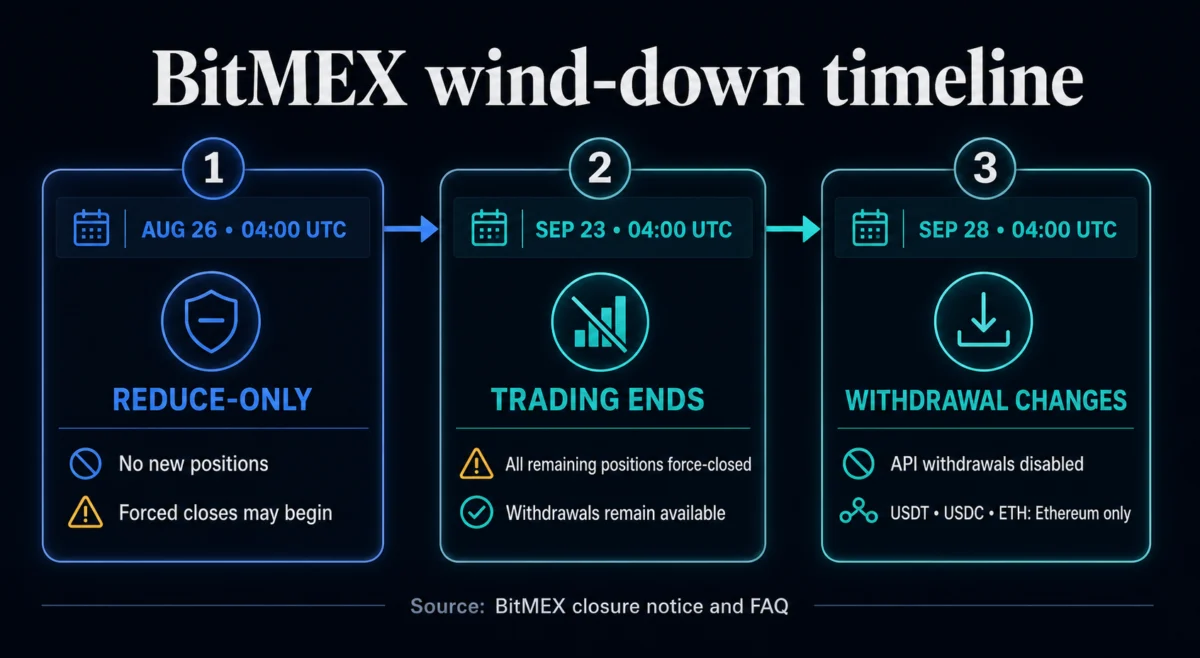
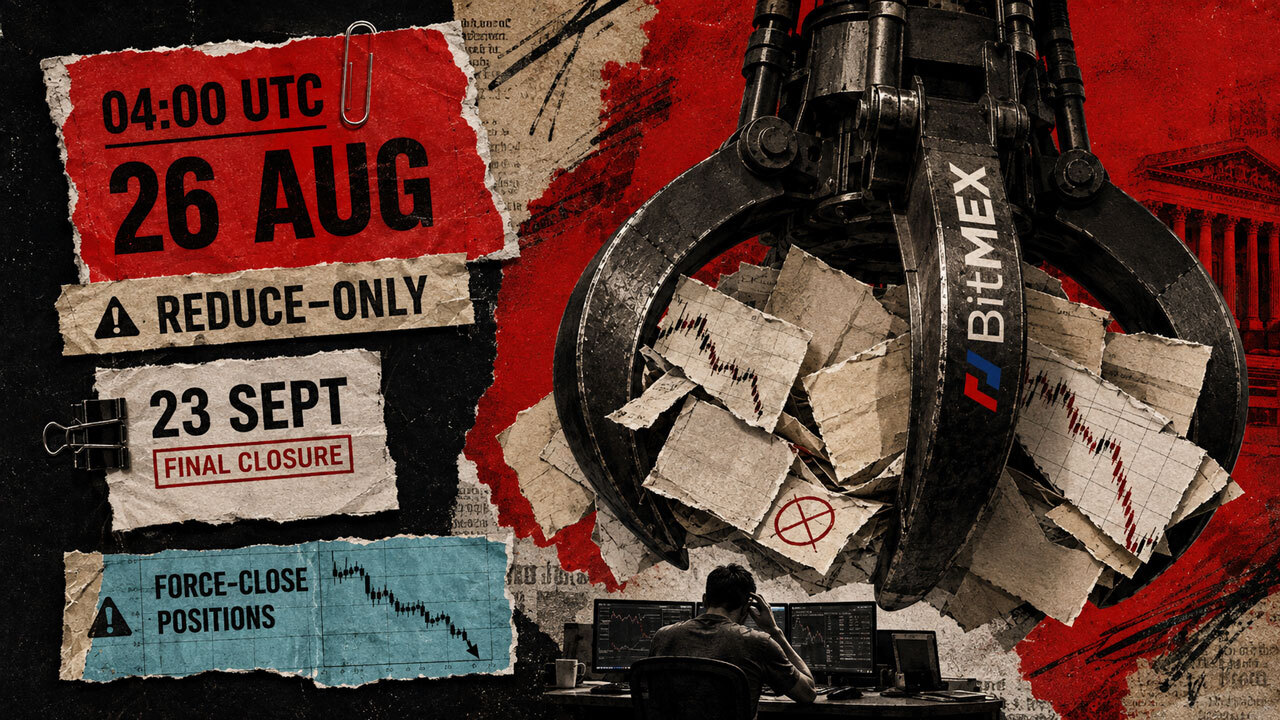
The cryptocurrency derivatives exchange BitMEX is entering a critical phase of its operational wind-down, with traders commencing a loss of direct control over their open positions. As of 04:00 UTC on August 26, the platform has transitioned into a "reduce-only" mode. This significant shift prohibits users from opening any new trades, effectively freezing their ability to adjust their market exposure by initiating fresh positions. This move is a precursor to the complete cessation of trading activities, which is scheduled for September 23, marking a pivotal moment for the exchange’s long-standing user base.
The decision to close BitMEX was the result of a comprehensive strategic review conducted by HDR Global Trading Limited, the entity that owns and operates the exchange. BitMEX has explicitly stated that the closure is not a consequence of financial distress, a prior security breach, or immediate regulatory pressures. This assertion suggests a more strategic or business-driven rationale behind the decision, though specific details remain undisclosed. The closure process is being managed through a meticulously planned timetable, designed to facilitate an orderly transition and minimize disruption as much as practically possible.
Under the outlined closure timetable and operational Frequently Asked Questions (FAQ) provided by BitMEX, traders are still permitted to reduce their existing exposure after the August 26 cutoff. However, this period, stretching from August 26 until the final closure on September 23, is characterized by a heightened risk of forced liquidations. BitMEX reserves the right to forcibly close positions during this wind-down phase. Crucially, the exchange has stated that it will not assume responsibility for any trading losses incurred by users who are unable to close their positions during this transitional period. This places a significant onus on traders to proactively manage their portfolios and be aware of the potential for automated or exchange-initiated closures.
Chronology of BitMEX Closure and Operational Changes
The BitMEX closure unfolds across several key dates, each representing a distinct stage in the platform’s decommissioning:
- August 26, 04:00 UTC: The exchange enters "reduce-only" mode. New positions are prohibited, but traders can still close or reduce existing ones. This marks the beginning of traders’ diminishing control over their trading strategies.
- September 23, 04:00 UTC: BitMEX will forcibly close all remaining open positions. Trading on the platform will cease entirely. The settlement price or contract index, as applicable, will be used to determine the outcome of these forced closures.
- September 28, 04:00 UTC: API withdrawals will be disabled. This includes withdrawals facilitated by institutional integrations, meaning all remaining funds must be withdrawn manually via the BitMEX website. This change impacts services like Fireblocks and Copper.
- Post-September 28: Following the disabling of API withdrawals, BitMEX will exclusively support USDT, USDC, and ETH for withdrawals, and these will be limited to the Ethereum network.
The Transition to Reduce-Only Mode: Implications for Traders
The transition to reduce-only mode on August 26 signifies a fundamental shift in the trader-exchange relationship on BitMEX. While traders can still mitigate their risk by exiting or scaling down their positions, the inability to initiate new trades means they cannot adapt to evolving market conditions by taking new directional bets. This is particularly impactful in the volatile cryptocurrency market, where rapid price movements can necessitate quick strategic adjustments.
The looming possibility of forced closures before September 23 introduces an element of uncertainty. BitMEX’s stated intention to force-close positions is aimed at facilitating an "orderly wind-down." However, for traders, this means their positions could be liquidated at a price point they did not anticipate or control, potentially leading to unexpected losses. The exchange’s disclaimer of responsibility for such losses underscores the importance of proactive risk management by the users. Traders who have open positions are now operating under a compressed timeline and with diminished agency.
The Final Closure and Post-Trading Operations
On September 23, BitMEX will execute a complete shutdown of its trading operations. At this designated time, all outstanding positions will be automatically closed by the exchange. The resulting profits or losses will be settled to users’ wallet balances according to the relevant contract specifications. Following this final trading closure, users will still have access to their accounts, but this access will be limited. They will be able to view their wallet balances, review their transaction history, and initiate withdrawals through the designated withdrawal pages. The trading interface and other exchange services will no longer be functional.
A significant operational change following the trading halt involves account fees. For fully verified balances remaining on BitMEX after September 23, a monthly account fee will be implemented. This fee is set at 1% per annum or $50, whichever is greater. This charge will continue to accrue until the user withdraws their balance. The exchange notes that this fee could potentially increase over time. It is important to note that this fee will only be deducted from the existing account balance. BitMEX has clarified that it will not push a user’s balance below zero, nor will it leave a user indebted to the exchange. If a user’s remaining balance is less than the minimum withdrawal amount, the accumulated fee could reduce that balance to zero. This policy incentivizes users to withdraw their funds promptly to avoid any erosion of their remaining assets.
Discontinuation of API Withdrawals and Withdrawal Limitations
Further impacting institutional users and those relying on automated trading systems, BitMEX will disable API withdrawals on September 28 at 04:00 UTC. This measure effectively ends support for programmatic withdrawals through integrations such as Fireblocks and Copper. Consequently, all users who have been utilizing these services will be required to perform manual withdrawals via the BitMEX website.

Following this discontinuation of API withdrawal capabilities, BitMEX’s withdrawal options will become significantly more restricted. The exchange will exclusively support withdrawals of Tether (USDT), USD Coin (USDC), and Ether (ETH). Furthermore, these withdrawals will be limited to the Ethereum network. This streamlining of withdrawal options aims to simplify the final stages of fund repatriation for remaining users, but it also necessitates that users ensure their desired assets and networks align with these final supported options.
Background Context and Broader Implications
BitMEX, once a dominant force in the cryptocurrency derivatives market, has faced a series of challenges in recent years. These include increased regulatory scrutiny from bodies like the U.S. Commodity Futures Trading Commission (CFTC), which led to significant fines and the delisting of certain trading pairs. The platform’s shift in ownership and operational strategy, culminating in this closure, reflects the evolving landscape of the crypto exchange industry, characterized by intense competition and a tightening regulatory environment globally.
The closure of BitMEX signifies the end of an era for many traders who utilized the platform during its peak popularity. It also serves as a stark reminder of the inherent risks associated with centralized cryptocurrency exchanges. While these platforms offer convenience and liquidity, users are ultimately subject to the operational decisions, financial stability, and regulatory compliance of the exchange itself. The forced closures and subsequent fee structures highlight the importance of diversification and self-custody of digital assets, where possible, to mitigate counterparty risk.
For the broader cryptocurrency market, the departure of a historically significant player like BitMEX may lead to a redistribution of trading volume to other established and emerging derivatives platforms. It also underscores the ongoing consolidation and maturation of the industry, where exchanges must adapt to regulatory demands and evolving user expectations to remain competitive. The finality of the BitMEX closure serves as a cautionary tale for traders, emphasizing the need for constant vigilance regarding exchange health, operational status, and the timely retrieval of funds.