Lina Irawan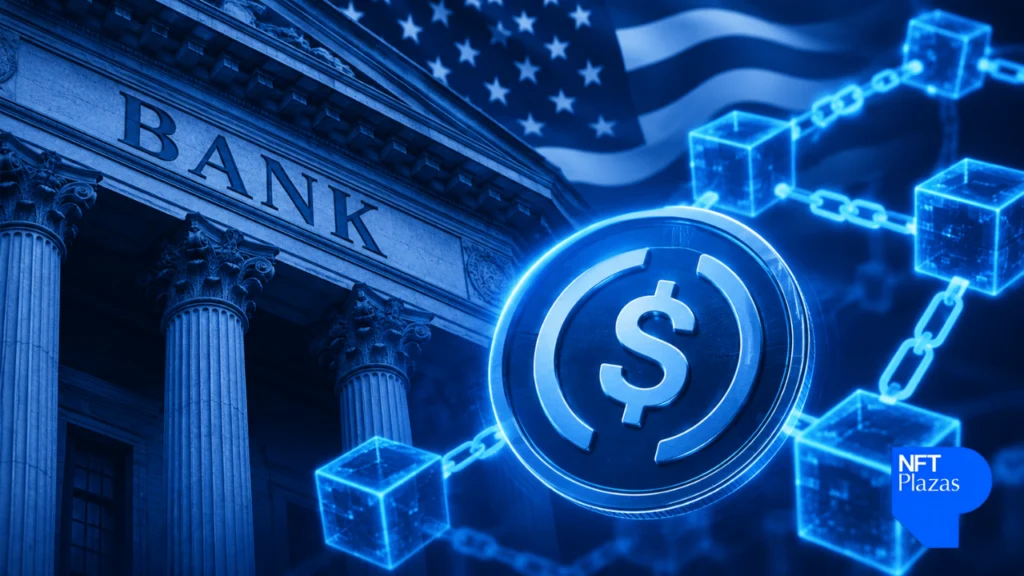
Thirty-nine U.S. state banking associations have joined forces to establish a significant new blockchain network for financial institutions, signaling a substantial move by traditional finance into the realms of stablecoins, tokenized deposits, and blockchain-based payment systems. The newly formed BankChain Alliance announced its ambitious undertaking on Tuesday, aiming to develop an industry-owned, industry-designed, and industry-governed blockchain network with a projected launch in 2027. This collective effort represents a formidable coalition, uniting associations that collectively oversee 3,283 banks holding an aggregate of $21.8 trillion in assets. While the project is in its nascent stages and has yet to select a technology partner, its formation underscores a palpable shift within the banking sector, moving beyond mere experimentation with blockchain technology to the active construction of robust, foundational infrastructure.
The initiative arises at a critical juncture, as banks increasingly recognize the strategic imperative to embrace and integrate distributed ledger technology (DLT) into their core operations. For decades, traditional banking has relied on established, centralized systems for payments and deposit management. However, the emergence of digital assets and the growing prevalence of blockchain technology have presented both challenges and opportunities. The BankChain Alliance’s stated objective is to empower financial institutions to offer innovative digital banking services while steadfastly upholding the security, regulatory compliance, and customer protections that are the hallmarks of the traditional banking sector.
The proposed BankChain network is designed to be a versatile platform capable of supporting a range of advanced financial functionalities. These include smart payments, which can automate transactions based on predefined conditions; tokenized deposits, representing traditional bank deposits in a digital, blockchain-compatible format; stablecoins, digital currencies pegged to stable assets like the U.S. dollar; and automated settlement processes, which can significantly reduce transaction times and counterparty risk. A crucial aspect of the alliance’s vision is interoperability, with the network intended to connect with other existing and future blockchain networks rather than operating as an isolated, proprietary system. This approach aims to foster a more interconnected and efficient digital financial ecosystem.
Ownership of the BankChain network will be accessible to banks of all sizes across the nation, fostering a collaborative environment and ensuring that the infrastructure development aligns with the diverse needs of the industry. Kathy Kraninger, President and CEO of the Florida Bankers Association and former Director of the Consumer Financial Protection Bureau, is serving as the alliance’s interim chair. Kraninger emphasized that the initiative is designed to democratize access to modern financial technology, enabling even smaller community banks, which often lack the substantial resources of large Wall Street institutions to develop such infrastructure independently, to leverage these advancements. This inclusivity is seen as vital for ensuring that banks can continue to serve customers effectively across rural, urban, and regional communities with cutting-edge digital solutions.

The Strategic Imperative of Bank-Controlled Blockchain Infrastructure
The formation of the BankChain Alliance can be understood within the broader context of a competitive landscape emerging between traditional financial institutions and cryptocurrency companies. Both are vying for dominance in the future of digital dollar transactions and asset management. Stablecoins have rapidly ascended to become a cornerstone of the digital asset economy, facilitating trading and offering a bridge between traditional finance and the decentralized world. Concurrently, banks are actively exploring the potential of tokenized deposits. This concept involves representing existing fiat currency held in bank accounts as digital tokens on a blockchain. These tokenized deposits could then traverse blockchain networks while remaining firmly anchored within the regulated framework of established banks.
For financial institutions, the development of tokenized deposits and their own stablecoin infrastructure presents a compelling alternative to allowing crypto-native stablecoins to unilaterally define the standards for blockchain-based dollar payments. The BankChain Alliance’s dual focus on both stablecoins and tokenized deposits strongly suggests a strategic intent by the banking industry to not only participate directly in the burgeoning digital dollar market but also to shape its evolution. This proactive approach aims to prevent a scenario where a significant portion of digital dollar movement is dictated by entities outside the traditional banking system.
Navigating the Regulatory Landscape: Stablecoin Rules and Banking Interests
The timing of the BankChain Alliance’s announcement is particularly significant, coinciding with ongoing debates and legislative efforts in Washington D.C. concerning stablecoin regulation. The banking industry has been actively engaged in these discussions, often advocating for stricter oversight to protect its interests. In July, prominent industry groups, including the American Bankers Association and the Independent Community Bankers of America, alongside numerous state banking associations, urged senators to strengthen provisions related to stablecoins within proposed legislation, such as the CLARITY Act.
A key point of contention has been Section 404 of proposed bills, which addresses rewards or yields associated with payment stablecoins. While these proposals generally aim to prohibit returns solely for holding stablecoins, they often preserve certain activity-based rewards. Banking groups have voiced concerns that ambiguities in such language could inadvertently allow some stablecoin products to function similarly to interest-bearing bank deposits. The fundamental concern for banks is that deposits serve as a crucial funding source for lending activities. If consumers and businesses begin to shift their funds from traditional bank accounts into stablecoins offering comparable economic incentives, banks could face a significant reduction in their funding base, impacting their ability to provide loans to households, small businesses, and local communities.
This debate has gained further traction following the passage of the GENIUS Act in 2025, which established a federal framework for payment stablecoins in the United States. Federal regulators are currently in the process of developing rules to implement this legislation, which will include requirements for stablecoin issuers and protocols for customer identification and anti-money laundering (AML) measures. The banking industry’s position in this regulatory arena presents a complex dynamic: simultaneously advocating for tighter controls on stablecoins that could directly compete with bank deposits, while also actively building the infrastructure that would enable banks to participate more robustly in the digital dollar market.

Broader Industry Trends: Traditional Finance Embraces the On-Chain Future
The BankChain Alliance is not an isolated phenomenon; its emergence is part of a broader trend of traditional financial institutions actively exploring and adopting blockchain technology. In July, Swift, the global interbank messaging system, announced that its blockchain-based shared ledger was ready for initial use. This development is accompanied by plans for testing live transactions involving tokenized deposits with 17 banks across six continents. Notable participants in these pilot programs include major global financial institutions such as Citi, BNY Mellon, Wells Fargo, HSBC, UBS, BNP Paribas, Standard Chartered, DBS, and MUFG. Swift’s system is engineered to facilitate the continuous movement of tokenized deposits, leveraging existing infrastructure for final settlement, thereby aiming to enhance the speed and efficiency of cross-border transactions.
Beyond payment systems, major banks are also investigating blockchain applications for custody services, the creation of tokenized investment products, and more efficient settlement mechanisms. This collective movement indicates a fundamental shift in the financial industry’s perception of blockchain. What was once viewed primarily as a disruptive force emanating from the cryptocurrency sector is now increasingly being embraced as a foundational technology that can be adapted and integrated within existing regulated financial systems. Banks are no longer content to observe from the sidelines; they are actively building the digital infrastructure of the future.
A Pivotal Moment: The Race for Control of Digital Finance Infrastructure
Despite the considerable momentum and strategic vision behind the BankChain Alliance, it is important to acknowledge that the project remains in its early stages. Significant hurdles lie ahead, including the selection of a suitable technology partner, the intricate process of building the network, and the critical task of persuading individual banks to adopt and participate in the platform. Ensuring seamless interoperability with existing payment systems and other burgeoning blockchain networks will also be paramount to its success.
However, the very creation of the BankChain Alliance represents a pivotal shift in the financial landscape. For years, the discourse around blockchain and stablecoins was predominantly characterized by crypto companies striving to establish alternatives to traditional financial services. Now, banks are not only developing their own blockchain infrastructure but are also actively engaged in shaping regulatory frameworks through lobbying efforts.
If the BankChain Alliance achieves its objectives, it could unlock unprecedented opportunities for thousands of U.S. banks. These institutions could gain access to shared, modern infrastructure for digital payments, tokenized deposits, and automated settlements, all while remaining firmly within the established regulatory perimeter of traditional banking. This scenario fundamentally alters the nature of the competition. The question is no longer simply whether banks will adopt blockchain technology, but rather, who will ultimately control the infrastructure that underpins the next generation of financial services. The BankChain Alliance’s bold initiative suggests that traditional finance is determined to be a leading architect of that future.