admin
admin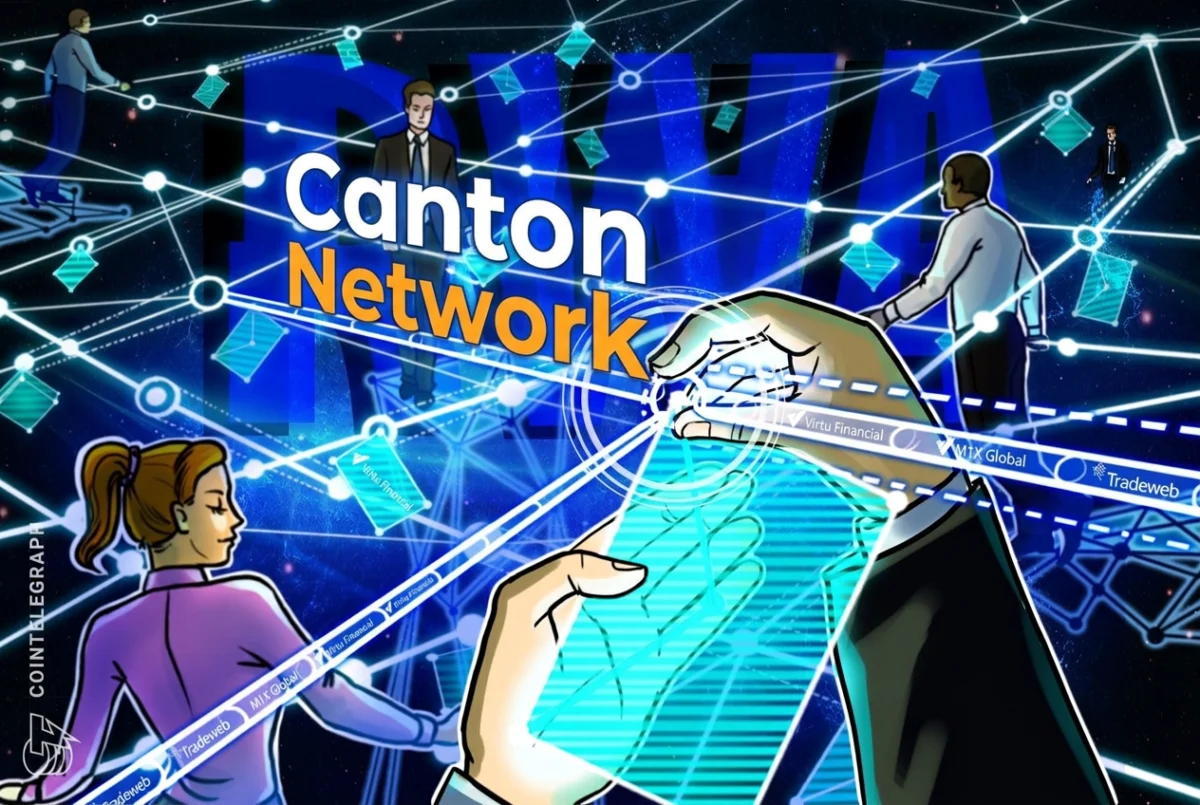
The landscape of institutional finance reached a significant milestone this week as Virtu Financial, M1X Global, and Tradeweb successfully completed an onchain repurchase agreement (repo) transaction. This operation utilized a sovereign digital bond as collateral, with the entire lifecycle of the transaction—from execution to settlement—occurring on the Canton Network. This event represents a critical step forward in the integration of blockchain technology within the plumbing of global capital markets, demonstrating that complex financial instruments can be managed with greater efficiency, transparency, and speed than traditional legacy systems allow.
The transaction centered on the use of USDM1, a US dollar-denominated sovereign bond issued onchain by the Republic of the Marshall Islands. This digital asset is unique in its structure, being backed 1:1 by short-term US Treasuries and governed under New York law as a fully collateralized sovereign obligation. By utilizing USDM1, the participating firms were able to execute a repo agreement where the bond continued to pay a coupon even while serving as collateral, providing a dual benefit of yield and liquidity. The entire repo and repurchase cycle, executed between regulated counterparties on the Tradeweb platform, was finalized in under 10 minutes—a stark contrast to the days or hours typically required in traditional markets.
Technical Architecture and the Role of USDM1
The success of this transaction hinges on the specific design of the USDM1 asset. Unlike many early-stage tokenized assets that serve primarily as speculative vehicles or static representations of value, USDM1 is engineered for institutional utility. Issued by the Republic of the Marshall Islands, it carries the legal weight of a sovereign obligation. This status is reinforced by its adherence to New York law, providing a familiar and robust legal framework for institutional participants who are often hesitant to engage with assets in jurisdictions with less established commercial codes.
The asset’s 1:1 backing by short-term US Treasuries ensures that it maintains a stable value profile, making it an ideal candidate for high-quality liquid assets (HQLA) in the repo market. In a traditional repo transaction, one party sells securities to another with an agreement to repurchase them at a later date at a slightly higher price. The security serves as collateral for what is essentially a short-term loan. By moving this process onchain, the "atomic settlement" feature of the Canton Network ensures that the transfer of the digital bond and the corresponding payment happen simultaneously. This eliminates delivery-versus-payment (DvP) risk, which remains a persistent concern in traditional finance where the transfer of assets and cash often occurs through different, non-synchronized systems.
The Strategic Importance of the Canton Network
The Canton Network, the infrastructure provider for this transaction, is a privacy-enabled blockchain designed specifically for the needs of regulated financial institutions. Developed by Digital Asset, Canton addresses the primary hurdles that have historically prevented banks and asset managers from adopting public blockchains: privacy and interoperability.
On the Canton Network, participants can maintain control over their data, ensuring that sensitive transaction details are only visible to the parties involved and relevant regulators. This "permissioned" nature is balanced with the ability to interact across different applications on the network. For instance, the repo transaction involved Tradeweb as the execution venue and required coordination with institutional custodians. According to the project’s release, custody for USDM1 is provided by a consortium of established digital asset firms, including Anchorage Digital, BitGo, and tZERO. This ecosystem of regulated service providers creates a "closed-loop" environment where institutional trust is maintained throughout the asset’s lifecycle.
A Chronology of Institutional Activity on Canton
The recent repo transaction is not an isolated event but rather the latest in a series of rapidly accelerating institutional milestones on the Canton Network. The network has seen a flurry of activity throughout the summer of 2024, signaling a growing appetite among Wall Street firms for blockchain-based rails.
In July 2024, Tradeweb facilitated a real-time transfer of a tokenized US Treasury from Franklin Templeton to Virtu Financial. That transaction settled against USDCx, a programmable version of the USDC stablecoin, demonstrating the feasibility of real-time settlement for the world’s most liquid government debt.
The momentum continued into August 2024 with several high-profile launches. FalconX and Interstice introduced a cross-chain swap engine designed to connect the institutional liquidity of Canton with other major blockchain networks, including Ethereum, Solana, and the Robinhood Chain. This interoperability is crucial for the broader adoption of tokenized assets, as it prevents the creation of "liquidity silos" where assets are trapped on a single network.
Simultaneously, World Liberty Financial launched its USD1 stablecoin natively on the Canton Network, providing another layer of liquidity for institutional traders. Perhaps most notably for the long-term integration of blockchain into public policy, the American Idea Foundation—founded by former US House Speaker Paul Ryan—announced a collaboration with Digital Asset for a 2027 pilot program. This initiative aims to use the Canton Network to distribute state-administered benefits across three US states, showcasing the technology’s potential beyond the trading floor and into the realm of public administration and social services.
Supporting Data: The Scale of the Repo Market
To understand the significance of the Virtu, M1X, and Tradeweb transaction, one must consider the sheer scale of the global repo market. The repo market is the "oil" that keeps the engine of global finance running, providing the necessary liquidity for daily operations across the banking sector. In the United States alone, the daily turnover in the repo market often exceeds $4 trillion.
Traditionally, these transactions are settled through centralized clearinghouses and legacy messaging systems like SWIFT and Fedwire. While efficient, these systems are subject to "settlement friction"—the time and administrative cost associated with ensuring that assets have moved correctly. By reducing the settlement cycle from T+1 or T+2 (the standard one or two days) to under 10 minutes, onchain repo transactions could potentially save the financial industry billions of dollars in capital charges and operational costs.
Furthermore, the ability to use "natively issued" sovereign collateral—meaning the bond was born on the blockchain rather than being a "wrapped" version of a paper bond—simplifies the legal and technical chain of custody. This reduces the risk of errors and makes the collateral more "mobile," allowing it to be redeployed across different transactions with minimal delay.
Implications for the Future of Institutional Financing
While the 10-minute repo transaction is an early-stage example, its implications are profound. It suggests a future where "collateral mobility" is the norm rather than the exception. In today’s market, high-quality collateral often sits idle because the cost and time required to move it exceed the benefit of the transaction. Onchain systems like Canton allow for "fractionalized" and "high-velocity" collateral management, where assets can be utilized for minutes or hours to cover specific liquidity needs before being moved elsewhere.
However, challenges remain before this model sees broad adoption. Regulatory clarity is the primary hurdle. While the USDM1 bond is structured under New York law, global regulators are still grappling with how to treat tokenized assets on their balance sheets. Issues such as capital requirements (the amount of cash banks must hold against their assets) and the legal definition of "finality of settlement" on a blockchain are still being debated in major financial hubs.
Additionally, there is the question of liquidity. For the onchain repo market to rival the traditional market, there must be a critical mass of both collateral (digital bonds) and cash (stablecoins or central bank digital currencies). The recent flurry of activity on Canton suggests that the infrastructure is ready, but the migration of trillions of dollars in assets will take years, if not decades.
Official Responses and Market Reactions
While official statements from the parties involved emphasized the technical success of the pilot, the broader market reaction has been one of cautious optimism. Analysts note that the involvement of Tradeweb—a titan in the electronic trading of fixed-income products—is a "validator" for the technology. Tradeweb’s participation signals to other market participants that onchain trading is no longer a fringe experiment but a viable path for the future of the industry.
M1X Global, as the issuer of the infrastructure for the sovereign bond, highlighted that the transaction proves that "sovereign debt can be more than just a buy-and-hold asset." By turning the bond into a dynamic piece of collateral, they are increasing the utility of the debt for the issuing nation—in this case, the Marshall Islands—while providing institutional investors with a high-grade financial instrument.
Virtu Financial’s role as a counterparty further underscores the interest from the market-making community. For firms that rely on high-frequency trading and rapid capital turnover, the ability to settle transactions in minutes rather than days is a competitive advantage that directly impacts the bottom line by reducing the amount of "trapped" capital.
Conclusion: A New Era for Sovereign Debt
The completion of this onchain repo transaction marks a shift in the narrative surrounding blockchain in finance. The conversation is moving away from the volatility of cryptocurrencies and toward the efficiency of "tokenized real-world assets" (RWAs). By combining natively issued sovereign debt with atomic settlement on a privacy-focused network, Virtu, M1X, and Tradeweb have provided a blueprint for the modernization of the global financial system.
As the Canton Network continues to attract a diverse array of participants—from stablecoin issuers like World Liberty Financial to public policy foundations—the ecosystem is reaching a "tipping point." The successful execution of a 10-minute repo cycle demonstrates that the technology is no longer the bottleneck; rather, the pace of adoption will now depend on the speed at which the legal and regulatory frameworks can evolve to match the speed of the code. For the institutional repo market, a multi-trillion-dollar cornerstone of the global economy, the transition to the blockchain has begun.