admin
admin
The global financial landscape witnessed a significant synchronized rally on Thursday as Bitcoin rebounded toward the $81,000 threshold, buoyed by a historic earnings report from semiconductor giant Nvidia. As Wall Street opened to a surge in technology equities, the cryptocurrency market mirrored this "risk-on" sentiment, with Bitcoin (BTC) reaching local highs of $80,808. This price action comes at a critical juncture for the digital asset, as market participants look to solidify the $80,000 mark as a definitive support level ahead of a massive derivatives expiry and high-stakes macroeconomic commentary from the United States Federal Reserve.
The Nvidia Catalyst and Tech-Crypto Correlation
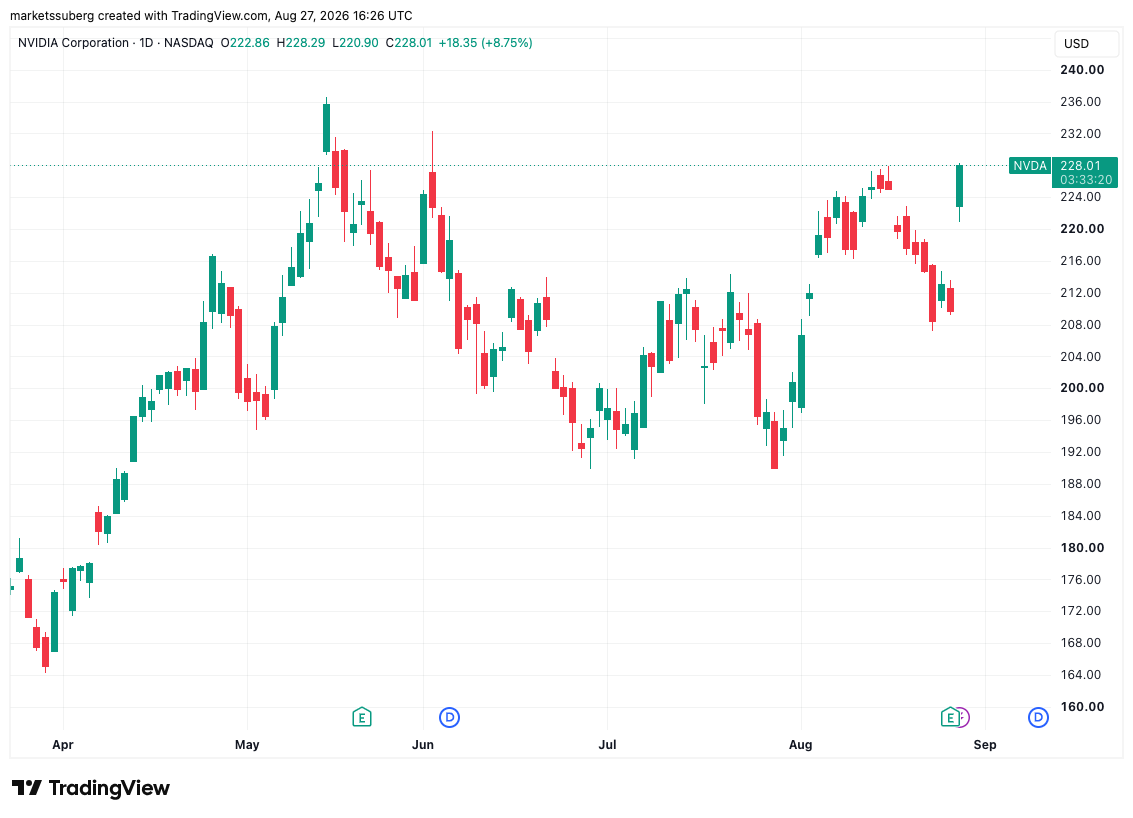
The primary engine behind the Thursday rally was Nvidia’s extraordinary second-quarter earnings report, which surpassed even the most optimistic analyst projections. The company posted a quarterly revenue of $96.2 billion, exceeding expectations by nearly $4 billion. This financial performance underscored the sustained demand for artificial intelligence (AI) infrastructure, a sector that has increasingly become a leading indicator for broader market liquidity and investor appetite.
Following the announcement, Nvidia’s stock price surged by more than 9% in early trading, resulting in a market capitalization gain of over $400 billion. According to the financial analysis resource The Kobeissi Letter, this move positioned Nvidia to record the third-largest single-day market cap gain by a public company in history. The ripple effects were felt immediately across the tech-heavy Nasdaq Composite Index, which rose by 1% within the first hour of trading.
For Bitcoin, the correlation with high-growth technology stocks remains a dominant theme. As liquidity flows into the AI and semiconductor sectors, it often spills over into the digital asset space, which investors view as a high-beta play on global monetary conditions. The ability of BTC to reclaim $80,000 in the wake of Nvidia’s success suggests that the "wealth effect" from traditional equities is providing the necessary tailwind for crypto bulls to challenge previous resistance zones.

Macroeconomic Uncertainty and the Jackson Hole Symposium
While corporate earnings provided the immediate spark, the broader market remains tethered to the signals emanating from the U.S. Federal Reserve’s annual Jackson Hole economic symposium. The event, which brings together central bankers, policymakers, and academics, is currently underway in Wyoming. All eyes are now fixed on the upcoming keynote address by Kevin Warsh, who is anticipated to provide clarity on the central bank’s trajectory regarding interest rates and inflation management.
The timing of the symposium is particularly sensitive given the recent volatility in U.S. government bond yields and a series of mixed inflation data points. Market participants are searching for signs of a potential policy pivot or, at the very least, a stabilization of the hawkish rhetoric that has characterized much of the past year. Kevin Warsh, known for his measured and often cautious approach to public signaling, faces the difficult task of managing market expectations without triggering excessive volatility.
Kathy Bostjancic, Chief U.S. Economist at Nationwide, highlighted the stakes of the address in a statement to CNBC, noting that the jump in long-term interest rates has created a high degree of uncertainty. "Chairman Warsh’s address is poised to be extremely key given the jump in long-term interest rates and high uncertainty over the path of inflation and the Fed’s reaction function going forward," Bostjancic remarked. For Bitcoin investors, any hint of a "dovish" lean—suggesting lower rates for longer or a pause in tightening—could serve as a secondary catalyst for a move toward $90,000.
Analyzing Liquidations and the Thinning Sell Wall
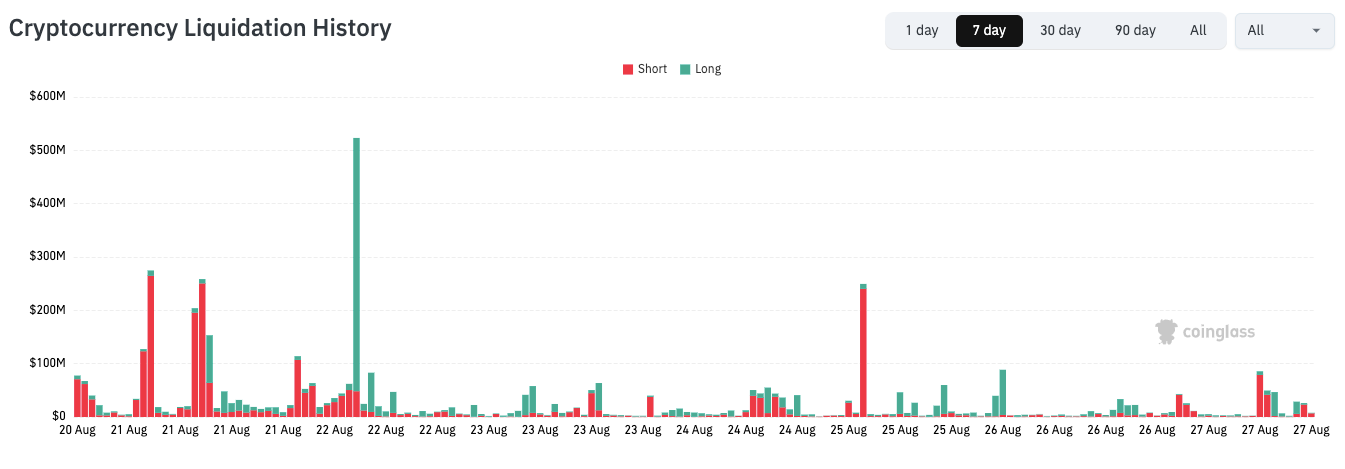
As Bitcoin pushed toward $81,000, the internal mechanics of the crypto market revealed a significant shift in trader positioning. Data from the analytics platform CoinGlass indicated that total crypto liquidations reached approximately $417 million over a 24-hour period. A substantial portion of these liquidations were "short" positions—bets that the price of Bitcoin would fall—which were forcibly closed as the price climbed, adding further upward pressure in what is known as a short squeeze.
Technical analysts have been monitoring a "sell wall" or a concentrated area of ask liquidity that previously extended up to the $86,000 mark. This zone has acted as a ceiling for Bitcoin’s price action over the past several weeks, creating friction every time the asset attempted a breakout. However, recent data suggests that this resistance is beginning to erode.
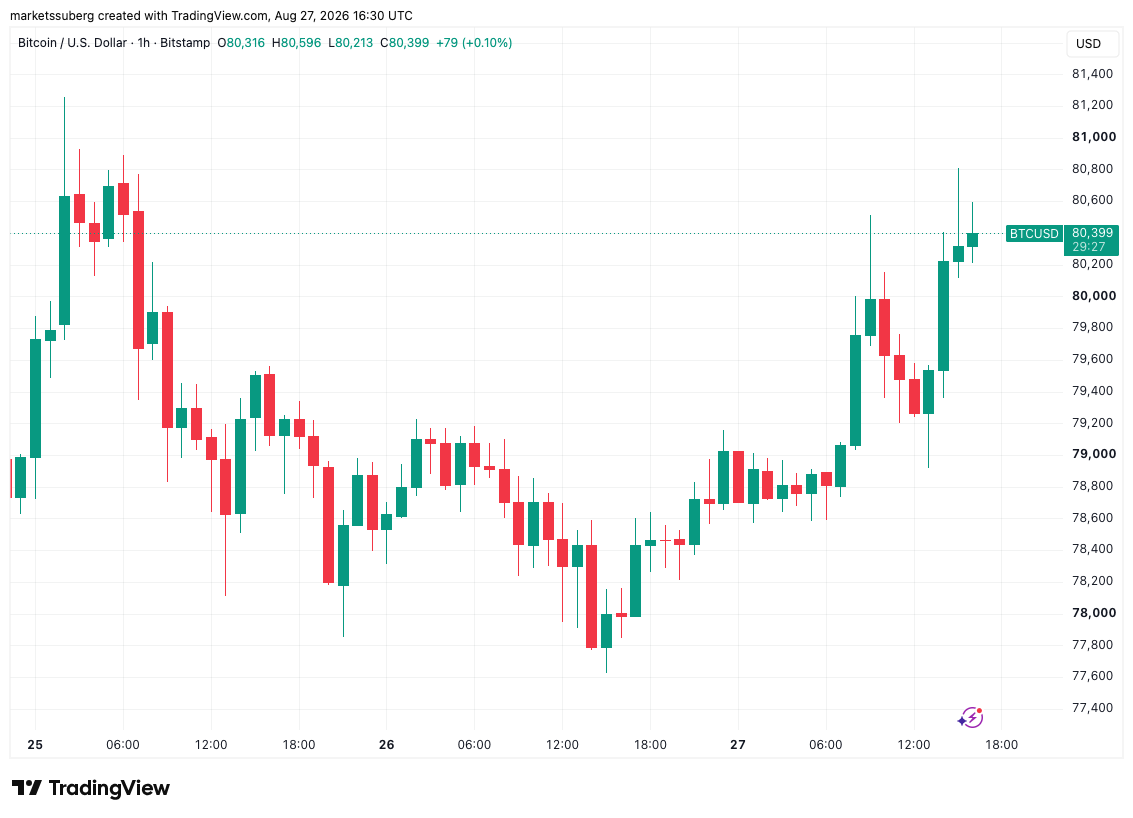
David Eng, a prominent market analyst, observed that the liquidity wall is weakening just as the market approaches a major structural milestone. "BTC is compressed under resistance just as the derivatives structure holding it there is about to weaken," Eng stated. He further noted that if Bitcoin can decisively break the $82,000 level, the path toward $85,000 and beyond becomes "much cleaner," as there are fewer large-scale sell orders to impede the momentum.
The $6.58 Billion Options Expiry Event
A pivotal factor in the current price compression is the impending monthly options expiry on the Deribit exchange. Scheduled for Friday, the event involves the expiration of approximately 81,700 BTC contracts, carrying a total notional value of $6.58 billion. Options expiry events are historically periods of heightened volatility, as institutional traders and "market makers" adjust their hedges to account for the closing of large positions.
In the lead-up to an expiry of this magnitude, the price of the underlying asset often gravitates toward the "max pain" point—the strike price at which the greatest number of options contracts (both calls and puts) would expire worthless. However, once the expiry occurs, the "gravitational pull" of these contracts dissipates, often leading to a violent breakout in whichever direction the prevailing trend dictates.
The concentration of open interest around the $80,000 and $82,000 strike prices suggests that professional traders are heavily hedged around these levels. Once these obligations are settled on Friday, the reduction in "gamma" (the rate of change in an option’s delta) could allow Bitcoin to move more freely. If the post-expiry environment aligns with continued strength in the Nasdaq and a neutral-to-dovish tone from Jackson Hole, the conditions for a "gamma squeeze" to the upside may be met.
Historical Context and Technical Divergence
The current price action is also being viewed through the lens of historical technical indicators. Some analysts have pointed to a bullish divergence in the Relative Strength Index (RSI), a momentum oscillator that measures the speed and change of price movements. Current RSI patterns are drawing comparisons to the market structure seen in late 2022, a period that preceded a major recovery phase for the digital asset.
While Bitcoin remains below its all-time high, the steady "chipping away" at resistance levels suggests a more sustainable uptrend than the vertical spikes seen in previous cycles. The transition from $70,000 to $80,000 was marked by several weeks of consolidation, which technical traders generally interpret as the building of a strong foundation. The current attempt to flip $80,000 into support is the final hurdle before Bitcoin enters a "price discovery" phase where historical resistance levels no longer exist.
Implications for the Broader Altcoin Market
As is often the case, Bitcoin’s strength has begun to permeate the broader cryptocurrency ecosystem. Ethereum (ETH) and several high-cap altcoins have also posted modest gains, though they continue to lag behind Bitcoin’s dominance. The "Bitcoin Dominance" index, which measures BTC’s share of the total crypto market cap, remains near multi-year highs, indicating that investors are still prioritizing the relative safety of the "digital gold" over more speculative assets.
However, if Bitcoin successfully clears the $85,000 mark and stabilizes, market analysts expect a "rotation" of capital into altcoins. This pattern typically occurs when Bitcoin’s volatility cools off at a new high, leading investors to seek higher returns in smaller-cap assets. The performance of AI-related cryptocurrencies, such as Near Protocol (NEAR) and Render (RNDR), has been particularly notable, directly benefiting from the "Nvidia effect" and the general enthusiasm surrounding artificial intelligence technologies.
Conclusion: A Confluence of High-Impact Events
The convergence of Nvidia’s record-breaking earnings, the Jackson Hole economic symposium, and a multi-billion dollar options expiry has created a "perfect storm" of volatility and opportunity for the Bitcoin market. The digital asset’s ability to maintain its footing above $80,000 in the face of macro uncertainty speaks to a growing institutional resilience and a shift in the global perception of crypto-assets.
As Friday approaches, the market remains in a state of watchful anticipation. The resolution of the options expiry will likely dictate the short-term trend, while the words of Kevin Warsh will set the stage for the medium-term economic environment. Should the current momentum hold, the $85,000 level may not just be a target, but a stepping stone toward a new era of valuation for the world’s largest cryptocurrency.
Investors are reminded that while the current outlook appears bullish, the intersection of derivatives expiry and central bank policy is inherently unpredictable. The "sell wall" at $86,000 remains a formidable obstacle, and the potential for a "sell the news" reaction following the Jackson Hole address cannot be entirely discounted. As the week draws to a close, the primary objective for Bitcoin bulls remains clear: secure the $80,000 handle and prepare for the next leg of the global market rally.