admin
admin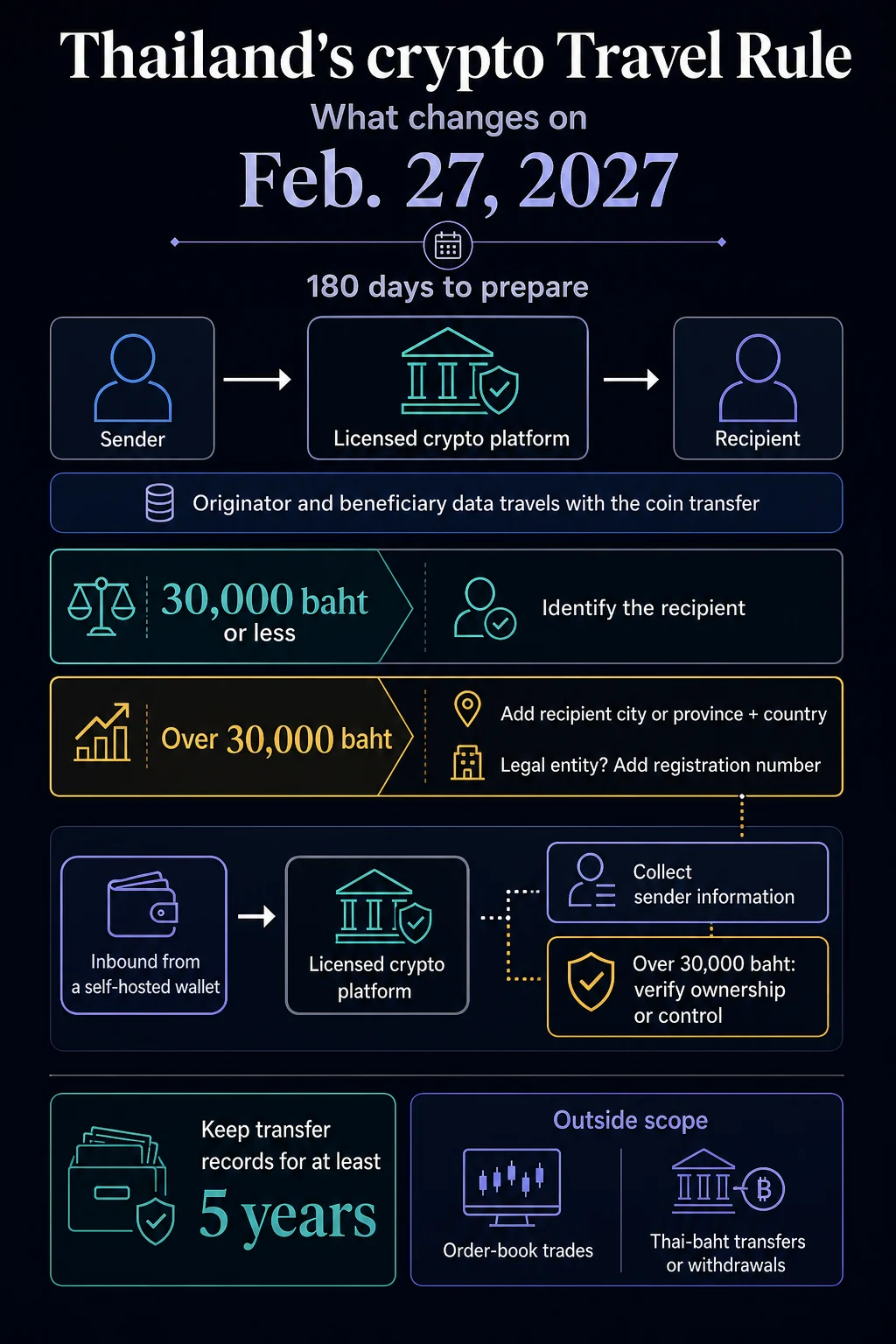
Thailand’s Securities and Exchange Commission (SEC) has finalized a significant update to its regulatory framework for digital assets, introducing a comprehensive "Travel Rule" that mandates enhanced data collection and verification for cryptocurrency transfers. This new regulation, set to take effect on February 27, 2027, after a 180-day implementation period following its publication in the Royal Gazette, aims to bolster anti-money laundering (AML) and counter-terrorist financing (CTF) efforts within the nation’s rapidly evolving digital asset landscape.
The core of the Travel Rule requires licensed cryptocurrency operators within Thailand to meticulously gather and transmit identifying information of both the sender and the recipient involved in any digital asset transfer. This initiative aligns Thailand with global regulatory trends and the Financial Action Task Force (FATF) recommendations, which emphasize the importance of tracing the flow of virtual assets to prevent illicit activities. The extended lead time of 180 days is designed to provide supervised entities with sufficient opportunity to upgrade their systems, refine their operational procedures, and ensure compliance with the stringent new data-handling requirements.
Enhanced Scrutiny for Crypto Transfers
Under the new directive, supervised digital-asset operators are obligated to collect a detailed set of information pertaining to their customers and the counterparties involved in any cryptocurrency transaction. This extends to verifying the qualifications of any digital asset service providers or intermediaries that facilitate the transfer. When a transfer originates from a regulated platform, the sending operator must furnish the recipient’s operator with comprehensive originator and beneficiary details. Crucially, these transfer-related records must be retained for a minimum of five years, creating an auditable trail for regulatory oversight.
The depth of information required from customers is tiered based on the value of the cryptocurrency being transferred. Even for outgoing transfers originating from a wallet held with a regulated platform, customers must now identify the intended recipient, irrespective of the transaction amount. This marks a departure from previous practices where smaller transactions might have been subject to less rigorous scrutiny.
The 30,000 Baht Threshold and Beyond
A significant threshold has been established at 30,000 Thai Baht (approximately $820 USD as of late 2023, subject to currency fluctuations). For transfers exceeding this amount, customers will be required to provide additional identifying details about the recipient, including their geographical location (province or city) and country of residence. If the recipient is a legal entity, its official registration number must also be submitted. While smaller transfers necessitate basic recipient identification, larger transactions demand a more granular level of detail, including specific location or corporate information.
This graduated approach aims to strike a balance between regulatory necessity and user convenience. The objective is to ensure that while legitimate transactions can proceed smoothly, higher-value transfers, which potentially carry a greater risk of illicit use, are subject to enhanced due diligence.
Addressing Self-Hosted Wallets and Offshore Transactions
The Travel Rule also introduces specific requirements for transfers involving self-hosted wallets, a category that has historically presented challenges for regulatory tracking. When cryptocurrency arrives at a regulated platform’s wallet from a self-hosted wallet, the platform must collect sender information in a manner consistent with other transfers. If the transaction value surpasses the 30,000 Baht threshold, the platform is further obligated to verify that the user indeed owns or controls the self-hosted wallet. This verification process typically involves confirming the individual’s ability to access and manage the wallet.

It is important to note that the onus of compliance falls squarely on the supervised operators when a transfer touches their services. The SEC’s Q&A document clarifies that not every cryptocurrency transfer will automatically necessitate proof of wallet ownership. The rule is designed to apply to specific scenarios and thresholds, aiming to avoid unnecessary burdens on everyday users and smaller transactions.
Scope and Limitations of the New Regulation
The SEC has been careful to delineate the scope of the new Travel Rule, specifying that it does not extend to all platform activities. For instance, transactions conducted on an operator’s order book, such as buying or selling cryptocurrencies within a single platform, are not subject to these new data-sharing requirements. Similarly, transfers and withdrawals of Thai Baht, the national fiat currency, are excluded, as the regulation specifically targets the movement of digital assets.
The SEC anticipates that for the majority of transfers, operations will continue through standard processes, provided that customers furnish complete and accurate information and that platforms are adequately prepared. However, the regulator acknowledges that high-value transfers, transactions where essential data is missing, or those requiring additional wallet verification protocols may experience longer processing times. This is an inherent consequence of implementing more robust compliance measures.
Background and Chronology of the Travel Rule Implementation
The development and implementation of the Travel Rule in Thailand have been a gradual process, reflecting the nation’s commitment to fostering a secure and compliant digital asset ecosystem. The SEC has been actively engaged in discussions with industry stakeholders for a considerable period, seeking to understand the practical implications of such regulations.
- August 25, 2026: The associated notification outlining the specifics of the Travel Rule is dated.
- September 2, 2026: The Thai SEC officially announces the new Travel Rule, signaling its impending implementation.
- February 27, 2027: The Travel Rule officially comes into effect, following a 180-day implementation period from its publication in the Royal Gazette.
This phased approach allows for a structured transition, enabling licensed operators to invest in necessary technological upgrades and personnel training. The SEC’s proactive engagement through customer-facing Q&A documents underscores its commitment to transparency and to ensuring that market participants understand their obligations and the rationale behind the new rules.
Supporting Data and Global Context
The implementation of the Travel Rule by Thailand’s SEC is part of a broader global trend towards regulating the cryptocurrency sector more stringently. The FATF, a global intergovernmental organization dedicated to combating money laundering and terrorist financing, has been a key proponent of the Travel Rule for virtual asset service providers (VASPs). FATF Recommendation 16, often referred to as the "Travel Rule," requires VASPs to obtain and transmit required originator and beneficiary information for virtual asset transfers above a certain threshold.
As of recent reports, numerous jurisdictions have already implemented or are in the process of implementing their own versions of the Travel Rule. These include countries within the European Union, the United States, Singapore, and Japan, among others. The common thread across these implementations is the objective to enhance transparency and prevent the misuse of digital assets for illicit purposes.

In Thailand, the digital asset market has witnessed significant growth in recent years, attracting both domestic and international investors. While this growth presents economic opportunities, it also heightens the potential for regulatory challenges. Data from the Thai SEC indicates a substantial increase in the number of registered digital asset trading platforms and a growing volume of transactions, underscoring the need for robust regulatory oversight. The introduction of the Travel Rule is a direct response to this evolving market dynamic, aiming to ensure that Thailand remains an attractive yet secure hub for digital asset innovation.
Official Statements and Industry Reactions
While specific official statements from individual licensed crypto operators in Thailand have not been widely publicized regarding this particular announcement, the general sentiment within the industry has been one of preparedness and a willingness to comply with regulatory mandates. Industry associations representing digital asset service providers in Thailand have historically engaged in constructive dialogue with the SEC, providing input on proposed regulations to ensure they are both effective and practically implementable.
The SEC’s approach, characterized by a clear communication strategy and a defined implementation timeline, is likely to be met with a collaborative response from regulated entities. The regulator has consistently emphasized its commitment to fostering a safe and responsible digital asset market, and the Travel Rule is a significant step in that direction. The extended implementation period is a testament to the SEC’s understanding of the technical and operational adjustments required by businesses.
Broader Impact and Implications
The introduction of the Travel Rule by Thailand’s SEC has several key implications for the cryptocurrency ecosystem:
- Enhanced AML/CTF Compliance: The most immediate impact is a significant strengthening of Thailand’s capabilities in combating money laundering and terrorist financing within the digital asset space. The ability to trace transactions and identify parties involved will make it more difficult for criminals to utilize cryptocurrencies for illicit activities.
- Increased Operational Costs for Operators: Licensed crypto operators will incur costs associated with upgrading their IT infrastructure, implementing new data management systems, and potentially hiring additional compliance staff. This could lead to a consolidation within the industry, with larger, well-resourced operators better positioned to meet the new requirements.
- Potential Impact on User Experience: While the SEC aims to minimize disruption, users may experience longer transaction times, especially for high-value transfers or when dealing with self-hosted wallets. The need to provide more personal information might also raise privacy concerns for some users, although this is a standard practice in traditional financial systems.
- Alignment with International Standards: By adopting the Travel Rule, Thailand solidifies its position within the global regulatory landscape, enhancing its credibility and potentially attracting more compliant international businesses and investors who value regulatory certainty.
- Focus on Self-Hosted Wallets: The specific measures for self-hosted wallets signal a growing regulatory focus on this segment of the crypto market, which has traditionally been harder to monitor. This could encourage users to interact more with regulated platforms for increased security and compliance.
- Impact on Offshore Transfers: The requirement to collect and transmit recipient data for offshore transfers means that Thai users engaging with international crypto platforms, or vice-versa, will fall under this new scrutiny. This could lead to greater transparency in cross-border crypto movements involving Thailand.
In conclusion, Thailand’s implementation of the Travel Rule represents a pivotal moment in its digital asset regulation. It underscores a commitment to regulatory maturity and a proactive approach to mitigating risks associated with the growing adoption of cryptocurrencies. While the transition will necessitate adjustments from both operators and users, the long-term benefits of a more secure and transparent digital asset environment are expected to outweigh the immediate challenges. The success of this initiative will hinge on effective implementation, ongoing collaboration between regulators and industry, and the continued evolution of technology to support these evolving compliance requirements.