James Watt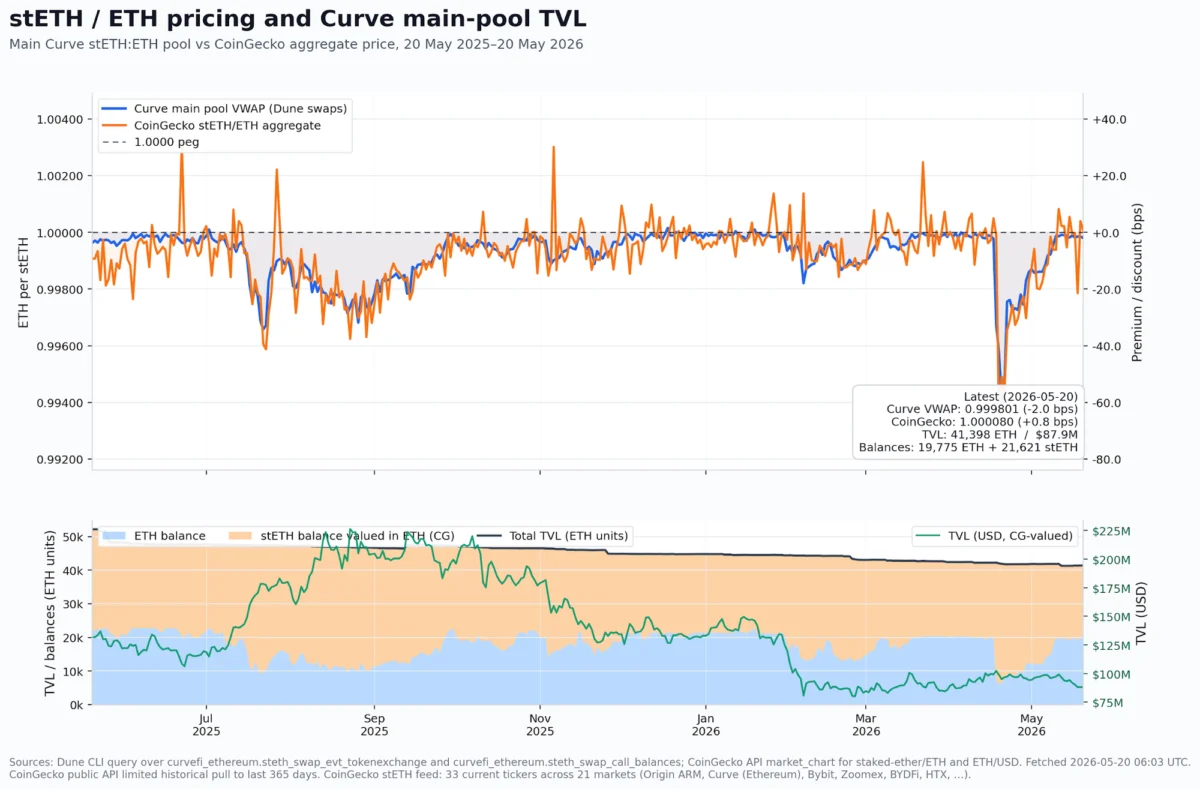
The decentralized finance (DeFi) landscape experienced a significant stress test in April 2026, when a sophisticated exploit targeting KelpDAO’s rsETH bridge path sent ripples through the restaking and ETH-denominated lending markets. This incident, while impacting specific protocols, notably affirmed the underlying resilience and functional integrity of stETH and wstETH, Ethereum’s premier liquid staking tokens. Despite the substantial external shock, market data during and after the event indicated that stETH maintained its core functionality, demonstrating a capacity for rapid price recovery and actionable liquidity depth, even as execution costs temporarily escalated. The episode provided critical insights into the distinctions between protocol-specific vulnerabilities and the systemic robustness of foundational assets within the broader crypto ecosystem.
The event, which unfolded on April 18, 2026, centered on a critical vulnerability within KelpDAO’s LayerZero-based rsETH bridge. Attackers successfully exploited a cross-chain verification failure, leading to the unauthorized minting of approximately 116,500 rsETH on the Ethereum mainnet. Valued at roughly $292 million at the time, this massive influx of unbacked tokens bypassed the necessary source-chain burn mechanism, creating a significant imbalance and immediate market distress. The primary channels of contagion were the restaking collateral pools and various lending protocols that had exposure to rsETH. Crucially, stETH and wstETH, while experiencing secondary market volatility, were not the compromised assets, nor were Lido’s core staking mechanics implicated in the exploit. This distinction proved pivotal in how the market processed and ultimately recovered from the shock.
The KelpDAO Exploit: A Detailed Chronology and Its Immediate Aftermath
The initial hours following the discovery of the exploit on April 18 were characterized by heightened market anxiety and a scramble for clarity. News of the incident spread rapidly across social media and blockchain monitoring platforms, triggering swift reactions from market participants. As the scale of the unbacked rsETH became apparent, protocols with direct exposure to KelpDAO’s rsETH, particularly those in the nascent restaking sector and associated lending markets, began to assess their positions. This created a domino effect, as liquidators and arbitrageurs reacted to the de-pegging of rsETH and sought to mitigate risks across interconnected DeFi platforms.
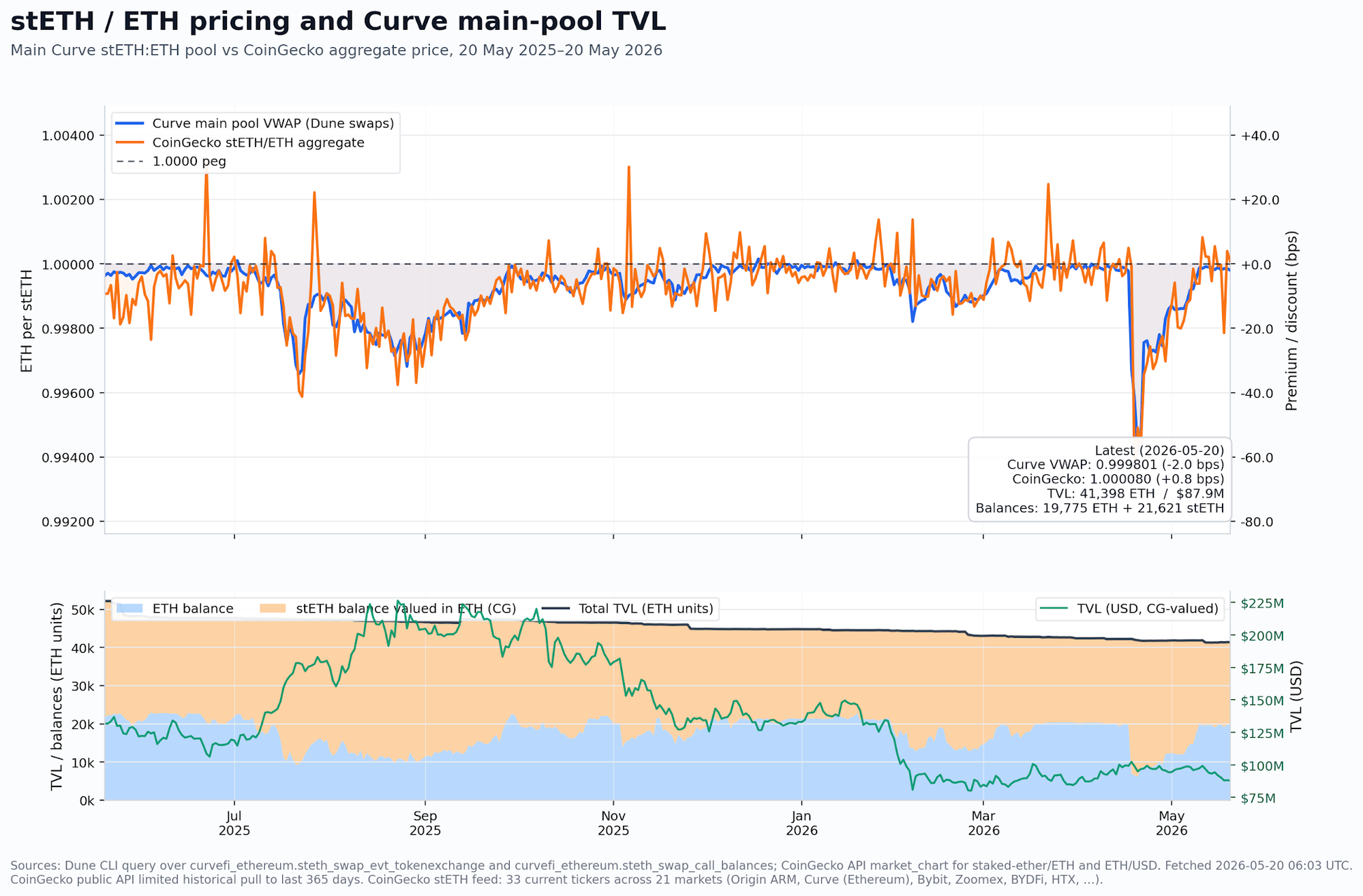
For stETH, the largest liquid staking token, the impact was indirect but palpable. As a foundational asset in many DeFi strategies, including restaking and lending, stETH saw its pricing against ETH momentarily dip. This was largely a consequence of broader market uncertainty and the deleveraging pressures across the ecosystem, rather than any intrinsic flaw within the Lido protocol or stETH itself. The period from April 18 to April 28, often referred to as the "stress window," saw stETH/ETH pricing reach its lowest point. According to data from Curve’s main pool, the daily Volume-Weighted Average Price (VWAP) for stETH briefly touched approximately 0.9941 ETH per stETH, representing a deviation of about -59 basis points (bps) from parity. CoinGecko’s aggregate stETH/ETH pricing reflected a comparable low of approximately 0.9934. This momentary divergence from its peg, while notable, was significantly less severe than the de-pegging events seen in compromised assets and swiftly began to reverse. By May 20, less than a month after the exploit, Curve VWAP had largely recovered, trading near parity at 0.99980, with CoinGecko registering 1.00008, underscoring a remarkable market correction.
Understanding the Ecosystem: stETH, rsETH, and the Rise of Restaking
To fully appreciate the implications of the KelpDAO incident, it is essential to contextualize the assets involved and the evolving landscape of Ethereum’s staking economy.
stETH (Staked ETH): Issued by Lido Finance, stETH is a liquid staking token representing staked Ether on the Ethereum beacon chain. It allows users to stake their ETH while retaining liquidity, enabling them to use their staked assets in various DeFi protocols. As Ethereum’s largest liquid staking token, stETH plays a critical role in the network’s security and the broader DeFi ecosystem, facilitating capital efficiency for staked assets. Its peg to ETH is maintained through a combination of Lido’s redemption mechanisms and deep secondary markets.
rsETH (Restaked ETH): This represents a newer generation of liquid restaking tokens. Protocols like KelpDAO build on top of liquid staking tokens like stETH or native ETH to offer "restaking" services, primarily through EigenLayer. Restaking allows users to repurpose their staked ETH to secure additional decentralized services (Actively Validated Services, or AVSs) beyond Ethereum itself, earning additional rewards. rsETH, therefore, is a derivative of already staked ETH, adding another layer of complexity and potential risk.
LayerZero and Cross-Chain Bridges: The KelpDAO exploit specifically targeted a LayerZero-based bridge path. LayerZero is an omnichain interoperability protocol designed to facilitate seamless communication and asset transfers across different blockchains. While these bridges are crucial for connecting disparate blockchain ecosystems, they also represent significant attack vectors. Cross-chain verification failures, as seen in the KelpDAO incident, highlight the inherent risks associated with transferring assets between chains, where the security of the bridged asset relies heavily on the integrity of the bridge’s smart contracts and validation mechanisms.
The distinction between the security model of a liquid staking token like stETH, which is directly tied to Ethereum’s core consensus, and a derivative liquid restaking token like rsETH, which adds layers of smart contract and bridge risk, was starkly illuminated by the KelpDAO event.
Beyond Price: The Crucial Metric of Liquidity Depth
While headline prices offer an immediate snapshot of market sentiment, liquidity depth provides a more granular and often more telling indicator of market health under stress. It measures the ease with which large trades can be executed without significantly impacting the asset’s price. For stETH, the KelpDAO incident tested this crucial metric, and the results showcased a remarkable degree of resilience.
Before the exploit, for a substantial $1 million fixed-sell wstETH quote on Ethereum mainnet, the median daily quote impact was an impressively low -0.1 basis points (bps). This indicated exceptionally efficient execution, where large trades had minimal price slippage. During the 10-day stress window following April 18, this median impact predictably rose to -5.0 bps. Furthermore, the 7-day moving average of this metric reached a trough of -15.9 bps.
These figures, while representing a real and noticeable increase in execution costs, are critical to interpret correctly. A -15.9 bps impact for a $1 million trade, while higher than normal, is still a very manageable cost for professional traders and institutional participants. Crucially, it signifies that liquidity did not vanish. The market remained functional, allowing for measurable, routable, and interpretable execution of significant orders. This prevented a catastrophic liquidity spiral, where a lack of depth could amplify price movements and trigger widespread liquidations. The ability of the market to absorb such a large external shock without collapsing liquidity for a key asset like wstETH underscores the maturity and robustness of the underlying infrastructure and market mechanisms.
Lido’s Internal Resilience and Protocol Mechanics
A key factor contributing to stETH’s resilience during this period was the inherent design and operational transparency of the Lido protocol. Unlike rsETH, which faced a direct exploit of its bridging mechanism, Lido’s core staking protocol and the integrity of stETH itself remained uncompromised.
During the stress window, Lido’s internal protocol mechanics functioned exactly as intended. The protocol continued to process staking rewards and, notably, experienced one of the largest periods of net outflows in its history without faltering. This ability to handle significant redemptions and market activity under duress is a testament to the protocol’s robust architecture and careful risk management. The market’s ability to distinguish between a failure in a specific cross-chain restaking asset path (KelpDAO’s rsETH) and the liquidity profile of stETH as Ethereum’s largest liquid staking token was paramount. Participants understood that the vulnerability lay in the derivative layer, not in the foundational liquid staking asset. This clarity helped prevent a full-blown panic and facilitated the eventual recovery of stETH pricing.
Reactions from the Ecosystem and Expert Analysis
The KelpDAO incident prompted a wave of analysis and commentary from across the DeFi ecosystem. KelpDAO, following the exploit, quickly moved to publish post-mortem analyses, detailing the cross-chain verification failure and outlining their plans for recovery and compensation. Their transparency, though born out of crisis, was a critical step in maintaining trust and providing clarity to affected users.
From Lido’s perspective, the event underscored the importance of distinguishing between core liquid staking and the emerging, more complex restaking derivatives. Sources close to Lido indicated that the incident, while regrettable for the wider ecosystem, validated the robustness of Lido’s own design and the prudence of its focus on secure, battle-tested liquid staking. Analysts across crypto research firms highlighted stETH’s performance as a benchmark for resilience. "The KelpDAO exploit was a severe test for DeFi’s interconnectedness," noted one prominent blockchain analyst. "While some derivatives struggled, the stability of core assets like stETH demonstrated that deeper liquidity and a clear, uncompromised underlying asset path are vital shock absorbers in these volatile markets."
The incident also sparked renewed discussions about the inherent risks of cross-chain bridges. "Every bridge adds a layer of trust and potential vulnerability," commented a security researcher specializing in smart contract audits. "The KelpDAO exploit is a stark reminder that while interoperability is key for growth, the security implications of complex multi-chain architectures cannot be overstated." This led to calls for enhanced auditing, more robust verification mechanisms, and potentially new standards for bridge security within the LayerZero ecosystem and beyond.
Broader Implications for DeFi Security and Cross-Chain Interoperability
The KelpDAO rsETH exploit serves as a powerful case study with far-reaching implications for the future of decentralized finance and cross-chain interoperability.
Enhanced Scrutiny on Derivative Layers: The incident highlighted the need for rigorous scrutiny of protocols that build complex financial primitives on top of foundational liquid staking tokens. While restaking offers innovative avenues for yield generation, it also introduces new layers of smart contract risk and potential points of failure that must be thoroughly understood and mitigated.
The Enduring Challenge of Bridge Security: Cross-chain bridges remain one of the most significant security challenges in DeFi. The KelpDAO exploit, much like previous high-profile bridge hacks, underscores the difficulty in securing these critical pieces of infrastructure. The industry will likely see continued innovation in bridge designs, with a greater emphasis on decentralized validation, multiple attestation layers, and potentially novel cryptographic solutions to enhance security.
Validation of Foundational Assets: Conversely, the event reinforced the value proposition of foundational liquid staking tokens like stETH. Their deep liquidity, extensive ecosystem integration, and direct link to the security of the underlying blockchain (Ethereum) make them comparatively more resilient to external shocks that target derivative layers or specific application vulnerabilities. This distinction will likely influence investor behavior, potentially leading to a flight to quality during periods of market stress.
The Takeaway: Resilience Where it Matters
The KelpDAO incident in April 2026 provided an invaluable real-world stress test for the Ethereum liquid staking ecosystem. It unequivocally demonstrated why liquidity and asset integrity must be evaluated not just under normal market conditions, but, crucially, when the system is under extreme pressure. For stETH, the event showcased that a combination of deep secondary markets, transparent on-chain pricing, and broad ecosystem integration can effectively absorb a severe external shock without compromising the core staking asset. While pricing moved and execution costs rose, the market for stETH remained remarkably functional.
This outcome is a testament to years of diligent liquidity building around stETH as a foundational Ethereum asset. It underscores a core advantage for users, integrators, and protocols that rely on staking collateral to be not only useful in quiet markets but also robust and reliable when markets are under duress. The incident, while a setback for specific protocols, ultimately reinforced the critical importance of secure, well-audited foundational assets and the necessity of distinguishing between intrinsic asset risk and the risks associated with derivative layers and cross-chain infrastructure. As DeFi continues to evolve, the lessons learned from the KelpDAO exploit will undoubtedly shape future development, security practices, and risk assessment methodologies across the entire decentralized finance landscape.
Sources and data: Dune query 5965996 / 9625248 for wstETH/ETH liquidity depth; Dune queries 5596727 and 710202 plus CoinGecko API for stETH/ETH pricing. Data pulled May 20, 2026.