James Watt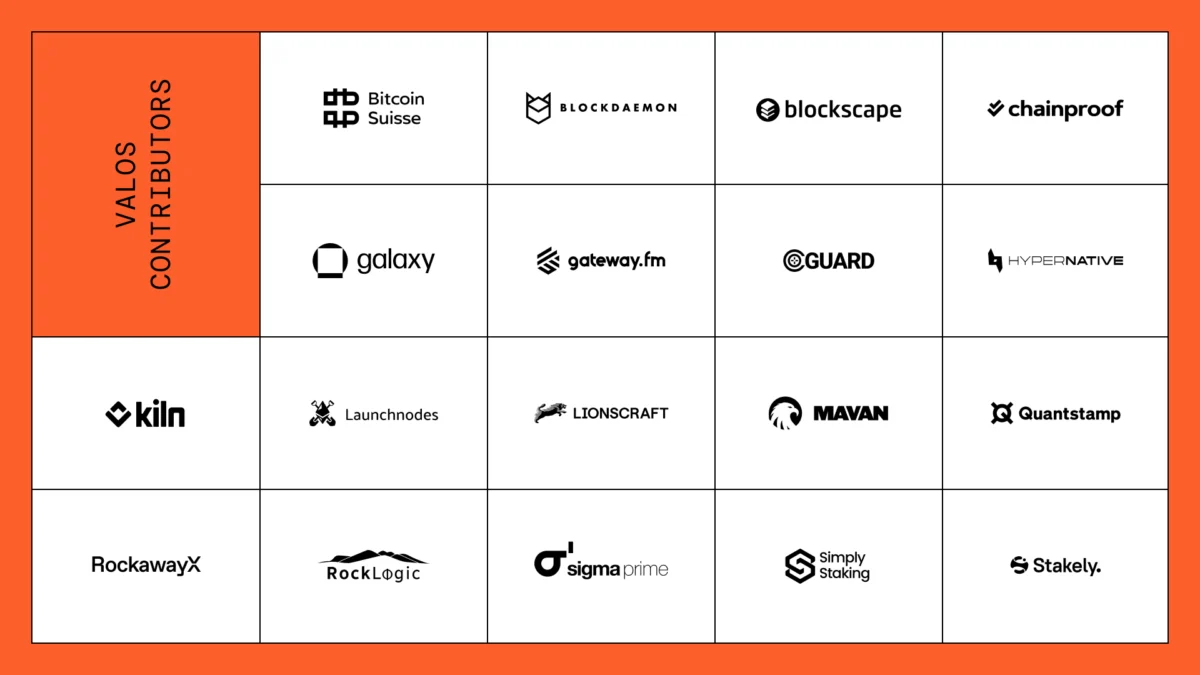
As Ethereum continues its profound evolution into a global digital infrastructure, the operational integrity of its vast and growing validator set has become an increasingly critical concern. Secure, resilient, and well-governed validator operations are not merely best practices; they are foundational to Ethereum’s decentralization, censorship resistance, and long-term network security. With staking participation soaring—currently encompassing over 30 million ETH, valued at well over $100 billion, and supported by nearly one million active validators—and the underlying infrastructure becoming increasingly professionalized, the imperative for shared, transparent operational standards has never been more pronounced. This pressing need is addressed by ValOS (Validator Operations Standard), a community-driven framework specifically designed to raise the bar for validator operations across the entire Ethereum staking ecosystem.
ValOS aims to establish best-in-class standards, empowering node operators to manage operational risk effectively, demonstrate clear accountability, and operate this critical infrastructure with unparalleled transparency and discipline. Its emergence signifies a mature step for the Ethereum ecosystem, moving beyond nascent operational practices towards a formalized, robust framework capable of underpinning a multi-trillion-dollar digital economy. To enhance its real-world applicability and ensure its long-term sustainability, the framework’s development and enablement received significant funding from Lido DAO, channeled through its LEGO (Lido Ecosystem Grants Organization) initiative, highlighting a collective commitment from major ecosystem players to strengthen Ethereum’s foundational layer.
The Imperative for Standards: Ethereum’s Evolving Landscape
Ethereum’s transition to a Proof-of-Stake (PoS) consensus mechanism with "The Merge" in September 2022 fundamentally reshaped its security model. Instead of energy-intensive mining, the network now relies on validators who stake ETH to propose and attest to blocks. This shift brought significant benefits, including vastly improved energy efficiency, enhanced security finality, and the potential for greater decentralization over time. However, it also introduced new complexities and risks associated with validator operations.
Each validator represents 32 ETH, locked to secure the network. Their continuous, correct operation is paramount. Misbehavior, such as proposing invalid blocks, or prolonged downtime can lead to "slashing," where a portion of their staked ETH is forfeited, and "inactivity leaks," where their stake slowly diminishes. These penalties are designed to incentivize good behavior but also underscore the financial and technical risks borne by node operators. The sheer volume of staked ETH and the growing number of validators—ranging from individual hobbyists to sophisticated institutional staking providers—mean that operational failures, even isolated ones, can aggregate into systemic risks if not properly managed.
The landscape is further complicated by the technical demands of running a validator. Node operators must manage complex software stacks, maintain high uptime, implement robust security measures against cyber threats, monitor network conditions, and stay updated with protocol changes. The rise of liquid staking protocols, such as Lido, which aggregate staked ETH from numerous users and distribute it across a diverse set of node operators, further amplifies the need for standardized operational excellence. These protocols are custodians of significant portions of the staked ETH, making the reliability of their underlying operators a direct reflection of the protocol’s trustworthiness and the broader network’s health.
From DUCK to ValOS: A Chronology of Collaboration
The journey towards ValOS is not an overnight development but rather an evolution built upon prior community initiatives, most notably the DUCK (Distributed Utilization of Configurations and Knowledge) initiative. DUCK emerged as an open, collaborative effort designed to equip Node Operators with practical tools and shared knowledge to mitigate real-world operational risks. Launched in late 2021 and gaining traction throughout 2022, DUCK brought together contributors from across the staking ecosystem – including independent operators, protocol developers, and professional staking services – to collectively identify common challenges and develop actionable solutions.
Chronology of Key Developments:
- Late 2021 – Early 2022: Inception of the DUCK initiative, driven by community recognition of the need for shared operational knowledge ahead of The Merge. Initial discussions focused on identifying common pain points and best practices.
- Mid-2022: DUCK contributors actively collaborate to develop foundational resources. This period saw the creation of a comprehensive Risk Framework, categorizing potential operational risks (e.g., slashing, downtime, security breaches, key management failures).
- Late 2022 – Early 2023: Development of the Mitigation & Controls Library, offering practical, step-by-step guidance on how to prevent or respond to identified risks. Concurrently, a Communications Toolkit was crafted to assist operators in transparently informing stakeholders during incidents or critical updates.
- Throughout 2023: DUCK resources gain adoption within parts of the staking community, demonstrating their utility and the demand for formalized standards.
- Late 2023: Discussions begin on how to formalize and scale the DUCK initiative, recognizing the need for a more robust organizational structure and long-term governance to ensure wider adoption and credibility. This leads to the conceptualization of ValOS.
- Early 2024: ValOS formally proposed, building directly on DUCK’s foundations but introducing a dedicated organizational and governance structure.
- Mid-2024: Lido DAO, through its LEGO program, approves significant funding for ValOS development and enablement, recognizing its strategic importance for the ecosystem.
- Late 2024: ValOS officially launches, integrating and extending the DUCK resources into a structured framework.
- Early 2025: The "D.U.C.K. Funding Launch for Audit Participants" (DUCK FLAP) grant pool is established by Lido DAO via LEGO to incentivize early adoption of ValOS assurance reviews.
The DUCK initiative’s resources, including its Risk Framework, Mitigation & Controls Library, and Communications Toolkit, provided Node Operators with actionable guidance for risk assessment, incident response planning, internal controls, and stakeholder communication. Crucially, these tools were designed for immediate use, significantly lowering the barrier for operators to adopt more rigorous operational practices. ValOS formalizes and extends this pioneering work by introducing a dedicated organizational and governance structure to support long-term adoption, credibility, and continuous improvement. This evolution is critical for transforming ValOS from a set of helpful guidelines into a durable, recognized standard that can be relied upon across the entire Ethereum staking ecosystem.
The ValOS Framework: Pillars of Operational Excellence
ValOS provides a structured and adaptable approach to validator operations, meticulously designed to help node operators identify, assess, and mitigate the multifaceted risks inherent in running Ethereum staking infrastructure. Unlike rigid, one-size-fits-all mandates, ValOS focuses on overarching principles, pragmatic controls, and transparent governance processes that can be tailored to a wide spectrum of operator setups. This flexibility ensures its applicability across diverse scales, from independent community validators managing a handful of instances to sophisticated professional staking providers overseeing thousands of validators.
The framework’s core principles emphasize security, resilience, transparency, and accountability. It encourages operators to adopt a proactive stance on risk management, moving beyond reactive problem-solving to anticipatory planning. Key areas covered by ValOS include:
- Security Controls: Best practices for key management, infrastructure hardening, network security, and protection against common attack vectors like DDoS attacks and supply chain exploits. This includes recommendations for multi-signature schemes, hardware security modules (HSMs), and secure remote access protocols.
- Operational Resilience: Strategies for ensuring high availability and minimizing downtime, such as redundant infrastructure, robust monitoring systems, automated failover mechanisms, and comprehensive disaster recovery plans. The framework addresses geographical distribution of infrastructure and diversification of client software to enhance network robustness.
- Governance and Accountability: Guidelines for internal governance, incident response procedures, clear reporting structures, and transparent communication with stakers and the broader community. This also encompasses ethical considerations, such as mitigating Maximum Extractable Value (MEV) risks and ensuring fair block production.
- Compliance and Auditing: A structured approach to demonstrating adherence to standards, preparing for potential audits, and facilitating assurance reviews. This aspect is crucial for building trust, particularly with institutional participants who require verifiable proof of operational diligence.
By offering a common language and shared expectations, ValOS fosters a more resilient and predictable validator landscape. This standardization is not merely beneficial for operators themselves, who gain clear benchmarks and reduced uncertainty; it is absolutely essential for the broader Ethereum ecosystem. The network’s security, its ability to process transactions, and its overall user trust fundamentally depend on reliable validator performance. ValOS acts as a critical enabler, helping to ensure that the foundational layer of Ethereum remains robust as the network continues to scale and integrate into global financial and technological systems.
Lido DAO’s Strategic Investment and Ecosystem Support
The backing of Lido DAO, a decentralized autonomous organization that governs the largest liquid staking protocol on Ethereum, represents a significant vote of confidence in ValOS. Lido DAO’s decision to fund the framework’s development and enablement through its LEGO program underscores its strategic commitment to the long-term health and decentralization of the Ethereum network. As a major player in the staking ecosystem, Lido directly benefits from a more secure and resilient validator set, as its own stability and reputation are intrinsically linked to the operational excellence of its node operators.
The allocation of $60,000 to the "D.U.C.K. Funding Launch for Audit Participants" (DUCK FLAP) grant pool is a tangible manifestation of this commitment. This financial incentive is specifically designed to bootstrap the initial assurance reviews for ValOS. By covering up to 50% of the assurance review costs, Lido DAO aims to lower the financial barrier for early Node Operator adopters, particularly smaller or independent operators, encouraging them to undergo formal reviews and validate their adherence to ValOS standards. This initiative is crucial for establishing initial credibility and fostering a culture of verifiable operational excellence.
"Our investment in ValOS through LEGO underscores our unwavering commitment to the health and long-term viability of the broader Ethereum ecosystem," stated a spokesperson for Lido DAO. "We believe that community-driven standards like ValOS are vital for ensuring that Ethereum’s foundational layer remains robust, secure, and decentralized as it scales to serve a global user base. By incentivizing early adoption, we aim to accelerate the establishment of a trusted baseline for validator operations." This proactive funding mechanism demonstrates a clear understanding that a shared, high-quality infrastructure benefits all participants, ultimately strengthening Ethereum’s position as the leading smart contract platform.
Towards Industry Recognition and Trust
A paramount goal of ValOS is to evolve into a recognized assurance and risk management framework for validator operations within the digital asset space. Over time, the framework is envisioned to support professional audits, independent assurance reviews, and industry-wide benchmarks for operational excellence in staking. This level of formalization is critical for several reasons, particularly as institutional capital and traditional financial entities increasingly explore participation in the Ethereum ecosystem.
For Node Operators, achieving ValOS compliance and undergoing an assurance review provides a credible and transparent way to demonstrate that risks are actively identified, managed, and regularly reviewed. This not only builds trust with their stakers but also serves as a competitive differentiator in an increasingly crowded market. It moves beyond self-attestation to a verifiable standard, akin to ISO certifications or SOC 2 reports in traditional tech.
For the broader ecosystem—including individual stakers, institutional participants, decentralized protocols, and DAOs—ValOS offers a crucial layer of confidence. It provides assurance that validator infrastructure, which underpins their investments and applications, is being operated in line with well-defined, community-vetted standards. This transparency is key to mitigating counterparty risk and fostering a more stable and predictable environment for all.
Industry analysts widely agree on the importance of such frameworks. "The maturation of decentralized networks hinges on the development of robust operational standards," commented a blockchain research analyst from a prominent firm. "ValOS represents a vital step in bridging the gap between the innovative, permissionless nature of Web3 and the stringent requirements of institutional adoption. Standardized audits built on ValOS could significantly de-risk institutional engagement with staking, unlocking substantial capital flow into the ecosystem."
By aligning best practices across diverse operators, ValOS aims to significantly reduce systemic risk, thereby improving overall network resilience. This objective is particularly important as Ethereum’s staking layer continues its rapid scaling, attracting an increasingly diverse array of participants, each with varying levels of technical expertise and risk tolerance. The ability to point to a universally accepted standard will be instrumental in fostering sustained growth and stability.
Implications for Decentralization and Institutional Adoption
The long-term implications of ValOS extend far beyond operational efficiency. By standardizing best practices, ValOS has the potential to subtly but profoundly influence the decentralization trajectory of Ethereum. While some might argue that professionalization inherently leads to centralization, ValOS aims to democratize access to high-quality operational knowledge. By providing clear, actionable guidelines, it empowers smaller, independent operators to achieve levels of security and resilience previously only attainable by larger, well-resourced entities. This could help diversify the validator set, preventing an undue concentration of power among a few large staking providers.
Furthermore, ValOS is a critical enabler for greater institutional adoption of Ethereum staking. Traditional financial institutions, corporate treasuries, and large asset managers operate under strict regulatory and internal compliance frameworks. The absence of recognized, auditable standards for validator operations has historically been a significant barrier to their participation. ValOS offers a pathway to address this. An independent assurance review against ValOS criteria could become a prerequisite for institutional engagement, providing the necessary audit trails and risk management assurances that these entities demand. This could unlock a new wave of capital and participation, further deepening Ethereum’s liquidity and strengthening its economic security.
The framework also implicitly prepares the ecosystem for potential future regulatory environments. As jurisdictions around the world grapple with how to regulate digital assets, self-governing, community-driven standards like ValOS can demonstrate a proactive commitment to responsible operation. This could potentially inform or even influence the development of future regulatory guidelines, positioning the Ethereum community as a leader in establishing best practices rather than being merely reactive to external mandates.
Challenges and the Path Forward
Despite its ambitious goals and strong community backing, ValOS will face challenges. Widespread adoption will require ongoing education and outreach to the diverse validator community. Operators, particularly smaller ones, may be hesitant to invest time and resources into formal reviews without clear immediate benefits. The continuous evolution of Ethereum’s protocol and the broader threat landscape will also necessitate regular updates and refinements to the ValOS framework itself, requiring sustained community engagement and governance.
However, the foundational work of DUCK, coupled with Lido DAO’s strategic funding, provides a strong impetus. The DUCK FLAP grant pool is a smart move to overcome initial adoption hurdles. The community-driven nature of ValOS also fosters a sense of ownership and collective responsibility, which is crucial for its long-term success.
Supporting Ethereum’s Long-Term Stability
Ethereum’s security model fundamentally relies on the collective performance and unwavering reliability of its validators. Strengthening operational standards through initiatives like ValOS is therefore a core, non-negotiable component of preserving Ethereum’s decentralization, censorship resistance, and overall stability for decades to come.
ValOS is poised to play an indispensable role in supporting Ethereum’s long-term health by encouraging higher standards, fostering better risk management practices, and cultivating greater transparency across the entire validator ecosystem. By promoting shared accountability and operational excellence, ValOS ensures that Ethereum’s staking infrastructure can continue to support the network’s explosive growth in a secure, resilient, and sustainable manner, safeguarding its status as the world’s premier decentralized application platform.
To delve deeper into the framework and explore how to get involved, further information on ValOS is available at www.valos.global.