
 Lina Irawan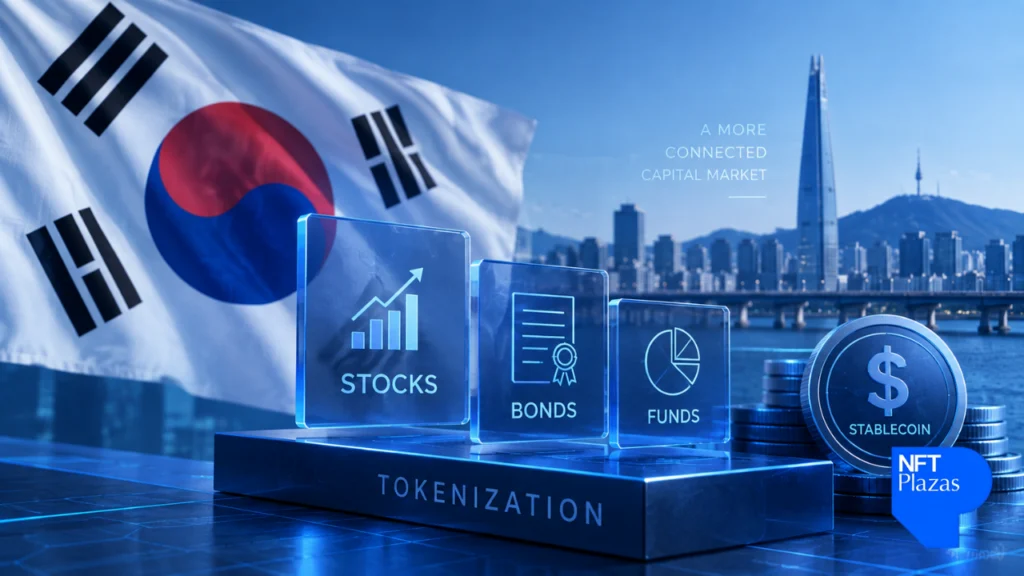
South Korea is poised to revolutionize its financial markets by systematically migrating traditional securities onto blockchain infrastructure. The nation’s top financial regulator, the Financial Services Commission (FSC), has officially unveiled a comprehensive three-phase roadmap, a strategic initiative designed to seamlessly connect tokenized stocks, bonds, and funds with stablecoin-based payment systems. This groundbreaking plan, announced on September 4th following extensive public-private consultations on securities tokenization, marks a significant departure from current practices and signals a bold leap into the digital future of finance.
The initial phase of this transformative endeavor is slated to commence on February 4, 2027. This pivotal date is contingent upon the anticipated effective date of amendments to the Act on Electronic Registration of Stocks and Bonds, which will formally recognize tokenized securities as legitimate digital representations of traditional financial instruments. This legal recalibration is the cornerstone upon which the entire roadmap is built, providing the necessary regulatory clarity and framework for the burgeoning digital asset landscape within the established financial system.
This initiative transcends the scope of South Korea’s existing security token offerings (STOs), which have predominantly concentrated on fractional investment products, catering to a specific segment of the market. The FSC’s vision is far more expansive, aiming to construct a robust infrastructure capable of supporting the tokenized issuance, trading, and circulation of a broad spectrum of conventional securities, including publicly traded stocks, government and corporate bonds, and diverse investment funds. This move signals a strategic intent to democratize access to a wider array of investment opportunities while simultaneously modernizing the operational efficiencies of the financial sector.
Seoul Sets a Strategic Three-Phase Roadmap for Digital Transformation
The meticulously crafted roadmap is divided into three distinct phases, each designed to build upon the successes and lessons learned from the preceding stage. This phased approach underscores a commitment to responsible innovation, allowing for careful testing and adaptation before full-scale implementation.
Phase One: Laying the Foundation (Commencing February 2027)
The inaugural phase, commencing in February 2027, will focus on a carefully selected, limited group of assets. These initial offerings will include privately pooled money market funds, bonds specifically designated for institutional investors, unlisted stocks held through sophisticated trust structures, and publicly offered fractional investment securities that have already seen some traction. This strategic selection is deliberate, aimed at establishing the essential legal, technical, and operational foundations for tokenized securities. By commencing with a more controlled environment, regulators and market participants can meticulously test the system’s integrity, identify potential vulnerabilities, and refine processes before opening the gates to a wider array of assets. This foundational stage is crucial for building confidence and ensuring a smooth transition for all stakeholders.
Phase Two: Broadening the Scope
Following the successful implementation and evaluation of Phase One, Phase Two will mark a significant expansion, bringing tokenization to all publicly offered securities. This will represent a profound shift, effectively integrating blockchain-based infrastructure into the mainstream securities markets. The aim is to move beyond niche investment products and enable the tokenized issuance and trading of common stocks and bonds that are accessible to the broader investing public. This phase signifies the true mainstreaming of tokenized securities, where the benefits of blockchain technology, such as increased transparency, reduced settlement times, and enhanced accessibility, can be realized on a much larger scale. The precise timeline for Phase Two is yet to be determined and will be contingent on the outcomes of the initial tokenization program, the pace of technological adoption by financial institutions, and the progress of related legislative initiatives.
Phase Three: The Payment Layer Integration
The ultimate objective of this ambitious roadmap is encapsulated in Phase Three, which targets the integration of an on-chain payment infrastructure. Regulators envision a system where tokenized securities and their associated payments can be seamlessly transacted through connected digital systems, leveraging stablecoins as a primary medium of exchange. This would create a fully integrated ecosystem where the issuance, trading, clearing, and settlement of securities occur on a blockchain, directly linked to a stablecoin-based payment rail. This vision promises to dramatically reduce friction in financial transactions, automate significant portions of the settlement process, and forge more direct and efficient links between asset ownership and payment finality. Similar to Phase Two, the timeline for Phase Three is fluid and will be influenced by the successful progression of earlier phases and the development of a comprehensive regulatory framework for stablecoins, which is currently under legislative consideration.
New Regulations for Investors and Issuers: Balancing Innovation with Protection
Alongside the roadmap, the FSC has also introduced new model standards specifically for fractional investment, aiming to foster a balanced and secure environment for both investors and financial institutions. These regulations are designed to promote wider participation while mitigating potential risks associated with the nascent tokenized markets.

Investor Protection Measures:
Individual investors will face certain subscription limits to prevent excessive risk exposure. Subscriptions for fractional investment products will be capped at the lower of 30 million South Korean won (approximately $22,000 USD) or 5% of an offering’s total issuance. Furthermore, retail investors will encounter annual net purchase limits on tokenized securities traded over-the-counter, with a cap set at 100 million South Korean won (approximately $74,000 USD) per exchange. These measures reflect a prudent approach to safeguarding retail investors as the tokenized market evolves, ensuring that access is expanded without leading to unchecked speculative behavior.
Requirements for Financial Firms:
Financial firms that intend to participate in the tokenized securities market will be subject to stringent capital and technology requirements. Entities managing tokenized securities accounts will be mandated to possess a minimum equity capital of 4 billion South Korean won (approximately $2.9 million USD). Additionally, these firms will need to demonstrate the capacity to manage these accounts effectively, with dedicated personnel responsible for account management, robust internal controls, and advanced IT security protocols to protect against cyber threats.
The Korea Securities Depository (KSD) is actively developing the technical specifications that securities firms must meet to connect to the shared infrastructure. Concurrently, the FSC plans to propose revisions to subordinate rules under the Financial Services and Electronic Registration Acts by the end of September, further solidifying the regulatory framework. These preparations underscore the government’s commitment to a well-regulated and secure digital asset ecosystem.
Strategic Rationale: Why South Korea is Moving Now
The timing of South Korea’s ambitious blockchain roadmap is not coincidental. It aligns with a global trend of increasing integration of blockchain technology into conventional financial markets. South Korea, known for its vibrant retail investment culture and a substantial base of cryptocurrency users, is strategically positioning itself at the forefront of this evolution. Its regulators have adopted a proactive stance, focusing on creating clear rules and frameworks to bring digital assets and blockchain-based financial products into the regulated financial system, rather than allowing them to develop in unregulated gray areas.
This approach resonates with a broader movement across Asia towards embracing blockchain-based financial infrastructure. Japan, for instance, is actively exploring a blockchain settlement system for stocks and government bonds. Financial hubs like Singapore are diligently developing comprehensive regulatory frameworks for stablecoins. South Korea’s plan, however, stands out for its integrated vision, connecting the dots between tokenized securities and stablecoins. By considering an infrastructure where securities issuance, trading, and settlement can be digitally interconnected, South Korea aims to achieve a level of efficiency and automation previously unimaginable. This could lead to significant reductions in settlement times, streamlined transaction processing, and a more direct nexus between asset ownership and payment finality.
The Biggest Test Will Be the Infrastructure: Navigating the Challenges Ahead
While the prospect of moving securities onto blockchain technology is exciting, it is crucial to acknowledge that efficiency is not an automatic outcome. The implementation of blockchain technology introduces its own set of challenges that must be carefully addressed. These include robust cybersecurity measures to protect against sophisticated attacks, the mitigation of smart-contract vulnerabilities that could lead to unforeseen financial losses, effective liquidity management within a decentralized framework, and the complex regulatory questions that arise when tokenized assets and transactions cross international borders.
The phased structure of South Korea’s roadmap is therefore a significant strategic advantage. By commencing with a more limited group of securities rather than immediately attempting to tokenize the entire stock and bond market, regulators are creating an environment conducive to learning and adaptation. The first phase will serve as a critical testbed, evaluating the ability of financial institutions to integrate distributed ledger infrastructure into their existing market operations without compromising investor protection or overall financial stability. The success of this initial phase will be paramount in building confidence and demonstrating the viability of the technology.
Should the system perform as intended during Phase One, the subsequent phases will carry far greater implications. Tokenization will transition from a specialized application for fractional investments to a foundational architecture for a wide array of conventional securities. South Korea’s ultimate aspiration is the creation of a digital capital market, a sophisticated ecosystem where tokenized stocks, bonds, and funds can be seamlessly settled through a blockchain-based payment infrastructure interconnected with stablecoins.
For the time being, February 2027 represents a key milestone, a tangible marker of progress on this transformative journey. However, the comprehensive roadmap signals a definitive shift in Seoul’s approach. Security tokens are no longer being viewed as a peripheral experiment but are being positioned as a potential cornerstone for the next generation of South Korea’s regulated capital markets. This strategic move, if successful, could set a precedent for other nations looking to harness the power of blockchain technology to modernize their financial systems. The coming years will undoubtedly be a period of intense innovation, careful regulation, and significant transformation for the South Korean financial landscape.









