Lina Irawan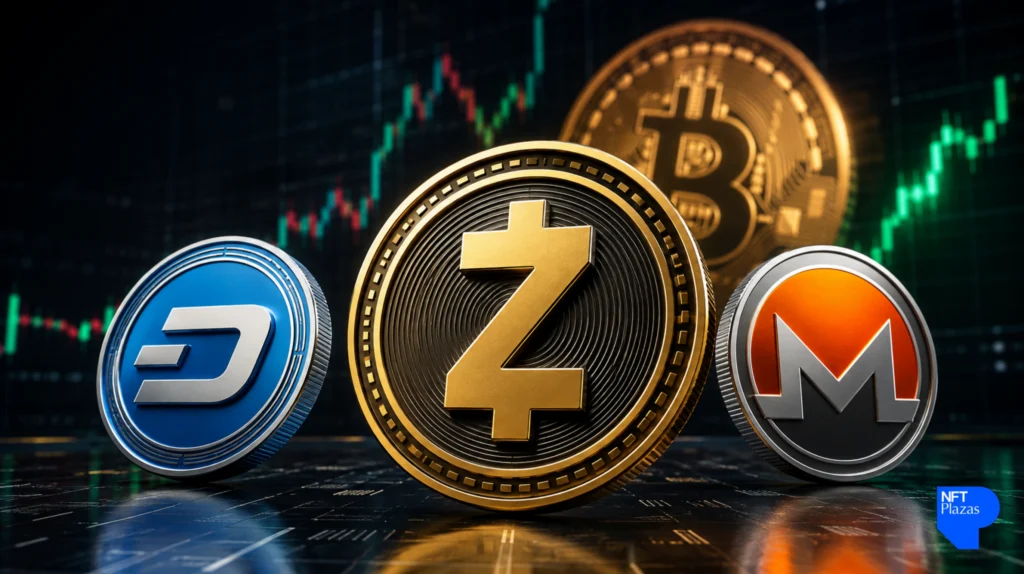
On September 5, 2026, while Bitcoin briefly touched the $81,000 threshold, the cryptocurrency market witnessed a more significant breakout from its privacy-focused altcoins. Zcash maintained a strong position around the $1,000 mark, Dash experienced a remarkable surge of over 40% in a single 24-hour period, and Monero demonstrated a weekly performance that outpaced Bitcoin. This collective upward movement signals a discernible shift in capital flows, with investors increasingly prioritizing tokens designed for enhanced transaction privacy. The prominent resurgence of privacy coins, spearheaded by Zcash’s enhanced accessibility through a new exchange-traded product, positions this niche sector as the vanguard of the crypto market’s latest recovery phase.
The catalyst for this privacy coin rally appears to be multifaceted, with the introduction of Grayscale’s Zcash Investment Trust (ZCSH) on the NYSE Arca exchange serving as a pivotal development. This listing provides a novel and more regulated entry point for traditional investors to gain exposure to Zcash, bypassing the complexities of direct cryptocurrency acquisition and self-custody. The subsequent positive price action in Zcash (ZEC) has seemingly created a ripple effect, positively impacting other privacy-centric cryptocurrencies such as Dash (DASH) and Monero (XMR), solidifying their collective ascent within the broader digital asset landscape.
Zcash Takes Center Stage in Market Rebound
Zcash was trading at approximately $1,025 on September 5, holding its ground near the psychologically significant $1,000 level after a robust week of gains. Data from CoinGecko indicated that ZEC had appreciated by roughly 9.5% in the preceding 24 hours and a substantial 28.1% over the seven-day period. This performance significantly dwarfed Bitcoin’s more modest 2.7% gain over the same timeframe, highlighting Zcash’s exceptional momentum.
The rally propelled Zcash’s market capitalization to an estimated $17.3 billion, accompanied by a 24-hour trading volume nearing $1.3 billion. Over the preceding 30-day period, ZEC had seen an impressive gain of around 102.8%. Looking at the longer term, its one-year performance exceeded an astounding 2,400%, positioning Zcash as one of the most outstanding performers within the privacy coin sector during the current market recovery. This remarkable growth underscores a renewed investor confidence in Zcash’s underlying technology and its potential as a privacy-preserving digital asset.
The visual representation of Zcash’s price trajectory over a four-hour period (as depicted in accompanying charts) illustrates a sharp upward trend, with consistent buying pressure supporting its ascent. Technical indicators, though not explicitly detailed in the provided data, likely reflect strong bullish sentiment that has enabled the token to break through key resistance levels. The significant increase in market cap and trading volume further substantiates the narrative of strong investor interest and capital allocation into ZEC.

ETF Inflows Provide Crucial Catalyst for Zcash’s Ascent
Zcash’s upward momentum received a significant boost following the listing of the ZCSH product on the NYSE Arca by Grayscale in late August 2026. Official filings with the U.S. Securities and Exchange Commission (SEC) confirmed that the Grayscale Zcash Trust underwent a renaming to The Zcash ETF and commenced trading under the ticker symbol ZCSH on August 25, 2026. This strategic rebranding and listing on a major traditional exchange mark a critical milestone for Zcash and the broader privacy coin sector.
The ZCSH ETF provides an innovative pathway for investors to gain exposure to Zcash through conventional brokerage accounts, effectively eliminating the need for them to navigate the complexities of acquiring digital assets directly on cryptocurrency exchanges or managing private keys for self-custody. For privacy coins, an asset class that historically grapples with listing challenges and regulatory scrutiny, the presence of a regulated product trading on a platform like NYSE Arca is a substantial development. It lends legitimacy and accessibility, thereby differentiating Zcash within its peer group and potentially attracting a wider investor base.
As of September 3, 2026, the ZCSH ETF held approximately $414.7 million in assets under management, representing around 428,613 units of Zcash. Since its inception, the ETF has recorded net inflows totaling at least $34.4 million. Notably, September 2 marked the product’s strongest single-day inflow, with approximately $12.6 million pouring in. These figures indicate robust demand from traditional investors seeking exposure to Zcash, validating Grayscale’s strategic move and contributing significantly to ZEC’s price appreciation. The consistent inflows suggest sustained interest and a growing conviction in Zcash’s long-term value proposition among a new cohort of investors.
Short Squeeze Amplifies Zcash’s Upward Trajectory
The upward price movement of Zcash was further amplified by leveraged trading dynamics, particularly after the token successfully breached the $1,000 resistance level. Recent liquidation data revealed that within a 24-hour period, approximately $31.45 million worth of ZEC positions were liquidated. Crucially, a substantial portion of this, amounting to $26.46 million, originated from short positions.
This overwhelming ratio of liquidated short positions indicates that the rapid price surge placed immense pressure on traders who had bet on a decline in ZEC’s value. As these leveraged short positions were automatically closed to mitigate losses, additional buying pressure entered the market, effectively accelerating the upward price trend and making Zcash’s rally even more pronounced. This phenomenon, often referred to as a short squeeze, can lead to rapid and significant price increases as forced buying activity cascades through the market.
The accompanying chart illustrating Zcash liquidations over a 24-hour period visually confirms the dominance of short liquidations, underscoring the impact of this dynamic on the token’s price action. The substantial volume of forced buying generated by these liquidations played a critical role in ZEC’s ascent beyond key psychological and technical barriers, reinforcing the bullish sentiment.

Contagion Effect Spreads to Other Privacy Coins
The momentum generated by Zcash’s surge began to permeate other privacy-focused cryptocurrencies, demonstrating a sector-wide positive correlation. Dash experienced a significant uptick, trading around $65.88. This represented a remarkable increase of approximately 44.6% in just 24 hours and an impressive surge of over 70% within the past seven days. The 24-hour trading volume for Dash approximated $535 million, indicating heightened investor activity.
Monero, while exhibiting more moderate gains compared to Zcash and Dash, also participated in the broader privacy sector’s recovery. XMR was trading around $530.92, marking a 4.7% increase in the last 24 hours and a 13.2% rise over the week. While these figures are less dramatic than those of ZEC and DASH, they still indicate that Monero is moving in tandem with the positive sentiment surrounding privacy coins.
This divergence in performance, where privacy coins are outperforming larger, more established assets like Bitcoin, highlights a specific investor preference for assets offering enhanced confidentiality. However, the sharp gains experienced by this sector also introduce a degree of vulnerability. Should market sentiment shift or profit-taking commence, the rapid ascent could lead to increased volatility, potentially reversing some of the recent gains. The concentrated nature of this rally within privacy tokens suggests that investors are actively seeking out these specific characteristics, but it also means that a downturn in this niche could be more pronounced.
Bitcoin Sets the Broader Market Context Amidst Lingering Risks
Bitcoin continues to serve as the foundational asset and a general indicator for the broader cryptocurrency market’s recovery. However, its recent performance has been considerably overshadowed by the explosive gains seen in privacy coins. Bitcoin briefly surpassed the $81,000 mark before settling back to around $79,600. Its 24-hour trading range was recorded between $78,706 and $81,379. The $80,000 to $81,000 zone is now a critical area to monitor, as its ability to hold this level will be indicative of whether the current risk-on sentiment can extend to larger-cap digital assets.
Despite the current positive market trends, significant risks persist, particularly concerning the inherent characteristics of privacy coins. This asset class is notoriously volatile and highly susceptible to regulatory interventions. Concerns surrounding anti-money laundering (AML) compliance and potential illicit use have historically led to regulatory crackdowns. In various jurisdictions, cryptocurrency exchanges have previously restricted or delisted privacy tokens due to these concerns. Consequently, capital inflows into the privacy coin sector can be subject to abrupt reversals, often occurring at a faster pace than with major cryptocurrencies like Bitcoin or Ethereum.
The short-term sustainability of the privacy coin rally hinges on several factors. Firstly, the continued demand for the ZCSH ETF will be a crucial indicator of sustained institutional interest. Secondly, Zcash’s ability to maintain its footing above the $1,000 support level, following the initial wave of forced buying from the short squeeze, will be vital. If this buying pressure wanes, the sector that has led the current rally could also face the most significant profit-taking pressure. Investors are closely watching for signs of consolidation or potential pullbacks, as the rapid nature of this ascent could set the stage for a sharp correction if underlying fundamentals do not support the current valuations. The interplay between enhanced accessibility, regulatory scrutiny, and inherent privacy features will continue to shape the narrative for this burgeoning sector of the cryptocurrency market.