
 admin
admin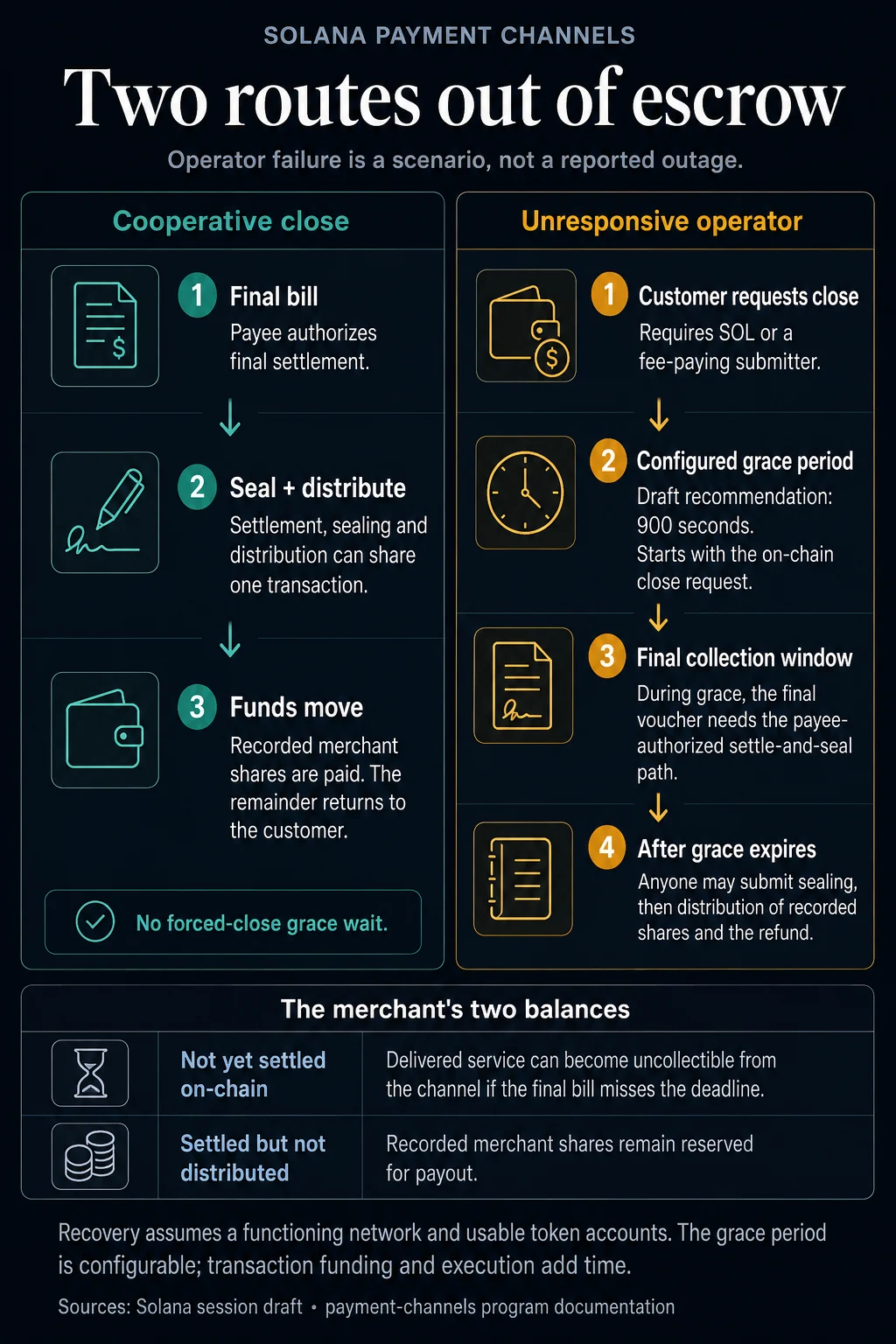
The advent of high-throughput payment channels on the Solana blockchain promises to revolutionize how services, particularly those leveraging AI, are consumed and paid for. However, this innovative approach introduces a sophisticated interplay of risk management for customers, merchants, and operators, particularly when unexpected disruptions occur. At its core, the system allows customers to pre-fund a payment channel, enabling them to consume AI services and other digital goods against this deposit. This design bypasses the need for individual blockchain transactions for every micro-payment, drastically reducing fees and latency. Yet, it necessitates robust mechanisms for fund recovery and final settlement when the operational flow is interrupted.
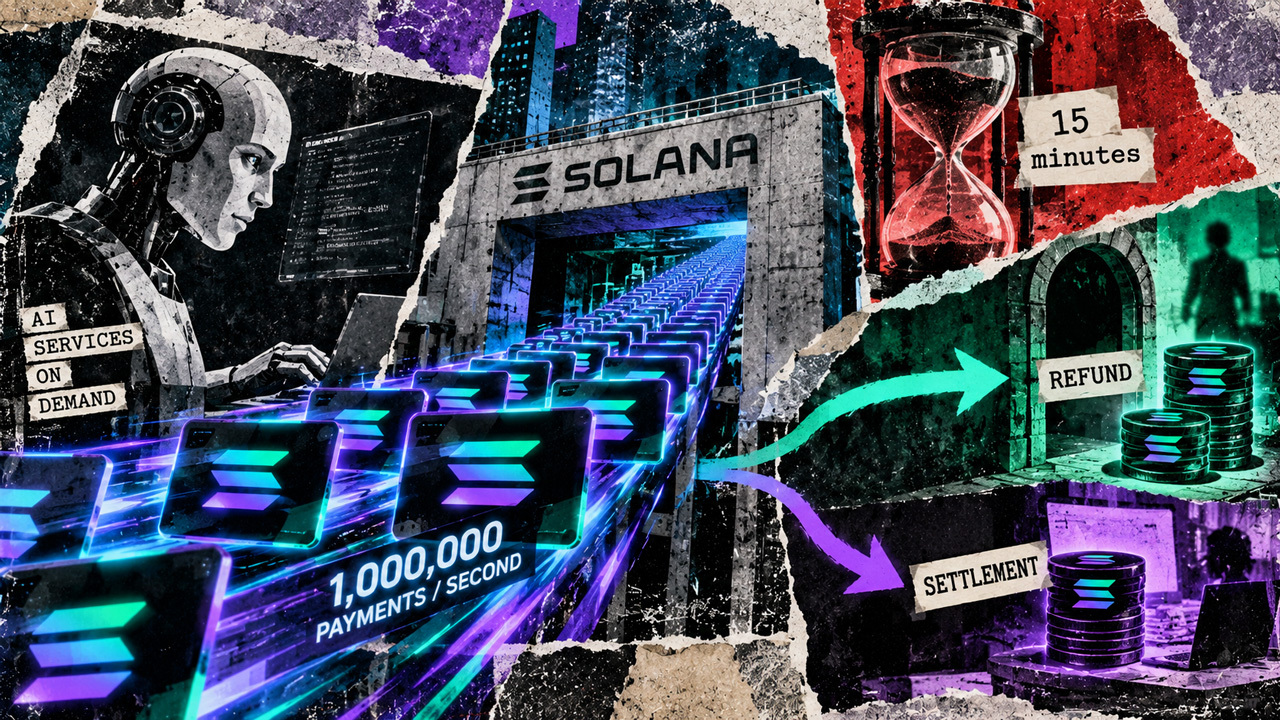
The recent announcement from the Solana Foundation regarding its payment channels, which reportedly processed over one million payments per second through a proxy utilizing 100,000 unique wallets, highlights the technical prowess of this solution. This benchmark, achieved on a sophisticated hardware setup, signifies a significant leap in blockchain transaction capacity. However, the underlying mechanics reveal a delicate balance of responsibilities and potential vulnerabilities. Customers deposit funds, merchants provide services, and an operator facilitates the payment process. Each party finances a distinct phase of the transaction lifecycle: the customer’s upfront deposit, the operator’s temporary advancement of SOL for network fees and account rent, and the merchant’s service provision awaiting on-chain finalization. The efficiency gains are substantial, but the consequences of an operator going offline or a system restart can be profound, impacting the recoverability of funds and the finality of transactions.
Understanding the Payment Channel Mechanism
At the heart of Solana’s payment channels is the concept of a pre-funded escrow account. A customer initiates the process by depositing a predetermined ceiling amount into an on-chain program. This program acts as the ledger, meticulously tracking spending authorizations against the deposited funds. When the customer decides to cease service consumption or when the channel naturally concludes, the remaining balance, after accounting for settled payments, can be returned to the customer.
The ideal scenario involves cooperative closure. In this instance, both the customer and the merchant agree to finalize the channel. The designated payee, whose signature validates the closure, can then submit a single on-chain transaction. This transaction serves two critical functions: it "seals" the channel, freezing the total amount that has been legitimately settled, and it then distributes the funds accordingly, transferring the settled merchant’s share and returning the remaining balance to the customer. This cooperative approach offers the most efficient and seamless resolution, avoiding any prolonged waiting periods for final settlement or refunds.
Navigating the Risks of Disruption
The complexities arise when the operational flow is disrupted. A primary concern is the scenario where the operator, responsible for managing the payment process and potentially advancing network fees, becomes unresponsive. This could be due to technical failures, server downtime, or other unforeseen issues. In such events, the customer needs a clear and secure pathway to reclaim any unspent portion of their deposit. Simultaneously, the merchant requires assurance that their earned revenue, representing services already rendered and recorded, reaches the blockchain before the recovery window closes.
A significant warning embedded within the benchmark template for these payment channels underscores the critical nature of the interval between authorization and collection. If the system’s in-memory store is restarted without proper persistence mechanisms, any vouchers that were accepted but not yet settled on the blockchain could be forfeited. This underscores the paramount importance of "durable session storage," which the benchmark template explicitly states needs separate benchmarking, as its write operations become integral to the request path.
The benchmark itself, reporting approximately 1.09 million verified vouchers per second on a high-performance host, measures the speed at which a payment gateway can respond to requests without necessarily confirming each transaction on the mainnet or completing an AI service. While impressive, this figure does not encapsulate the full picture of a deployed system’s performance, particularly concerning the robustness of its recovery mechanisms and the merchant’s ability to collect payment under adverse conditions.
The Two Paths to Fund Recovery
Solana’s payment channel framework outlines two primary routes for fund recovery in the event of a disruption. The first is the cooperative settlement, as described earlier, where both parties agree to close the channel. The second, and more critical for scenarios involving unresponsive operators, is the "forced close."
When a customer perceives a stalled service or an unresponsive operator, they can initiate a forced close request. This action, once recorded on the blockchain, triggers a configurable "grace period." The default recommended grace period is 900 seconds, or 15 minutes. It is crucial to note that this timer begins when the request is registered on-chain, not necessarily when the customer first experiences a service interruption.
Challenges for the Unresponsive Operator Scenario
The forced close mechanism introduces several layers of complexity, particularly for customers who may not possess native SOL tokens. If the operator is responsible for paying network fees and account rent, and they become unavailable, a customer without SOL might find themselves unable to initiate the forced close or facilitate the subsequent recovery transactions. In such cases, the customer would need to acquire SOL or find a third-party "submitter" willing to pay the transaction fees. The concept of "permissionless recovery" allows for other parties to step in, but this still hinges on the availability and willingness of a submitter to bear the transaction costs.
Once the grace period expires, anyone can submit the final sealing instruction for the channel. Following this, the customer can withdraw their remaining deposit, less any amounts that were successfully recorded as settled on-chain. Alternatively, any party can submit a distribution transaction. This transaction, utilizing the payout split agreed upon in the initial channel opening, would distribute the recorded merchant shares and the pending customer refund.
These recovery paths, while designed to be robust, are not without their own limitations. They presuppose a functioning blockchain network and accessible token accounts. The program documentation includes a warning that if an escrow account is "issuer-frozen," it can impede transfers. Furthermore, a distribution transaction might redirect a beneficiary’s or refund account’s share to the treasury if those accounts become unusable. These are independent constraints on recovery, even when an operator’s signature is not required for the final settlement.
For the customer, the practical delay in recovering funds involves not only the configured grace period timer but also the time taken to arrange and submit the necessary on-chain transactions. The financial burden also shifts, depending on who ultimately executes these transactions. The 15-minute grace period is a protocol-level wait time, distinct from the per-authorization cost measured in the benchmark tests.
The Merchant’s Narrowing Collection Window
The merchant’s ability to collect payment is intrinsically linked to the status of their outstanding bills. The system distinguishes between an off-chain voucher (a record of service provision), an amount recorded as settled on-chain, and tokens that have already been distributed.
The current settlement implementation allows any party to present a valid voucher for settlement as long as the channel remains open. However, once the payer (customer) initiates a close request, this standard settlement instruction is no longer accepted. During the grace period following a forced close, the final settlement must be executed through the payee-authorized "settle-and-seal" path, as detailed in the state-machine rules.
During this grace period, the merchant has a critical window of opportunity to record their final bill. While a third party might be able to pay transaction fees to submit a transaction, they cannot necessarily substitute for the missing payee’s signature, which is essential for the authorized settlement path. Holding a copy of a voucher is only beneficial if that voucher can still be utilized within the defined deadline through the authorized settlement process.
If the delivered service, representing unfinalized on-chain settlements, does not reach the final settlement total before the deadline, it can become uncollectible from that specific channel. Once the channel is sealed, the customer’s refund is calculated based on the recorded on-chain total, not on any subsequent attempt by an operator to reconstruct what might have been billed.
Conversely, merchant funds that have already been settled on-chain are treated differently. These amounts remain earmarked for distribution after the channel is sealed, provided the necessary token accounts are functional. The customer’s refund does not encompass these already-settled merchant shares. Therefore, operator failure does not automatically equate to the disappearance of all unpaid merchant balances.
A missing payout transaction, for instance, can still be completed through a permissionless distribution mechanism after the channel is sealed, assuming usable accounts and a funded transaction. However, rectifying a missing final on-chain settlement is more challenging. After a forced close is initiated, adding such a settlement requires a valid voucher and the payee-authorized path to be successfully utilized before the grace period expires.
The framework also accommodates different signing arrangements. In "client mode," the customer holds the key to sign vouchers, which is the default if not specified otherwise. In "operator mode," the customer provides a reusable bearer proof, and the operator signs the spending vouchers. The escrow ceiling invariably bounds settlement in either mode. The choice of signing arrangement dictates who generates the payment authorization. Importantly, the publicly available documentation does not mandate a single, universally applied grace period or signing mode for all channels operating on Alibaba Cloud or pay.sh. Consequently, the exposure of both customers and merchants is contingent upon the specific terms and configurations of their individual payment channels.
The Operator’s Financing Costs and System Economics
Beyond the customer and merchant considerations, operators also incur distinct financing costs. The instruction reference for the payment channels indicates that the refundable SOL rent for a drained channel account can remain committed until a 1,500-slot opening window has passed. This timer is specifically related to account deallocation and does not impede customer token refunds or merchant token payouts, which proceed independently.
For operators, the need for durable voucher records and timely settlement addresses different operational imperatives. Durable records are crucial for preserving the integrity of billing information, while timely settlement ensures that this information is recognized on-chain. Subsequent distribution completes the payment cycle. Increasing the frequency of settlements can reduce the value of services that are pending on-chain recording. Conversely, earlier distribution minimizes the duration for which recorded proceeds remain in escrow.
From the customer’s perspective, smaller committed balances reduce the capital tied up in a session. However, the ability to exit the channel and reclaim funds remains dependent on the channel’s configured timer and their access to a funded transaction submitter. Meanwhile, the merchant’s primary concern is a collection process that can withstand system restarts and operate effectively within the defined closing window.
Solana’s payment channels effectively abstract repeated authorizations away from the blockchain’s immediate processing load. The financing for these operations is visibly distributed across three key areas: the customer’s initial deposit, the merchant’s services awaiting collection, and the operator’s advance of SOL for network costs. A comprehensive economic assessment of this system must therefore consider how reliably these three distinct balances reach their intended owners, especially when the high-speed, off-chain transaction path encounters disruptions. The resilience and efficiency of the recovery mechanisms, therefore, become as critical as the raw throughput figures when evaluating the practical viability and widespread adoption of this technology.








