
 admin
admin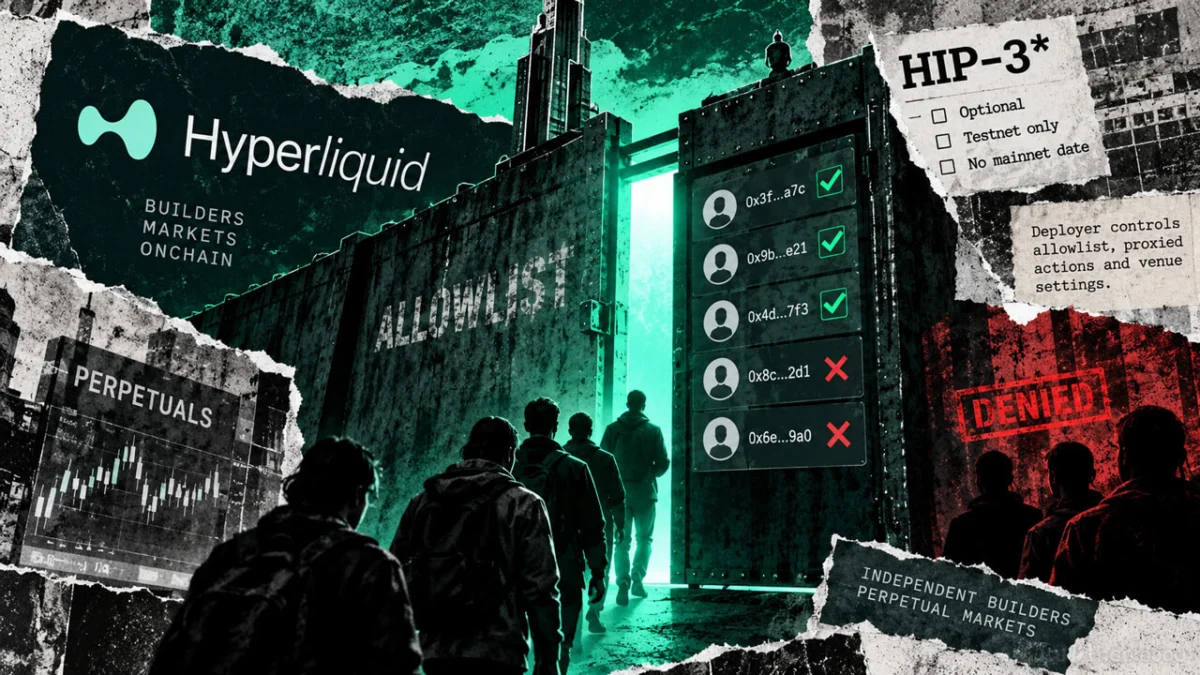
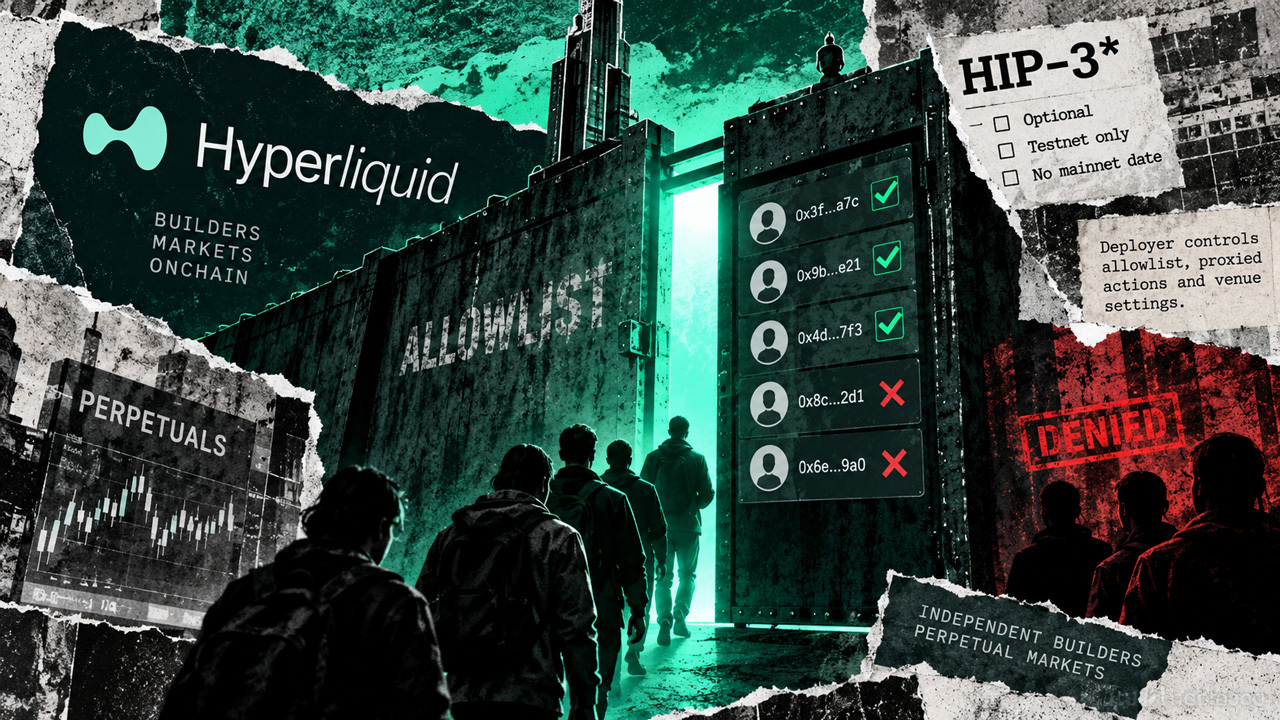
In a significant development for on-chain derivatives trading, Hyperliquid, a prominent perpetual exchange, has introduced optional wallet allowlists for its builder-run perpetual markets. This new feature, identified as HIP-3*, allows individual market deployers to establish their own access controls without affecting the platform’s broader permissionless trading environment. Announced via API updates on September 3rd, this testnet-only extension represents a crucial step towards providing more granular control and customization for market creators on the Hyperliquid ecosystem.
The HIP-3 framework itself was designed to empower independent developers to launch and manage their own perpetual markets on Hyperliquid. This existing architecture allows for a high degree of decentralization and innovation, where each market can operate with its own unique parameters, oracles, and risk management strategies. The addition of HIP-3* builds upon this foundation by introducing an optional layer of access management, directly controlled by the market’s deployer. This means that while Hyperliquid remains largely an open platform, specific venues can now opt to restrict trading to a pre-approved list of wallets.
Background: The Evolution of Decentralized Exchanges and User Control
The emergence of decentralized exchanges (DEXs) has been a cornerstone of the cryptocurrency revolution, promising greater transparency, security, and user autonomy. However, as the ecosystem matures, a persistent tension has emerged between the ideals of permissionless access and the practical needs of various market participants, including regulated entities and institutional investors. Many traditional financial institutions, for example, are subject to stringent "Know Your Customer" (KYC) and "Anti-Money Laundering" (AML) regulations, which can make direct participation in fully permissionless DeFi protocols challenging.
Hyperliquid’s approach with HIP-3* seeks to bridge this gap. By allowing individual market operators to implement their own access controls, the platform offers a flexible solution that respects the core principles of decentralization while accommodating diverse operational requirements. This is not a protocol-wide KYC mandate, nor does it represent an endorsement or adoption by any specific institution. Instead, it empowers independent deployers to build and operate markets that align with their specific legal, compliance, or business objectives.
Timeline of Development and Announcement
While the specific genesis of the HIP-3* concept predates the September 3rd announcement, the formal introduction to the public occurred through Hyperliquid’s API Announcements channel. This notification marked the feature’s availability on the testnet, signaling that the core functionality has been developed and is undergoing rigorous testing. The decision to deploy it first on testnet is a standard practice in software development, allowing for real-world validation and feedback before a potential mainnet launch.
The preliminary nature of the specification, combined with the absence of an announced mainnet date, suggests that Hyperliquid is prioritizing a thorough and iterative development process. This cautious approach is vital for a platform operating in the high-stakes world of financial derivatives, where security and reliability are paramount. The testnet phase will likely involve a period of intense scrutiny from developers, traders, and potential market operators, providing valuable insights for refinement.
Key Functionalities of HIP-3* Allowlists
The core of HIP-3 lies in the expanded capabilities granted to a market deployer. These capabilities are designed to provide granular control over user interactions within their specific venue. According to the current API reference, a HIP-3 enabled venue allows the deployer to perform five defined actions on behalf of a user:
- Add or Remove Allowlist Approval: This is the fundamental mechanism of HIP-3*. The deployer can grant or revoke trading privileges for specific wallet addresses. This allows for dynamic management of who can participate in the market.
- Cancel Specified Resting Orders: Traders often place "resting orders" that remain active in the order book until they are filled or manually canceled. The deployer can cancel individual resting orders for a user, which might be useful for managing risk or clearing outdated positions.
- Cancel All of the User’s Resting Orders and Time-Weighted Average Price (TWAP) Orders: This is a more comprehensive cancellation tool. It allows the deployer to clear all outstanding resting orders and any TWAP orders initiated by a user on that specific venue. This could be employed in situations requiring swift market cleanup or risk mitigation.
- Place Reduce-Only Orders: A "reduce-only" order is a type of order that can only decrease an existing position. It cannot be used to open a new position or increase an existing one. This is a crucial risk management tool, enabling deployers to help users unwind positions without the risk of inadvertently opening new ones.
- Move Collateral to Another Account on the Same Venue: This feature allows the deployer to facilitate the movement of collateral between different accounts within the same trading venue. This could streamline certain operational processes for users or for managing pooled assets.
It is important to note that each of these powers is strictly confined to the boundaries of the specific venue where the HIP-3* deployer is operating. For instance, the bulk-cancellation tool will only affect orders on that particular DEX and will not interfere with orders placed on other decentralized exchanges. Similarly, the collateral transfer function is venue-scoped, meaning it cannot move assets outside of that specific market.
Delegation of Powers
A sophisticated aspect of HIP-3* is the ability for a primary deployer to delegate these five core tools to approved sub-deployers. This allows for a more nuanced and specialized operational structure. For example, one address might be solely responsible for managing the allowlist, granting and revoking access, while another distinct address could be authorized to handle order cancellations. This separation of duties enhances security and allows for the creation of more robust operational teams for complex market operations.
Understanding the Scope: What HIP-3* Is Not
Crucially, the documentation for HIP-3 does not enumerate every action a wallet outside the allowlist might still be able to perform on its own. This distinction is vital. HIP-3 should be understood as an access control and operator empowerment mechanism for a newly created venue. It is not a universal wallet freeze across the entire Hyperliquid platform, nor does it fundamentally alter how users interact with other markets or the core Hyperliquid protocol.
Implications for Market Participants and Deployers
The introduction of HIP-3* has several significant implications:
- Catering to Regulated Entities: Firms that operate under specific regulatory frameworks, such as those requiring KYC/AML compliance, can now build perpetual markets on Hyperliquid that adhere to their obligations. This opens the door for more traditional financial players or compliant crypto firms to engage with the Hyperliquid ecosystem.
- Enhanced Customization for Deployers: Beyond regulatory needs, HIP-3* provides deployers with greater flexibility to tailor their market’s user experience and operational management. They can create exclusive trading environments or implement specific risk management protocols for their user base.
- Preservation of Permissionless Markets: A key strength of HIP-3* is that it is optional and additive. Existing markets operating under the original HIP-3 framework will remain unaffected, ensuring that the permissionless nature of Hyperliquid is preserved. This dual approach caters to a wider spectrum of market participants and deployers.
- Clarified Responsibility: Hyperliquid has emphasized that the legal and operational choices, including the implementation and management of allowlists, rest entirely with each individual deployer. The protocol itself does not assume responsibility for the compliance or operational choices made by these independent entities. This separation is crucial for maintaining the decentralized ethos of the platform.
Economic Responsibility and the HIP-3 Model
The economic responsibilities for market operators on Hyperliquid remain largely consistent with the original HIP-3 specification. Under HIP-3, deployers are tasked with a comprehensive set of responsibilities, including:
- Contract Development: Designing and deploying the smart contracts that govern the perpetual market.
- Oracle Maintenance: Ensuring the accuracy and reliability of price feeds for liquidations and settlement.
- Leverage Limits: Setting the maximum leverage available to traders on their venue.
- Market Settlement: Managing the process of settling trades and positions.
Each deployer-created DEX on Hyperliquid operates with its own independent margining system, order book, and specific trading parameters. This decentralized model fosters a competitive landscape where different markets can innovate and cater to various trading styles and risk appetites.
Staking and Security Under HIP-3
For a mainnet HIP-3 deployer, a significant requirement is the maintenance of a substantial stake in HYPE tokens, currently set at 500,000 HYPE. This stake serves as a financial commitment and a deterrent against malicious activity. Validators have the authority to "slash" this stake if a deployer engages in irregular inputs that compromise the protocol’s correctness, uptime, or performance. HIP-3* adds an access control layer to this existing operator model. It does not shift the responsibility for managing a restricted venue away from the deployer to Hyperliquid, nor does it alter the fundamental permissionless nature of other markets operating on the network.
Future Outlook and Potential Adoption
The introduction of HIP-3* on testnet is a strategic move that allows for community engagement and refinement. While no mainnet launch date has been announced, the feature’s potential is significant. It could attract institutional capital and regulated entities that have been hesitant to engage with fully permissionless DeFi platforms due to compliance concerns.
The success of HIP-3* will likely depend on several factors:
- Clarity of Regulatory Landscape: As regulatory clarity around digital assets evolves globally, features like HIP-3* will become increasingly valuable for firms navigating these complexities.
- Ease of Use for Deployers: The user-friendliness of the tools for managing allowlists and delegating powers will be critical for adoption.
- Community Feedback: The ongoing feedback from the testnet phase will play a crucial role in shaping the final implementation.
In conclusion, Hyperliquid’s HIP-3* represents a thoughtful evolution in the decentralized derivatives space. By empowering market operators with granular control over access, it offers a pragmatic solution that balances the ideals of decentralization with the practical needs of a diverse range of market participants. This development signals a maturing ecosystem that is increasingly capable of supporting sophisticated and varied trading environments.








