
 admin
admin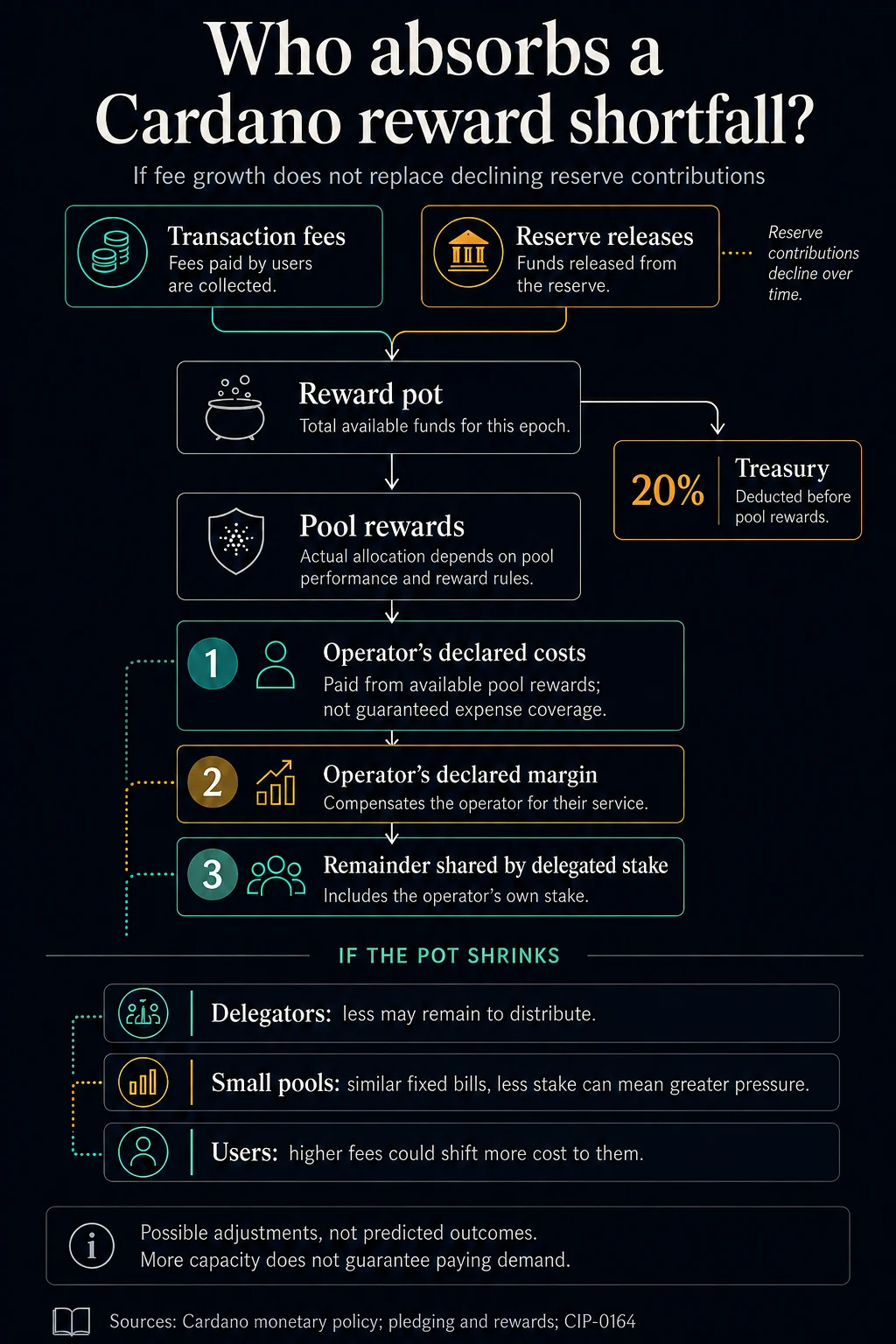
Cardano’s ambitious Leios upgrade has successfully demonstrated a remarkable sixfold increase in throughput during its initial public testnet phase, a crucial development for the blockchain’s long-term scalability and economic sustainability. However, the ultimate success of this upgrade, and indeed the health of Cardano’s staking ecosystem, remains intrinsically tied to the network’s ability to attract and retain paying users who will generate the transaction fees necessary to support its operations as its foundational reserve dwindles.
During the 41-day testnet deployment, the Leios protocol achieved a peak transaction throughput of 26.8 transaction kilobytes per second (TxkB/s). This represents a significant leap from the existing Ouroboros Praos system, which has a documented ceiling of 4.51 TxkB/s. The results, released by network developer Input Output (IOHK), indicate that Leios is capable of substantially expanding Cardano’s transaction processing capacity without fundamentally altering its core security architecture.
In the stable final days of the testnet, Leios handled 54% of the total traffic reaching the simulated chain. More impressively, it processed 18 times the transaction volume observed on the Cardano mainnet during a comparable period. This surge in activity, however, was generated through artificial means designed to stress-test the system’s limits, rather than originating from users actively paying for transactions. This distinction is becoming increasingly pivotal for the economic model underpinning Cardano’s decentralized network and the rewards received by its ADA holders.
The Shifting Sands of Cardano’s Economic Model
Cardano’s staking rewards, a cornerstone of its Proof-of-Stake consensus mechanism, are currently derived from a dual source: transaction fees generated by network activity and periodic releases from its substantial ADA reserve. This reserve, a significant initial allocation of the network’s native token, is designed to gradually diminish over time. As these reserve contributions wane, the responsibility for funding stake pool operators and delegators—the individuals who secure the network by staking their ADA—increasingly falls upon the shoulders of active network users through transaction fees.
The Leios upgrade is engineered precisely to address a potential bottleneck: the throughput ceiling that could otherwise prevent Cardano from generating sufficient transaction fees to meet its ongoing operational costs. The technical specifications of Leios explicitly link its enhanced capacity to the network’s long-term economic viability, anticipating a future where reserve funding is minimal. The engineering challenge of scaling the network’s capacity appears to be on track, but the more complex question now facing Cardano is whether this increased capacity will be met with commensurate user demand and paid transactions.
Leios: Building the Capacity, Not Guaranteeing the Revenue
Cardano’s current Ouroboros Praos consensus protocol, while robust and secure, imposes constraints on the volume of transaction data that can be reliably processed and propagated across the network. This limitation is a critical factor in maintaining the stability and integrity of block production.
The Leios upgrade introduces a novel approach to scaling by adding parallel processing capacity. This is achieved through the implementation of larger "Endorser Blocks," which can accommodate additional transactions while the underlying Praos chain continues its operations. These Endorser Blocks are validated by committees before their transactions are officially recorded, enabling Cardano to process a significantly higher volume of activity without necessitating a complete overhaul of its existing security framework. The initial public testnet results serve as a compelling demonstration that this architectural innovation can materially elevate the network’s transaction processing ceiling.
Input Output’s official announcement regarding the testnet phase highlighted its duration of 41 days, during which over 127,000 blocks were produced. Approximately 30,000 of these were Endorser Blocks, underscoring the effectiveness of the new parallel processing mechanism. During this period, 63 stake pools registered to participate in the testing. While developers actively addressed a series of implementation challenges, including memory leaks, chain forks, crashes, and other issues that emerged under heavy load, Input Output emphasized that none of these incidents exposed fundamental flaws in the Leios protocol itself.
However, the creation of increased blockspace, while a technical triumph, does not automatically translate into staking income. This revenue generation is contingent upon individuals and applications choosing to utilize this expanded capacity and paying the associated transaction fees. This is where Cardano’s established economic model presents a distinct hurdle.
Navigating the Economic Tightrope: Fees, Reserves, and Adoption

A detailed cost analysis accompanying the Leios specification provides crucial insights into the financial requirements of the Cardano network. This analysis projects a baseline of 48 million ADA in monthly staking rewards. Under a scenario modeling a 43% decline in reserve contributions by 2029, approximately 20.64 million ADA per month would need to be generated through transaction fees to bridge the gap. It is important to note that this projected date serves as a modeling horizon rather than a definitive endpoint for the Cardano reserve.
To meet this projected fee generation target, calculations based on an average transaction size of 1,500 bytes and a modeled fee of roughly 0.221 ADA suggest a sustained throughput of approximately 36 transactions per second (TPS) continuously over a 30-day month. The broader Leios specification often references a target range of 36 to 50 TPS as relevant for economic sustainability. It is crucial to differentiate these figures from the testnet’s 26.8 TxkB/s result. The testnet metric measures raw data processing capacity, whereas the economic model quantifies the number of fee-paying transactions required to meet specific financial obligations.
The revenue threshold is further nuanced by the distribution of rewards. Cardano directs 20% of its total reward pool to the treasury, with the remaining 80% distributed to stake pools. To compensate for the projected 20.64 million ADA shortfall after this treasury allocation, and using the same transaction and fee assumptions, the required sustained TPS increases to approximately 45.
The implications of different TPS levels are significant, as illustrated by the following projections:
- At 50 TPS: The model generates an estimated 28.7 million ADA in gross monthly fees. This would place it comfortably above the modeled target, providing a surplus.
- At 20 TPS: This level of activity produces approximately 11.5 million ADA in gross monthly fees. This would leave a substantial gap of 9.16 million ADA against the modeled target of 20.64 million ADA required from fees.
- At 10 TPS: This lower level of activity generates only about 5.74 million ADA in gross monthly fees, falling significantly short of the target and indicating a substantial reliance on the dwindling reserve.
Table: Projected Gross Fees vs. Modeled Target (30-day Month)
| Sustained Transactions Per Second (TPS) | Gross Fees Over 30 Days (ADA) | Against the Modeled 20.64 Million ADA Target (Shortfall/Surplus) |
|---|---|---|
| 10 | 5.74 million | Below target |
| 20 | 11.48 million | 9.16 million ADA short |
| 50 | 28.70 million | 8.06 million ADA above |
Furthermore, the elasticity of transaction fees plays a critical role. A reduction in the average fee would necessitate a doubling of transaction volume to achieve the same revenue. Conversely, an increase in fees could boost revenue per transaction but carries the inherent risk of deterring potential users, particularly in a competitive blockchain landscape.
This presents Cardano with a familiar economic conundrum faced by many scaling blockchain networks: while increased and more affordable blockspace can serve as a catalyst for broader adoption, the network’s long-term viability ultimately depends on generating sufficient paid usage to sustain the infrastructure that secures it.
The Road Ahead: From Capacity to Sustained Demand
Input Output has articulated a long-term vision for Cardano, aiming to transition the network from its current approximately 800,000 transactions per month to over 27 million. A key objective of this ambitious growth trajectory is to achieve economic self-sufficiency as reserve funding continues to decline. The Leios upgrade is positioned as the primary consensus upgrade designed to provide the foundational capacity necessary to support this envisioned expansion.
Should user adoption fall short of these projections, the pressure will inevitably shift to other areas of the ecosystem. A reduced pool of rewards could lead to less for delegators after stake pool operators account for their operational costs and profit margins. Smaller pools, often operating with fixed infrastructure expenses, might face increased pressure to accept lower earnings, subsidize their operations, or consider consolidation. Another potential lever is an increase in transaction fees, but this strategy is only viable if users continue to transact on the network despite the higher costs.
The Leios design does incorporate a degree of protection against bearing the full cost of unused infrastructure. Under the proposed architecture, standard Praos blocks can continue to handle low-volume traffic without activating the more resource-intensive Endorser Block mechanisms. This approach helps to mitigate some of the costs associated with maintaining unused capacity.
The project is currently progressing through the "Water" phase of its public testnet. This stage involves rigorous testing of various configurations, a re-architected mempool (the waiting area for transactions), and the deployment of production-ready cryptographic keys. Input Output has set an ambitious target for mainnet readiness by the end of 2026, acknowledging that delivering such a significant consensus upgrade within this timeframe would represent an unusually rapid development cycle.
For stake pool operators and ADA delegators, the true measure of Leios’s success will not be evident until after the capacity-testing phase concludes. The crucial metrics will be sustained network transaction volume, the actual fees generated by these transactions, and the extent to which this fee revenue can effectively replace the declining contributions from Cardano’s reserve. The economic health of the Cardano network, therefore, is no longer solely an engineering challenge but increasingly an adoption bet.








