
 admin
admin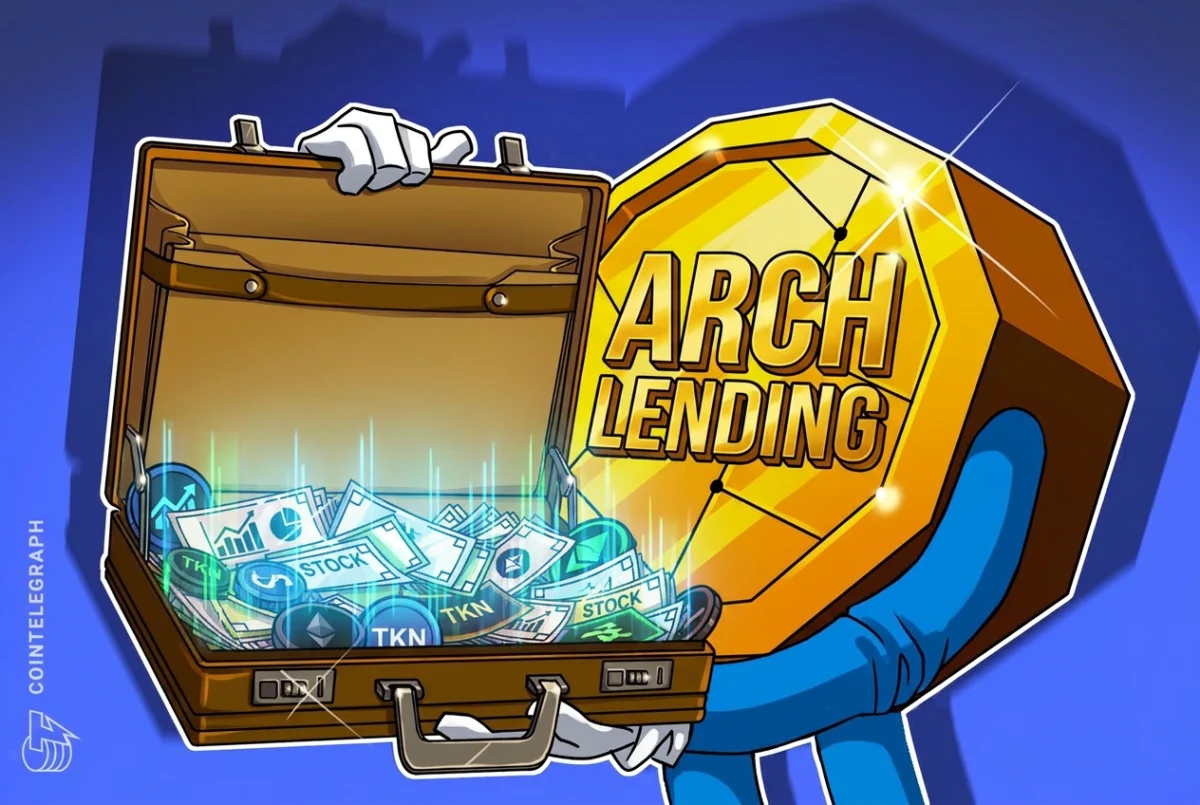
Arch Lending, a prominent institutional-grade cryptocurrency lender, has announced a strategic expansion into the burgeoning sector of loans backed by tokenized equities, signaling a significant shift in how digital asset markets interact with traditional financial instruments. The move, articulated by Arch co-founder and Chief Revenue Officer Himanshu Sahay during a recent appearance on Cointelegraph’s Chain Reaction podcast, positions the firm at the forefront of a movement to bridge the gap between decentralized finance (DeFi) and the $100 trillion global equity market. According to Sahay, the lender plans to officially enter this specific market "pretty soon," driven by a visible and growing demand for credit facilities that utilize onchain representations of stocks and exchange-traded funds (ETFs) as collateral.
The decision to expand into tokenized equities comes at a time when the broader Real World Asset (RWA) sector is experiencing unprecedented growth. Sahay noted that while the issuance of tokenized equities has accelerated rapidly over the past twelve months, the infrastructure for lending against these assets has remained relatively stagnant. By providing liquidity to holders of tokenized stocks, Arch aims to unlock capital efficiency for investors who wish to maintain exposure to traditional markets while accessing liquidity within the crypto ecosystem. Sahay predicted that the maturation of this market would eventually attract a multitude of lenders, creating a robust credit ecosystem for digital securities issued by major players such as Superstate, Robinhood, and Securitize.
The Rapid Ascent of Tokenized Equities
The backdrop for Arch Lending’s expansion is a market that has transformed from a niche experiment into a multi-billion dollar sector. According to data provided by RWA.xyz, the total value of distributed tokenized stocks and equities has surged to approximately $3.15 billion, a staggering increase from the roughly $630 million recorded just one year ago. This 400% year-over-year growth underscores a fundamental shift in investor appetite, as both retail and institutional participants seek the benefits of blockchain technology—such as 24/7 settlement, fractional ownership, and transparency—applied to traditional financial products.
The growth is not limited to equities alone but extends to tokenized Treasury bills and money market funds, which have served as the "gateway drug" for institutional RWA adoption. However, tokenized equities represent the next logical step in this evolution. Companies like Securitize, which recently partnered with BlackRock to launch the BUIDL fund, and Robinhood, which has increasingly looked toward blockchain integration, are creating the supply side of this equation. Arch Lending’s entry addresses the demand side, providing the necessary leverage and credit cycles that are essential for any functioning capital market.
Arch Lending’s Evolving Portfolio and the XRP Factor
While the move into tokenized equities represents the future, Arch Lending’s current operations remain deeply rooted in the primary cryptocurrency markets. Sahay revealed that Bitcoin (BTC) continues to dominate the firm’s existing loan book, accounting for more than 80% of its total collateralized positions. This concentration reflects Bitcoin’s status as the "digital gold" and the most liquid, trusted asset within the crypto space.
However, the firm has already begun diversifying its collateral options beyond pure-play cryptocurrencies. In recent weeks, Arch launched loan products backed by tokenized gold, specifically utilizing Paxos Gold (PAXG) and Tether Gold (XAUT). This move into precious metals served as a pilot for the firm’s broader RWA strategy, proving that the infrastructure for managing non-volatile, off-chain assets on a blockchain is both viable and in demand.
Interestingly, Sahay highlighted a burgeoning interest in XRP as collateral, particularly among borrowers based in the United States. This trend is noteworthy given the regulatory scrutiny XRP has faced over the past several years. The increased demand for XRP-backed loans suggests a growing confidence among US-based holders regarding the asset’s legal status and its utility as a long-term reserve asset. As Arch moves toward tokenized stocks, the lessons learned from managing diverse assets like gold and XRP will likely inform its risk management frameworks for equity-backed credit.
A Comparative Look at the Tokenized Lending Landscape
Arch Lending is entering a competitive arena where several major crypto-native firms have already laid the groundwork for tokenized equity credit. The integration of traditional finance (TradFi) assets into DeFi protocols has been a recurring theme in 2024.
In February, Ondo Finance, a leader in the RWA space, launched DeFi lending markets for two of its flagship tokenized ETFs: the SPDR S&P 500 ETF (IUSP) and the Invesco QQQ (IQQQ). Through an integration with the Morpho lending protocol, Ondo enabled investors to use these tokenized versions of the world’s most popular ETFs as collateral to borrow stablecoins on the Ethereum network. This pioneered the concept of "onchain margin," allowing investors to leverage their S&P 500 holdings without ever leaving the blockchain.
Furthermore, the cryptocurrency exchange Kraken expanded the utility of its "xStocks" product in July, making ten different tokenized stocks eligible as collateral for futures and margin positions. This move allowed traders to hedge their equity positions or gain additional crypto exposure using their stock holdings as a base. Similarly, Coinbase’s "B20" stocks, which launched on the Base Layer-2 network in August, were designed specifically with DeFi integration in mind. By utilizing Chainlink’s price-feed infrastructure, Coinbase ensured that these tokenized stocks could be reliably valued by decentralized lending protocols, facilitating a new wave of automated, transparent credit.
Technical and Operational Implications of Equity-Backed Loans
The transition from crypto-backed lending to equity-backed lending introduces several layers of technical and operational complexity. Unlike Bitcoin, which exists natively on a blockchain, tokenized equities are derivatives of assets held in custody by traditional financial institutions. This requires a robust legal and technical bridge to ensure that the "token" truly represents a claim on the underlying share.
For Arch Lending, this means implementing rigorous oracle solutions to track the real-time prices of the underlying stocks, which, unlike crypto, only trade during specific market hours. The "price gap" risk—where a stock’s price might change significantly between the Friday close and Monday open—requires sophisticated liquidation engines and conservative Loan-to-Value (LTV) ratios to protect the lender’s capital.
Moreover, the role of issuers like Superstate and Securitize is critical. These firms handle the KYC (Know Your Customer) and AML (Anti-Money Laundering) requirements at the minting level. Arch Lending must ensure that its lending platform is compatible with the "permissioned" nature of these tokens. Many tokenized equities are not freely transferable like Bitcoin; they can only be held by verified wallets. Arch’s ability to navigate these "walled garden" environments while maintaining the efficiency of a digital lender will be a key determinant of its success.

Broader Market Impact and the Path Toward Convergence
The entry of firms like Arch Lending into the tokenized equity market is more than just a new product launch; it is a signal of the broader "convergence" between TradFi and DeFi. For decades, the traditional financial system has operated in silos, with equity markets, credit markets, and payment systems often requiring days to settle and reconcile. Blockchain technology offers a unified ledger where an asset (a stock) can be used as collateral for a loan (credit) and settled instantly (payment).
Industry analysts suggest that the ability to borrow against tokenized equities could lead to a significant increase in onchain liquidity. Institutional investors who hold large portfolios of stocks may be more inclined to move those assets onchain if they know they can access immediate liquidity without selling their positions. This could result in a "flywheel effect" where more high-quality collateral moves onchain, leading to lower borrowing costs and more stable lending markets.
Furthermore, the rise of tokenized equity lending may force traditional brokerage firms to accelerate their own blockchain initiatives. If an investor can get a more flexible, 24/7 margin loan from a firm like Arch Lending using tokenized Robinhood shares than they can from a traditional bank, the competitive pressure on legacy institutions will intensify.
Conclusion: The New Frontier of Digital Credit
As Arch Lending prepares to roll out its tokenized equity loan products, the company is positioning itself at the nexus of a historical shift in capital markets. The move reflects a maturing industry that is moving past the volatility of "meme coins" and speculative assets toward the integration of the world’s most stable and productive assets.
With the tokenized equity market already surpassing $3 billion and showing no signs of slowing down, the demand for sophisticated credit products is inevitable. By bridging the gap between the security of traditional equities and the efficiency of blockchain technology, Arch Lending and its peers are not just changing how we trade; they are changing the very nature of ownership and liquidity in the digital age. The successful implementation of these credit markets will likely serve as a blueprint for the future of global finance, where every asset—from a share of Apple stock to a bar of gold—can be moved, programmed, and leveraged with a single click.








