admin
admin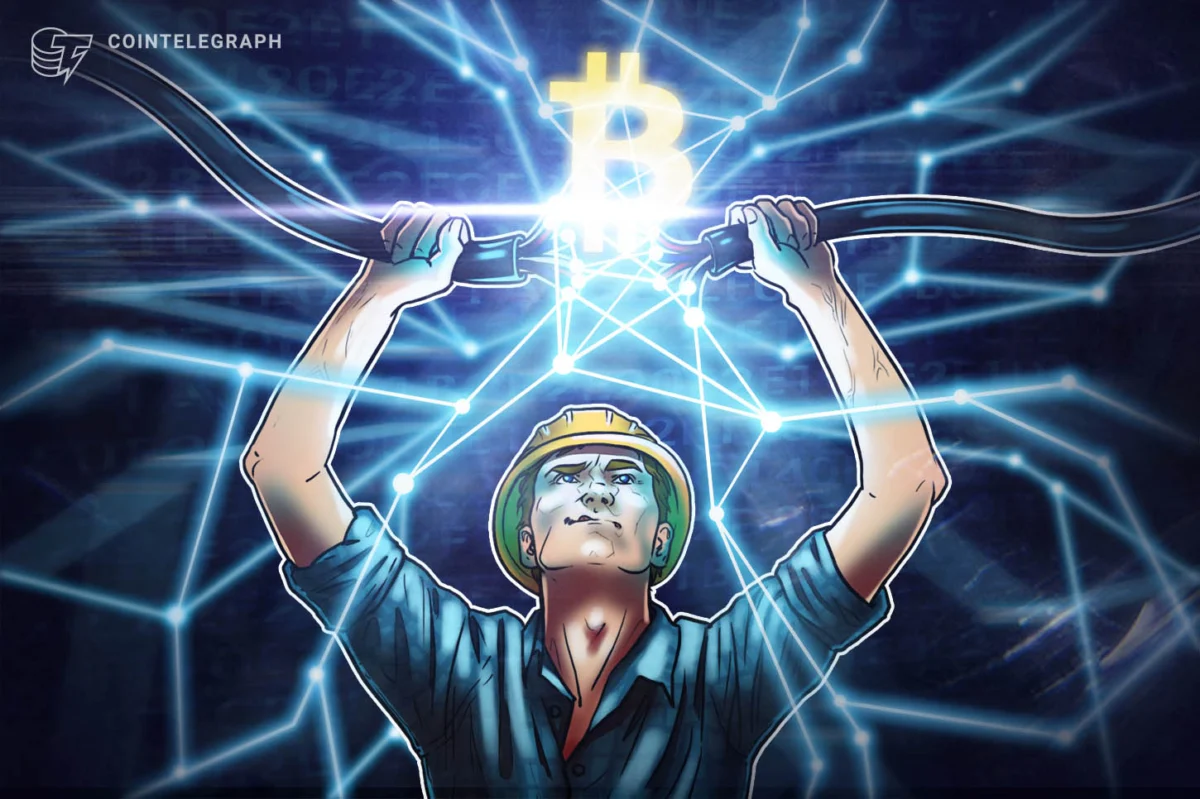
Investment research firm Bernstein has reaffirmed its "overweight" rating on the Bitcoin mining sector, identifying a transformative shift in the industry as mining firms increasingly pivot toward supporting artificial intelligence (AI) infrastructure. In a comprehensive research note released on Thursday, analysts highlighted that the burgeoning synergy between Bitcoin miners and AI data center operators is no longer a theoretical projection but a rapidly materializing financial reality. The firm’s "Bitcoin mining industry deal tracker" documented a relentless pace of activity throughout July, recording new AI-related agreements every week. These combined deals represent a staggering 7.5 gigawatts (GW) of power capacity, translating to an estimated $150 billion in multi-year contract value.
The core of Bernstein’s thesis rests on the premise that power, rather than hardware or software, has become the primary bottleneck for the global AI revolution. As traditional data center developers face multi-year delays in securing grid connections and navigating local opposition, Bitcoin miners—who already possess high-voltage power interconnections and large-scale industrial sites—are uniquely positioned to bridge the gap. This strategic advantage has turned Bitcoin miners into indispensable partners for AI developers who are desperate for speed-to-market.
The Infrastructure Pivot: From Digital Gold to Silicon Support
The transition from pure-play Bitcoin mining to high-performance computing (HPC) and AI hosting is driven by a fundamental shift in the economics of energy. Historically, Bitcoin miners have sought out the cheapest stranded energy to maximize margins. However, following the 2024 Bitcoin halving event, which slashed block rewards by 50%, many firms have looked to diversify their revenue streams. AI hosting offers a more predictable, long-term revenue model compared to the volatility of cryptocurrency prices.
According to Bernstein, the third-party computing capacity provided by these miners is becoming "highly valuable" because of the increasing difficulty in building new "greenfield" data centers in the United States. While the AI industry demands massive amounts of electricity, the aging U.S. power grid and growing political resistance to new industrial developments have created a supply-demand imbalance. Bitcoin miners, having already secured the necessary permits and infrastructure for high-density power usage, provide a "plug-and-play" solution for AI firms like Anthropic and CoreWeave.
A Chronology of High-Stakes Deals in July
The month of July served as a watershed moment for the sector, with several major publicly traded miners announcing landmark agreements that reshaped investor expectations.
In early July, MARA Holdings (formerly Marathon Digital) announced an ambitious plan to acquire a site in Texas with up to 2 gigawatts of capacity. This move was specifically designed to expand the company’s footprint in the AI and digital infrastructure space, signaling a shift away from a Bitcoin-only strategy.
Following closely, TeraWulf, another prominent player in the space, finalized a 20-year data center lease with the AI startup Anthropic. This joint venture is projected to generate approximately $19 billion in contract revenue over its lifetime. TeraWulf’s strategy focuses on utilizing zero-carbon energy sources, such as nuclear and hydro, which are increasingly favored by AI companies looking to meet environmental, social, and governance (ESG) goals.
The momentum reached a fever pitch on Monday when Hut 8 and IREN (formerly Iris Energy) disclosed their own massive infrastructure deals. Hut 8 announced a 15-year, $9.8 billion lease agreement for its AI data center campus. Simultaneously, IREN revealed it had secured $2.8 billion in cloud services contracts with various AI developers. IREN’s pivot is particularly notable; the company has been aggressively retooling its data centers to accommodate NVIDIA GPUs alongside its existing Bitcoin mining ASICs.
Seeking Alpha contributor "The Curious Analyst" noted that IREN is successfully converting its "infrastructure advantage into contracted and more predictable revenue." While the contributor rated IREN as a "strong buy," they cautioned that the primary risk remains execution—specifically the technical challenge of retrofitting sites designed for mining into facilities capable of housing sophisticated AI clusters.
Market Performance and Investor Sentiment
The financial markets have responded enthusiastically to these strategic shifts. On the news of the Hut 8 and IREN deals, Bitcoin mining stocks saw double-digit gains. In premarket activity on Thursday, Hut 8’s shares rose by 5.23%, while IREN and TeraWulf saw gains of 1.89% and 1.49%, respectively.
Bernstein’s outlook remains broadly bullish across the sector. The firm maintains an "outperform" rating on most of the companies mentioned, including Hut 8, IREN, and TeraWulf. MARA Holdings is currently rated as "market perform," reflecting a more cautious view of its valuation relative to its peers. The CoinShares Bitcoin Mining ETF (WGMI), which tracks the performance of the broader sector, also reflected this optimism, rising 1.47% ahead of the Nasdaq opening.
This market enthusiasm is underpinned by the realization that Bitcoin miners are no longer just speculative plays on the price of Bitcoin. Instead, they are being revalued as "infrastructure plays" that sit at the intersection of energy and technology.
Political and Environmental Headwinds
Despite the financial upside, the expansion of AI data centers and Bitcoin mining facilities is facing significant political pushback. This friction is a central component of Bernstein’s analysis, as it further restricts the supply of new power, thereby increasing the value of existing mining sites.
In Texas, a primary hub for the industry, the political climate is becoming increasingly complex. On Wednesday, Democratic Senate candidate James Talarico introduced a proposal aimed at tightening the local approval process for data centers. His plan includes a repeal of tax breaks for AI data centers, arguing that the state’s power grid should prioritize residential consumers and small businesses over energy-intensive industrial operations.
Similar concerns have surfaced in Oregon. In April, U.S. Senator Ron Wyden expressed alarm over the water consumption of AI data centers in his home state. Large-scale facilities can consume up to 5 million gallons of water per day for cooling purposes, a figure that Wyden argues could exacerbate water scarcity during periods of drought. He has formally requested that large data center operators provide transparent plans on how they intend to mitigate their impact on local groundwater supplies.
On a national level, the debate over who pays for grid upgrades is intensifying. In March, the administration of former President Donald Trump published a "Ratepayer Protection Pledge," which seeks to ensure that the expansion of AI infrastructure does not result in higher electricity bills for average households. This sentiment was echoed in January by several state governors who argued that while the grid must expand to accommodate AI, the costs of these upgrades should be borne by the companies creating the demand, rather than being shifted to existing ratepayers.
Technical Analysis: The Challenge of Conversion
While the "land grab" for power capacity is well underway, the technical transition from Bitcoin mining to AI hosting is not without hurdles. Bitcoin mining is typically performed using Application-Specific Integrated Circuits (ASICs), which are designed for a single purpose and require high-density power but relatively simple cooling and networking infrastructure.
In contrast, AI workloads require High-Performance Computing (HPC) environments equipped with Graphics Processing Units (GPUs). These systems demand significantly more sophisticated cooling solutions (often liquid cooling), high-speed fiber optic networking, and ultra-reliable power backup systems (UPS).
The "execution risk" mentioned by analysts refers to the ability of mining companies to manage this capital-intensive retrofitting process. However, Bernstein argues that the scarcity of power is so acute that AI companies are willing to overlook some of these technical hurdles or even fund the retrofitting costs themselves in exchange for guaranteed access to the grid.
Broader Implications and Future Outlook
The convergence of Bitcoin mining and AI represents a paradigm shift for the digital economy. For the Bitcoin network, this trend could lead to a more geographically distributed and resilient hash rate as miners find new ways to subsidize their operations through AI hosting. For the AI industry, it provides a vital lifeline in a world where energy has become the most precious commodity.
The $150 billion in contracts identified by Bernstein may only be the beginning. As the demand for generative AI continues to surge, the pressure on global energy markets will likely intensify. Bitcoin miners, once viewed by critics as "energy vampires," are rebranding themselves as the "energy banks" of the 21st century—gatekeepers of the power required to fuel the next era of technological innovation.
In the long term, the success of this pivot will depend on the industry’s ability to navigate the twin challenges of technical execution and political regulation. If the sector can successfully appease local communities and regulators while delivering the high-density power that AI demands, the valuation of Bitcoin mining stocks may continue to decouple from the price of the underlying cryptocurrency, reflecting their new role as the backbone of global computing infrastructure.