admin
admin
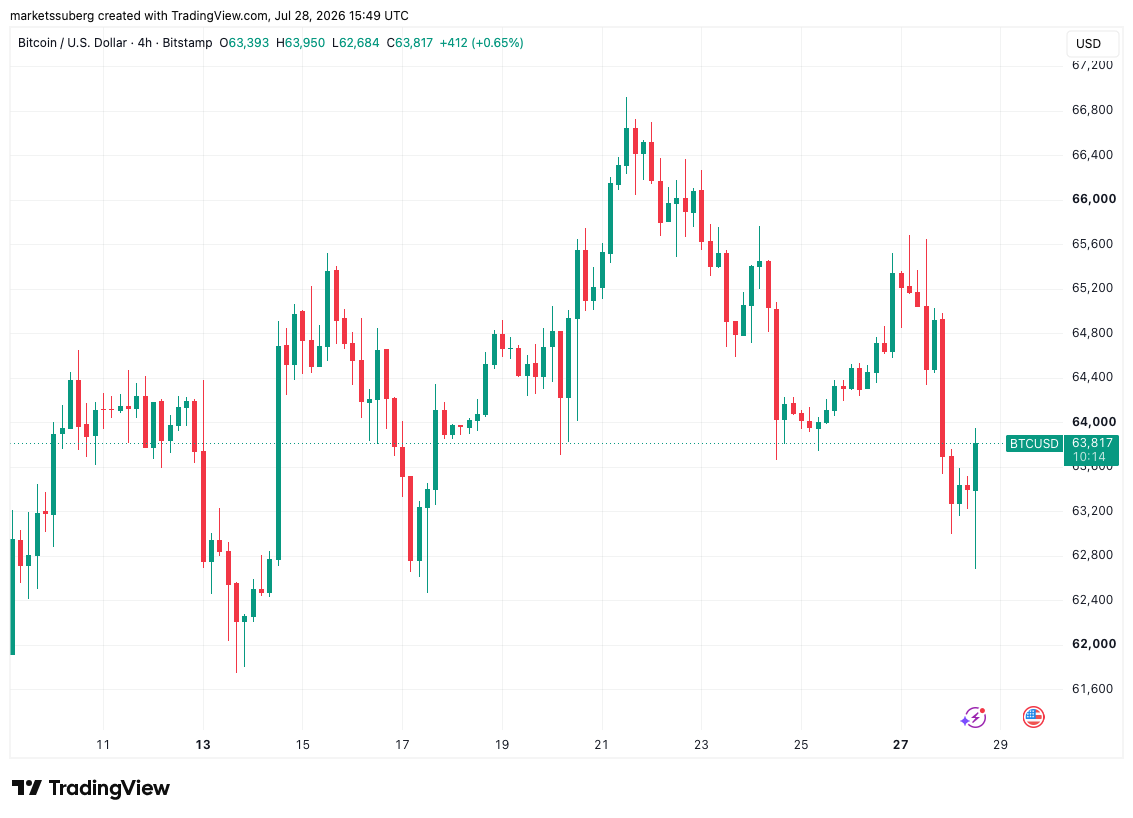
Bitcoin experienced a significant downward correction during Tuesday’s Wall Street opening session, reaching its lowest price point in ten days as it closely mirrored a broader retreat in global equity markets. The primary cryptocurrency by market capitalization fell below the critical $63,000 threshold for the first time since July 17, marking a sharp reversal from recent bullish sentiment. This price action was largely precipitated by a systemic sell-off in the semiconductor and technology sectors, which began in Asian markets and subsequently migrated to United States exchanges. The resulting volatility triggered a massive wave of forced liquidations across the cryptocurrency ecosystem, with data indicating that over $510 million in leveraged positions were wiped out within a 24-hour window.
The Asian Semiconductor Rout and Global Market Contagion
The initial catalyst for Tuesday’s market turbulence emerged from the Asia-Pacific region, where semiconductor-heavy indices suffered historic losses. South Korea’s KOSPI Index concluded its session with a staggering 10.8% decline, a move rarely seen outside of major global financial crises. The downturn was led by SK Hynix, a premier chip-maker, which saw its valuation plummet by 14.8%. Similarly, in Japan, memory manufacturer Kioxia Holdings experienced an 18.3% drop in a single day of trading.
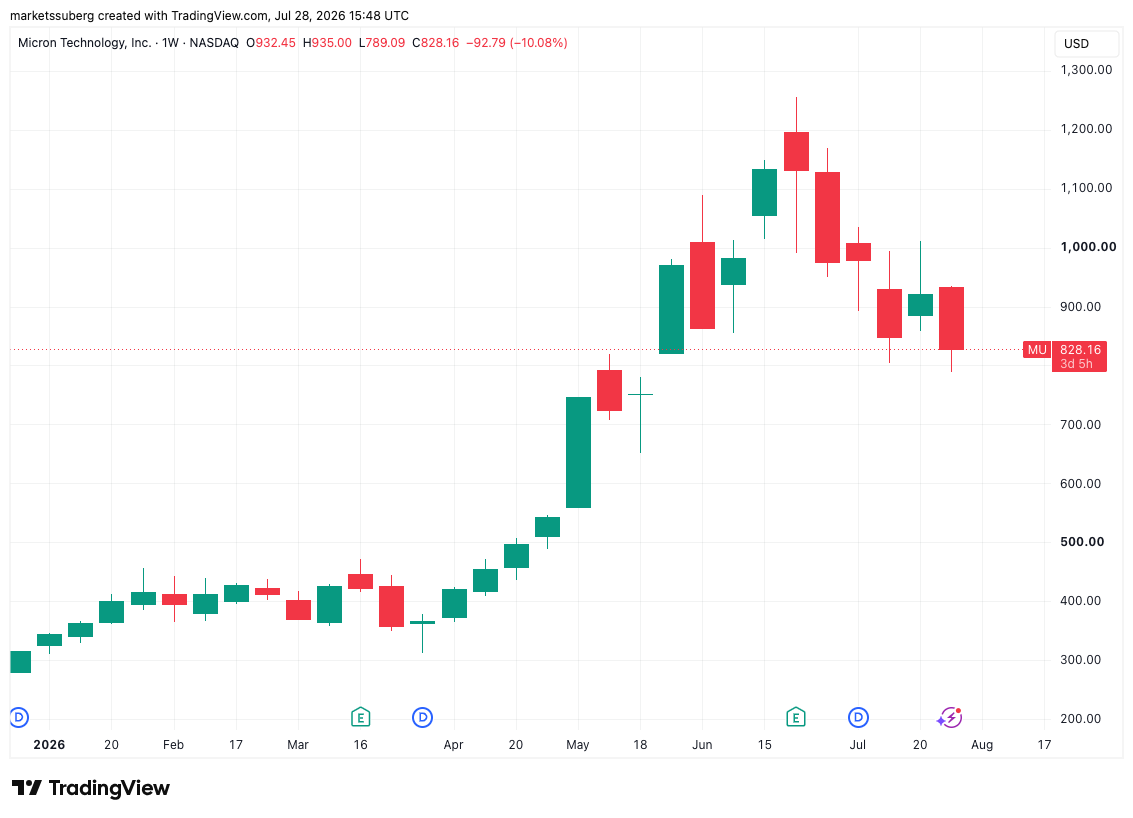
These losses were not isolated incidents but rather reflections of growing investor anxiety regarding the valuation of artificial intelligence (AI) infrastructure companies. As the Asian trading day closed, the bearish momentum transitioned into the European and North American sessions. In the United States, the tech-heavy Nasdaq Composite Index opened with a decline of over 1%, while individual semiconductor stocks faced even more severe pressure. Micron Technologies, a bellwether for the memory chip industry, saw its share price fall by more than 10% at the opening bell, eventually touching its lowest levels since late May and erasing weeks of gains.
Scrutinizing the Sustainability of AI Capital Expenditure
The underlying cause of the tech sector’s retreat appears to be a fundamental reassessment of the "AI trade." For much of the past year, equity markets have been driven by the massive capital expenditure (capex) of "hyperscalers"—the world’s largest cloud and technology providers. However, a growing cohort of institutional investors and analysts is beginning to question the long-term sustainability and immediate return on investment (ROI) of these expenditures.

Current projections for the combined 2026 capex of Alphabet (Google), Microsoft, Amazon, and Meta are tracking toward a range of $725 billion to $730 billion. Wall Street estimates suggest this figure could balloon to nearly $900 billion by 2027. Despite these massive investments, the financial results have been mixed. For instance, Alphabet recently reported its first record cash burn of $5.9 billion in the second quarter, even as its cloud division posted an impressive 82% growth rate. The disconnect between heavy spending and bottom-line profitability has led to a "show-me" environment where investors are no longer willing to bid up tech stocks solely on the promise of future AI dominance.
Competitive Pressures from China and the Efficiency Gap
Adding to the concerns of Western investors is the rapid advancement of the AI sector in China, which threatens the competitive moat of established U.S. firms. The recent launch of Moonshot AI’s Kimi K3, an open-source model, has sent ripples through the industry. Benchmarking data indicates that the Kimi K3 model performs competitively against top-tier proprietary systems developed by U.S.-based Anthropic and OpenAI.
The emergence of high-performing, open-source alternatives from China intensifies questions about the massive spending commitments of Western hyperscalers. If comparable AI capabilities can be achieved or replicated at a fraction of the cost through open-source innovation, the premium valuations currently assigned to U.S. AI infrastructure may be difficult to justify. This competitive pressure has contributed to the de-risking sentiment seen in semiconductor stocks, which has, in turn, bled into the cryptocurrency markets due to the high correlation between Bitcoin and the Nasdaq.
Analyzing the $510 Million Crypto Liquidation Event
As equity markets faltered, the cryptocurrency market faced a severe deleveraging event. Bitcoin’s decline below $63,000 acted as a trigger for a "liquidation cascade," where falling prices hit the stop-loss levels or margin requirements of leveraged traders, forcing the sale of their assets and further driving down the price.
Data from the crypto analytics platform CoinGlass revealed that total liquidations exceeded $510 million over the 24-hour period. The vast majority of these liquidations were "long" positions—bets that the price of Bitcoin and other digital assets would continue to rise. When the market reversed sharply, these traders were caught off guard. On Monday, prior to the sell-off, analytics platform CoinAnk had warned of significant liquidity clusters sitting just below the $64,700 mark. The platform noted that "extremely large long liquidity" had accumulated at these levels, suggesting that a breach would lead to the very cascade that materialized on Tuesday.
In contrast, the resistance levels on the upside appeared relatively thin. CoinAnk identified the zone between $65,800 and $66,200 as a major short liquidation zone, but the lack of bullish momentum prevented the market from testing those levels. The resulting price action underscored the current fragility of the market’s leverage structure, where a 2% to 3% move in the underlying asset can trigger hundreds of millions of dollars in forced exits.
Macroeconomic Headwinds and the Bank of Japan
While the tech sell-off was the immediate driver of Bitcoin’s decline, broader macroeconomic factors are also weighing on investor sentiment. Market participants are closely watching the upcoming Bank of Japan (BoJ) meeting scheduled for Friday. The Japanese Yen has recently repeated 40-year lows against the U.S. Dollar, prompting speculation that the BoJ may be forced to intervene or adjust its monetary policy more aggressively than previously anticipated.
The "Yen carry trade"—a strategy where investors borrow Yen at low interest rates to invest in higher-yielding assets elsewhere—has been a significant source of global liquidity. Any tightening of Japanese monetary policy or a sharp appreciation of the Yen could lead to a reversal of these trades, resulting in a withdrawal of liquidity from risk assets, including both technology stocks and cryptocurrencies. This macro uncertainty has contributed to a cautious atmosphere, preventing Bitcoin from decoupling from the traditional financial markets during this period of volatility.
Technical Outlook and Market Implications
From a technical perspective, Bitcoin’s inability to hold the $64,000 support level has shifted the short-term bias toward the bears. The $63,000 level is viewed by many analysts as a psychological and technical "line in the sand." A sustained close below this level could open the door for a retest of the $60,000 support zone, which has historically served as a major accumulation area for institutional buyers.
The current market environment highlights the evolving role of Bitcoin in the global financial ecosystem. While often touted as "digital gold" or a hedge against traditional market instability, BTC’s price action continues to exhibit a high degree of sensitivity to global liquidity cycles and tech-sector sentiment. The correlation between Bitcoin and the Nasdaq remains a dominant theme for 2024, as institutional adoption through Spot ETFs has further integrated the digital asset into traditional portfolios.
Conclusion and Future Projections
The events of Tuesday serve as a stark reminder of the interconnectedness of modern financial markets. The sell-off in Asian semiconductors, driven by fundamental questions regarding the AI revolution’s ROI, created a domino effect that eventually reached the shores of the digital asset market. For Bitcoin, the path forward will likely depend on two key factors: the stabilization of the technology sector and the outcome of major central bank meetings later this week.
If tech giants can provide more concrete evidence of AI profitability in upcoming earnings reports, the pressure on semiconductor stocks may ease, providing a tailwind for Bitcoin. Conversely, if the Bank of Japan signals a hawkish shift or if US economic data surprises to the downside, the current deleveraging trend could extend into the coming weeks. For now, market participants remain on high alert, navigating a landscape defined by high leverage, shifting technological narratives, and an increasingly complex macroeconomic backdrop.
As the dust settles from the $510 million liquidation event, the focus shifts back to the spot market. Analysts will be looking for signs of "dip-buying" from institutional players to gauge whether the current correction is a temporary setback in a larger bull cycle or the beginning of a more prolonged period of consolidation for the world’s leading cryptocurrency.