
 admin
admin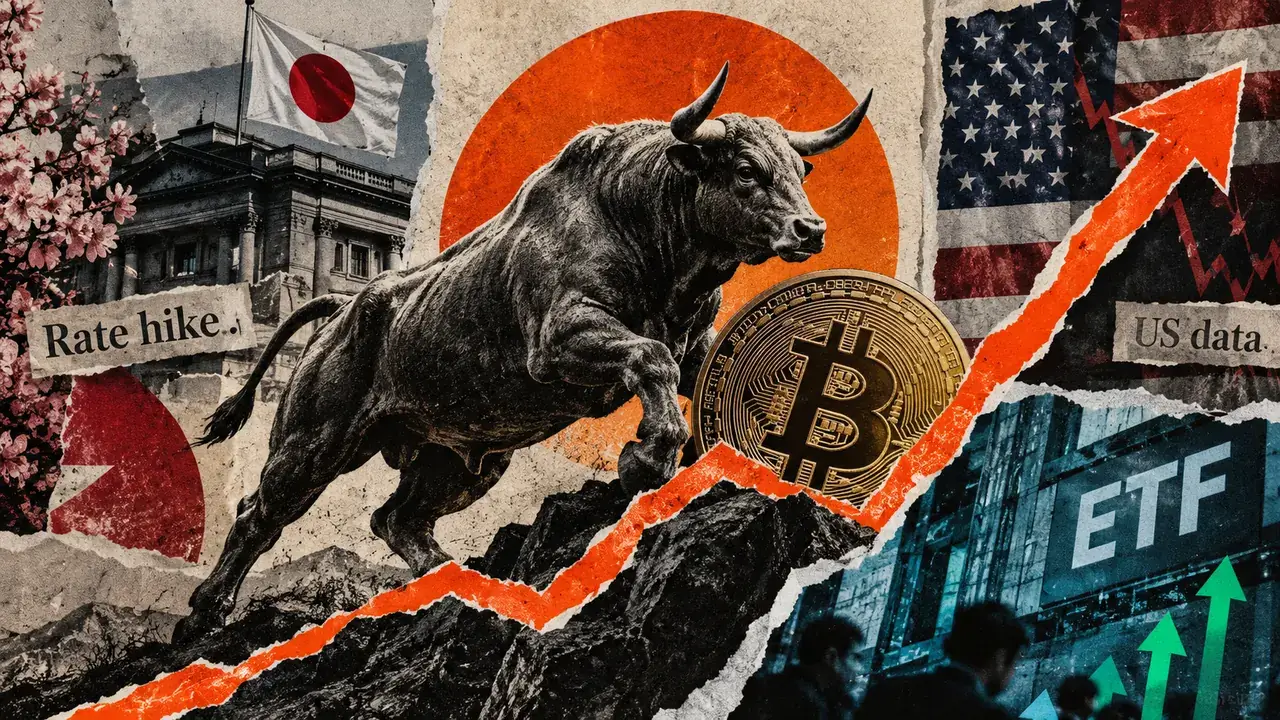
Bitcoin’s impressive surge past the $80,000 mark on September 18th ignited a palpable sense of optimism across the digital asset market, marking a significant technology-driven relief rally. This upward momentum coincided with a notable weakening of the Japanese yen and followed a day of renewed inflows into spot Bitcoin Exchange-Traded Funds (ETFs). The advance was already gaining traction in European trading sessions, preceding the release of underwhelming U.S. economic data that might otherwise have argued against further monetary tightening by the Federal Reserve.
At the time of reporting, Bitcoin was trading at approximately $80,856, reflecting a robust 5.60% increase over the preceding 24-hour period. Analysts broadly attributed this surge to a general market-wide relief rally, characterized by an improving, albeit still fragile, demand signal. The timing of the ascent suggests a broader recovery in risk appetite, though pinpointing a single decisive catalyst remains challenging.
Early reports from Dow Jones indicated Bitcoin trading at $78,309, up 2.3%, during European trading hours, directly linking the rebound to a technology sector-led recovery observed on Thursday. A dispatch at 10:54 a.m. BST detailed the price action observed earlier that morning, highlighting the early signs of upward momentum.
The broader equity market backdrop provided additional support for this optimistic outlook. Nasdaq 100 E-mini futures, for instance, were reported up by 0.56% at 9:50 a.m. BST, according to Reuters. This rise was attributed to a retreat in oil prices, which in turn eased inflationary concerns. This correlation strengthens the interpretation that Bitcoin’s movement was part of a wider resurgence in investor appetite for risk assets, rather than a solely reactive move to subsequent U.S. economic announcements.
By the opening minutes of U.S. stock trading, Bitcoin had already surpassed the $79,000 level, registering a gain exceeding 4%. This information was corroborated by a Yahoo Finance report published at 3:13 p.m. BST, underscoring the sustained upward trajectory of the cryptocurrency throughout the trading day.
The Bank of Japan’s Monetary Policy and Yen Dynamics
A key external factor influencing market sentiment was the Bank of Japan’s (BoJ) monetary policy decision, announced at 3:54 a.m. BST. The BoJ’s Monetary Policy Meeting confirmed a 7-2 majority vote to raise the overnight call rate target to 1.25%, an increase from the previous 1% and in line with market expectations. This adjustment, scheduled to take effect on September 24th, was a significant step for a central bank that has historically maintained ultra-loose monetary policies.
The subsequent decline in the Japanese yen was consistent with a sentiment of relief rather than shock from an unexpectedly aggressive tightening measure. Daily observations from the BoJ indicated that the dollar was trading at approximately 156.15-17 yen at 1 a.m. BST, and had weakened further to 157.48-50 yen by 9 a.m. BST. This consistent depreciation of the yen across the announcement window suggested that the market had already priced in a degree of policy adjustment, and the actual decision, while a tightening move, did not trigger a significant hawkish reaction that would have drastically strengthened the yen.
Reuters attributed the yen’s weakness to the two dissenting votes on the BoJ’s policy committee and guidance that may have disappointed traders anticipating a more aggressively hawkish stance. A weaker yen, in this context, can be seen as a sign of relief for those holding yen-denominated positions, particularly those funded by borrowing in yen. While this could theoretically free up capital, the available data does not definitively establish a direct flow of these funds into Bitcoin. Instead, it points to a broader market adjustment where the pressure on yen-funded positions eased, contributing to a more generalized risk-on sentiment.
U.S. Economic Indicators and Their Limited Impact on the Morning Rally
The U.S. policy backdrop, meanwhile, remained characterized by restrictive monetary conditions. The Federal Reserve’s decision on the preceding Wednesday, as reported by Dow Jones, involved a quarter-point interest rate hike, signaling the central bank’s continued commitment to combating inflation.
The economic data released on Friday afternoon provided further context for the market’s direction. At 2 p.m. BST, U.S. industrial production was reported as unchanged for August, and manufacturing output experienced a decline of 0.3%. These figures, confirmed by the Federal Reserve’s release, fell short of Trading Economics’ expectations, which had anticipated a 0.3% increase in both categories. Further underscoring the economic slowdown, the leading economic index fell by 0.1% at 3 p.m. BST, contrary to expectations of a 0.1% rise.
While weaker economic activity generally strengthens the argument against further monetary tightening, these releases occurred in the afternoon and could not have explained the advance in Bitcoin that was already visible earlier in the day. Furthermore, Friday’s price action was not solely driven by falling yields. Reuters reported that the 10-year Treasury yield had risen by 2.9 basis points to 4.976% prior to the U.S. market open, indicating that interest rate expectations were not uniformly pointing towards easing.
Spot Bitcoin ETFs and the Search for Durable Demand
A crucial element supporting the rally, and a key indicator for the future direction of Bitcoin, is the performance of spot Bitcoin ETFs in the U.S. On September 17th, these ETFs recorded net inflows totaling USD 159.5 million, according to data from Farside Investors. BlackRock’s IBIT fund was a significant contributor to these inflows, although withdrawals from other ETF providers tempered the overall positive figure.
This positive inflow day followed a period of net outflows on September 15th and 16th. The renewed positive session on the 17th is a concrete piece of evidence that demand through these regulated investment vehicles improved in the days leading up to Friday’s price surge. However, a single day of positive inflows, while encouraging, does not definitively establish a durable reversal in demand trends. The sustained performance of these ETFs will be critical in signaling a long-term shift in investor sentiment and capital allocation towards Bitcoin.
The daily inflow data for ETFs provides a tangible demand signal, but it is important to note the limitations of this metric. These reports do not reveal the precise timing of the purchases within the day, nor do they definitively establish the source of the buying pressure that fueled Friday’s advance. The distinction between institutional buying through ETFs and retail buying on exchanges, for instance, remains somewhat opaque from this data alone.
The Role of Liquidations and Regulatory Developments
The possibility of forced buying, often triggered by short squeezes, is another factor that may have amplified Bitcoin’s upward move. CoinGlass data indicated approximately $230.6 million in total Bitcoin futures liquidations over the 24-hour period leading up to the reporting, with an open interest of $56.36 billion.
It is essential to understand that liquidation totals encompass both long and short positions being closed. A short squeeze specifically occurs when bearish positions are forcibly liquidated as prices rise, creating a feedback loop that drives prices higher. However, the available liquidation data, without a breakdown of short-side liquidations or corresponding changes in funding rates and open interest, cannot definitively quantify the contribution of short covering to Friday’s advance. While the liquidation figures suggest market activity, attributing a specific percentage of the price increase to short squeezes remains speculative without more granular data.
In parallel, broader regulatory developments continued to shape the landscape for digital assets. The U.S. Securities and Exchange Commission’s (SEC) announcement on Thursday regarding an exemption for tokenized stocks offered a glimpse into evolving regulatory approaches. This conditional relief pertains to specific stock-trading venues and liquidity providers, and while not a direct approval for Bitcoin-related products, it signifies a growing engagement with tokenization technologies that could have indirect implications for the broader digital asset ecosystem. The regulatory clarity, or lack thereof, continues to be a significant factor influencing institutional adoption and investor confidence in cryptocurrencies.
Uncertainty Lingers: The Path Forward for Bitcoin
For the current rally to demonstrate genuine durability, several key indicators will need to show sustained positive trends. Repeated and consistent inflows into spot Bitcoin ETFs would provide a more robust demand signal than a single-day rebound. Furthermore, more granular liquidation data, particularly a clear breakdown of short-side liquidations alongside changes in funding rates and open interest, could shed light on the extent to which forced buying is contributing to price movements.
Friday’s sequence of events strongly supports the interpretation of a relief rally, driven by a confluence of factors including improved risk sentiment and a potential easing of pressure on certain market participants. However, the critical question of whether this advance is fueled by genuine fresh demand for Bitcoin or primarily by short covering remains unresolved. The coming days and weeks will be crucial in determining whether this surge marks a sustained recovery or a temporary reprieve in Bitcoin’s price trajectory. The interplay between macroeconomic factors, regulatory developments, and the evolving demand dynamics for digital assets will continue to be closely watched by investors and analysts alike. The market’s ability to absorb this upward price action without significant pullbacks will be a key test of its underlying strength.








