admin
admin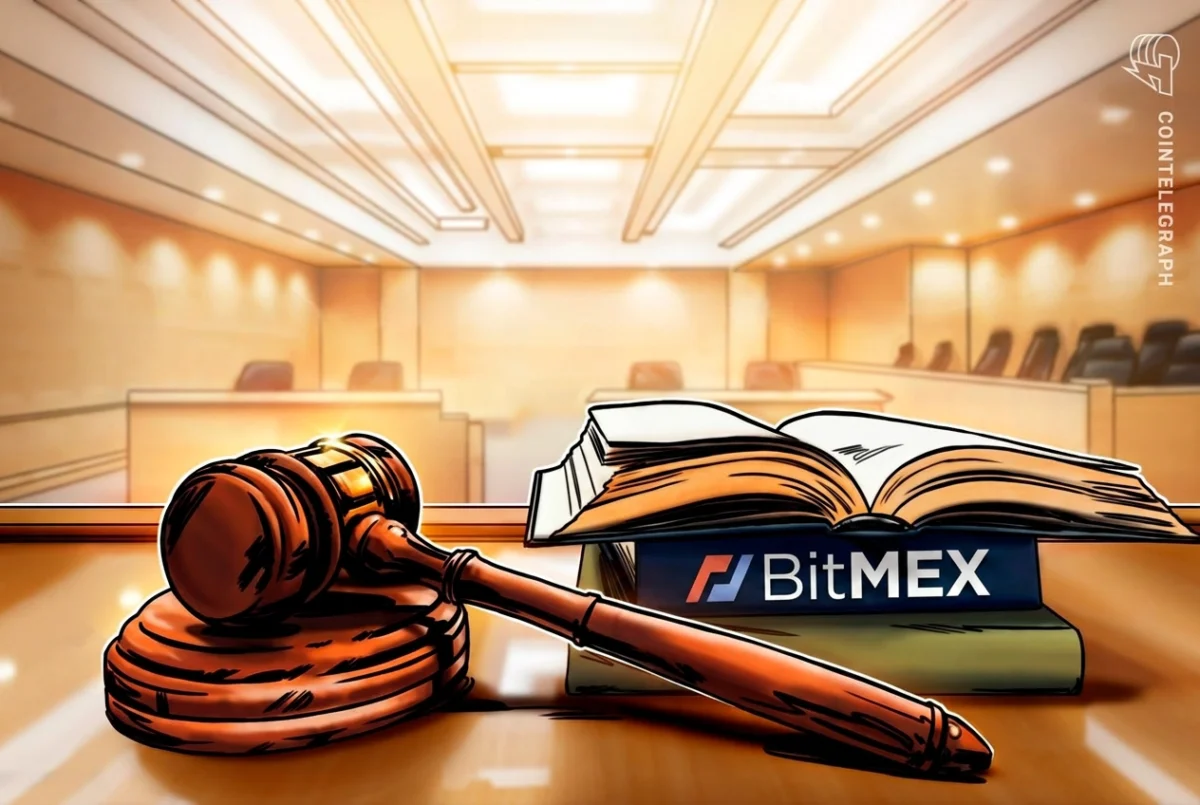
The cryptocurrency derivatives landscape has been shaken by a significant legal challenge as BitMEX, once a dominant force in the high-leverage trading space, faces a comprehensive class action lawsuit. Filed in the United States District Court for the Southern District of New York, the complaint alleges that the platform orchestrated a sophisticated scheme to fraudulently engineer customer liquidations. According to the plaintiffs, BKX Services Inc. and David Namdar, BitMEX utilized its internal systems to deliberately trigger liquidations, allowing the exchange to seize substantial amounts of Bitcoin collateral from its users. This legal action arrives at a critical juncture for the exchange, coinciding almost exactly with the announcement that the platform will cease operations in September 2024.
The plaintiffs assert that the exchange’s operational model was designed not merely to facilitate trading but to profit directly from the failure of its clients’ positions. The complaint details specific losses, with BKX Services Inc. reporting a loss of at least 305.81 BTC and David Namdar alleging losses exceeding 316.85 BTC. At current market valuations, these combined losses of 622.66 BTC represent tens of millions of dollars in digital assets. The lawsuit seeks not only the return of the withheld Bitcoin but also compensatory and punitive damages for a class of U.S. customers who engaged in Bitcoin swap transactions on the platform dating back to July 2018.
The Mechanics of Alleged Manipulation and the Liquidation Engine
Central to the lawsuit is the allegation that BitMEX’s liquidation engine was structurally biased against the trader. The plaintiffs contend that the platform encouraged the use of extreme leverage—up to 100 times the initial collateral—which inherently increased the risk of forced liquidation. However, the core of the fraud claim lies in how these liquidations were executed. The filing alleges that BitMEX would automatically close out positions even when the underlying collateral was still worth significantly more than the losses incurred by the position.
Under standard market conditions, a liquidation engine is intended to protect an exchange’s solvency by closing a position before it enters negative equity. The plaintiffs argue that BitMEX’s system went beyond protection, instead functioning as a profit center. They claim the "excess" Bitcoin recovered from these liquidations was diverted into the platform’s "Insurance Fund." While ostensibly designed to cover potential shortfalls from other bankrupt positions, the plaintiffs argue the fund was used as a mechanism for the exchange to aggregate and retain user collateral under the guise of risk management.
Furthermore, the complaint revives long-standing industry rumors regarding BitMEX’s internal trading desk. The plaintiffs allege that this internal desk possessed "god mode" access—the ability to view private customer information, including stop-loss orders and liquidation prices. Most damningly, the lawsuit claims that during periods of high market volatility, when the BitMEX servers frequently experienced "freezes" or "system overloads," the internal trading desk remained operational. This allowed the exchange to trade against its own customers while those customers were physically unable to log in, move their stops, or close their positions to prevent total loss.
A Chronology of Regulatory Scrutiny and Platform Decline
To understand the context of this lawsuit, one must look at the turbulent history of BitMEX and its parent company, HDR Global Trading Limited. Founded in 2014 by Arthur Hayes, Ben Delo, and Samuel Reed, BitMEX pioneered the "Perpetual Swap," a derivative product that allowed traders to speculate on Bitcoin prices with massive leverage without an expiry date.
- 2014–2018: BitMEX rises to become the world’s largest crypto derivatives exchange by volume, often handling billions of dollars in daily trades.
- July 2019: Reports emerge that the U.S. Commodity Futures Trading Commission (CFTC) has opened an investigation into whether BitMEX allowed Americans to trade on the platform in violation of U.S. law.
- October 2020: The U.S. Department of Justice (DOJ) and the CFTC file criminal and civil charges against the founders. The charges include violations of the Bank Secrecy Act and operating an unregistered trading platform.
- August 2021: BitMEX agrees to pay a $100 million penalty to settle the CFTC and FinCEN charges.
- May 2022: Arthur Hayes and the other founders are sentenced to probation and fines following guilty pleas regarding anti-money laundering (AML) failures.
- July 2024: BitMEX begins a rapid delisting process, removing 65 trading pairs and derivatives markets, signaling a significant contraction of its business.
- August 22, 2024: BKX Services Inc. and David Namdar file the current class action lawsuit. Simultaneously, BitMEX announces it will officially shut down all operations by September 23, 2024.
The timing of the lawsuit and the shutdown announcement suggests a final reckoning for the "Old Guard" of the crypto exchange world. The plaintiffs’ legal team points to a previous 2020 class action filed by Brett Messieh, which alleged similar misconduct. Although that case was voluntarily dismissed without prejudice in June 2025 (likely due to jurisdictional or procedural shifts), the new filing leverages many of the same core arguments, bolstered by the platform’s recent collapse.
The Insurance Fund and the Profitability of Failure
A significant portion of the evidentiary focus in the lawsuit is expected to center on the BitMEX Insurance Fund. Throughout the 2017-2021 period, market analysts frequently noted that the BitMEX Insurance Fund grew at a rate that seemed disconnected from the actual necessity of covering bankrupt positions. In many instances, the fund grew even during periods of relative market stability.
Data from the platform’s own transparency reports during its peak showed the fund holding upwards of 35,000 BTC. Critics, and now the plaintiffs, argue that if the liquidation engine were "fair," the fund should fluctuate—growing during some liquidations but shrinking when the engine fails to close a position before it hits negative equity. The consistent, aggressive growth of the fund is cited as statistical evidence that the "liquidation price" was set too far away from the "bankruptcy price," ensuring the exchange always walked away with a surplus of the user’s Bitcoin.
This "spread" between the price at which a user was liquidated and the price at which the exchange actually closed the position in the market is where the alleged fraud occurred. By systematically capturing this spread, the plaintiffs argue that BitMEX turned the volatility of the crypto market into a guaranteed revenue stream, funded entirely by the forced losses of its user base.
Market Reaction and the Shutdown Process
The announcement of the platform’s closure sent shockwaves through the remaining BitMEX ecosystem. The BMEX token, the exchange’s native utility token, experienced a catastrophic price collapse, losing approximately 90% of its value within hours of the news. This crash underscored the lack of confidence in the platform’s "strategic review" conducted by HDR Global Trading.
According to the shutdown schedule released by the exchange:
- August 2024: New user registrations were immediately suspended.
- August 26, 2024: Users will be barred from opening any new trading positions.
- September 23, 2024: All services will be terminated, and the platform will officially close.
While BitMEX has framed the closure as a result of a "strategic review," legal experts suggest the mounting pressure from private litigation and the lingering effects of multi-year regulatory battles made continued operation untenable. The exchange, which once handled the majority of the world’s Bitcoin leverage, has seen its market share cannibalized by newer, more compliant competitors like Binance, Bybit, and OKX, as well as regulated U.S. entities like Coinbase and CME Group.
Broader Implications for the Crypto Derivatives Industry
The lawsuit against BitMEX serves as a cautionary tale for the broader cryptocurrency industry regarding "internal trading desks" and "liquidation transparency." In the early days of crypto, exchanges often wore multiple hats: they were the marketplace, the custodian, the clearinghouse, and, in many cases, the primary market maker (trader) on their own platform.
This lack of separation of duties is a primary target for regulators and class-action attorneys. The BitMEX case highlights the inherent conflict of interest that arises when an exchange profits from the liquidations of its own clients. If the allegations are proven true, it would establish a legal precedent that exchange-managed insurance funds and liquidation engines must be subject to rigorous third-party audits to ensure they are not being used as hidden profit-extraction tools.
For traders, the lawsuit emphasizes the dangers of high-leverage products on unregulated or semi-regulated platforms. The "system overload" defense, which BitMEX used for years to explain why users couldn’t access their accounts during market crashes, is now being framed in court as a deliberate "denial of service" to facilitate the seizure of collateral.
Future Outlook for the Plaintiffs and Affected Users
As the case moves forward in the Southern District of New York, the legal discovery process will be paramount. If the plaintiffs gain access to BitMEX’s internal server logs and trading data from the 2018-2022 period, they may be able to prove whether the internal trading desk truly had an unfair advantage during server outages.
However, the fact that BitMEX is shutting down adds a layer of complexity to the recovery of funds. While HDR Global Trading remains a legal entity, the liquidation of the platform’s assets and the potential distribution of its remaining Bitcoin reserves will be closely watched by the court. The plaintiffs’ goal is to ensure that the "Insurance Fund"—which they claim is composed of stolen collateral—is not dissipated during the shutdown process but is instead preserved for the restitution of affected traders.
In conclusion, the BitMEX class action is more than just a dispute over lost Bitcoin; it is a fundamental challenge to the operational ethics of the first generation of crypto-derivative giants. As the exchange prepares to go dark on September 23, the legal battle in New York may be the final chapter in the history of a platform that defined the "wild west" era of cryptocurrency trading. Whether the plaintiffs can successfully claw back their 622 BTC will depend on the court’s interpretation of where "risk management" ends and "engineered fraud" begins.