James Watt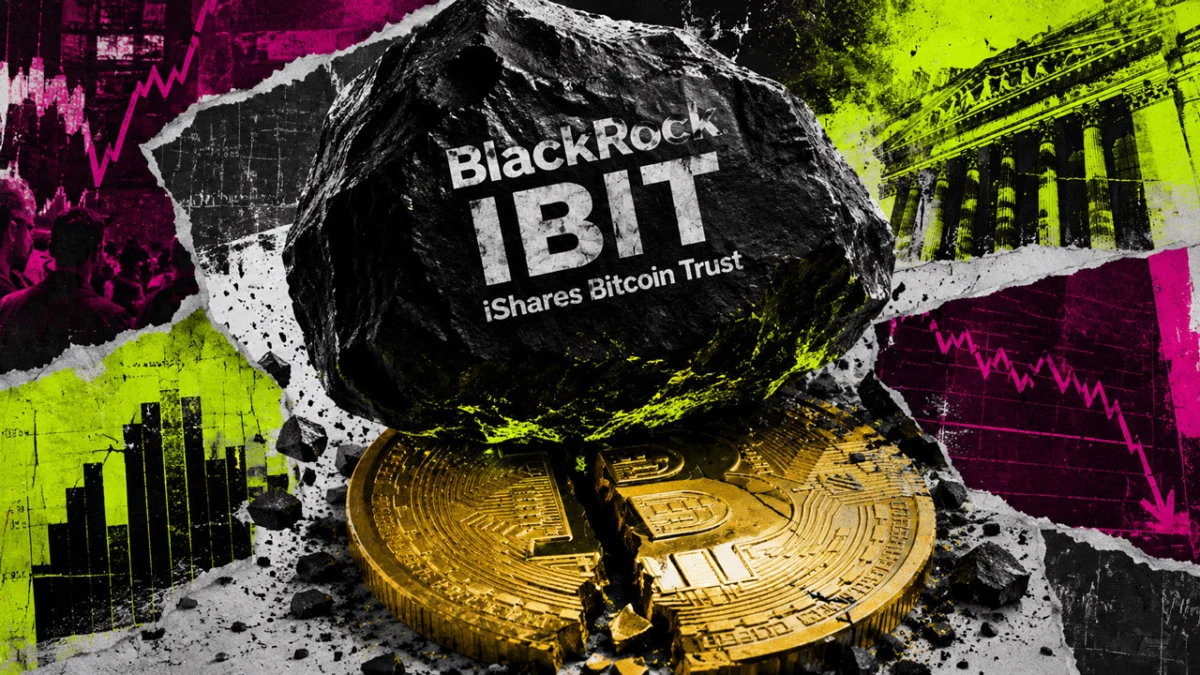
The landscape of United States spot Bitcoin exchange-traded funds (ETFs) experienced a sharp and unexpected pivot on July 23, 2026, as a robust seven-session streak of net inflows came to an abrupt halt. Total net outflows for the day reached $225 million, a figure largely driven by a significant retreat from BlackRock’s iShares Bitcoin Trust (IBIT). This reversal ended a period of sustained institutional optimism that had seen nearly $1 billion flow into the sector over the preceding week, signaling a potential shift in short-term sentiment or a period of strategic profit-taking among major institutional players.
The scale of the reversal was underscored by the dominance of BlackRock’s flagship fund in the daily statistics. IBIT recorded a net outflow of $202.5 million, representing approximately 89.96% of the total aggregate net outflows for the entire US spot Bitcoin ETF sector. This development is particularly noteworthy given that IBIT has historically been the primary engine of growth for the industry since the SEC’s landmark approval of spot Bitcoin ETFs in early 2024.
Breaking Down the July 23 Flow Dynamics
The $225 million exit from the market was not evenly distributed across the various product offerings. While BlackRock bore the brunt of the redemptions, five other competing funds recorded a combined net outflow of $27.6 million. In a surprising turn of events, Grayscale’s Bitcoin Trust (GBTC), which has faced persistent outflows since its conversion to an ETF, managed to buck the daily trend by attracting $5 million in net inflows.
When the performance of all funds excluding IBIT is aggregated, the net contribution to the day’s outflow was a relatively modest $22.6 million. This highlights the degree to which BlackRock’s activity dictated the market’s overall direction. For market analysts, the concentration of outflows within a single, highly liquid vehicle like IBIT suggests that large-scale institutional holders may have been rebalancing portfolios or reacting to specific macroeconomic triggers that coincided with the session.
Prior to this reversal, the sector had enjoyed a highly productive period between July 14 and July 22. During those seven consecutive positive sessions, the suite of US spot Bitcoin ETFs attracted a combined $999.3 million in fresh capital. The $225 million withdrawal on July 23 effectively erased 22.5% of those gains in a single day. Despite this setback, the net balance for the eight-session window remains firmly in the green, with a total net inflow of $774.2 million, according to data finalized by Farside Investors.
Bitcoin Price Performance and Market Benchmarks
The cooling of ETF demand appeared to correlate with a softening in the underlying price of Bitcoin. During the July 23 trading session, Bitcoin struggled to maintain its recent momentum, eventually ending the day below the psychologically significant $65,000 threshold. BlackRock’s internal reporting reflected this downward pressure, noting that IBIT’s net asset value (NAV) declined by 1.63% over the 24-hour period.
The fund’s benchmark, the CME CF Bitcoin Reference Rate, concluded the session at $64,768. This price action was directionally consistent with the lower demand seen in the ETF space, though financial historians often caution against drawing a direct line of causation between single-day flows and price movements. Because ETF flows are typically calculated and finalized after the close of the trading session, they often reflect positioning that was established hours earlier, sometimes acting as a lagging indicator of broader market sentiment.
At the time of the reporting, Bitcoin’s broader market metrics showed a 24-hour trading volume of $26.87 billion, a 15.57% increase despite the price dip. This suggests that while the price was moving lower, market participation remained high, likely fueled by the liquidation of long positions and active trading around the $65,000 support level. The total market capitalization for Bitcoin stood at $1.29 trillion, maintaining a dominant 58.72% share of the total $2.19 trillion global cryptocurrency market.
The Mechanics of the IBIT Outflow: Understanding Redemptions
To accurately interpret the $202.5 million outflow from IBIT, it is essential to distinguish between fund-level activity and corporate decision-making. A common misconception in the digital asset space is that a net outflow represents a "sale" of Bitcoin by BlackRock itself. However, the operational structure of an ETF is driven by market participants rather than the fund manager’s discretionary outlook.

According to BlackRock’s product documentation, the iShares Bitcoin Trust utilizes a "basket" system for creations and redemptions. Ordinary retail and institutional investors trade IBIT shares on the secondary market (such as the Nasdaq). When the demand for shares on the secondary market deviates significantly from the value of the underlying Bitcoin held by the trust, "Authorized Participants" (APs)—typically large financial institutions like Goldman Sachs or JPMorgan—step in.
In the case of an outflow, APs aggregate large blocks of shares (baskets) and return them to the trust in exchange for cash or the underlying asset. Therefore, the reported $202.5 million outflow reflects a net redemption of shares by these participants, responding to selling pressure or a lack of buying interest in the secondary market. It does not imply that BlackRock has changed its institutional stance on Bitcoin or is independently offloading its reserves.
Chronology of the Recent Trading Cycle
The volatility observed on July 23 can be better understood when placed within the context of the preceding weeks. The following timeline outlines the progression of the market leading up to the reversal:
- July 14 – July 18: Market sentiment shifts bullish as Bitcoin recovers from early-month lows. Inflows begin to accelerate, averaging over $120 million per day across the ETF sector.
- July 19 – July 21: Institutional appetite peaks. BlackRock’s IBIT sees record-breaking daily additions, contributing to a total five-day inflow of over $600 million.
- July 22: The final day of the streak. Total inflows reach the $999.3 million mark, with Bitcoin testing the $67,000 range.
- July 23: The reversal occurs. IBIT sees its largest single-day outflow in weeks ($202.5 million). Bitcoin price drops 1.11% to close below $65,000.
- July 24: Market enters a period of consolidation as investors wait for finalized data to determine if the outflow was an isolated event or the start of a broader trend.
Broader Implications and Institutional Sentiment
The concentration of the outflow within IBIT makes this session particularly significant for the broader industry. As the largest and most liquid Bitcoin ETF, IBIT is often viewed as a proxy for institutional "smart money." A withdrawal of this magnitude suggests that some large-scale players may be moving to the sidelines to assess macroeconomic variables, such as upcoming Federal Reserve commentary or shifts in the political landscape regarding digital asset regulation.
However, many analysts view the July 23 event as a "healthy reset" rather than a signal of an impending crash. After a seven-day streak that nearly touched $1 billion in new capital, a period of profit-taking is statistically probable. The fact that the net eight-day total remains positive by over $774 million provides a buffer for the market.
Furthermore, the small inflow into Grayscale’s GBTC ($5 million) provides a glimmer of stability. For much of 2024 and 2025, GBTC was a source of constant downward pressure as investors migrated to lower-fee alternatives like IBIT or Fidelity’s FBTC. A positive day for Grayscale, even if small, suggests that the "forced selling" or migration from that specific fund may finally be reaching a point of exhaustion.
Testing the ETF Demand Buffer
The durability of the current Bitcoin price cycle will likely depend on whether the July 23 reversal extends into subsequent sessions. The market is currently in a "testing phase" where the strength of the ETF demand buffer is being evaluated.
If repeated net outflows are recorded in the coming days, it would provide stronger evidence that institutional demand has reached a temporary saturation point or that a more bearish outlook is taking hold. Conversely, a quick return to net inflows would strengthen the interpretation that the IBIT-led reversal was a one-session anomaly—a "liquidity event" where large holders exited positions to capture gains from the previous week’s rally.
As the digital asset market matures, these fluctuations in ETF flows are becoming a standard part of the financial ecosystem, mirroring the behavior of traditional gold or equity ETFs. For now, the $774.2 million of net demand accumulated over the last eight sessions suggests that the institutional foundation for Bitcoin remains intact, even as the market navigates the volatility of a $225 million daily swing.
Investors and regulators alike will be watching the next set of finalized data closely to see if BlackRock’s IBIT returns to its role as a primary accumulator or if the sector is entering a more cautious mid-summer phase. With Bitcoin dominance holding steady near 59%, the influence of these spot ETFs continues to be the single most important factor in determining the cryptocurrency’s short-to-medium-term price trajectory.