Nila Kartika Wati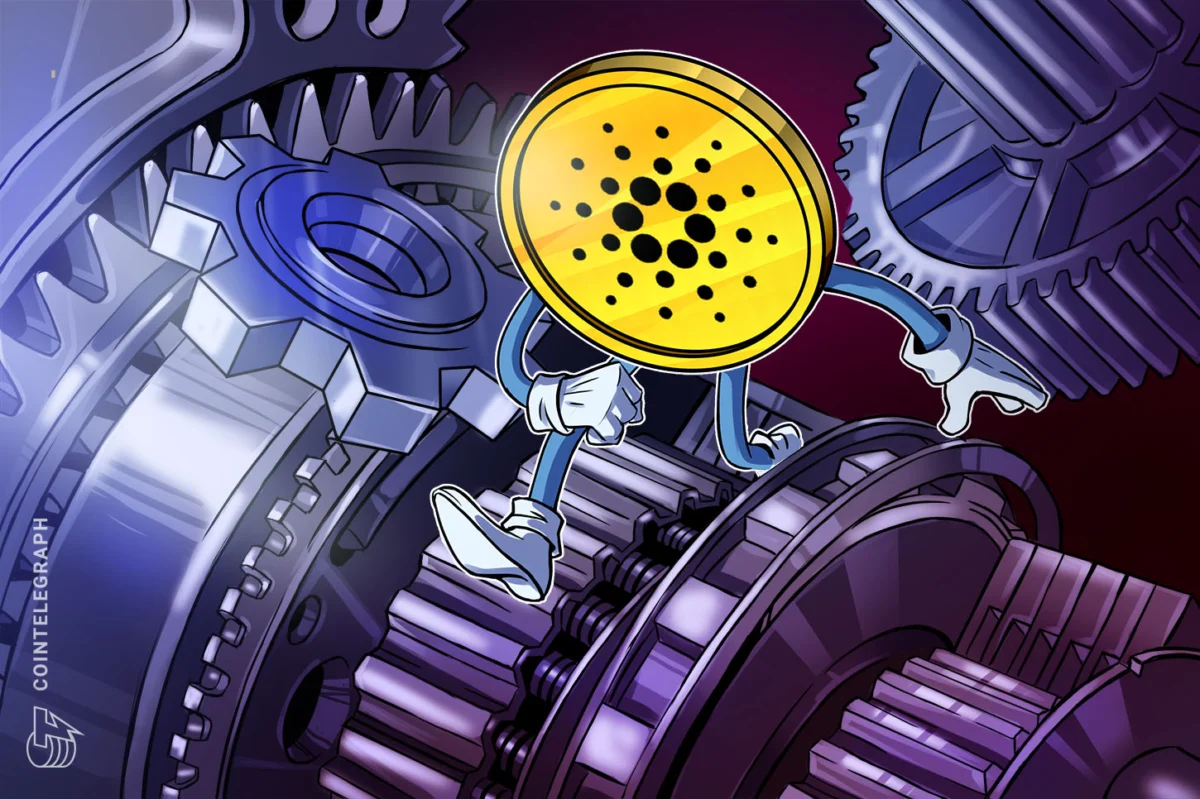
Cardano, the proof-of-stake blockchain platform, successfully activated its anticipated van Rossem hard fork on Saturday, upgrading the Cardano mainnet to Protocol Version 11. This significant network enhancement is poised to deliver immediate benefits by lowering smart contract execution costs and, critically, lays the foundational groundwork for Ouroboros Leios, a forthcoming and ambitious scalability upgrade designed to dramatically boost the protocol’s transaction throughput. The activation marks a pivotal moment in Cardano’s evolutionary roadmap, underscoring its commitment to progressive decentralization and robust technological advancement.
Technical Refinements and Immediate Impact of Van Rossem
The transition to Protocol Version 11 was meticulously executed, with on-chain data from Cardanoscan confirming the network’s shift from Protocol Version 10 in epoch 643 to the new iteration in epoch 644. This upgrade is not merely a version bump but incorporates several vital enhancements to the Plutus smart contract platform and improvements to the Plutus Cost Model. Plutus, Cardano’s native smart contract language, benefits from optimizations that streamline its operations, making smart contract interactions more efficient and less resource-intensive.
The direct consequence for developers and users interacting with Cardano’s decentralized applications (dApps) is a tangible reduction in transaction fees associated with smart contract execution. For a network aiming to foster a vibrant ecosystem of dApps, lower costs are a critical factor in attracting and retaining both builders and users. High transaction costs on other blockchain platforms have frequently been cited as barriers to entry and widespread adoption. By addressing this, van Rossem aims to make Cardano a more attractive and competitive environment for a diverse range of applications, from decentralized finance (DeFi) protocols to non-fungible token (NFT) marketplaces and gaming platforms. Input Output Global (IOG), the engineering company behind Cardano’s design and construction, highlighted these Plutus improvements and Cost Model enhancements in a recent weekly development report, emphasizing their role in preparing the network for future, more complex functionalities.
Paving the Way for Ouroboros Leios: The Scalability Frontier
While the immediate benefits of van Rossem are significant, its strategic importance lies in its role as a precursor to the "Dijkstra era hard fork," which will introduce Ouroboros Leios to the Cardano blockchain. Ouroboros Leios represents a monumental leap in Cardano’s scalability strategy, designed to address one of the most persistent challenges facing blockchain networks today: achieving high transaction throughput without compromising security or decentralization.
Ouroboros Leios is a highly anticipated scaling proposal for Ouroboros, the innovative proof-of-stake (PoS) consensus mechanism that underpins Cardano. Unlike traditional proof-of-work systems that rely on energy-intensive mining, Ouroboros leverages stake delegation and cryptographic proofs to secure the network. While highly secure and energy-efficient, the current iteration of Ouroboros, like many first-generation PoS protocols, faces theoretical limitations in processing an extremely high volume of transactions per second (TPS) compared to centralized systems or some newer, more performant Layer 1 blockchains. Leios aims to overcome this by introducing advanced techniques such as "input endorsers" and "pipelining," which allow for more efficient block production and validation. Input endorsers enable the network to process transactions in parallel more effectively, while pipelining optimizes the flow of data through the consensus mechanism, reducing latency and increasing overall capacity.
The goal of Leios is ambitious: to drastically increase the transactions per second (TPS) that the Cardano network can handle, without weakening the stringent security guarantees inherent to the Ouroboros protocol. This balance between scalability, security, and decentralization is often referred to as the "blockchain trilemma," and Leios is Cardano’s sophisticated answer to this complex problem. The expected launch of Ouroboros Leios is projected for late 2026, marking it as a long-term strategic objective that will solidify Cardano’s position as a leading contender in the high-performance blockchain arena. The van Rossem hard fork, by providing an updated Plutus environment and optimized cost model, ensures that the underlying infrastructure is robust enough to support the intricate demands of the Leios architecture when it eventually goes live.
A Landmark in Decentralized Governance: The First Community-Driven Hard Fork
Beyond its technical advancements, the van Rossem upgrade holds profound historical significance for Cardano’s governance model. It represents the first governance-driven hard fork in the protocol’s history. Previous network upgrades, such as Shelley, Goguen, and Basho, were primarily coordinated and implemented by Input Output Global (IOG), the principal development team. While IOG’s leadership was instrumental in building and maturing the Cardano ecosystem, the long-term vision for the network has always been progressive decentralization, culminating in the "Voltaire era" where community governance reigns supreme.
The successful implementation of van Rossem through a governance action signifies a major stride towards this vision. It demonstrates the growing maturity and efficacy of Cardano’s on-chain governance mechanisms, allowing the community of ADA holders and stake pool operators to directly propose, debate, and vote on critical protocol changes. This shift empowers the decentralized community to take greater ownership of the network’s future, aligning with the core ethos of blockchain technology. The process likely involved a Cardano Improvement Proposal (CIP) or a similar governance action, followed by a voting period where stakeholders could cast their votes based on their delegated stake. The successful passage and implementation of this proposal underscore the active participation and collective decision-making capacity within the Cardano ecosystem. This new paradigm fosters greater transparency, accountability, and resilience, as the network’s evolution is no longer solely reliant on a single entity but is guided by the collective will of its global participant base. This transition also sets a precedent for future upgrades, ensuring that the community plays an increasingly central role in shaping Cardano’s technological trajectory.
Cardano’s Development Roadmap: A Phased Evolution
To fully appreciate the significance of the van Rossem hard fork, it is essential to contextualize it within Cardano’s overarching development roadmap. Cardano’s journey has been meticulously planned through distinct development eras, each focusing on a specific set of functionalities:
- Byron Era (Foundation): The initial bootstrapping phase, establishing the foundational blockchain and its core components.
- Shelley Era (Decentralization): Introduced stake pools and delegated proof-of-stake, significantly decentralizing block production.
- Goguen Era (Smart Contracts): Integrated the Plutus smart contract platform, enabling the development of dApps.
- Basho Era (Scalability): Focused on optimizing the network’s performance, interoperability, and scalability. Van Rossem and Ouroboros Leios are key components of this era.
- Voltaire Era (Governance): The final phase, aimed at transitioning full control of the network to the community through on-chain governance mechanisms. The van Rossem hard fork is a significant early manifestation of Voltaire’s principles being implemented.
The van Rossem upgrade, therefore, stands at the intersection of the Basho and Voltaire eras. It embodies the technical advancements required for scalability (Basho) while simultaneously representing a practical application of decentralized governance (Voltaire). This dual significance highlights Cardano’s unique approach to blockchain development: a research-driven, peer-reviewed, and incrementally phased strategy that prioritizes security, sustainability, and community control.
Statements, Reactions, and Broader Implications
Input Output Global (IOG), through its development reports, has consistently expressed its long-term vision for Cardano’s evolution. Their statement regarding van Rossem "laying the foundation for the next upgrade, the Dijkstra era hard fork, which will introduce Ouroboros Leios to Cardano," reflects a methodical and forward-looking approach. Developers within the Cardano ecosystem are expected to welcome the immediate benefits of reduced smart contract execution costs. This improvement directly translates to lower operational expenses for dApps, potentially encouraging more experimentation and innovation on the platform. For users, the promise of cheaper and faster transactions enhances the overall user experience, making dApps more accessible and appealing.
The broader Cardano community, particularly those engaged in governance through Project Catalyst and other forums, likely views the van Rossem hard fork as a resounding success for the nascent Voltaire era. It validates the community’s ability to drive meaningful change and provides a strong precedent for future decentralized decision-making. This move towards decentralized governance stands in stark contrast to the development paths of many other blockchains, where a core team or foundation often retains significant control over protocol upgrades.
Looking ahead, the successful activation of van Rossem and the anticipation of Ouroboros Leios position Cardano to be more competitive in the fiercely contested Layer 1 blockchain landscape. With Ethereum grappling with its own scalability solutions (Layer 2s, sharding via Ethereum 2.0), Solana aiming for ultra-high throughput, and other chains like Avalanche and Polkadot building out their ecosystems, Cardano’s measured but consistent progress in addressing scalability and decentralization is crucial. The ability to offer a secure, energy-efficient, and increasingly scalable platform with low transaction costs could attract a new wave of developers and enterprises seeking a robust foundation for their blockchain-based solutions.
However, the journey is far from over. The implementation of Ouroboros Leios, while promising, is a complex undertaking, and its successful deployment in late 2026 will require continued rigorous research, development, and testing. Furthermore, fostering a truly decentralized governance model involves ongoing education, engagement, and the development of robust tools to ensure broad and informed participation from the community. The recent news regarding the Cardano Foundation’s decision to cancel its annual conference after a failed funding vote, while not directly related to van Rossem, serves as a reminder of the challenges inherent in community-driven initiatives and the ongoing need for effective governance mechanisms to navigate complex decisions and resource allocation within a decentralized ecosystem.
In conclusion, the van Rossem hard fork represents a multi-faceted triumph for the Cardano network. It delivers immediate, tangible benefits to its users and developers through optimized smart contract operations and reduced costs. More importantly, it acts as a critical stepping stone towards the ambitious scalability goals embodied by Ouroboros Leios, promising a future of significantly increased transaction throughput without sacrificing core principles. Perhaps most notably, it marks a historic moment for Cardano’s governance, signifying a decisive shift towards a truly decentralized, community-driven future. As the network continues its phased evolution, van Rossem stands as a testament to Cardano’s methodical approach and its unwavering commitment to building a secure, scalable, and fully decentralized blockchain platform.