admin
admin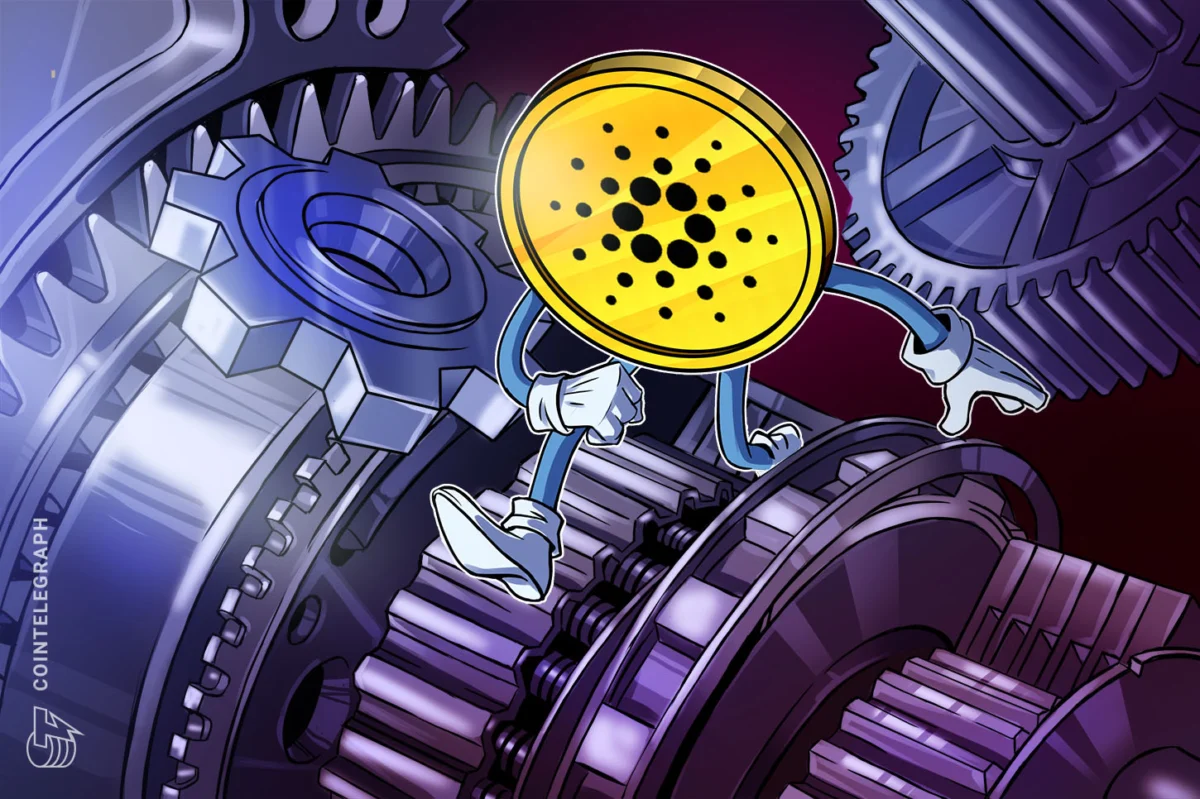
The Cardano blockchain has successfully completed the activation of the van Rossem hard fork, a pivotal technical milestone that transitioned the network from Protocol Version 10 to Version 11 as of Saturday. This upgrade, occurring during the transition from epoch 643 to epoch 644, represents more than a routine maintenance update; it serves as a foundational step toward the "Dijkstra" era and the eventual implementation of Ouroboros Leios, a major scalability framework designed to significantly increase the network’s throughput. According to on-chain data provided by Cardanoscan, the transition was executed seamlessly, marking the first time in the protocol’s history that a hard fork was driven entirely through the decentralized governance mechanisms established during the recent Voltaire era transition.
The van Rossem upgrade introduces critical enhancements to the Plutus smart contract platform, specifically targeting the efficiency of the Plutus Cost Model. By optimizing how smart contracts utilize computational resources, the update is expected to lower execution costs for decentralized application (DApp) developers and end-users alike. This cost reduction is vital for Cardano’s burgeoning decentralized finance (DeFi) ecosystem, where gas fees and execution overhead determine the economic viability of complex financial instruments. Beyond immediate cost savings, the upgrade acts as a technical bridge, installing the necessary logic and parameters required for the next phase of Cardano’s evolution, which will see the introduction of high-speed block propagation and parallelized transaction processing.
The Technical Evolution: From Protocol Version 10 to 11
The shift to Protocol Version 11 is a continuation of the "Hard Fork Combinator" (HFC) events that Cardano utilizes to ensure smooth transitions without network downtime. Unlike traditional blockchains where a hard fork might result in a chain split or require manual intervention from every node operator simultaneously, Cardano’s HFC technology allows the protocol to recognize both the old and new blocks, eventually "combining" the ledgers into a single, upgraded state.
The primary technical focus of the van Rossem upgrade lies in its refinements to the Plutus core. Plutus, Cardano’s native smart contract language based on Haskell, relies on a deterministic cost model that predicts exactly how much resource a transaction will consume before it is submitted to the ledger. Version 11 introduces "Plutus Cost Model enhancements," which recalibrate the relationship between CPU usage and memory consumption for specific on-chain scripts. These adjustments are informed by months of mainnet performance data, allowing the protocol to offer more aggressive pricing for common operations without compromising the security or stability of the EUTXO (Extended Unspent Transaction Output) model.
Furthermore, this upgrade prepares the node software for the Dijkstra era hard fork. Named after the pioneering computer scientist Edsger W. Dijkstra, this upcoming phase is dedicated to refining the efficiency of the network’s consensus and propagation layers. The integration of van Rossem ensures that the current ledger state is compatible with the forthcoming structural changes required for Ouroboros Leios, which remains the most anticipated scalability solution in the Cardano roadmap.
Governance as a Catalyst for Network Upgrades
A defining characteristic of the van Rossem hard fork is its origin as a governance-driven initiative. Historically, Cardano’s upgrades were coordinated primarily by Input Output Global (IOG), the engineering firm led by Charles Hoskinson that designed and built the protocol. However, following the Chang hard fork earlier this year, Cardano entered the Voltaire era, which introduced a decentralized governance framework governed by the Cardano Constitution and managed by Decentralized Representatives (DReps), Stake Pool Operators (SPOs), and the Constitutional Committee.
The van Rossem upgrade was ratified through this new on-chain governance process. The community-led decision-making process involved the submission of a governance action, followed by a voting period where stakeholders evaluated the technical merits of the upgrade. This shift in power dynamics demonstrates the maturity of Cardano’s decentralized identity, moving away from a "benevolent dictator" model toward a self-sustaining, community-governed digital state.
This governance transition has not been without its challenges. The Cardano Foundation recently made headlines by canceling its flagship annual conference following a failed funding vote from the community. While the cancellation of the event was seen by some as a setback for marketing, proponents of Cardano argue that it proves the governance system is functioning as intended: the community now has the final say on how treasury funds are allocated, prioritizing protocol development over promotional events.
The Road to Ouroboros Leios and the Dijkstra Era
The long-term significance of the van Rossem upgrade is inextricably linked to Ouroboros Leios. Currently, Cardano utilizes Ouroboros Praos, a proof-of-stake consensus mechanism that prioritizes security and decentralization but faces throughput limitations compared to centralized or high-performance-centric chains. Ouroboros Leios is designed to solve this by decoupling the process of transaction validation from block production.
Under the Leios framework, the network will introduce "Input Endorsers." These are specialized roles within the consensus process that pre-validate transactions and bundle them into "Input Blocks." These blocks are then referenced by "Ranking Blocks," which are produced by the traditional stake pool operators. By parallelizing these tasks, Cardano aims to achieve a dramatic increase in transactions per second (TPS) while maintaining the security guarantees of the Ouroboros protocol.
The Dijkstra era, which van Rossem facilitates, will be the period during which these Leios components are incrementally introduced. The timeline for the full deployment of Ouroboros Leios is currently projected for late 2026. By laying the groundwork now, the Cardano development team and the community-led organization Intersect are ensuring that the transition to high-throughput capabilities does not require a sudden, risky overhaul of the network’s core architecture.
Chronology of Cardano’s Major Milestones
To understand the context of the van Rossem upgrade, it is necessary to view it within the broader timeline of Cardano’s multi-year development strategy:
- Byron Era (2017): The foundation phase, where Cardano was launched as a federated network allowing users to buy, sell, and transfer ADA.
- Shelley Era (2020): The decentralization phase, which introduced stake pools and allowed ADA holders to delegate their stake, making Cardano one of the most decentralized proof-of-stake networks.
- Goguen Era (2021): The integration of smart contracts via the Alonzo hard fork, enabling the creation of DApps and the issuance of native tokens.
- Basho Era (Ongoing): The scalability phase, focusing on sidechains, Hydra (a Layer-2 scaling solution), and optimizations like the van Rossem and Dijkstra upgrades.
- Voltaire Era (2024): The governance phase, which introduced the on-chain voting and treasury management systems that ratified the current Protocol Version 11.
The van Rossem hard fork sits at the intersection of the Basho and Voltaire eras. It utilizes Voltaire’s governance tools to implement Basho’s scalability improvements. This synergy is a core component of Cardano’s "scientific method" approach to blockchain development, where each phase is peer-reviewed and meticulously planned before execution.
Ecosystem Impact and Supporting Data
The immediate impact of Protocol Version 11 is expected to be felt in the DeFi sector. According to data from DeFiLlama, Cardano’s Total Value Locked (TVL) has seen various fluctuations in 2024, influenced by broader market trends and the launch of new synthetic assets and stablecoins. Lower smart contract execution costs are a direct incentive for liquidity providers and yield aggregators who perform frequent on-chain transactions.
Furthermore, the upgrade addresses the "state bloat" concerns often associated with growing blockchains. By optimizing the Plutus cost model, the network can process more logic within the same block size limits, effectively increasing the "data density" of each block. This allows the network to handle more user activity without immediately needing to increase the 90KB block size limit, which helps keep the hardware requirements for running a Cardano node accessible to a wide range of participants.
Industry analysts have noted that Cardano’s focus on formal methods and high-assurance code often results in a slower development cycle compared to competitors like Solana or Avalanche. However, the successful and stable activation of van Rossem reinforces the argument that Cardano’s methodical approach prevents the frequent outages and emergency patches seen on other high-throughput networks.
Official Responses and Industry Reaction
Input Output Global, in its weekly development report released on July 17, 2026, emphasized the collaborative nature of the upgrade. The report stated that the transition was the result of extensive testing on the "SanchoNet" and "Preview" testnets, where SPOs and developers vetted the Protocol Version 11 code for several months.
"As well as Plutus improvements and Plutus Cost Model enhancements, this upgrade lays the foundation for the next upgrade, the Dijkstra era hard fork, which will introduce Ouroboros Leios to Cardano," IOG noted. This statement highlights the forward-looking nature of the current development cycle, where the focus has shifted from "adding features" to "optimizing for global scale."
The Cardano Foundation and Intersect, the member-based organization (MBO) tasked with ecosystem health, have also signaled their support for the move. Intersect played a crucial role in facilitating the governance discussions that led to the van Rossem vote, providing the technical documentation and forums necessary for the community to make an informed decision.
Broader Implications for the Blockchain Industry
The activation of van Rossem serves as a case study for the evolution of decentralized networks. As blockchains transition from their "startup" phase—where a central founding team makes all decisions—to a "mature" phase, the ability to execute complex technical upgrades via decentralized voting becomes a critical survival trait.
For Cardano, the success of this hard fork validates the years of research poured into the Voltaire governance model. It proves that a global community of stakeholders can effectively manage a multi-billion-dollar infrastructure project. For the wider crypto industry, it sets a benchmark for how protocol-level changes can be handled transparently and democratically.
Looking ahead to late 2026, the focus will remain on the performance metrics of the Dijkstra era. If Ouroboros Leios delivers on its promise of significantly higher TPS without sacrificing the security and decentralization that Cardano is known for, the protocol could see a renewed surge in institutional interest. For now, the van Rossem upgrade stands as a successful technical and social experiment, marking the beginning of a more efficient and community-led era for the Cardano mainnet.