Nila Kartika Wati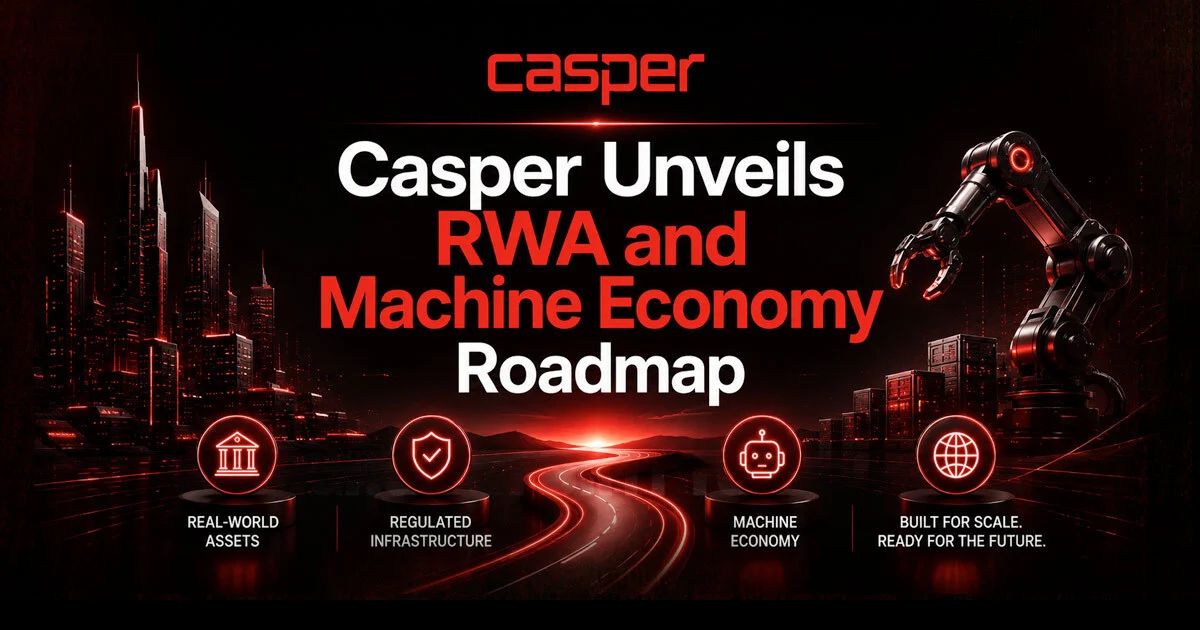
The Casper Network is charting a bold course for the future of blockchain technology, decisively moving beyond speculative digital assets to focus on regulated real-world assets (RWAs), advanced AI-powered payment systems, and robust infrastructure designed for institutional and machine-to-machine interactions. This strategic pivot was formally announced at the recent Digital Finance Forum in Bermuda, where Michael Steuer, President and CTO of the Casper Association, unveiled the comprehensive "Casper Manifest." This multi-year roadmap outlines a vision for a blockchain that is not only powerful and scalable but also seamlessly integrated into everyday applications, making its underlying technology virtually invisible to the end-user.
The Casper Manifest is a meticulously crafted plan that addresses several critical areas of blockchain development. Key components include achieving full Ethereum Virtual Machine (EVM) compatibility, enabling compliant private transactions, pioneering a gasless user experience (UX), implementing sophisticated smart accounts with biometric authentication, integrating AI for micropayments, and preparing the network for the advent of post-quantum cryptography. This ambitious agenda signifies Casper’s intent to become a foundational layer for the next generation of decentralized applications and financial systems.
The Vision: Blockchain That Disappears
A persistent challenge for broader blockchain adoption has been the inherent complexity and user friction associated with current platforms. Wallet pop-ups, the necessity of managing gas fees, and intricate onboarding processes have created significant barriers to entry for mainstream users and enterprises alike. Casper’s core philosophy, as articulated in the Manifest, is to eliminate these friction points, aiming to make blockchain applications as intuitive and effortless as conventional software.
To achieve this, the roadmap prioritizes several key UX enhancements. Gasless transactions, for instance, will abstract away the need for users to possess native tokens to pay for network fees, thereby simplifying the interaction model. Batch operations will allow for the aggregation of multiple transactions into a single on-chain event, further streamlining user flows and reducing computational overhead. Furthermore, the introduction of smart accounts, which will support features like biometric authentication, will bring a level of security and convenience comparable to modern digital services. The goal is to create an environment where users can engage with decentralized applications without needing to understand the underlying blockchain mechanics, enabling a "one tap and done" experience.
A significant technical milestone in this pursuit of seamless integration is the commitment to full EVM compatibility. This means that developers will be able to leverage Solidity, the primary programming language for Ethereum smart contracts, along with widely adopted tools such as MetaMask, directly on the Casper Network. This capability is crucial, as it allows for the direct migration and deployment of existing Ethereum-based applications without the need for costly and time-consuming rewrites. Given Ethereum’s dominant position as the largest developer ecosystem in the cryptocurrency space, this move is expected to attract a significant influx of developers and applications to Casper, fostering innovation and accelerating network growth.

Bridging Privacy and Compliance: A Dual Approach
Historically, the blockchain space has often presented a dichotomy between privacy-focused solutions and those designed for regulatory compliance. Casper is challenging this paradigm by asserting its ambition to support both simultaneously. The network is set to integrate support for compliant security tokens, adhering to the widely recognized ERC-3643 standard. This standard is already instrumental in governing billions of dollars worth of tokenized assets across various industries, indicating its maturity and acceptance within traditional financial frameworks.
Simultaneously, Casper is developing confidential transaction infrastructure. This innovative approach aims to allow for the privacy of on-chain data while still providing mechanisms for auditors and regulators to verify compliance when necessary. This dual capability is particularly pertinent as institutional investors increasingly explore the potential of tokenized assets and on-chain finance. By offering a platform that can accommodate both the privacy demands of certain transactions and the regulatory oversight required by established financial institutions, Casper positions itself as a strong contender for facilitating the mainstream adoption of digital assets in regulated markets.
The implications of this combined approach are profound. For financial institutions, it offers a pathway to leverage blockchain technology for asset tokenization and trading with the assurance of regulatory adherence and enhanced privacy for sensitive operations. For issuers of digital securities, it provides a flexible framework that can meet diverse stakeholder requirements. This ability to cater to both the need for confidentiality and the imperative of compliance could be a deciding factor in the widespread institutional embrace of tokenized real-world assets.
Preparing for the Future: AI, Machine Economies, and Quantum Security
Casper’s forward-looking strategy extends beyond current market trends, proactively addressing emerging technological frontiers. The roadmap includes specific provisions for the integration of Artificial Intelligence (AI) and machine-to-machine (M2M) payments, targeting the burgeoning field of autonomous economic agents. The network plans to support the X402 payment standard, a protocol designed to facilitate seamless and automated transactions between AI agents. This functionality could enable AI systems to autonomously pay for APIs, access vast datasets, or utilize distributed computing resources using cryptocurrencies, paving the way for sophisticated machine economies.
One of the most groundbreaking aspects of the Casper Manifest is its commitment to post-quantum security. The advent of quantum computing poses a significant threat to current cryptographic algorithms, which form the backbone of today’s digital security. By proactively incorporating quantum-resistant cryptography, Casper aims to ensure the long-term security and integrity of its network and the assets transacted upon it.
The plan involves the introduction of "hybrid accounts" that will support both traditional cryptography and quantum-resistant keys. This phased approach allows for a gradual transition, mitigating risks associated with a sudden shift in cryptographic standards. The initial rollout of X402 micropayments with quantum-safe features is anticipated within weeks, demonstrating Casper’s commitment to rapid implementation. Full EVM compatibility and support for compliant security tokens are slated for later in 2026, while the development of enhanced privacy features and the complete quantum-safe infrastructure will continue through 2027.

This strategic foresight in addressing post-quantum threats is a significant differentiator. While many blockchain platforms are still grappling with scalability and interoperability, Casper is investing in future-proofing its technology against one of the most significant technological disruptions on the horizon. This proactive stance could position Casper as a leader in providing secure and resilient blockchain solutions for decades to come.
The Broader Impact and Future Outlook
The Casper Network’s ambitious roadmap signifies a deliberate effort to move beyond the speculative cycles that have characterized much of the cryptocurrency market. By focusing on tangible use cases, institutional adoption, and future-proofing its technology, Casper is positioning itself as a foundational platform for the evolving digital economy. The success of this strategy, however, will ultimately hinge on widespread adoption by both institutions and developers.
The inclusion of EVM compatibility is a strategic masterstroke, leveraging the existing developer community and tooling of Ethereum to accelerate Casper’s ecosystem growth. The focus on seamless UX, compliant transactions, and advanced features like AI payments and quantum security addresses critical needs and emerging opportunities in the blockchain space.
The Digital Finance Forum in Bermuda provided a fitting backdrop for this significant announcement, drawing attention from key stakeholders in the financial and technology sectors. The presence of influential figures and the discourse surrounding regulated finance underscore the growing convergence of traditional finance and blockchain technology.
While the implementation of such an extensive roadmap is inherently complex and will face numerous challenges, Casper’s clear vision and strategic priorities indicate a strong commitment to building a robust, scalable, and future-ready blockchain network. The coming years will be critical in observing how effectively Casper executes its Manifest and whether it can indeed make blockchain technology feel as invisible and indispensable as the internet itself. The network’s proactive approach to addressing future technological shifts, particularly in quantum computing, suggests a long-term perspective that could set it apart in a rapidly evolving digital landscape. The ultimate impact will be measured by its ability to foster a vibrant ecosystem of real-world applications and attract significant institutional capital, transforming the way assets are managed, transactions are conducted, and economies operate in the digital age.