admin
admin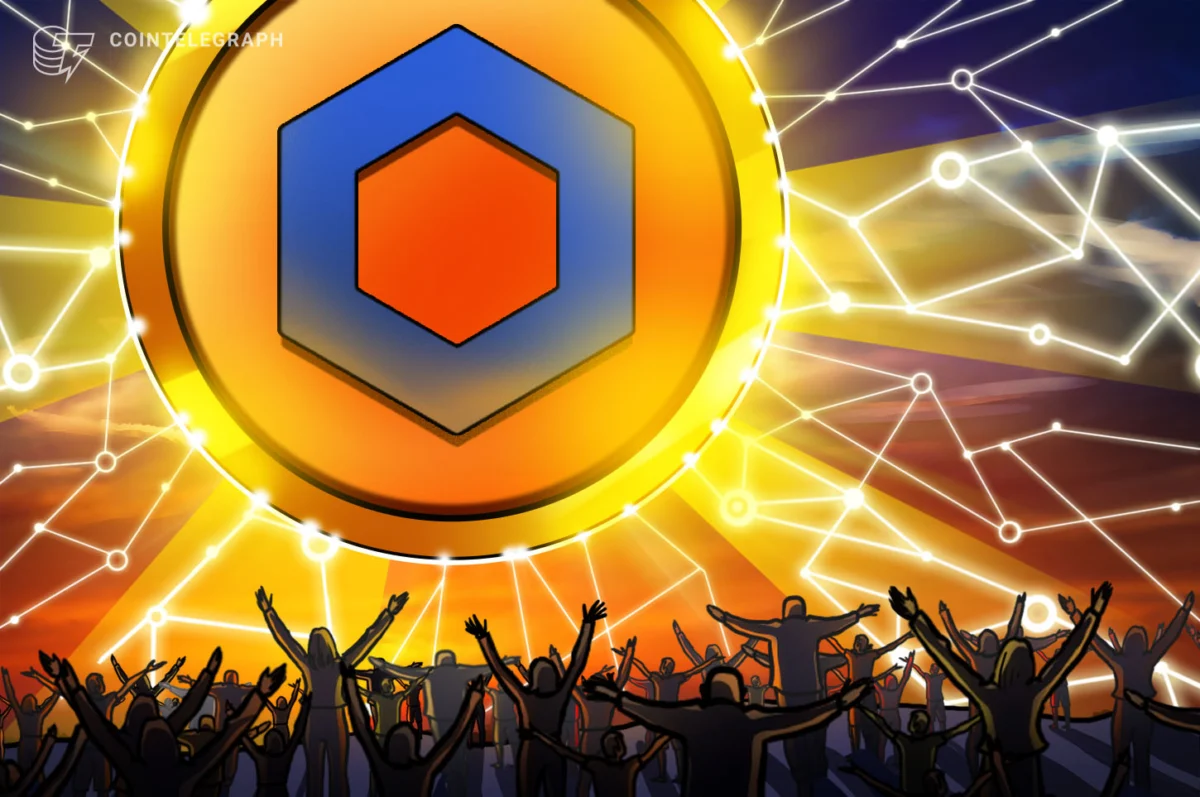
The Chainlink (LINK) token is positioned for a potential 25-fold price increase, with projections suggesting a valuation of $200 by the end of 2030, according to a comprehensive research report released by Standard Chartered. This bullish outlook is primarily driven by the accelerating expansion of the tokenized Real-World Asset (RWA) market, which is expected to create unprecedented demand for the industry’s leading decentralized oracle services. Geoff Kendrick, the global head of digital asset research at Standard Chartered, authored the report, highlighting a structural shift in how traditional financial institutions interact with blockchain technology.
The forecast hinges on the premise that the tokenization of RWAs—ranging from sovereign debt and corporate bonds to real estate and private equity—will reach a total market value of $4 trillion by the end of 2028. As these traditional assets migrate to distributed ledger technology, the requirement for secure, reliable, and real-time external data becomes paramount. Standard Chartered suggests that Chainlink’s established infrastructure and dominant market share place it in a unique position to capture the lion’s share of the value generated by this transition.
The Catalysts for Exponential Growth
The primary driver behind the projected rise of LINK from its current level of approximately $8 to $200 is the massive influx of capital into tokenized and crypto-native assets. Standard Chartered’s research forecasts a 37-fold increase in assets deployed within the decentralized finance (DeFi) ecosystem, potentially reaching $2.7 trillion by 2030. This growth is not merely a expansion of existing crypto-native protocols but represents a fundamental integration of legacy financial systems with blockchain networks.
Geoff Kendrick noted that the sophisticated nature of these assets requires more than just simple price feeds. To function effectively in a regulated environment, tokenized assets require four critical components: trusted data delivery, seamless interoperability between disparate blockchain networks, privacy-preserving compliance mechanisms, and deep integrations with existing financial messaging systems like Swift. The report asserts that "only Chainlink is currently equipped to provide" this comprehensive suite of services at the scale required by global financial institutions.
The economic model of the LINK token is expected to benefit directly from this utility. As the demand for oracle services and cross-chain communication increases, the fee generation within the Chainlink network is projected to rise significantly. This increased revenue, coupled with the token’s role in securing the network through staking, provides the fundamental basis for the $200 price target.
A Chronology of Institutional Adoption and Market Trends
The path toward the $4 trillion RWA market has been marked by several key milestones over the past 24 months. In 2023, the narrative around tokenization moved from theoretical experimentation to practical implementation. Major financial players, including BlackRock, Franklin Templeton, and Fidelity, began launching tokenized money market funds and exploring on-chain settlement for private credit.
In mid-2023, Chainlink launched its Cross-Chain Interoperability Protocol (CCIP), a move that many analysts view as the turning point for institutional blockchain adoption. CCIP allows traditional banks to connect their existing back-end systems to any public or private blockchain without the need for complex custom integrations. This was followed by high-profile collaborations, including a pilot with Swift and several global Tier-1 banks, demonstrating how CCIP could facilitate the transfer of tokenized assets across different blockchain environments.
By early 2024, the momentum intensified. Data from CryptoRank indicates that the trading volume of tokenized RWAs on decentralized exchanges (DEXs) reached a record high of $141 billion in July 2024 alone. This represented a 19.5% increase in a single month, fueled largely by the tokenization of public equities and government debt. Standard Chartered views this trend as the early stage of an "institutional wave" that will define the next six years of the digital asset market.
The Importance of Total Value Secured (TVS)
To understand Chainlink’s dominance, market analysts point to the metric of Total Value Secured (TVS). According to data from DeFiLlama, Chainlink currently secures approximately $34.4 billion in assets across various protocols. This figure is more than four times larger than its nearest competitor, Chronicle, which secures roughly $7.36 billion. Other competitors, such as Pyth Network and API3, maintain significant presence in specific niches like low-latency trading data, but Chainlink remains the "gold standard" for broad-based institutional applications.
The high TVS serves as a significant competitive moat. For a large-scale financial institution like a central bank or a global asset manager, the security and historical uptime of an oracle provider are the most critical factors in vendor selection. The "Lindey Effect"—the idea that the longer a technology has survived, the longer it is likely to persist—is particularly relevant for Chainlink, which has maintained a near-perfect track record of data delivery since its inception.
Analysis of Implications for the Financial Industry
The implications of Standard Chartered’s forecast extend beyond the price of a single digital asset. If tokenized RWAs do indeed reach $4 trillion by 2028, it would signify a total transformation of global capital markets. The benefits of tokenization—including 24/7 fractional ownership, automated compliance through smart contracts, and significantly reduced settlement times—could save the financial services industry billions of dollars in annual operational costs.
For Chainlink, the role of an "abstraction layer" is critical. Banks are often hesitant to commit to a single blockchain, fearing technology lock-in or the obsolescence of a specific network. By acting as a universal bridge, Chainlink allows these institutions to remain "blockchain agnostic." They can issue assets on a private bank chain while allowing those assets to interact with the liquidity of public networks like Ethereum or Avalanche, all while maintaining strict regulatory compliance.
Furthermore, the rise of "Proof of Reserve" (PoR) services provided by Chainlink offers a level of transparency previously unavailable in traditional finance. PoR allows for the real-time auditing of the collateral backing a tokenized asset, ensuring that for every digital dollar or bond on the blockchain, there is a corresponding physical or cash asset held in custody. This transparency is a key requirement for the "trusted data" mentioned in Kendrick’s report.
Statements and Reactions from the Sector
While Standard Chartered’s $200 target is among the most bullish in the market, it aligns with recent sentiment from other major players. Sergey Nazarov, the co-founder of Chainlink, has frequently stated in industry keynotes that the "Global Financial System" is the ultimate end-user of blockchain technology. Nazarov has argued that the shift from "probabilistic" brand-based trust to "deterministic" math-based trust is an inevitable evolution of the internet.
Market observers have noted that the integration of Chainlink into the infrastructure of the Depository Trust & Clearing Corporation (DTCC) and the Australian and New Zealand Banking Group (ANZ) serves as a validation of this thesis. In statements regarding recent pilots, ANZ representatives highlighted how CCIP enabled the bank to simulate the purchase of tokenized assets using a digital stablecoin, with the entire transaction settled on-chain in seconds rather than days.
However, not all analysts are as optimistic about the 2030 timeline. Some argue that the regulatory environment remains the largest bottleneck. While the technology for a $4 trillion RWA market exists today, the legal frameworks required to recognize on-chain ownership across multiple jurisdictions are still being drafted.
Risks and Counter-Narratives
Despite the optimistic projections, Standard Chartered’s report acknowledges several significant risks that could impede Chainlink’s path to $200. The first and most prominent risk is the pace of institutional adoption. While the interest in tokenization is high, the actual deployment of capital-heavy initiatives is often slowed by internal bureaucracy, legacy system inertia, and cautious legal departments within major banks.
Competition also remains a factor. While Chainlink currently holds a dominant position, "specialist" oracle providers are emerging to challenge its market share in specific sectors. For example, some high-frequency trading platforms prefer oracles that offer sub-second updates, an area where newer protocols are focusing their development. If a competitor were to develop a more cost-effective or faster solution that gains institutional trust, Chainlink’s fee generation could be cannibalized.
Technical setbacks represent a third category of risk. As the complexity of cross-chain communication increases, so does the potential attack surface for hackers. While Chainlink’s architecture is decentralized and multi-layered, any significant vulnerability or exploit in the CCIP or the core oracle network could severely damage institutional confidence and lead to a mass migration to alternative solutions.
Conclusion and Future Outlook
The Standard Chartered report provides a detailed roadmap for how Chainlink could evolve from a niche crypto service into a foundational pillar of global finance. The $200 price target for LINK by 2030 represents more than just market speculation; it is a calculation based on the projected utility and necessity of secure data in a $4 trillion tokenized economy.
As the decade progresses, the focus will likely shift from simple price feeds to complex, privacy-preserving data workflows. The ability of Chainlink to adapt to these requirements—while maintaining its lead in Total Value Secured—will determine whether it can fulfill the exponential growth trajectory outlined by Geoff Kendrick and his team at Standard Chartered. For now, the alignment between institutional interest in RWAs and the technological capabilities of the Chainlink network suggests a significant shift in the landscape of decentralized infrastructure.