admin
admin
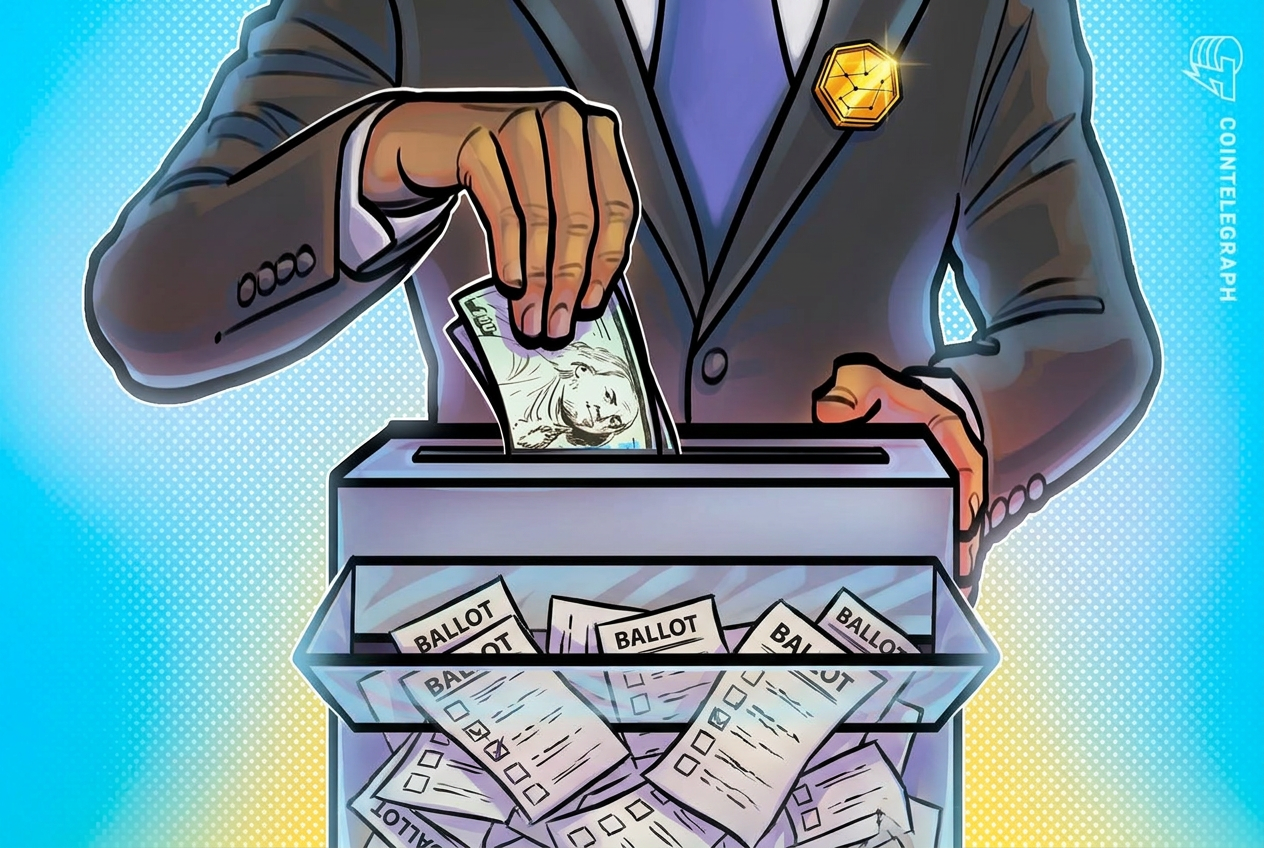
The landscape of American electoral politics is undergoing a significant shift as digital asset stakeholders transition from passive observers to primary financial movers. Protect Progress, a political action committee (PAC) heavily funded by industry titans Ripple Labs and Coinbase, has significantly increased its financial intervention in the upcoming primary for Michigan’s 13th Congressional District. Federal Election Commission (FEC) filings released on Thursday reveal that the PAC has now committed more than $2 million toward media buys designed to bolster the candidacy of incumbent Representative Shri Thanedar and simultaneously undermine his Democratic challenger, Donavan McKinney.
This surge in spending represents a strategic escalation by the crypto lobby, effectively doubling the PAC’s reported expenditures from just one week prior. The latest disclosures indicate an additional $884,240 allocated to pro-Thanedar advertisements, paired with over $150,000 dedicated to oppositional messaging against McKinney. As the Michigan primary, scheduled for Tuesday, approaches, the influx of capital underscores the industry’s determination to secure a legislative environment favorable to blockchain innovation and digital asset integration.
The Michigan Battleground: Thanedar vs. McKinney
The 13th Congressional District of Michigan has become a focal point for the digital asset industry due to Representative Shri Thanedar’s consistent legislative support for the sector. During his tenure in the U.S. House of Representatives, Thanedar has positioned himself as a proactive advocate for the "pro-innovation" wing of the Democratic Party. His voting record includes support for the GENIUS Act, a piece of legislation focused on the regulation and stabilization of the stablecoin market, and the Digital Asset Market Clarity (CLARITY) Act. The latter is currently under deliberation in the Senate and seeks to establish a comprehensive regulatory framework for crypto market structures.
Furthermore, Thanedar’s role as a cosponsor of the Promoting Innovation in Blockchain Development Act has endeared him to industry leaders. The bill aims to provide legal protections for blockchain developers, shielding them from certain liabilities that proponents argue stifle technological advancement. For companies like Ripple and Coinbase, Thanedar represents a reliable ally in a Congress that has often been divided or hostile toward the crypto industry.
In contrast, Donavan McKinney has framed the PAC’s involvement as an outside interference intended to bypass grassroots democratic processes. In a statement released on July 21, McKinney characterized the spending as a "payback" scheme. He alleged that the crypto lobby is rewarding Thanedar for legislative actions that indirectly benefited former President Donald Trump. McKinney specifically pointed to reports that Trump earned more than $1.4 billion from cryptocurrency investments in 2025, including holdings in the "Official Trump" (TRUMP) memecoin and interests in his family’s business venture, World Liberty Financial.
While McKinney’s claims link Thanedar’s support for bills like the GENIUS Act to Trump’s personal financial gains, the Representative’s campaign has maintained that his support for crypto is rooted in economic modernization and job creation within the tech sector.
The Financial Architecture of Crypto PACs
The spending in Michigan is not an isolated incident but part of a broader, well-orchestrated financial strategy. Protect Progress is an affiliate of Fairshake, a "super PAC" that has emerged as one of the most well-funded political entities in the current election cycle. Fairshake and its subsidiaries—including Protect Progress and Defend American Jobs—have collectively raised a "war chest" that exceeded $193 million as of early January.
The scale of this intervention is unprecedented for a single-industry lobby. According to a June report by the consumer advocacy group Public Citizen, crypto-aligned PACs have been responsible for spending more than $82 million of the roughly $189 million total contributed by crypto companies in the 2026 election cycle. This concentration of capital allows the industry to influence a wide array of races, often targeting candidates who express skepticism toward digital assets or supporting those who promise a "light-touch" regulatory approach.
The funding for these PACs comes primarily from a handful of major corporate entities:
- Ripple Labs: The enterprise blockchain firm has been a primary donor, viewing political engagement as essential following its lengthy legal battles with the Securities and Exchange Commission (SEC).
- Coinbase: The largest U.S.-based cryptocurrency exchange has pivoted toward an "on-chain" grassroots and political strategy to counter regulatory uncertainty.
- Andreessen Horowitz (a16z): The venture capital firm has also contributed significantly, aiming to protect its various investments in the Web3 ecosystem.
National Expansion: Washington and Alabama
While Michigan is the current theater of operations, FEC filings indicate that the crypto lobby is diversifying its geographic focus. In Washington state, which also holds its primaries this Tuesday, the Fairshake affiliate Defend American Jobs PAC has spent over $65,000 on media buys to support a Republican candidate in the 4th Congressional District. This move highlights the industry’s bipartisan approach, targeting both Democrats and Republicans who align with their policy goals.
In Alabama, the focus has shifted toward the August 11 primaries. Defend American Jobs has directed more than $511,000 toward media support for Jerry Carl Jr., a Republican who served as a representative for Alabama’s 1st Congressional District between 2021 and 2025. Carl, a wealthy former lawmaker with a reported net worth of up to $15 million in 2023, is seen as a candidate capable of championing corporate-friendly crypto legislation. The PAC’s investment in Carl suggests a strategy of reclaiming seats for established allies who have temporary absences from the House.
Chronology of the 2026 Crypto Lobby Surge
To understand the current spending blitz, it is necessary to trace the timeline of the industry’s political mobilization:
- Late 2024: Following a series of regulatory enforcement actions, major crypto firms began pooling resources into Fairshake to prepare for the 2026 midterms and presidential cycle.
- January 2025: Fairshake reports a record-breaking $193 million in cash on hand, signaling its intent to become a dominant force in the election.
- March–May 2025: PAC affiliates begin identifying key primary races in Texas and Illinois, pouring millions into "education" ads that often focus on general economic issues rather than crypto specifically, to improve candidate favorability.
- June 2025: Public Citizen releases its report detailing the $189 million total spend, sparking a national debate about the influence of "dark money" and corporate PACs in the digital age.
- July 2025: Representative Shri Thanedar’s support for the CLARITY Act triggers a massive influx of funds from Protect Progress as Donavan McKinney’s challenge gains local momentum.
- August 2025: The current spending peak is reached, with over $2 million deployed in Michigan and significant sums moved into Washington and Alabama.
Legislative Implications and Market Clarity
The primary objective of this massive capital deployment is the passage of specific legislation that would redefine the digital asset market in the United States. The industry is particularly focused on two pillars:
The CLARITY Act
The Digital Asset Market Clarity Act is viewed as the "Holy Grail" for crypto exchanges. It seeks to clearly define which digital assets are securities and which are commodities, effectively stripping the SEC of some of its oversight power and handing more authority to the Commodity Futures Trading Commission (CFTC). The industry argues this would provide the "clarity" needed for institutional investment to flow into the space without fear of retrospective litigation.
The GENIUS Act
Focused on stablecoins, the GENIUS Act proposes a federal framework for issuers, requiring them to maintain 1:1 reserves in high-quality liquid assets. While more restrictive than the current "wild west" environment, the industry supports the bill because it provides a path to legitimacy and integration with the traditional banking system, potentially allowing stablecoins to be used more broadly for payments and settlements.
Broader Impact and Ethical Considerations
The aggressive spending by Protect Progress and Fairshake has drawn sharp criticism from transparency advocates. Critics argue that the sheer volume of money allows a single industry to "buy" legislative outcomes, potentially at the expense of consumer protections. Public Citizen and other watchdog groups have pointed out that the ads funded by these PACs rarely mention "cryptocurrency" or "blockchain." Instead, they often focus on the candidate’s biography or unrelated policy stances, a tactic known as "issue masking" designed to appeal to general voters while securing a candidate who will vote favorably on the donor’s specific interests.
Furthermore, the connection to Donald Trump’s personal crypto earnings has added a layer of partisan volatility. As Trump’s 2025 financial disclosures revealed significant profits from the sector, the crypto lobby’s support for candidates like Thanedar—who support bills that could further increase the value of those assets—has led to accusations of a circular economy of influence.
Despite these criticisms, the crypto industry maintains that it is simply exercising its right to participate in the political process. Proponents argue that because the industry has been targeted by what they describe as "regulation by enforcement," they have no choice but to support candidates who understand the nuances of the technology.
Conclusion
As voters in Michigan, Washington, and Alabama head to the polls, the influence of the crypto lobby will be put to its most rigorous test yet. The $2 million spent in Michigan’s 13th District is a testament to the high stakes the industry perceives in the current legislative cycle. Whether this financial might translates into electoral victory for Shri Thanedar and others remains to be seen, but it has already succeeded in making digital asset policy a central, if sometimes shadowed, pillar of the 2026 American political landscape. The outcome of these primaries will likely dictate the momentum of crypto regulation for the next decade, determining whether the U.S. becomes a global hub for digital finance or continues its path of regulatory friction.