Layla Zulfa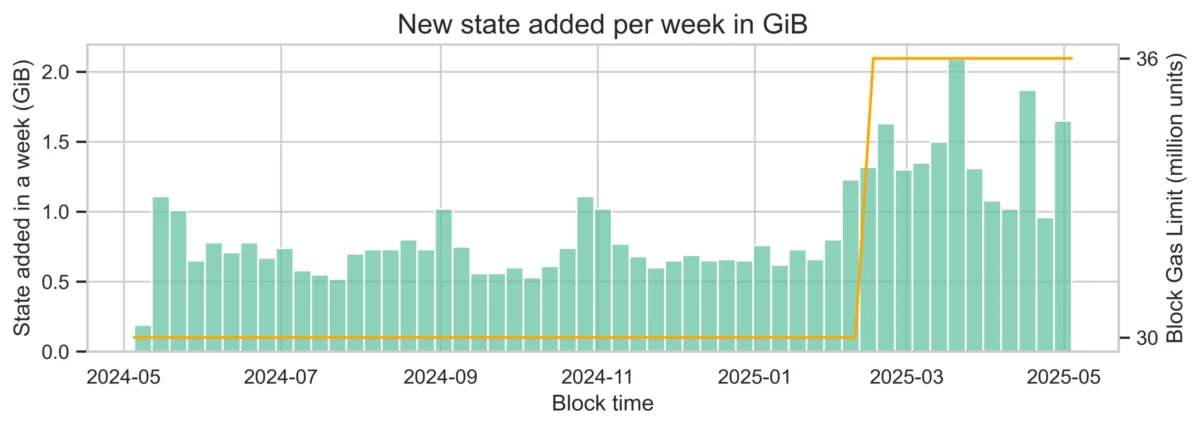
Ethereum, which began as an audacious experiment, has rapidly evolved into a foundational pillar of global digital infrastructure. Each day, it facilitates the settlement of billions of dollars in value, orchestrates countless decentralized applications (dApps), and serves as the robust anchor for an expanding ecosystem of Layer 2 (L2) solutions. This intricate and expansive digital economy, however, ultimately hinges on a singular, often-overlooked component: the network’s "state."
Understanding Ethereum’s State: The Digital Ledger of Reality
At its core, Ethereum’s state can be conceptualized as the collective memory of the entire network at any given moment – "everything Ethereum knows right now." Unlike traditional banking where a user’s balance is stored in an institutional database, on Ethereum, an individual’s Ether (ETH) balance, the code of a smart contract, the ownership of an NFT, or the data within a decentralized autonomous organization (DAO) all reside within this shared, globally distributed state. It encompasses all account balances, smart contract code, and stored data across the entire blockchain. This comprehensive snapshot is critical for the network’s integrity, enabling every transaction to be validated against the current reality and ensuring that all participants operate from the same fundamental truth.
The state is the bedrock for virtually every operation: it dictates account balances, defines the rules for smart contract execution, and verifies the authenticity of digital assets. Consequently, if this state becomes unwieldy, excessively centralized, or challenging to access and maintain, the stability, cost-efficiency, and decentralization of all dependent layers — from the core protocol to L2s and dApps — are jeopardized. This escalating challenge is now at the forefront of Ethereum’s developmental roadmap.
Ethereum’s Scaling Journey and the Inevitable State Expansion
Ethereum has been on an ambitious multi-year journey to enhance its scalability, a process that has seen transformative upgrades and innovative new protocols. Key milestones include the transition to Proof-of-Stake (The Merge), the introduction of EIP-4844 (proto-danksharding) to reduce L2 transaction costs, strategic increases in the gas limit to allow more operations per block, and the implementation of mechanisms like enshrined Proposer-Builder Separation (ePBS) to mitigate Maximal Extractable Value (MEV) centralization. While each of these advancements has significantly augmented the network’s capacity to process activity, they have concurrently intensified the challenges associated with managing the blockchain’s ever-growing state.
Challenge 1: The Relentless Growth of State Data
A fundamental characteristic of Ethereum’s state is its unidirectional growth. Every new account creation, every data write to a storage slot, and every deployment of new bytecode adds data that the network is mandated to retain indefinitely. This perpetual expansion carries substantial, tangible costs for anyone operating a full Ethereum node. These costs manifest across several critical vectors:
- Storage Costs: The sheer disk space required to store the full state snapshot grows continuously, demanding increasingly larger and more expensive storage solutions.
- I/O Costs: Accessing and updating this vast dataset requires intensive Input/Output operations, placing a significant burden on node hardware and slowing down processing times.
- Network Bandwidth: Syncing new nodes or distributing state updates across the network consumes considerable bandwidth, impacting network efficiency and accessibility.
Data collected, for instance, in the context of EIP-8037, clearly illustrates this trend, showing a consistent addition of new state data week after week. This persistent state accumulation is a direct consequence of increased network activity and transaction throughput. Gas limit increases, while beneficial for immediate transaction capacity, invariably amplify state growth by enabling more writes per block.
Other blockchain networks have already encountered severe versions of this problem, where the immense state size renders running a full node impractical for the average user. This inevitably centralizes state storage and serving capabilities into the hands of a few large, sophisticated providers. On Ethereum, a significant majority of blocks are already produced by specialized builders. The concern deepens regarding how many independent parties can realistically construct blocks end-to-end if the full state becomes prohibitively expensive or complex to maintain. A scenario where only a handful of actors possess the capacity to hold and serve the entire state poses a direct threat to Ethereum’s core tenets of censorship resistance and credible neutrality, as fewer independent entities can create blocks that include potentially censored transactions.
Mitigation efforts, such as FOCIL (Forced Inclusion via Call Data) and VOPS (Validity-Only Partial Statelessness), aim to preserve censorship resistance even in an environment dominated by specialized builders. However, the efficacy of these mechanisms remains contingent on a vibrant ecosystem of nodes that can access, store, and serve the state without facing prohibitive costs. Thus, controlling state growth is not merely an optional optimization but a fundamental prerequisite for maintaining Ethereum’s decentralized ethos. Researchers are actively measuring and stress-testing the network’s limits to determine when these issues become critical, with initiatives like bloatnet.info providing public data on state bloat metrics.
Challenge 2: The Paradox of Statelessness and Centralized State Serving
Even if Ethereum’s gas limit were to remain static indefinitely, the network would eventually face insurmountable state growth challenges. Recognizing the community’s demand for higher transaction throughput, the concept of "statelessness" has emerged as a powerful scaling paradigm. In a truly stateless environment, validators would no longer need to store the entire state to validate new blocks; instead, they could merely verify cryptographic proofs that attest to the state’s integrity. This represents a monumental scalability breakthrough, enabling the network to handle significantly more activity.
However, statelessness introduces a critical implicit shift: state storage and serving can become a distinct, specialized role, decoupled from the responsibilities of every validator. In such a future, the vast majority of the state would likely be stored and served by a limited number of specialized entities: large block builders, professional RPC (Remote Procedure Call) providers, and dedicated archival services. This specialization, while efficient for validation, inherently leads to a more centralized state infrastructure.
The consequences of this potential centralization are multifaceted and concerning:
- Single Points of Failure: A reliance on a few large state providers introduces critical vulnerabilities. Disruptions, censorship, or malicious actions by these few entities could severely impact network accessibility and functionality.
- Increased Costs and Inaccessibility: State access could become more expensive, as specialized providers would likely charge for their services, potentially pricing out smaller entities or individual users.
- Fragility of L2 Safety Valves: Layer 2 solutions often rely on the ability of users to "force-include" transactions directly onto L1 if an L2 operator acts maliciously or becomes unresponsive. If L1 state access becomes unreliable, costly, or highly centralized, these crucial safety mechanisms become significantly harder to exercise in practice, undermining the security guarantees of L2s.
Even if a multitude of entities were to store the state, there currently exist insufficient mechanisms to cryptographically prove that they are actively serving it, nor are there strong incentives to do so. While basic services like "snap sync" are widely offered by default, comprehensive RPC services are not. Without making state serving more economical and attractive, the network’s fundamental ability to access its own historical and current state risks falling under the control of a select few.

Strategic Directions for a Resilient Ethereum State
Addressing these challenges requires a multi-pronged approach, and the Ethereum community is actively exploring three broad directions to safeguard the network’s long-term health and decentralization.
1. State Expiry: Pruning the Digital Tree
The premise of state expiry is simple yet profound: not every piece of state data holds equal importance indefinitely. Recent analysis, such as that detailed in "Not all state is equal," has revealed that approximately 80% of Ethereum’s state has remained untouched for over a year. Despite this inactivity, nodes continue to bear the cost of perpetually storing this dormant data. State expiry aims to temporarily remove inactive state from the "active set" that full nodes must maintain, requiring a cryptographic proof to revive it when needed. Two primary categories are under consideration:
- Mark, Expire, Revive: This fine-grained approach would allow the protocol to flag rarely used state as "inactive," removing it from the immediate active set. When such state is required, a proof of its prior existence would enable its revival. This design keeps frequently accessed contracts and balances "hot" and cheap to access, while minimizing the burden of long-forgotten data on every node. The complexity lies in managing the metadata required for marking and the mechanisms for proof generation.
- Multi-Era Expiry: This conceptually simpler design periodically rolls over the entire state into distinct "eras," for example, annually. The current era remains small and fully active, while older eras are effectively "frozen" from the perspective of live execution. New state is written into the current era. Revival of old state would necessitate proofs demonstrating its existence in a previous era. While simpler to manage in terms of state partitioning, the revival proofs for multi-era systems tend to be more complex and larger.
Both state expiry categories share the common goal of maintaining a small, manageable active state by temporarily deactivating inactive portions, while ensuring that all historical data can still be accessed if necessary. They present different trade-offs in terms of implementation complexity, user experience, and the computational load distributed across clients and infrastructure providers.
2. State Archive: Separating the Hot from the Cold
State archiving offers a complementary strategy by explicitly segmenting the network’s state into "hot" and "cold" components.
- Hot State: This refers to the most recent, frequently accessed, and actively used portions of the state. It needs to be readily available for rapid transaction processing and validation.
- Cold State: This comprises older, less frequently accessed data, which can be stored separately and accessed with lower urgency.
In a state archive design, nodes would prioritize storing the "hot set" for fast access. Even as the total state continues its inexorable growth, the performance-critical "hot set" can remain bounded in size. This separation means that a node’s execution performance, particularly the crucial I/O costs associated with state access, can remain relatively stable over time, preventing degradation as the blockchain ages. This provides a practical path for node operators to manage their resources more effectively.
3. Empowering Decentralized State Access: Lowering Barriers and Enhancing Tools
Beyond structural changes to state management, a critical direction involves making it inherently easier and more attractive for a broader range of participants to hold and serve Ethereum’s state. This includes designing nodes and wallets that can be useful contributors without needing to store the entire historical state.
- Partial Statelessness for Nodes: This approach would allow clients to store only a subset of the state – for example, only the currently active state, or state relevant to a user’s specific interactions. This significantly reduces resource requirements, making node operation more accessible to individuals and smaller entities, thereby increasing the diversity of network participants.
- Lowering Infrastructure Barriers:
- Decentralized RPC Networks: Encouraging and developing decentralized alternatives to existing centralized RPC providers (like Infura or Alchemy) can distribute the burden and control of state serving.
- State Distribution Networks: Building efficient protocols and incentives for distributing state data across a wider network of participants can improve redundancy and access speeds.
- Enhanced Light Clients: Improving the capabilities of light clients, which only download block headers and small portions of state, can allow more users to interact directly and securely with the chain without relying on full nodes.
These initiatives are being explored through detailed research and development, including proposals for Validity-Only Partial Statelessness (VOPS) and efforts to improve the efficiency of various node types.
The Path Forward: Immediate Action and Long-Term Vision
Ethereum’s state, while seemingly a technical detail, is quietly at the epicenter of some of the most critical questions defining the protocol’s future: how to balance scalability with decentralization, how to ensure credible neutrality, and how to maintain an open and accessible network for all. While many of these questions remain open-ended, the overarching strategic direction is unequivocally clear: proactively reduce state as a performance bottleneck, lower the cost of holding it, and make it easier for a diverse set of participants to serve it.
Current priorities for the Stateless Consensus team and the broader Ethereum Foundation (EF), who emphasize a healthy diversity of opinion across the organization, focus on low-risk, high-reward endeavors that yield immediate benefits while paving the way for more ambitious future protocol changes:
- Archive Solutions: Experimenting with out-of-protocol solutions to manage state archiving. This involves testing methods to keep the active state bounded while relying on specialized archives for older data. The goal is to gather real-world data on performance, user experience, and operational complexity. If successful, these solutions could eventually be integrated as in-protocol changes.
- Partial Stateless Nodes and RPC Enhancements: Recognizing that most users and applications interact with Ethereum via RPC providers, significant efforts are underway to:
- Improve the efficiency of centralized RPC providers, making them more resilient and cost-effective.
- Facilitate the development and adoption of decentralized RPC networks.
- Enable more direct interaction between users and the network’s state, reducing reliance on intermediaries.
These projects are strategically chosen for their immediate utility and forward compatibility, ensuring that Ethereum becomes healthier and more robust today, while simultaneously laying the groundwork for the more profound protocol adjustments necessary for its long-term vision.
As these iterations progress, the community can expect continued updates on progress and open questions. The challenge of state management is not one to be solved in isolation. It necessitates a collaborative effort from client developers, node operators, infrastructure providers, L2 builders, and indeed, anyone invested in Ethereum’s enduring health and decentralized future. The invitation is open to share feedback, engage in discussions on forums and calls, and actively participate in testing new approaches in practice. This collective engagement is vital to securing Ethereum’s position as a global public good.