Nila Kartika Wati
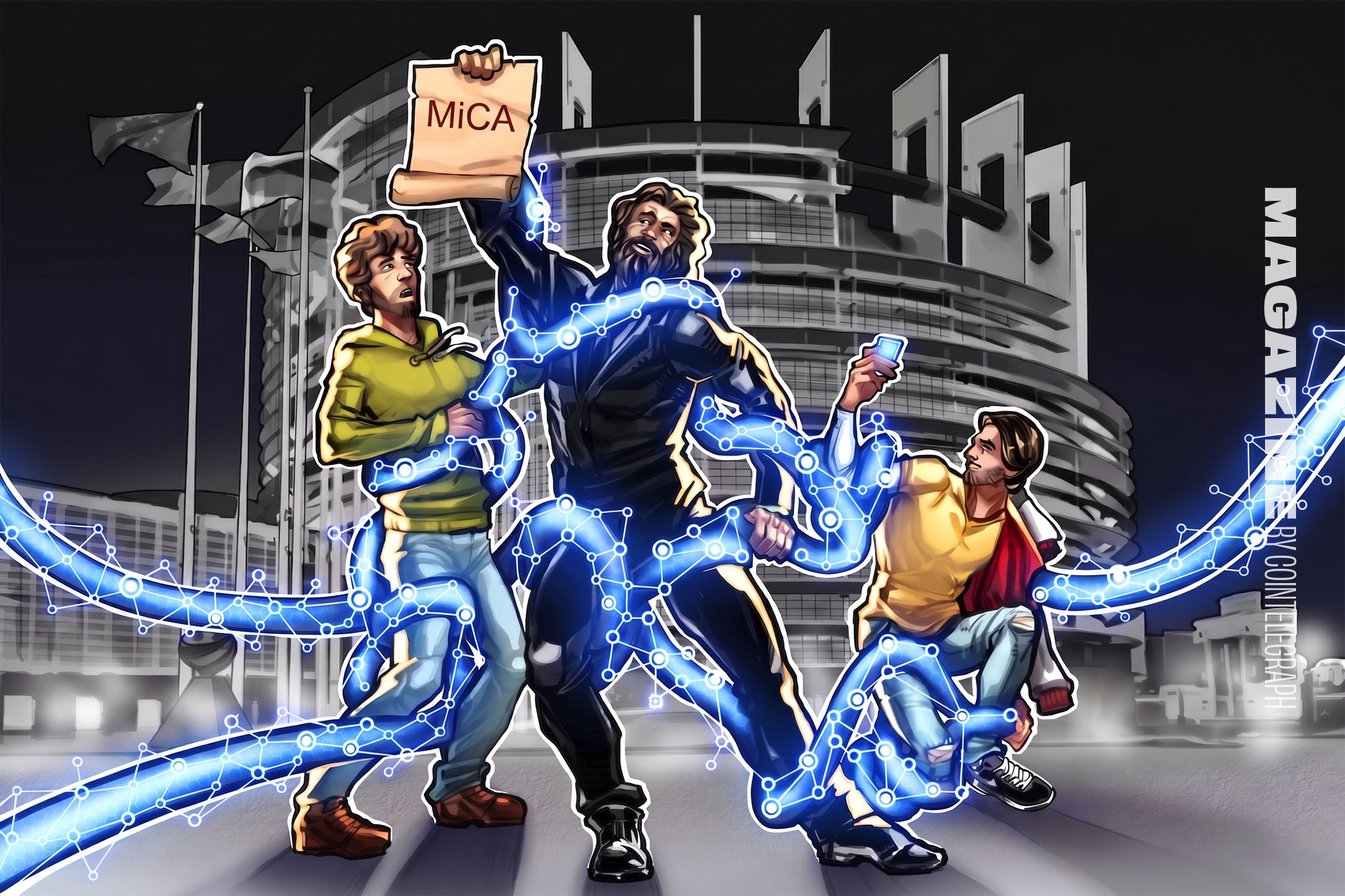
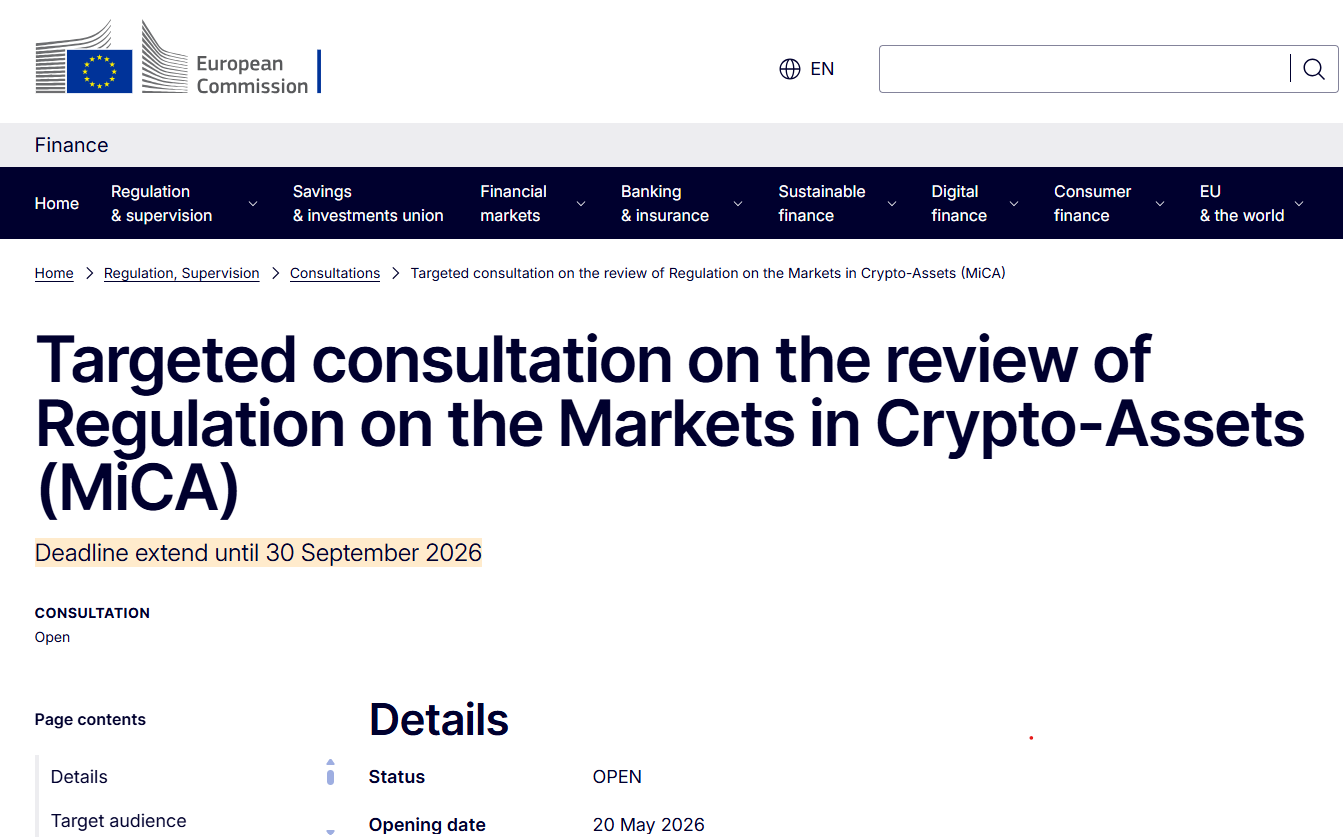
The European Commission is actively considering a significant expansion of its landmark Markets in Crypto Assets (MiCA) regulation, with a focused review on integrating crypto lending and decentralized finance (DeFi) activities that were initially excluded from its regulatory perimeter. This crucial reassessment comes as the crypto landscape continues to evolve rapidly, presenting novel challenges for consumer protection, market integrity, and financial stability. On May 20, 2024, the European Commission initiated a targeted consultation, inviting stakeholders to contribute their insights on critical areas left unaddressed by the original MiCA framework, most notably DeFi protocols and the intricate mechanisms of crypto lending and borrowing. The consultation period is set to conclude on September 30, 2024, after which the Commission will analyze the feedback to inform potential legislative action.
MiCA’s Foundation and the Initial Exclusion of Crypto Lending
The Markets in Crypto Assets (MiCA) regulation represents a pioneering legislative effort by the European Union to establish a comprehensive regulatory framework for crypto-assets. Adopted in June 2023, with phased implementation beginning in mid-2024 and full applicability by December 2024, MiCA aims to provide legal certainty, foster innovation, ensure consumer and investor protection, and maintain financial stability within the burgeoning digital asset sector. Its primary scope covers the issuance of crypto-assets (excluding those already regulated by existing financial services legislation, such as e-money tokens and asset-referenced tokens) and the provision of crypto-asset services, including custody, exchange, and advice.
However, during its extensive drafting process, which began in 2020, the rapidly evolving nature of certain segments of the crypto market, particularly decentralized finance and peer-to-peer lending models, presented significant definitional and supervisory challenges. Consequently, MiCA’s original rulebook deliberately carved out activities deemed "fully decentralized," including many forms of crypto lending and borrowing that did not neatly fit into traditional financial service categories or involve identifiable central intermediaries. The rationale at the time was to avoid stifling nascent innovation while allowing for a more mature understanding of these complex ecosystems before imposing potentially ill-fitting regulations. This initial exclusion created a significant regulatory gap, leaving billions of euros in crypto lending and borrowing activities operating largely outside the EU’s supervisory purview.
The Evolving Landscape: Why Reconsider Now?
The decision to revisit MiCA’s scope reflects a growing recognition within Brussels that the crypto market has matured considerably since the regulation’s initial conception, and the risks associated with unregulated activities have become more pronounced. The period following MiCA’s drafting saw an explosion in the DeFi sector, with total value locked (TVL) in decentralized lending protocols reaching tens of billions of dollars globally. While this growth showcased innovation, it also brought to light vulnerabilities and significant investor losses.
Notable incidents in the centralized crypto lending space, such as the high-profile collapses of Celsius Network and Voyager Digital in 2022, which collectively held billions in user deposits and ultimately led to bankruptcy, served as stark reminders of the systemic risks inherent in loosely regulated crypto lending models. Although these were centralized entities, their failures underscored the urgent need for robust investor protection and risk management frameworks across the entire crypto lending spectrum. Simultaneously, the DeFi landscape experienced its share of exploits, flash loan attacks, and smart contract vulnerabilities, leading to substantial financial losses for participants. These events have intensified calls from consumer protection advocates, financial stability watchdogs, and even some industry players for a more comprehensive regulatory approach.
Furthermore, global regulatory bodies, including the Financial Stability Board (FSB) and the International Organization of Securities Commissions (IOSCO), have increasingly advocated for a "same activity, same risk, same regulation" principle. This approach suggests that if crypto-asset activities perform similar economic functions and pose comparable risks to traditional financial services, they should be subject to similar regulatory oversight, regardless of the underlying technology or decentralization claims. The European Commission’s current consultation aligns with this global trend, seeking to close potential arbitrage opportunities and ensure a level playing field.
The Intricacy of Lending Vaults: A Regulatory Conundrum
At the heart of the current consultation lies the challenge of defining and regulating "lending vaults." These sophisticated on-chain mechanisms are designed to channel substantial capital—potentially billions of dollars—into decentralized credit markets. Unlike conventional lending institutions with clear legal structures and identifiable intermediaries, lending vaults often operate through smart contracts and distributed participation, making their legal classification ambiguous under existing EU law. Their current legal status largely relies on non-binding interpretations that suggest they fall outside the strict definitions of MiCA and traditional EU fund rules.
Yuriy Brisov, an EU digital assets lawyer and partner at Digital & Analogue Partners, highlights this definitional void: "EU law has no category called a ‘vault.’ A lawyer therefore defines it the way a regulator would qualify it: by function, not by label." This functional approach is crucial because, while a vault may not bear the label of a "lender," it performs the economic functions of lending by aggregating funds and deploying them into credit markets. However, the operational model of vaults, which spreads various functions across smart contracts and multiple, often anonymous, participants rather than consolidating them within a single company, presents a formidable challenge for traditional regulatory frameworks built on identifying a responsible legal entity.
The decentralized lending protocol Morpho offers a practical illustration of this complexity with its Vault V2 architecture. Morpho’s design explicitly divides responsibilities among an owner, a curator, an allocator, and a sentinel. The curator is responsible for configuring strategy and risk parameters, the allocator executes the actual fund allocations, and the sentinel is empowered to mitigate risks. While this multi-party structure aims to enhance security and decentralization, it simultaneously blurs the lines of accountability. Identifying a single "provider" of a regulated lending service under MiCA becomes exceedingly difficult when responsibilities are so granularly distributed, making it challenging to assign regulatory obligations to any one participant.
Jonathan Galea, a partner at Cahill Gordon & Reindel, has extensively explored the regulatory implications of lending vaults, examining how their structures intersect with MiCA, stablecoin regulations, and European fund law. Galea cautions policymakers against treating all lending vaults as a monolithic category. He asserts that "lending vaults solve more practical problems than they create," particularly by efficiently directing fragmented liquidity into on-chain lending markets. He emphasizes that different types of vaults—some focused purely on lending, others on buying and selling crypto assets—perform distinct economic functions and should therefore be regulated differently. "Bring ‘DeFi lending’ into the perimeter as a single label," Galea warns, "and structures that deserve opposite answers risk ending up captured together." This nuanced perspective underscores the necessity for a tailored regulatory approach that recognizes the diverse functionalities within the "vault" ecosystem, ensuring that regulations are fit for purpose rather than broadly restrictive.
Defining Decentralization and Control: A Regulatory Minefield
A core tenet of MiCA’s initial exclusion was its non-applicability to crypto-asset services provided in a "fully decentralized manner." However, the concept of "full decentralization" itself is a spectrum, and few, if any, protocols are entirely devoid of human influence or control points. This ambiguity poses a significant hurdle for regulators attempting to draw clear lines.
Jonathan Galea argues that using decentralization as the primary dividing line for regulation could inadvertently penalize innovation. He states, "Decentralization is a spectrum and a function of time: a test built on it would penalize newer, more novel protocols while entrenching mature incumbents that have had years to distribute control." Newer protocols, by their very nature, often start with a more centralized structure before progressively decentralizing over time. Imposing stringent decentralization requirements from the outset could stifle their development and disadvantage them against established players.
Yuriy Brisov proposes an alternative approach, focusing on the structural characteristics of a vault and the degree of human control exercised over it. He suggests that "the safer ground is structural: there is no undertaking, no appointed manager, the holder has a direct coded claim on the pool, and the user can exit before any parameter change takes effect." This framework shifts the focus from an abstract concept of decentralization to tangible, verifiable elements of a protocol’s design that empower users and limit the control of any central party.
The fundamental question for regulators remains: who should actually be regulated? In highly decentralized systems, identifying a singular responsible entity—be it a company, a foundation, or an individual—becomes exceedingly difficult. Without a clear entity to hold accountable, enforcement becomes a significant challenge. Michael Egorov, founder of Curve Finance, a prominent DeFi protocol, advocates for a distinct regulatory paradigm for DeFi lending. He argues that "If DeFi lending is ever brought into the scope of regulation, it should be treated completely differently. DeFi doesn’t need some of the safeguards which traditional lending requires, and yet, at the same time, it may need others." Egorov emphasizes the need for a "really careful" approach, suggesting that a dedicated framework could enhance safety and broaden access to DeFi lending without imposing unworkable rules that conflict with the inherent architecture of decentralized protocols.
Implications for the European Digital Asset Ecosystem
The European Commission’s decision on how to integrate crypto lending and DeFi into its regulatory framework will have profound implications for the continent’s digital asset ecosystem.
Innovation vs. Regulation: The primary challenge for Brussels is to strike a delicate balance between fostering innovation and ensuring robust consumer protection and financial stability. Overly broad or prescriptive regulations could stifle the growth of nascent DeFi projects within the EU, potentially driving talent and capital to more permissive jurisdictions. Conversely, a lack of clear rules could perpetuate risks and deter institutional adoption.
Compliance Burden and Costs: Should crypto lending be brought under MiCA or a new dedicated framework, protocols and developers would face significant compliance burdens. This could include requirements for licensing, capital reserves, anti-money laundering (AML) and know-your-customer (KYC) procedures, risk management, and disclosure obligations. For smaller, community-driven projects, these costs could be prohibitive, potentially leading to market consolidation or a flight of innovation from the EU.
Investor Protection and Market Integrity: Clearer regulations could significantly enhance investor protection by establishing minimum standards for transparency, security, and dispute resolution. This, in turn, could build greater trust in the DeFi sector, potentially attracting a wider range of institutional and retail investors who are currently hesitant due to regulatory uncertainty. Moreover, it could bolster market integrity by reducing opportunities for illicit activities and market manipulation.
EU’s Global Stance: MiCA has already positioned the EU as a global leader in crypto regulation. How it addresses the complexities of DeFi lending will further shape its influence on international regulatory standards. A well-considered, nuanced approach could serve as a blueprint for other jurisdictions grappling with similar challenges. Brisov suggests that if lending and borrowing are to be regulated, they should be explicitly added to the list of regulated crypto-asset services under MiCA, rather than attempting to broaden the definition of a "crypto-asset service provider" itself, which could inadvertently capture unintended activities.
Timeline and Forward Outlook
The European Commission’s targeted consultation on the review of MiCA Regulation is a critical juncture. With the consultation period closing on September 30, 2024, the Commission will then undertake a comprehensive analysis of the feedback received from a diverse array of stakeholders, including industry participants, legal experts, consumer groups, and national authorities. This analysis will form the basis for potential legislative proposals.
The path forward is complex. For Brussels, the challenge extends beyond a simple "yes" or "no" to regulating DeFi lending. It involves the intricate task of crafting rules that can effectively distinguish between the myriad forms of on-chain lending, accurately assess the associated risks, and, crucially, identify the individuals or entities (if any) that genuinely exercise control and can be held accountable within these often-decentralized ecosystems. The decisions made in the coming months will profoundly shape the future trajectory of digital finance within the European Union, determining whether it can harness the innovative potential of DeFi while safeguarding its financial markets and citizens.