Nila Kartika Wati
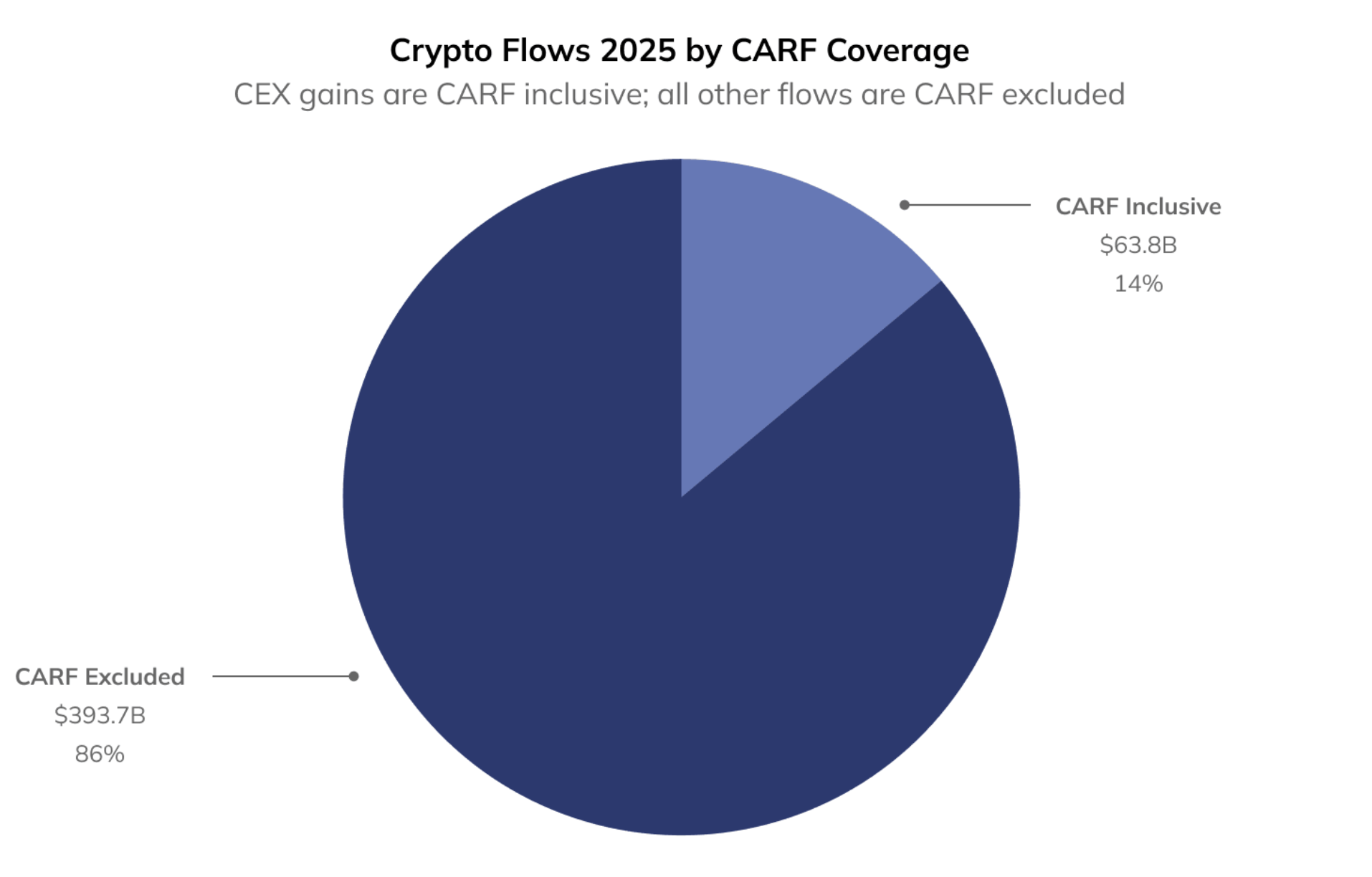
A groundbreaking report from blockchain analytics firm Chainalysis reveals that potentially taxable onchain crypto activity reached a staggering $457 billion globally in 2025. This substantial figure underscores a significant challenge for international tax authorities, as current international reporting rules, particularly the Organisation for Economic Co-operation and Development’s (OECD) Crypto-Asset Reporting Framework (CARF), are estimated to capture only a fraction – a mere 14% – of this vast sum. The findings highlight a burgeoning global tax gap in the rapidly evolving digital asset landscape, posing complex questions for governments, regulators, and the crypto industry alike.
The Unseen Billions: Chainalysis Exposes Massive Onchain Tax Blind Spot
The Chainalysis report, a comprehensive analysis of onchain transactions, paints a clear picture of the scale of unaddressed taxable activity. While the global figure stands at $457 billion, regional breakdowns reveal specific hotspots. North America led all regions with an estimated $134.6 billion in potentially taxable onchain activity, with the United States alone accounting for a significant $112.6 billion of that total. Close behind was the European Union, where onchain activity subject to potential taxation reached $125.1 billion. These figures represent a substantial portion of economic activity that, if left untaxed, could lead to considerable revenue losses for national treasuries.
The estimates provided by Chainalysis encompass a broad range of crypto activities. This includes realized gains from crypto asset sales, income derived from various blockchain-native operations such as mining, staking, and lending protocols, as well as payments made directly in crypto-denominated assets across six major blockchains. Crucially, the report explicitly states that these estimates exclude trading and other financial activities conducted within centralized exchanges. This exclusion is significant because centralized exchanges, by their very nature, often operate under stricter Know Your Customer (KYC) and Anti-Money Laundering (AML) regulations, making their data more accessible to reporting frameworks like CARF. The exclusion thus suggests that the true total of potentially taxable crypto activity, encompassing both centralized and decentralized realms, could be far higher than the $457 billion identified by Chainalysis.
The most striking revelation, however, is the stark disparity between the identified taxable activity and what CARF is designed to cover. Chainalysis concludes that transactions falling under CARF’s purview account for only 14% of the onchain taxable activity it has identified. This means a staggering 86% of this activity, totaling hundreds of billions of dollars, currently falls outside the scope of the new international reporting standard. This vast uncovered portion primarily includes activity on decentralized exchanges (DEXs), peer-to-peer (P2P) transfers, various onchain income streams, and direct crypto payments that do not involve a centralized intermediary.
CARF’s Design and Its Limitations: A Framework Built for Intermediaries
To understand this significant gap, it’s essential to examine the design and intent of the Crypto-Asset Reporting Framework (CARF). Developed by the OECD in 2022, CARF represents a coordinated international effort to address the challenges of taxing crypto assets across borders. The framework was born out of a recognition that the rapid growth of the crypto market, coupled with its pseudonymous nature and global reach, presented unprecedented opportunities for tax evasion. The OECD, an intergovernmental economic organization with 38 member countries, has long been at the forefront of developing international tax standards, including the Common Reporting Standard (CRS) for traditional financial assets. CARF was designed as a logical extension of these efforts, specifically tailored for the unique characteristics of crypto assets.
CARF officially commenced data collection on January 1, 2026, across 48 jurisdictions, including major economic blocs like the United Kingdom and the European Union. Under this framework, in-scope crypto service providers are mandated to collect additional customer information, including tax residency details. This data, encompassing transaction records, is then reported to domestic tax authorities, who can subsequently share this information across international borders with other CARF-implementing jurisdictions. The core principle is to create a transparent ecosystem where tax authorities have visibility into crypto transactions, similar to how they monitor traditional bank accounts and investment portfolios.
However, as highlighted by Chainalysis, CARF’s fundamental design principle—its focus on crypto intermediaries—is also its Achilles’ heel when it comes to capturing the full scope of onchain activity. Colby Mangels, a former OECD adviser who played a role in developing CARF, elucidated this point in an interview with Cointelegraph in January. He explained that the framework was explicitly conceived around businesses that facilitate crypto transactions, acting as central points of contact and data collection. These "covered crypto service providers" are typically centralized exchanges, custodians, and certain wallet providers that manage customer funds or facilitate transactions on their behalf.
The Decentralized Dilemma: Why DeFi and P2P Transactions Remain Untaxed
The vast 86% of potentially taxable onchain activity that eludes CARF can largely be attributed to the burgeoning world of decentralized finance (DeFi) and other direct peer-to-peer interactions on blockchain networks. DeFi protocols, by their very nature, aim to remove intermediaries from financial services. This includes decentralized exchanges (DEXs) where users trade directly from their wallets via smart contracts, lending and borrowing protocols that operate autonomously, and various yield-generating mechanisms that do not rely on a central entity.

In these decentralized environments, there is often no identifiable "service provider" or "custodial relationship" in the traditional sense upon which to impose reporting requirements. For instance, a user swapping tokens on a DEX interacts directly with a smart contract, not with a company that collects their personal data. Similarly, peer-to-peer transfers involve direct wallet-to-wallet transactions, leaving no centralized record-keeper beyond the immutable public ledger itself. Income streams from staking on certain protocols or participating in liquidity pools also often flow directly to users’ self-custodied wallets, without an intermediary generating a tax form.
This fundamental architectural difference between centralized and decentralized crypto ecosystems presents an enormous challenge for tax authorities. While the blockchain itself provides transparency regarding transaction flows, identifying the real-world identity of participants in these decentralized activities is significantly more complex than obtaining data from a regulated, centralized entity. The pseudonymous nature of blockchain addresses, combined with the global and permissionless access to DeFi protocols, creates a vast reporting perimeter that CARF, in its current form, cannot effectively penetrate. This gap means that individuals earning significant income or realizing substantial gains through DeFi or direct onchain activities could potentially operate outside the existing tax reporting net, contributing to a substantial loss of potential government revenue.
A Growing Concern: The Evolution of Crypto Taxation and Regulatory Response
The challenge of crypto taxation is not new, but its scale has escalated dramatically with the growth of the digital asset market. In the early days of Bitcoin, the tax implications were largely ambiguous, with many users unaware or uncertain of their obligations. The U.S. Internal Revenue Service (IRS) issued its first significant guidance on virtual currency in 2014, classifying crypto as property for tax purposes, a stance that many other jurisdictions later adopted. This classification meant that capital gains and losses from selling or exchanging crypto, as well as income from mining or receiving crypto as payment, became taxable events.
Since then, tax authorities globally have been grappling with how to effectively monitor and enforce crypto tax compliance. The lack of a uniform global framework, coupled with the rapid innovation within the crypto space, has created a patchwork of regulations that are often difficult for both taxpayers and tax agencies to navigate. The motivation behind initiatives like CARF is deeply rooted in this ongoing struggle. Beyond merely collecting revenue, governments are also concerned about the potential for crypto to be used for illicit finance, money laundering, and terrorist financing. By increasing transparency and information sharing, frameworks like CARF aim to address both tax evasion and broader financial integrity concerns.
The global push for greater transparency in financial systems has been a key theme in international policy for decades, with organizations like the Financial Action Task Force (FATF) and the G20 playing crucial roles. CARF is a direct outcome of this broader movement, applying established principles of international tax cooperation to the novel domain of crypto assets. However, the Chainalysis report makes it abundantly clear that while CARF is a vital step, it is currently insufficient to address the full scope of taxable crypto activity, particularly as the industry continues to innovate and decentralize.
Regional Hotspots: Where the Taxable Activity Concentrates
The concentration of potentially taxable onchain activity in North America and the European Union reflects these regions’ leading roles in crypto adoption, innovation, and market size. North America, driven largely by the United States, has a vibrant crypto ecosystem, encompassing major institutional players, a substantial retail investor base, and a significant presence of blockchain development and venture capital. The $112.6 billion attributed to the US alone underscores the massive scale of crypto engagement within the country. This includes a diverse range of activities, from individual investors realizing gains on their digital assets to businesses accepting crypto payments and individuals participating in various DeFi protocols.
Similarly, the European Union, with its diverse member states and a growing regulatory landscape (such as MiCA, the Markets in Crypto-Assets regulation), has fostered a substantial crypto market. The $125.1 billion figure for the EU highlights the widespread adoption and active participation of European entities and individuals in the onchain economy. These regions are not only centers for crypto trading and investment but also for the development of new blockchain technologies and decentralized applications, naturally leading to higher volumes of onchain activity that could generate taxable events. The sheer volume of this activity in economically powerful regions makes the tax gap identified by Chainalysis particularly concerning for their respective governments.
Implications for Global Revenue and Financial Systems
The implications of such a vast and uncaptured tax base are profound for global revenue and the stability of financial systems. A potential $457 billion in taxable activity, with 86% of it potentially evading current reporting mechanisms, represents a significant leakage of funds that could otherwise contribute to public services, infrastructure development, and economic stability. Governments worldwide are constantly seeking to optimize tax collection to fund their budgets, and a "tax gap" of this magnitude, if it persists, could strain fiscal policies and exacerbate national debt.
From the perspective of fairness, a substantial unaddressed crypto tax base undermines the principle of equitable taxation. If traditional investors and businesses are rigorously taxed on their gains and income, while a significant portion of the crypto economy operates with less transparency, it creates an uneven playing field. This disparity can erode public trust in the tax system and lead to perceptions of unfairness, potentially encouraging non-compliance in other sectors.
Inferred reactions from tax authorities and finance ministries would undoubtedly express deep concern. A spokesperson from the OECD or a major national tax agency would likely reiterate the importance of international cooperation and the need for adaptive regulatory frameworks. They might stress the ongoing commitment to closing tax loopholes and ensuring that all forms of economic activity contribute fairly to public coffers. The message would likely emphasize that while CARF is a critical first step, it is not the final solution, and further measures are under active consideration to address the evolving nature of the crypto market. The goal remains to create a level playing field and prevent the digital asset space from becoming a haven for tax evasion.
Navigating the Regulatory Labyrinth: Challenges for Users and Innovators
While the focus is often on governments’ revenue concerns, the tax gap also presents significant challenges for individual crypto users and the industry itself, particularly innovators in the DeFi space. For individual users, the complexity of tracking and self-reporting crypto transactions can be overwhelming. Given the myriad types of taxable events (swaps, staking rewards, liquidity pool fees, airdrops, NFTs, etc.) across multiple blockchains and protocols, calculating accurate tax liabilities can be a daunting task, even for those who genuinely wish to comply. The absence of clear, universally applicable guidance for all types of onchain activity often leaves users in a state of uncertainty, leading to both unintentional non-compliance and, in some cases, deliberate evasion.
For DeFi developers and innovators, the regulatory uncertainty surrounding taxation adds another layer of complexity to an already challenging environment. The specter of future regulations that could impose reporting burdens on decentralized protocols, or even hold developers accountable for activity on their platforms, could stifle innovation. There is a legitimate concern that overly broad or ill-conceived regulations might push talent and capital away from jurisdictions that impose excessive burdens, leading to a "protocol flight" where innovation migrates to more permissive regions.
Industry advocates and legal experts often highlight the need for regulations that are not only effective in achieving tax compliance but also practical, clear, and conducive to innovation. They might argue that a nuanced approach is required, one that distinguishes between malicious actors and legitimate innovators, and that recognizes the unique, often permissionless and immutable, nature of blockchain technology. The challenge is to find a balance: to close the tax gap without stifling the very innovation that promises to revolutionize finance and other sectors. Addressing privacy concerns, particularly in a world where financial data is increasingly scrutinized, also remains a critical point of contention for many crypto users and advocates.
The Path Forward: AML as a Precursor to Broader DeFi Tax Rules
The Chainalysis report implicitly points towards the urgent need for new regulatory thinking. The original article mentions that regulators are closely monitoring developments in anti-money laundering (AML) regulation, including efforts to define when DeFi platforms or their operators should be treated as regulated crypto service providers. This connection between AML and tax reporting is crucial. If regulatory bodies can establish clearer definitions and responsibilities for participants within the DeFi ecosystem for AML purposes, it could pave the way for analogous tax reporting requirements.
For instance, if a decentralized autonomous organization (DAO) or the developers behind a specific DeFi protocol are identified as having sufficient control or influence to be considered an "operator" under AML rules, similar logic might be applied to impose tax reporting obligations. This approach would involve a fundamental shift from CARF’s reliance on centralized intermediaries to a more nuanced understanding of "responsibility" within decentralized systems.
Technological solutions also hold promise. Blockchain analytics firms like Chainalysis are at the forefront of developing tools that can trace funds across complex onchain movements and identify patterns of activity. While these tools are primarily used for law enforcement and compliance, their capabilities could evolve to assist tax authorities in identifying taxable events and, potentially, the real-world identities behind pseudonymous addresses, particularly when combined with data from regulated on-ramps and off-ramps. Furthermore, discussions around self-sovereign identity solutions and privacy-preserving attestations could offer ways for users to prove their tax compliance without exposing all their transaction details.
Ultimately, the path forward will likely involve a multi-pronged strategy. This includes continued international collaboration to refine and expand frameworks like CARF, potentially developing new standards specifically for decentralized environments. It will require ongoing dialogue between regulators, the crypto industry, and legal experts to craft rules that are both effective and practical. Education for users about their tax obligations, coupled with simpler reporting tools, will also be vital. The goal is not merely to collect taxes but to integrate the rapidly growing digital asset economy into the broader financial system in a responsible and sustainable manner.
Conclusion: A Race Against Time for Tax Authorities
The Chainalysis report serves as a stark warning and a call to action. With $457 billion in potentially taxable onchain crypto activity largely falling outside the ambit of current international reporting standards, governments face a significant challenge in safeguarding their tax bases. While the OECD’s CARF is a commendable first step, its inherent limitations in addressing the decentralized nature of a large portion of the crypto market mean that the global tax gap is far from closed. The rapid evolution of DeFi and other onchain activities necessitates an equally rapid and adaptive regulatory response. Tax authorities are in a race against time to develop sophisticated frameworks that can keep pace with technological innovation, ensuring fairness, maintaining financial integrity, and capturing rightful revenue from the burgeoning digital economy. The future of crypto taxation will depend on the ability of international bodies and national governments to collaborate effectively, innovate regulatory approaches, and strike a delicate balance between compliance and fostering technological advancement.