admin
admin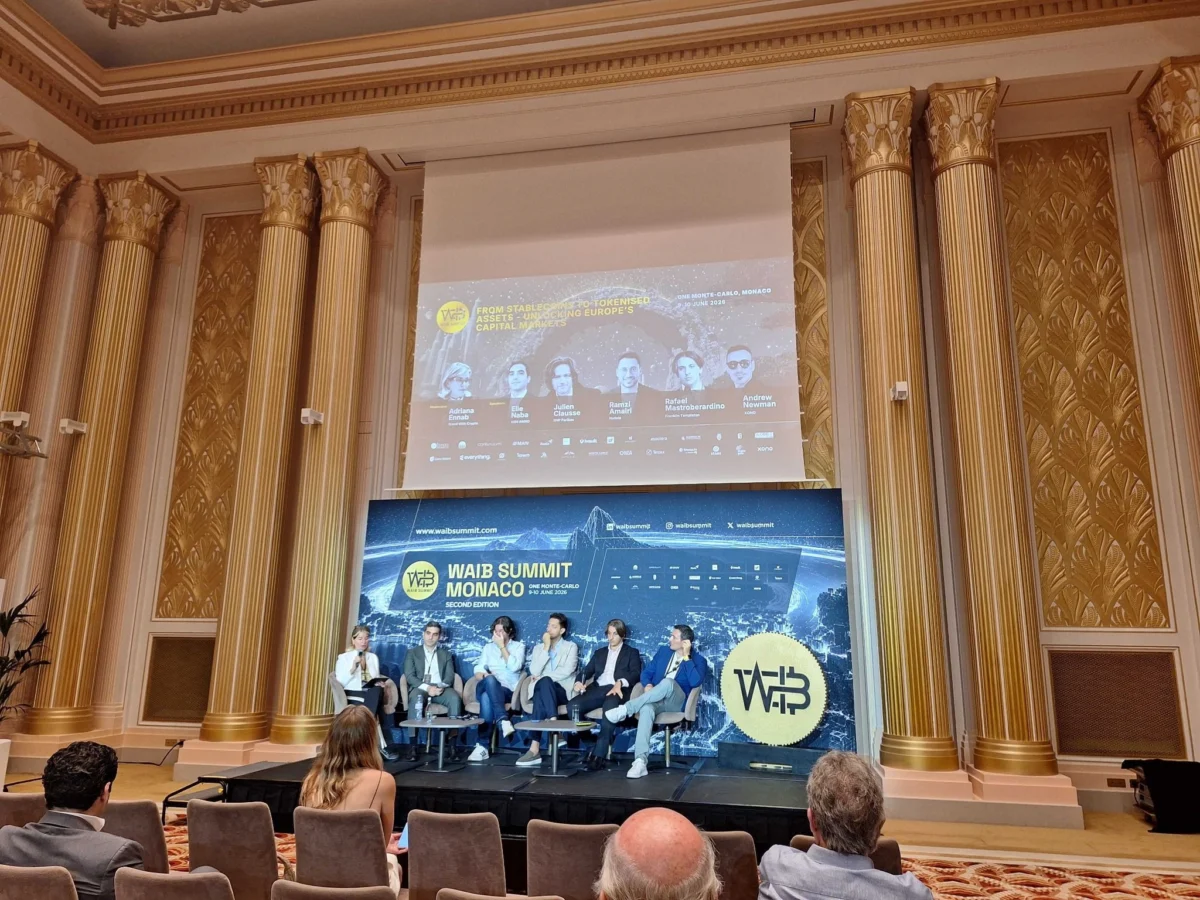
The landscape of global finance is undergoing a fundamental transformation as major banking institutions and asset managers aggressively integrate blockchain technology to overhaul the plumbing of capital markets. At the World Artificial Intelligence and Blockchain (WAIB) Summit 2026 in Monaco, senior executives from Franklin Templeton and BNP Paribas detailed a strategic shift toward the tokenization of real-world assets (RWA), characterizing the move as a necessary evolution to enhance capital efficiency, liquidity, and operational flexibility. This transition, which has moved from experimental pilots to large-scale institutional infrastructure, signals a departure from legacy settlement systems toward a unified, programmable financial ecosystem.
The Monaco Consensus: Tokenization as a Strategic Necessity
Speaking before an audience of international regulators and financial technologists, industry leaders emphasized that tokenization is no longer a peripheral interest but a core component of future-proofing institutional operations. Rafael Mastroberardino, head of digital assets partnership development at Franklin Templeton, highlighted that the primary driver for this adoption is the "optionality and flexibility" provided by onchain assets. According to Mastroberardino, the ability to wrap traditional securities in a digital format allows for more granular control over asset management, enabling banks and corporations to launch bespoke financial products that were previously impossible under the constraints of legacy technology.
The sentiment was echoed by Julien Clausse, head of the tokenization platform at BNP Paribas Corporate and Institutional Banking (CIB). Clausse pointed to the "multi-asset" nature of modern blockchain protocols as a breakthrough for institutional use cases. He argued that the true value of the technology is realized when diverse asset classes—ranging from sovereign bonds to corporate debt and equities—reside on the same interoperable ledger. This "atomic" interaction between assets allows for instantaneous delivery-versus-payment (DvP) and more efficient collateral management, reducing the risk and cost associated with traditional multi-day settlement cycles.
A Timeline of Institutional Acceleration in 2026 and 2027
The discussions in Monaco come amidst a rapid succession of milestones that have redefined the relationship between Wall Street and decentralized ledger technology (DLT). The trajectory of the past several months indicates a coordinated push by the world’s largest financial entities to establish a regulated, blockchain-based financial tier.
In mid-March 2026, the United States Securities and Exchange Commission (SEC) took a landmark step by approving a pilot proposal from Nasdaq. This approval allows the exchange to support the trading of tokenized versions of high-volume stocks and securities, marking the first time a major U.S. exchange has been permitted to integrate onchain settlement for mainstream equities.
Following closely on the heels of the Nasdaq announcement, the New York Stock Exchange (NYSE) announced a strategic partnership with Securitize, a leading tokenization platform. The collaboration aims to develop a comprehensive blockchain-based trading infrastructure. The NYSE initiative, backed by its parent company Intercontinental Exchange (ICE), is designed to facilitate 24/7 trading and instant settlement. By utilizing stablecoin-based funding, the platform intends to eliminate the gaps in liquidity that currently plague traditional markets during weekends and holidays.
Looking ahead, a consortium of the largest US-based financial institutions, including JPMorgan Chase, Bank of America, and Citigroup, is reportedly finalizing the architecture for a "tokenized deposit network." Scheduled for a phased launch in the first half of 2027, this network aims to keep commercial bank deposits within the regulated banking perimeter while providing the speed and programmability of digital assets. This move is seen as a direct response to the rising demand for "always-on" liquidity and the need to compete with non-bank stablecoin issuers.
Capital Influx and the Rise of Institutional Infrastructure
The shift toward tokenization is being fueled by significant venture capital and institutional investment. Digital Asset Holdings, a prominent player in the enterprise blockchain space, recently closed a $355 million funding round led by Andreessen Horowitz (a16z). This capital injection, which values the company at approximately $2 billion, is earmarked for the expansion of the Canton Network.

The Canton Network represents a critical piece of the institutional puzzle: a privacy-enabled, interoperable blockchain designed specifically for the requirements of traditional finance. Unlike public blockchains, where transaction data is visible to all participants, the Canton Network utilizes advanced cryptographic techniques to ensure that sensitive financial data remains confidential while still allowing for cross-chain settlement.
The network has already attracted a "who’s who" of global finance. Participants in recent pilots include Goldman Sachs, BNY Mellon, BNP Paribas, Standard Chartered, Société Générale, and Deutsche Börse. These institutions are testing the network’s ability to tokenize and settle traditional securities, such as repos and government bonds, in a synchronized environment.
Data-Driven Benefits: Why Institutions are Moving Onchain
The pivot to tokenization is supported by compelling economic data. According to research from various industry analysts, the transition from T+2 (trade date plus two days) settlement to T+0 (instant) settlement could free up billions of dollars in trapped capital. In the current system, financial institutions must maintain significant capital reserves to cover the risks associated with the time lag between a trade and its final settlement. By moving to an onchain model where the transfer of the asset and the payment happen simultaneously, these capital requirements are drastically reduced.
Key benefits identified by participants at the WAIB Summit include:
- Collateral Mobility: Tokenized assets can be moved across borders and platforms instantly, allowing institutions to optimize their balance sheets in real-time.
- Fractionalization: High-value assets, such as commercial real estate or private credit, can be broken down into smaller tokens, increasing market accessibility and liquidity.
- Operational Cost Reduction: The automation of compliance and corporate actions (such as dividend payments or voting) via smart contracts reduces the need for manual intervention and back-office reconciliation.
- 24/7 Market Access: Moving away from traditional "market hours" allows for global capital to flow more freely, reflecting the reality of a 24-hour digital economy.
Regulatory Responses and the European Context
While the United States has seen significant activity through the SEC’s recent pilot approvals, Europe is positioning itself as a leader in the regulatory framework for digital assets. The Markets in Crypto-Assets (MiCA) regulation has provided a level of legal certainty that is driving European banks like BNP Paribas and Société Générale to move faster with their tokenization offerings.
At the Monaco summit, regulators from several European jurisdictions discussed the importance of "regulatory sandboxes" that allow for the testing of tokenized securities under controlled conditions. The goal is to ensure that as the technology scales, it does not introduce systemic risks to the broader financial system. The emphasis remains on maintaining the integrity of the "regulated banking channel," ensuring that tokenized assets are backed by high-quality collateral and are subject to existing Anti-Money Laundering (AML) and Know Your Customer (KYC) protocols.
Implications for the Global Financial Architecture
The long-term implications of this shift are profound. If the 2027 launch of the tokenized deposit network is successful, it could signal the end of the distinction between "traditional finance" and "digital finance." Instead, there will simply be a modern financial system that utilizes blockchain as its primary record-keeping and settlement layer.
For large corporations, this means more efficient ways to manage treasury operations and issue debt. For investors, it could mean access to a wider array of asset classes with lower fees and faster settlement times. However, the transition is not without challenges. Interoperability remains a primary concern; for the "tokenized economy" to function, assets on one blockchain must be able to interact seamlessly with assets on another. The work being done by platforms like the Canton Network and industry groups focusing on standards will be vital in preventing the creation of new "digital silos."
As the WAIB Summit 2026 concluded, the consensus among the world’s financial elite was clear: tokenization is the path forward. With billions of dollars in funding, the backing of the world’s largest exchanges, and a clear regulatory roadmap emerging in key markets, the infrastructure for a tokenized global economy is being laid in real-time. The move toward 2027 represents not just a technological upgrade, but a total reimagining of how value is moved, stored, and managed in the 21st century.