
 James Watt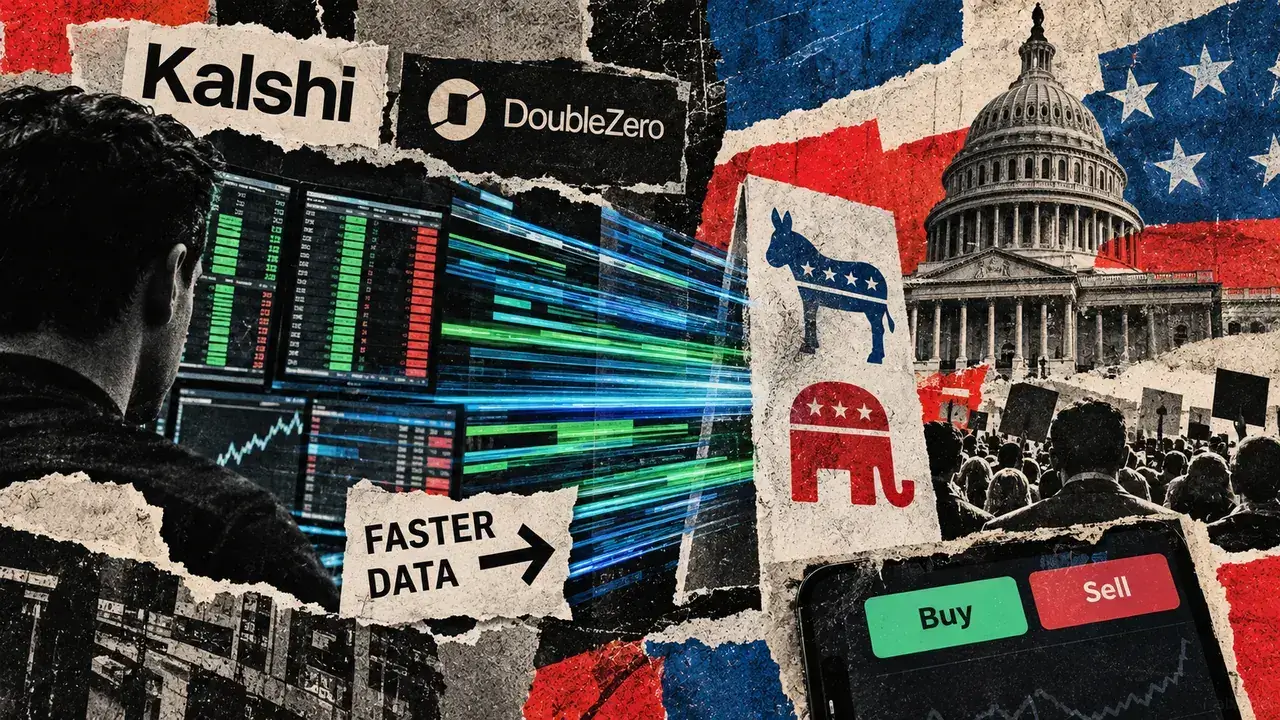
The integration of high-frequency trading infrastructure into the burgeoning world of political prediction markets marks a significant shift in how election outcomes are priced and traded. On September 9, DoubleZero, a provider of low-latency financial data services, announced the addition of Kalshi’s election and politics markets to its Edge platform. This service is specifically engineered to deliver real-time trading data over a dedicated network, offering professional participants a granular view of Kalshi’s order book, including the precise prices and volumes at which market participants are willing to transact. This development highlights a growing trend where the tools once reserved for traditional equities and commodities markets are being applied to the volatile and increasingly liquid arena of political forecasting.
The Evolution of Prediction Market Infrastructure
The decision to incorporate Kalshi’s data into the Edge service reflects a broader commercial realization: in prediction markets, information speed is as critical as the accuracy of the prediction itself. For many retail users, the experience of placing a bet on an election involves opening a mobile application and selecting a candidate based on personal conviction or polling data. However, for professional trading firms, the objective is often to capture the "spread"—the difference between the buying and selling price—or to react to breaking news faster than the broader market.
DoubleZero’s Edge service addresses a specific pain point in this ecosystem. When major news breaks—such as a candidate’s performance in a debate or a sudden shift in polling data—traders rush to adjust their positions. On standard internet connections, the price a user sees on their screen may already be obsolete by the time their order reaches the exchange. By utilizing a dedicated network, Edge aims to provide a more dependable and faster stream of information, allowing subscribers to see market movements in near real-time.
DoubleZero has indicated that this faster data flow is intended to assist professional trading companies in providing more efficient pricing. The logic follows that if market makers have better data, they can offer tighter spreads and higher liquidity. If competition among these professional firms remains robust, the resulting cost savings could eventually benefit the ordinary bettor by providing more stable and fair pricing, even if those bettors are not using high-speed connections themselves.
Chronology and Context: The Rise of Kalshi and Legal Milestones
The timing of this integration is not coincidental. The 2024 U.S. election cycle has seen an unprecedented surge in interest in prediction markets, which are increasingly viewed as more accurate barometers of public sentiment than traditional polling. Kalshi, a regulated exchange under the Commodity Futures Trading Commission (CFTC), has been at the center of a high-stakes legal battle regarding the legality of election betting in the United States.
Historically, the CFTC has been hesitant to allow contracts based on political outcomes, citing concerns over market integrity and the potential for "gaming" the democratic process. However, recent court rulings have shifted the landscape. In September 2024, a federal judge ruled in favor of Kalshi in its lawsuit against the CFTC, effectively clearing the path for the exchange to list congressional control contracts. This legal victory transformed Kalshi from a niche platform into a primary destination for political risk hedging, necessitating the kind of professional-grade data infrastructure provided by firms like DoubleZero.
DoubleZero itself brings a background in cryptocurrency infrastructure to the table. The company’s architecture combines privately supplied fiber links and specialized hardware, having previously established its presence by providing connections for Solana validators. The move into election markets signifies the convergence of decentralized finance (DeFi) technology, traditional low-latency trading, and political analysis.
The Mechanics of Prediction Market Trading
To understand why speed matters, one must examine the structure of a Kalshi contract. A standard "yes-or-no" contract on the platform pays out exactly $1.00 if the event occurs and $0.00 if it does not. If a "Yes" contract is trading at 60 cents, the market is essentially pricing in a 60% probability of that event happening. The 40-cent difference represents the potential profit, minus any exchange fees.
Traders do not necessarily have to hold these contracts until the election is settled. Much like stocks, these contracts can be traded intra-day. A trader might buy 1,000 contracts at 62 cents and sell them minutes later at 65 cents if a news event shifts the perceived probability. In this scenario, the trader earns a $30 profit (pre-fees) without ever needing to know the final election result.
This environment creates a high demand for the "order book"—a digital ledger showing all active buy and sell orders. The order book reveals the "spread" (the gap between the highest bid and lowest offer) and the "depth" (how many contracts can be traded before the price moves). For a high-frequency trader, seeing a large sell order being "eaten" by buyers in real-time is a signal to act. Edge delivers this raw data via messages that trading software can interpret instantly, bypassing the delays inherent in standard web-based streaming connections like WebSockets.
The Role of Market Makers and Price Stability
The primary beneficiaries of DoubleZero’s Edge service are market makers. These are specialized firms that provide liquidity by simultaneously offering to buy and sell contracts. They profit from the spread and are essential for ensuring that a retail user can enter or exit a position at any time.
However, market makers face a constant risk known as "adverse selection." If a market maker is slow to receive news, they might leave an old, "cheap" price on the board. A faster trader can see the news and "pick off" that price before the market maker has time to update it. If a market maker loses money repeatedly due to slow data, they will compensate by widening their spreads—making it more expensive for everyone to trade—or by reducing the number of contracts they are willing to trade.
By providing market makers with faster updates, services like Edge allow these firms to manage their risk more effectively. When market makers feel secure in their data, they can offer narrower spreads. For a retail user placing a $100 bet on their phone, this might mean the difference between buying at 61 cents versus 63 cents. While the retail user isn’t paying for the high-speed feed, they are the secondary beneficiaries of the professional competition it enables.
Regulatory Oversight and Market Integrity
As prediction markets grow in scale and sophistication, they draw increased scrutiny from regulators. The CFTC has remained vigilant regarding potential abuses. In an enforcement advisory issued on February 25, the commission highlighted several disciplinary cases involving prediction markets. These included instances where a political candidate traded on their own election prospects and a case involving a YouTube editor trading contracts based on unpublished video content.
These cases underscore a critical distinction in the industry: the difference between an "information advantage" gained through speed and an "information advantage" gained through non-public, confidential data. While DoubleZero provides the former—making public market data travel faster—it does not provide the latter.
Regulators and exchanges must work in tandem to ensure that the speed of a computer does not become a mask for insider trading. Kalshi employs price-time priority, a standard exchange mechanic where the best price is filled first, and if prices are equal, the order that arrived first takes precedence. While a faster feed helps a trader reach the front of the queue, it does not bypass the fundamental rules of the exchange.
Broader Implications for Financial and Political Analysis
The professionalization of prediction market data has implications that extend far beyond the betting community. As these markets become more liquid and the data more reliable, political probabilities are being integrated into broader financial models.
For instance, institutional investors in the cryptocurrency space or traditional finance may use election odds as an input for assessing legislative risk. If a particular party’s victory is correlated with more favorable regulations for Bitcoin, a sudden shift in the Kalshi "Yes" contract for that party could trigger automated adjustments in a firm’s crypto holdings. In this context, political data becomes a standard financial variable, much like an interest rate hike or an employment report.
However, analysts warn that "faster" does not always mean "more accurate." A price movement on a prediction market can sometimes be a "head fake"—a shift caused by a single large trader exiting a position rather than a change in the political landscape. The depth of the market is crucial; a probability derived from a market with $10 million in liquidity is significantly more authoritative than one with $10,000.
Conclusion: The Future of Political Risk Trading
The integration of Kalshi’s data into DoubleZero’s Edge service is a landmark moment in the maturation of prediction markets. It signals that political forecasting is moving out of the realm of casual speculation and into the world of institutional-grade financial assets.
For the professional trader, the benefit is clear: a technological edge that allows for more precise execution and risk management. For the exchange, it brings increased liquidity and a more robust ecosystem of participants. For the general public, it offers a high-resolution, real-time look at political probabilities, provided they understand the mechanics behind the numbers.
As the industry moves forward, the success of these high-speed services will be measured by the quality of the markets they support. If the introduction of professional infrastructure leads to tighter spreads and more resilient liquidity during volatile news cycles, it will validate the role of prediction markets as a vital tool for price discovery in an increasingly uncertain political world. The ultimate test will occur during the peak of election night, when the speed of data and the depth of the order book will determine who wins, who loses, and how much it costs to be right.









