Nila Kartika Wati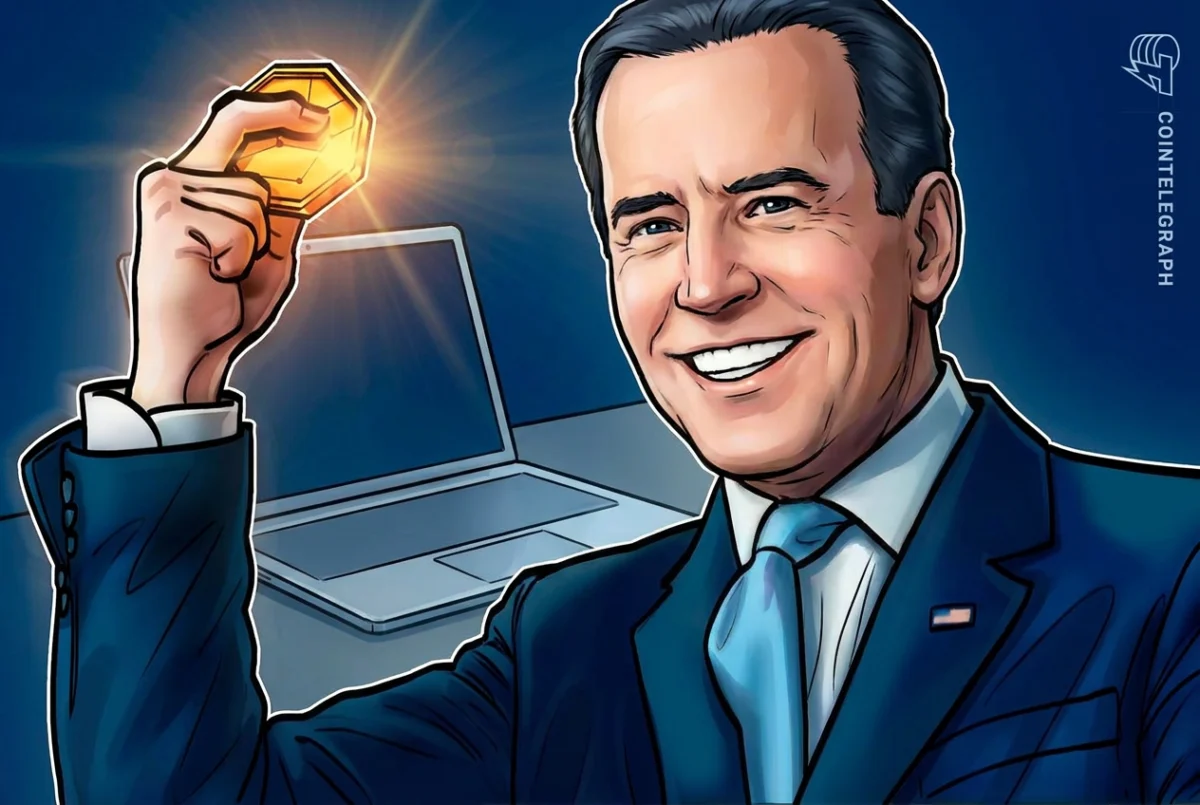
Hunter Biden’s LAPTOP memecoin experienced a precipitous decline of 86.5% within its initial 30 minutes of trading on Wednesday, marking the official foray of the son of former US President Joe Biden into the burgeoning and often volatile market for politically themed cryptocurrencies. The token, designated $LAPTOP and issued on the Ethereum layer-2 network Base, opened at $199.50 UTC but quickly fell to $26.88 by 12:30 pm UTC, according to data from CoinGecko. Despite the dramatic price collapse, the token recorded a significant trading volume exceeding $2.5 million in its nascent hours, indicating considerable, albeit bearish, market activity.
The launch of $LAPTOP represents a controversial attempt by Hunter Biden to reframe a highly publicized narrative that has plagued him for years. In a post on X (formerly Twitter) on Wednesday, Biden addressed the immediate public backlash and the token’s dismal market performance, stating, "The symbol they used to try to end me is now a symbol of resilience, redemption and recovery." He acknowledged the widespread cynicism surrounding memecoins and explicitly labeled President Donald Trump’s associated tokens as a "grift." Crucially, Biden also issued a clear warning to potential buyers, advising them not to anticipate that he, or anyone else, would actively work to inflate the value of LAPTOP.
The Genesis of the "Laptop Narrative"
The memecoin’s branding is inextricably linked to the infamous "laptop narrative," a controversy that originated in 2019. This narrative centers on a MacBook Pro that Hunter Biden reportedly left at a computer repair shop in Delaware. The contents of this device, allegedly containing emails, photographs, and other files, became a focal point of political contention. In October 2020, just weeks before the U.S. presidential election, the New York Post published articles purporting to reveal compromising information from the laptop. These publications detailed alleged business dealings in Ukraine and China, as well as personal struggles, drawing intense scrutiny.
Republican allies of then-President Donald Trump swiftly weaponized the material, using it to launch attacks against Hunter Biden and, by extension, his father, then-presidential candidate Joe Biden. They argued that the laptop’s contents demonstrated corruption and undue influence, allegations that the Bidens and their supporters consistently denied, often characterizing the story as Russian disinformation at the time. The veracity and chain of custody of the laptop’s contents have been subjects of ongoing debate and investigations, contributing to a deeply entrenched political narrative that has become synonymous with Hunter Biden’s public image. The $LAPTOP token, therefore, is positioned as an attempt to seize control of this narrative, transforming a symbol of alleged scandal into one of personal triumph and recovery.
A Chronology of the Token’s Unveiling
The path to the $LAPTOP memecoin’s launch was punctuated by several key events, building anticipation and controversy:
- August 21, 2023: Hunter Biden initially expressed strong criticism of crypto ventures associated with the Trump family. In a post, he accused entities like World Liberty Financial of leveraging political influence and centralized controls for the benefit of their founders, asserting that the broader crypto industry deserved better. This earlier stance would later become a point of contention, leading to accusations of hypocrisy following his own memecoin launch.
- Monday, [Date Inferred from Original]: Biden teased the LAPTOP token on X, sharing a post that displayed the token’s ticker alongside a montage of media coverage related to the infamous laptop. This initial announcement served as the official harbinger of his entry into the political memecoin arena, immediately drawing a mixture of curiosity and skepticism from the crypto community and political observers alike.
- Wednesday, [Date Inferred from Original]: The LAPTOP token officially launched on the Base network. Its immediate market performance was characterized by the dramatic 86.5% crash within the first half-hour of trading, signaling a turbulent reception from investors. Later that day, Hunter Biden posted his aforementioned defense and explanation on X, framing the token as a symbol of resilience.
Market Reaction and Expert Criticism
The announcement and subsequent launch of $LAPTOP were met with a wave of criticism from various corners, highlighting the contentious nature of political memecoins and the perceived motives behind such ventures. Digital investigator Stephen Findeisen, widely known as Coffeezilla for his work exposing online scams, was among the most vocal critics. He took to X, unequivocally labeling LAPTOP a "shitcoin" and explicitly urging his substantial following to refrain from purchasing it. Findeisen’s intervention underscored the prevailing sentiment among many crypto enthusiasts and consumer protection advocates that such tokens often lack genuine utility and are primarily driven by speculative hype, frequently leading to significant losses for retail investors.
Another prominent X account, "scupytrooples," directly appealed to Biden, advising him that there was "still time to walk this back." This reaction reflected a broader concern about the optics and potential negative repercussions of a high-profile political figure engaging in such a volatile and often unregulated financial endeavor.
Adding another layer of scrutiny, Jesse Pollak, the founder of the Base network, publicly clarified his team’s involvement. In an X post, Pollak stated that while the project had indeed contacted his team, Base had made a "conscious decision" not to assist with the token’s design or promotion. This distancing maneuver from the underlying blockchain network emphasized the independent nature of the token’s development and marketing, while also subtly indicating a desire to avoid association with potentially controversial projects, especially those tied to prominent political figures. The lack of direct endorsement from the network further highlighted the project’s independent, grassroots (or self-initiated) nature, distinguishing it from projects that might benefit from more formal platform support.
Tokenomics and Controversial Disclosures
The structural underpinnings of the LAPTOP token, as detailed in its public disclosures, reveal a design that, while common for memecoins, raises questions given Hunter Biden’s prior criticisms of other political crypto ventures. The project’s disclosures explicitly state that LAPTOP is a digital collectible with no inherent utility, ownership rights, voting rights, yield generation, or profit-sharing mechanisms. This lack of fundamental utility is a hallmark of most memecoins, which derive their value almost entirely from community sentiment, speculation, and brand recognition.
LAPTOP boasts a fixed total supply of 1 billion tokens, with 350 million tokens designated for initial circulation at launch. A significant portion of the supply, 300 million tokens (or 30% of the total), has been allocated to the founders, including Hunter Biden himself. These founder tokens are subject to a six-month lock-up period, followed by a monthly vesting schedule over the subsequent 24 months. This vesting schedule is intended to prevent an immediate sell-off by insiders, theoretically aligning their long-term interests with the token’s success, though it also ensures a steady stream of tokens entering the market over time.
An additional 30% of the token supply is tied to a unique mechanism linked to political, cultural, and crypto predictions. Under this scheme, tokens are designed to be burned if specified outcomes occur, while they would be released to charity if those outcomes do not materialize. This innovative, albeit complex, allocation mechanism introduces an element of gamification and social commentary into the token’s structure.
The disclosures also outline a comprehensive airdrop strategy, allocating 20% of the total supply for these distributions. The initial round of airdrops constitutes 10% of the total supply, with a specific and notable allocation: 2% is reserved for wallets that incurred losses on TRUMP-branded tokens, while the remaining 8% is designated for eligible subscribers to Biden’s "Where’s Hunter" Substack newsletter. A separate 10% future airdrop is slated to be distributed at the foundation’s discretion, providing flexibility for future community engagement or strategic distribution. The targeted 2% allocation for TRUMP token losers directly addresses Hunter Biden’s earlier criticisms of Trump-affiliated crypto projects, positioning LAPTOP as a potential "redemption" for those who lost money on what he termed a "grift." This move, however, also inadvertently highlights the very speculative and often zero-sum nature of the memecoin market.
Hypocrisy and the Broader Context of Political Memecoins
Hunter Biden’s launch of $LAPTOP has inevitably fueled accusations of hypocrisy, particularly given his earlier, strong condemnation of the Trump family’s forays into cryptocurrency. His August 21 post, where he decried the use of political influence and centralized controls in other crypto ventures, stands in stark contrast to his own project, which allocates a substantial chunk of its supply to founders and leverages his political identity for branding. Critics argue that while he lambasted others for "grifting," his own project, despite its stated intentions of "resilience and recovery," operates within the same highly speculative and often criticized framework of memecoins.
The rise of political memecoins like $LAPTOP is a recent, yet rapidly growing, phenomenon within the cryptocurrency landscape. Tokens such as TRUMP, MAGA, and BODEN (associated with Joe Biden) have seen significant trading volumes and market capitalization, often driven by political fervor, community engagement, and pure speculation rather than technological innovation or utility. These tokens thrive on cultural relevance and the passionate, often tribal, nature of political discourse. Their volatility is legendary, with prices often skyrocketing and plummeting based on news cycles, social media trends, and the whims of influential figures.
This trend has also drawn the attention of regulators. For instance, a California Senate bill was recently passed, aiming to ban the issuance of memecoins by public officials. While the full scope and enforceability of such legislation are still being debated, it signals a growing concern among lawmakers about the potential for conflicts of interest, market manipulation, and consumer protection issues when political figures engage directly in the issuance of speculative financial instruments. Hunter Biden’s venture into this space, particularly as the son of a sitting president, amplifies these regulatory concerns and places his project under an even brighter spotlight.
Implications and Future Outlook
The immediate and dramatic collapse of the LAPTOP memecoin’s value upon launch carries several implications. For Hunter Biden, it complicates his stated goal of reclaiming the "laptop narrative" as a symbol of resilience. While his words attempt to frame the token as a personal journey, its financial performance on day one paints a picture of significant risk and immediate investor losses, potentially reinforcing negative perceptions rather than fostering redemption. The optics of a token, launched by a politically prominent individual, crashing so severely, could invite further scrutiny from both the public and regulatory bodies.
For the broader political memecoin market, the LAPTOP launch serves as a stark reminder of the extreme volatility and speculative nature inherent in this niche. While some political tokens have seen incredible surges, others face immediate failure, highlighting the unpredictable sentiment that drives their value. It underscores the critical importance of due diligence and risk assessment for any individual considering investment in such assets, especially given the explicit warnings from the token’s issuer about not expecting value appreciation.
The incident also brings to the forefront the ongoing ethical and regulatory debate surrounding the intersection of politics and decentralized finance. As more public figures explore crypto, the lines between personal branding, political campaigning, and financial speculation blur, raising complex questions about transparency, accountability, and potential market manipulation. The lack of traditional utility in memecoins means their value is almost entirely psychological and speculative, making them particularly susceptible to pump-and-dump schemes or rapid loss of interest.
As the LAPTOP token navigates its future, its trajectory will likely continue to be influenced by political developments, social media discourse, and the broader sentiment within the cryptocurrency market. Whether it genuinely becomes a symbol of "resilience, redemption, and recovery" or simply another cautionary tale in the volatile world of memecoins remains to be seen. Its initial performance, however, strongly suggests that the journey will be anything but smooth.