James Watt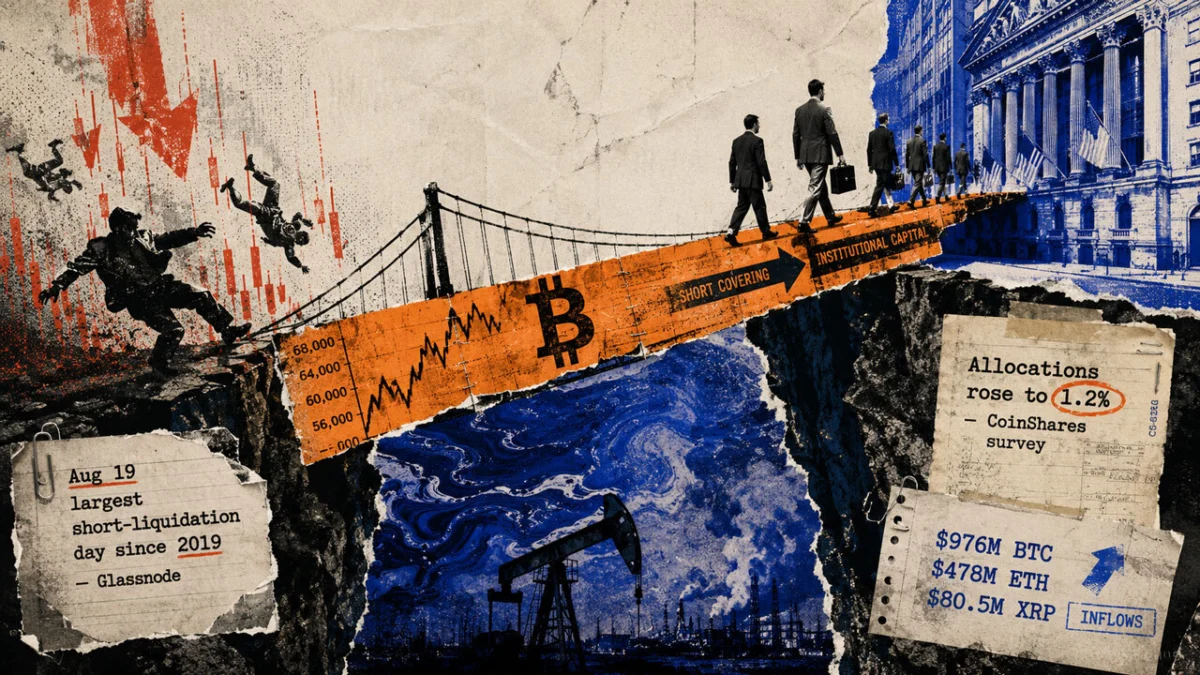
The global cryptocurrency market underwent a massive structural transformation in late August 2026, adding approximately $500 billion in total market capitalization within a matter of days. This rapid appreciation was primarily catalyzed by a violent short-liquidation squeeze that propelled Bitcoin from a base of $63,500 toward the $80,000 threshold. While the initial leg of the rally was driven by the forced closure of bearish bets, the subsequent phase saw a critical handoff to regulated investment products, which supplied the fresh capital necessary to sustain the move once the liquidation-driven momentum began to dissipate. Industry analysts, including Tom Lee of Fundstrat, have characterized this price action as a significant "course correction" for a market that had become excessively "offsides" or over-leveraged on the short side, potentially laying the groundwork for a more sustained institutional advance.
The Mechanics of the Liquidation Squeeze
The rally’s first stage was defined by a massive imbalance in the derivatives market. According to data from Glassnode, August 19, 2026, marked the largest single-day short-liquidation event in the firm’s records dating back to 2019. As Bitcoin’s price began to climb from its $63,500 floor, automated exchange mechanisms triggered the closure of short positions. In a short-liquidation event, traders who have bet on falling prices are forced to buy back the asset to cover their losses as prices rise. This creates a feedback loop of mandatory buying that accelerates upward price movement, often resulting in "violent" rallies that detach from immediate fundamental drivers.
Quantitative data from QCP’s derivatives desk highlighted the extent of this deleveraging. As Bitcoin climbed toward $80,000, the total Bitcoin-denominated futures open interest—the sum of all outstanding derivative contracts—dropped from approximately 646,000 BTC to 588,000 BTC. This 9% decline, representing roughly 58,000 BTC, confirms that the rally was not initially fueled by new speculative longs entering the market, but rather by the elimination of existing bearish positions. Crucially, funding rates remained relatively contained throughout this period. In a typical retail-driven speculative frenzy, price, open interest, and funding rates usually rise in tandem. The absence of a spike in funding suggests that the market did not immediately pivot to excessive long-side leverage, which often precedes a "long squeeze" or a sharp reversal.
The Institutional Handoff and Fund Inflows
As the forced buying from short sellers subsided, regulated investment products and institutional allocators stepped in to provide a secondary layer of demand. CoinShares reported that global crypto investment products saw inflows of over $2.9 billion during the week ending August 20, 2026. This figure represents the largest weekly total recorded in 2026, signaling a major shift in institutional sentiment. The momentum carried into the following week, with the first three trading days adding an additional $1.65 billion in net inflows.
A granular breakdown of the $1.65 billion three-session inflow reveals a broadening of interest across the digital asset spectrum:
- Bitcoin: $976 million (approx. 60% of total inflows)
- Ethereum: $478 million (approx. 29% of total inflows)
- XRP: $80.5 million (approx. 5% of total inflows)
- Solana: $62.9 million (approx. 4% of total inflows)
- Hyperliquid: $39 million (approx. 2% of total inflows)
This influx into regulated Exchange-Traded Funds (ETFs) and other institutional vehicles suggests that the rally transitioned from a technical "squeeze" to a fundamental "reallocation." A CoinShares fund-manager survey conducted in August 2026 supported this narrative, revealing that crypto allocations among respondents rose to an average of 1.2% of total portfolios. This marked the first significant increase in institutional weighting since the broad market selloff in October 2025. The survey, which covered investors overseeing a combined $1.16 trillion in assets, indicated that many institutions viewed the preceding price decline as a "good value" opportunity, allowing them to build exposure before the breakout occurred.
Macroeconomic Catalysts and the Treasury Buyback Program
The timing of the crypto breakout was closely tied to shifts in the broader macroeconomic environment. Analysis from QCP linked the initial price move to the U.S. Treasury’s decision to expand its buyback program for long-end securities. By purchasing older, less liquid Treasury bonds and replacing them with new issues, the Treasury effectively provided liquidity support to the financial system. This move, combined with a period of U.S. dollar weakness, created a "risk-on" environment conducive to rallies in high-beta assets like Bitcoin.
However, the macro landscape became significantly more complex toward the end of August. Federal Reserve Chair Kevin Warsh’s remarks at the Jackson Hole symposium introduced a more hawkish tone to the market. Fed-funds futures markets responded by repricing the probability of a September interest rate hike from 35% to 64%. This shift in expectations pushed Treasury yields higher and placed downward pressure on equities, creating a challenging backdrop for the newly established crypto price levels.
Geopolitical tensions further exacerbated market stress. Reports of renewed conflict between the U.S. and Iran on August 31 led to Brent crude oil prices surging above $90 per barrel. Rising energy prices often translate into inflationary concerns, which in turn reinforce the Federal Reserve’s hawkish stance. The resulting "risk-off" sentiment across global markets forced Bitcoin to test its resilience as institutional buyers faced their first major hurdle since the $80,000 surge.
Technical Support and the Road Ahead
From a technical perspective, the market is currently viewed as being in a "transition" phase. Glassnode’s August 31 Market Pulse report noted that while institutional allocation remains strong, there are early signs of short-term distribution—where newer buyers take quick profits—and a gradual rebuilding of leverage.
The most critical level for market participants to watch is the $70,000 mark. This price point represents the current cost basis for "short-term holders" (investors who have held their coins for less than 155 days). If Bitcoin falls below $70,000, a significant portion of the buyers who entered during the August rally would be "underwater" (holding unrealized losses). Such a move could trigger a fresh wave of selling if these investors decide to exit their positions to preserve capital.
Conversely, the "bull case" depends on Bitcoin’s ability to clear the overhead resistance zone located between $83,000 and $86,000. Reclaiming and holding this territory would indicate that institutional demand is sufficient to absorb the supply being sold by long-term holders. For this scenario to play out, market analysts suggest that weekly crypto product inflows must remain near or above the $1 billion mark. Additionally, keeping funding rates contained will be essential to ensure that the market does not become top-heavy with unstable, leveraged long positions.
Future Outlook and Key Indicators
The durability of the $500 billion market surge will likely be determined by several key economic data releases and policy shifts in early September. The U.S. jobs report, scheduled for September 4, is the next major volatility catalyst. Forecasts suggest a range of 55,000 to 58,000 new jobs. A significantly weaker-than-expected report could mitigate the hawkish sentiment sparked by Kevin Warsh, as it might signal an economic slowdown that precludes further rate hikes. On the other hand, a strong employment print would likely solidify the case for a September hike, further strengthening the U.S. dollar and testing the resolve of crypto allocators.
The "handoff" from short sellers to institutional funds is a milestone in the maturation of the digital asset market. It represents a shift from a market dominated by speculative derivatives to one increasingly influenced by regulated, long-term investment vehicles. However, this transition also means that crypto is more tightly integrated into the global macro-financial system than ever before.
As Tom Lee noted, the "course correction" has cleared the path for a potential larger advance, but the obstacles are now geopolitical and macroeconomic in nature. Whether the rally continues or retraces will depend on whether institutional appetite can withstand the triple threat of $90 oil, rising yields, and a hawkish Federal Reserve. If the inflows continue despite these headwinds, it would provide the strongest evidence yet that Bitcoin has established a new, higher floor in the global financial hierarchy. If redemptions begin to outweigh inflows, the August rally may be remembered as a massive liquidation event with a long tail, rather than the start of a new, permanent bull phase.