admin
admin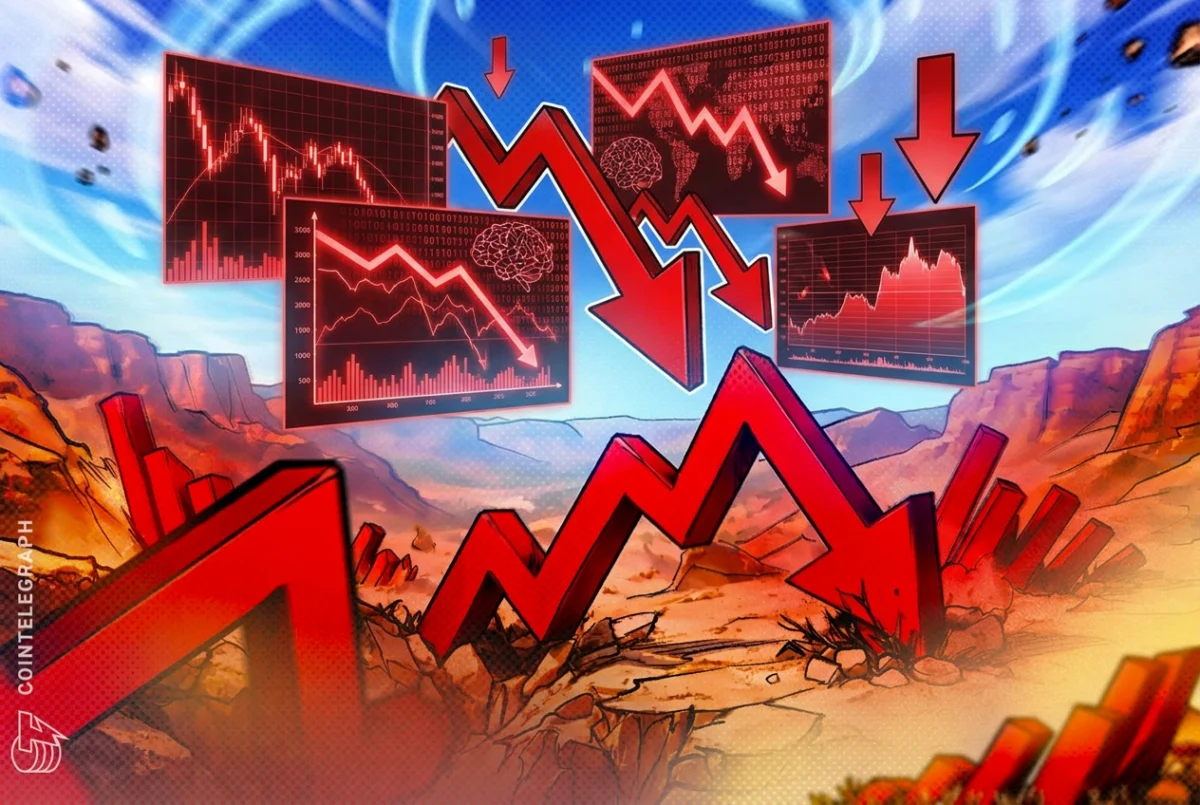
In a move that underscores the ongoing volatility within the high-growth artificial intelligence sector, Ken Griffin’s Citadel has reportedly acquired a significant portion of the public stock portfolio belonging to Situational Awareness, the hedge fund established by former OpenAI researcher Leopold Aschenbrenner. The transaction, first reported by the Financial Times, comes in the wake of a turbulent July for AI-related equities, which saw Situational Awareness suffer substantial losses and face mounting pressure from lenders. The deal marks a pivotal moment for Aschenbrenner’s nascent fund, which had previously been celebrated for its meteoric rise during the first half of 2024, only to be caught in a sharp market correction that tested its liquidity and leveraged positions.
The acquisition by Citadel involves a discounted portfolio of assets that Situational Awareness was forced to offload following a reported 67% decline in value during the month of July. While the fund had achieved a staggering 439% return through the end of June, the sudden "AI stock market rout" erased a significant portion of those gains, leaving the fund up approximately 80% for the year—a figure that, while still impressive by traditional standards, represents a massive drawdown from its peak. This sequence of events highlights the high-stakes nature of concentrated bets on emerging technologies and the risks inherent in the aggressive use of leverage to amplify returns in volatile sectors.
The July Market Correction and its Impact on AI Infrastructure
The broader context of this transaction is rooted in a significant shift in investor sentiment regarding the artificial intelligence narrative during mid-2024. After nearly two years of relentless growth fueled by the success of Large Language Models (LLMs) and the subsequent demand for hardware, the market began to question the immediate profitability and capital expenditure requirements of the AI revolution. This skepticism manifested in a broad sell-off of semiconductor stocks, energy providers, and data center infrastructure companies.
Situational Awareness, which had positioned itself at the epicenter of this "AI infrastructure" trade, was uniquely exposed. According to data from Yahoo Finance and SEC filings, several of the fund’s core holdings suffered double-digit losses in July. Sandisk, a key player in the storage and memory space essential for AI workloads, saw its stock price plummet by roughly 44% during the month, even after a late-month recovery. Similarly, Bloom Energy, which provides fuel cell technology often utilized by power-hungry data centers, declined by approximately 32%. CoreWeave, a specialized cloud provider for AI applications that has seen its valuation soar in private markets, also faced headwinds, with related public proxies falling nearly 26%.
The rapid decline in these asset prices likely triggered margin calls from Situational Awareness’s lenders. Margin calls occur when the value of an investor’s margin account falls below the broker’s required amount, necessitating the immediate injection of cash or the sale of assets to cover the shortfall. Reports from The Wall Street Journal indicate that Situational Awareness was actively seeking fresh capital from existing investors and lenders to meet these obligations. The fund reportedly entered into negotiations to sell a $3.5 billion stake in the AI startup Anthropic to a consortium led by Greenoaks and Sequoia Capital, though that deal was abruptly withdrawn as the Citadel transaction took shape.
Chronology of the Situational Awareness Liquidity Crisis
The timeline of the fund’s distress and subsequent asset sale reveals a fast-moving crisis that necessitated rapid intervention.
- January – June 2024: Situational Awareness records historic gains, reaching a year-to-date return of 439%. The fund benefits from a concentrated portfolio of AI hardware, energy infrastructure, and Bitcoin miners transitioning to AI hosting.
- Early July 2024: A global sell-off in the semiconductor and AI sectors begins, triggered by concerns over high valuations and geopolitical tensions affecting the chip supply chain in Asia.
- Mid-July 2024: Situational Awareness’s portfolio begins a steep descent. The fund’s heavy use of leverage accelerates the losses, leading to a monthly drawdown of 67%.
- Late July 2024: As asset values hit critical levels, the fund begins exploring emergency liquidity options. Discussions are held regarding the sale of private shares in Anthropic, a primary competitor to OpenAI.
- Wednesday, July 31, 2024: Reports emerge that the fund has agreed to sell its Anthropic stake for $3.5 billion. However, by the following morning, the deal is canceled.
- Thursday, August 1, 2024: News breaks that Ken Griffin’s Citadel has stepped in to purchase a large proportion of the fund’s public stock portfolio at a discount, providing the necessary liquidity to stabilize Situational Awareness’s remaining operations.
Citadel’s role in this transaction is consistent with its historical position as a major liquidity provider in the global markets. By purchasing the portfolio, Citadel essentially acts as the "backstop," absorbing the selling pressure that might otherwise have further depressed the prices of the underlying stocks. For Citadel, the acquisition offers an opportunity to acquire high-conviction AI assets at a significant discount to their June valuations.
Portfolio Analysis: The Intersection of AI and Bitcoin Mining
One of the more unique aspects of the Situational Awareness portfolio was its heavy investment in Bitcoin mining companies. SEC filings from the first quarter of 2024 revealed that the fund held approximately $1.11 billion in shares across seven prominent mining firms, including Iren (formerly Iris Energy), Core Scientific, Riot Platforms, and CleanSpark.
This investment strategy was not a bet on the price of Bitcoin itself, but rather a strategic play on the "power gap" in AI infrastructure. As the demand for AI compute increases, the primary bottleneck has shifted from chip availability to power and data center capacity. Bitcoin miners, who possess large-scale electrical interconnections and sophisticated cooling infrastructure, have increasingly become targets for AI companies seeking to secure power.
For example, Core Scientific recently signed a multi-billion-dollar deal with CoreWeave to host AI hardware, effectively repurposing its mining facilities for high-performance computing (HPC). Situational Awareness’s thesis, as outlined in Aschenbrenner’s writings, suggested that these miners were undervalued assets sitting on the "digital oil" of the 21st century: electricity. However, the high correlation between these mining stocks and the broader tech sector during the July rout meant they provided little diversification when the AI trade soured. It remains unclear whether the Bitcoin mining positions were included in the sale to Citadel or if Situational Awareness has retained them as part of its remaining $10 billion in assets.
Leopold Aschenbrenner and the Situational Awareness Thesis
To understand the fund’s aggressive positioning, one must look at the philosophy of its founder, Leopold Aschenbrenner. A former researcher at OpenAI, Aschenbrenner gained notoriety in the tech community after publishing a comprehensive essay series titled "Situational Awareness: The Decade Ahead." In these papers, he argued that the world is on the verge of achieving Artificial General Intelligence (AGI) by 2027.
Aschenbrenner’s thesis posits that the scaling laws of AI will require an exponential increase in "compute, power, and security." He predicted that the United States would need to mobilize resources on a scale similar to the Manhattan Project to maintain its lead in AI, leading to a massive boom in the physical infrastructure required to support these models. This conviction translated into the fund’s investment strategy: buying the "picks and shovels" of the AI era.
Aschenbrenner’s background is also linked to the effective altruism movement and the ill-fated FTX empire. He was a member of the FTX Future Fund’s team and was among those who resigned in November 2022 as Sam Bankman-Fried’s exchange collapsed. His subsequent stint at OpenAI ended in 2024, reportedly due to concerns over his public disclosures regarding AI safety and the company’s internal security protocols. These experiences have shaped a founder who is deeply convinced of the transformative power of AI but who also operates with a high appetite for risk.
Broader Market Implications and Future Outlook
The fire sale of Situational Awareness’s public assets to Citadel serves as a cautionary tale for the "AI-only" investment strategy. While the long-term potential of artificial intelligence remains a central theme for institutional investors, the July correction demonstrated that the path to AGI will be marked by extreme volatility and periodic "reality checks" regarding valuations.
Industry analysts suggest that the Citadel-Situational deal may signal a consolidation phase in AI investing. Large, multi-strategy hedge funds like Citadel are increasingly well-positioned to capitalize on the distress of smaller, more concentrated thematic funds. By providing liquidity during market panics, these larger entities can secure long-term positions in critical infrastructure companies at favorable entry points.
Furthermore, the survival of Situational Awareness—despite its massive drawdown—indicates that there is still significant underlying support for the AI infrastructure thesis. With $10 billion in assets remaining, including a prized stake in Anthropic, Aschenbrenner’s fund remains a significant player. The key challenge moving forward will be managing the "situational awareness" of its own balance sheet, ensuring that its conviction in the future of AI does not outpace its ability to withstand the fluctuations of the present market.
As of publication, neither Citadel nor Situational Awareness has issued an official statement regarding the specific terms of the asset transfer or the current composition of their respective portfolios. However, the transaction stands as a stark reminder that even in the most promising technological revolutions, the fundamentals of risk management and liquidity remain paramount.