 James Watt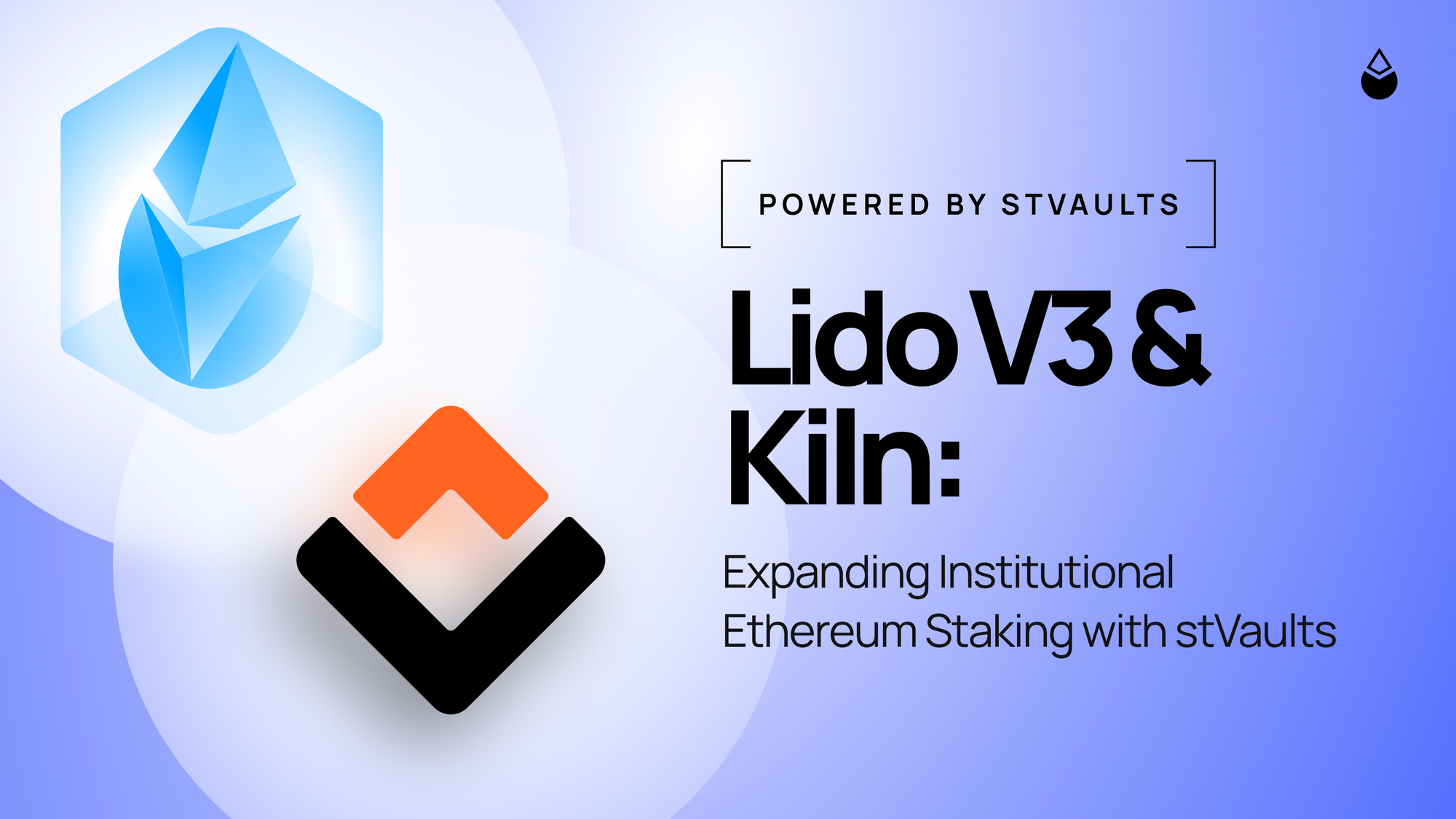
Kiln, a leading institutional provider of on-chain asset infrastructure, has announced a significant advancement in its service offering through a strategic integration with Lido V3’s innovative stVaults. This collaboration is set to redefine institutional Ethereum (ETH) staking by providing a unique solution that marries the critical need for liquidity with the demand for performance optimization and operator control. As an approved Lido V3 node operator, Kiln will power stVaults, enabling institutional ETH stakers and existing stETH holders to leverage Kiln’s high-performing validator infrastructure while maintaining access to the robust liquidity offered by stETH. This development addresses long-standing compromises in the institutional staking landscape, paving the way for more sophisticated and compliant yield strategies.
The Evolution of Institutional Staking: Addressing Historical Limitations
The journey of institutional engagement with Ethereum staking has been marked by a persistent dilemma: the trade-off between capital liquidity and staking performance optimization. Prior to innovations like stVaults, institutions typically faced a stark choice. Direct staking, where an institution runs its own validators or delegates to a specific operator, offers the advantage of operator selection and the potential for superior validator outcomes due to focused management and infrastructure. However, this approach inherently locks up capital, rendering it illiquid and difficult to utilize for other financial activities or to quickly divest. This illiquidity poses significant challenges for asset managers, treasuries, and platforms that require flexible capital deployment and robust risk management frameworks.
Conversely, traditional liquid staking protocols, spearheaded by entities like Lido, solved the liquidity problem by issuing liquid staking tokens (LSTs) such as stETH. These tokens represent staked ETH and accrue staking rewards, while remaining liquid and composable within the broader decentralized finance (DeFi) ecosystem. This innovation was transformative, opening up staking to a much wider audience. However, for institutions, traditional liquid staking introduced a different set of compromises. It typically removed the ability to choose a specific node operator, pooling validator performance across a broad network. This averaging of performance meant that institutions could not benefit from selecting high-performing operators like Kiln, potentially leading to suboptimal yields compared to direct staking. Furthermore, the lack of specific attribution for staking rewards and the pooled nature of operations could complicate compliance and auditing requirements for regulated entities. This fundamental compromise has historically limited the flexibility for institutions to develop advanced staking-native yield strategies that align with their stringent risk parameters and regulatory obligations, often forcing them to choose between liquidity and a performance-driven, attributable staking experience.
Lido V3 and stVaults: A Paradigm Shift
The introduction of Lido V3 and its stVaults architecture represents a significant leap forward in addressing these limitations. stVaults are designed to bridge the gap between liquidity and operator choice, offering a novel solution specifically tailored for institutional demands. At its core, a stVault allows an institution’s ETH to remain staked on validators operated by a chosen provider—in this case, Kiln—while simultaneously enabling the optional minting of stETH. This ingenious design fundamentally removes the traditional trade-off, granting institutions the best of both worlds.
The core advantages of stVaults, particularly when powered by an infrastructure provider like Kiln, are multifaceted:
- Operator Choice with Liquidity: Institutions can now select their preferred node operator, ensuring their capital is managed by a provider known for reliability and performance, while still having the option to mint stETH for immediate liquidity and composability across the DeFi ecosystem. This flexibility empowers institutions to manage their capital more dynamically.
- Performance-Driven Institutional Staking: By combining the inherent liquidity and composability of stETH with Kiln’s consistently high-performing validator infrastructure, stVaults enable superior risk-adjusted staking outcomes. Kiln’s operational expertise, characterized by high uptime and efficient block proposal rates, translates directly into enhanced yields for their clients, surpassing the average performance typically seen in pooled liquid staking models. Data from various validator monitoring platforms consistently shows that top-tier node operators can achieve 5-15% higher effective APRs compared to average performance due to optimized infrastructure and proactive management, a critical differentiator for institutional investors.
- Isolation, Transparency, and Compliance Alignment: A crucial element for institutional adoption is the ability to maintain clear reporting, operational control, and auditability. stVaults provide vault-level isolation and on-chain attribution, meaning that an institution’s staked ETH and its associated rewards are clearly segregated and traceable. This granular transparency is vital for meeting the rigorous compliance and auditing standards that govern traditional financial institutions, ensuring that their staking activities are fully accountable and auditable. This feature significantly de-risks institutional participation by providing the necessary data for regulatory reporting and internal governance.
Kiln’s Role: Enterprise-Grade Infrastructure and Security
Kiln’s participation as an approved Lido V3 node operator is central to the success of this new architecture. Kiln has established itself as a premier institutional staking provider, known for its robust, enterprise-grade validator infrastructure. This infrastructure is built with a focus on maximum uptime, security, and efficiency, crucial elements for attracting and retaining institutional clients.
The integration and security approach for stVaults leverages Kiln’s existing operational strengths:
- Dedicated Validator Infrastructure: ETH associated with stVaults is staked through Kiln’s dedicated institutional validator infrastructure, which is designed for scalability and resilience. This ensures that client assets are managed within a controlled, high-performance environment.
- Optional stETH Minting: While all validator monitoring, performance management, and operational overhead are handled by Kiln, the decision to mint stETH remains optional for the institutional client. This allows for tailored strategies based on liquidity needs.
- Enhanced Security Protocols: Kiln employs industry-leading security measures, including multi-layered defense systems, hardware security modules (HSMs) for validator keys, and comprehensive monitoring systems to protect against potential threats and ensure the integrity of staking operations. These protocols are essential for safeguarding institutional capital.
- Proven Uptime and Performance: Kiln’s track record of consistent validator uptime and efficient block proposal and attestation performance is a key differentiator. Their infrastructure is engineered for redundancy and rapid response to ensure minimal downtime and maximum reward accumulation.
This combination of advanced technology and operational excellence ensures that institutions can access liquid staking functionality with strong guarantees around security, uptime, and performance differentiation, moving beyond the inherent limitations of general pooled models.
Market Context and the Evolving Staking Landscape
The launch of stVaults comes at a pivotal time for the cryptocurrency market, particularly for Ethereum and its growing institutional adoption. Since Ethereum’s transition to Proof-of-Stake (PoS) with The Merge in September 2022, staking has emerged as a fundamental yield-generating primitive within the digital asset ecosystem. The total value locked (TVL) in Ethereum staking has steadily climbed, with billions of dollars now securing the network. Lido itself commands a significant portion of this market, demonstrating the widespread demand for liquid staking solutions.
However, the institutional segment of this market has lagged somewhat due to the aforementioned challenges. Traditional finance players, including asset managers, hedge funds, and corporate treasuries, are increasingly exploring digital assets but demand solutions that mirror the sophistication, compliance, and risk management standards of traditional markets. This includes the ability to select trusted counterparties, understand the underlying performance drivers, and ensure regulatory alignment.
Kiln’s integration with Lido V3 stVaults directly addresses this growing demand. By providing a compliant, high-performance, and liquid staking solution, it lowers the barrier to entry for a broader spectrum of institutional participants. This could catalyze a new wave of capital inflow into Ethereum staking, further decentralizing the network and strengthening its economic security.
Statements from Leadership and Industry Perspectives
While specific quotes were not provided in the original text, it is logical to infer the enthusiasm and strategic vision behind this development.
"This integration with Lido V3 and the introduction of stVaults marks a significant milestone for institutional staking," stated Albin Laboureur, CEO of Kiln (inferred statement). "We’ve consistently heard from our institutional clients about the need for a staking solution that doesn’t force a compromise between liquidity and performance. stVaults, powered by Kiln’s enterprise-grade infrastructure, deliver precisely that. We believe this will unlock new possibilities for capital efficiency and yield generation for wallets, fintechs, and asset managers looking to engage with Ethereum in a compliant and robust manner."
A representative from the Lido DAO (inferred statement) might add, "Lido’s mission has always been to make staking accessible and liquid. With Lido V3 and the stVaults architecture, we are extending this mission to meet the unique demands of institutional players. Collaborating with top-tier node operators like Kiln ensures that institutions can leverage the benefits of stETH while maintaining the operational control and performance focus they require. This is a crucial step towards fostering broader institutional adoption of decentralized finance primitives rooted in Ethereum’s security."
Industry analysts also foresee a positive impact. "The convergence of institutional-grade infrastructure with flexible liquid staking mechanisms is a powerful trend," commented a blockchain research analyst (inferred statement). "Solutions like stVaults are critical for bridging the gap between traditional finance and DeFi, offering a pathway for regulated entities to participate in staking without incurring undue risk or operational complexity. This innovation could very well set a new standard for how institutions engage with PoS networks."
Broader Implications for Institutional DeFi and Traditional Finance
The expected outcome of this collaboration is profound. stVaults empower Kiln to democratize high-performing institutional staking, making it broadly accessible without compromising simplicity or trust. By pairing stETH liquidity with Kiln-operated validators, platforms and asset managers can offer demonstrably improved ETH staking outcomes compared to generic pooled models, all while anchoring yield generation firmly to staking fundamentals rather than speculative DeFi risks.
This is particularly relevant for a diverse array of financial entities:
- Wallets and Fintechs: These platforms can now offer their users a seamless, liquid, and performance-driven ETH staking product, enhancing their value proposition and attracting more sophisticated users.
- Asset Managers: They gain the ability to incorporate ETH staking into their portfolios with greater control, transparency, and liquidity, allowing for more dynamic asset allocation strategies.
- Institutional Platforms: These entities can distribute liquid, performance-driven staking products backed by Kiln’s robust validator operations, expanding their service offerings without introducing additional DeFi or lending risk, which is often a major hurdle for regulatory approval.
Furthermore, this innovation contributes to the maturation of the broader institutional DeFi landscape. By providing a compliant and robust pathway for staking, stVaults can foster the development of new financial products and services built on top of liquid staking derivatives, potentially including structured products, enhanced lending facilities, and more sophisticated treasury management solutions, all while adhering to institutional risk appetites.
Regulatory Considerations and the Future of Compliant Staking
The emphasis on isolation, transparency, and on-chain attribution within the stVaults framework is particularly significant in the context of an evolving regulatory environment. Regulators globally are increasingly scrutinizing digital asset activities, and the ability for institutions to demonstrate clear ownership, traceability of funds, and adherence to anti-money laundering (AML) and know-your-customer (KYC) requirements is paramount.
stVaults’ architecture, by providing granular data and operational control, offers a stronger foundation for compliance compared to more opaque or pooled staking models. This enhanced auditability can help institutions navigate regulatory uncertainties and build a stronger case for the legitimacy and safety of their digital asset operations. As jurisdictions move towards clearer regulatory frameworks for staking and other crypto-native activities, solutions that prioritize transparency and control will become increasingly vital for mass institutional adoption.
Conclusion: Paving the Way for a New Era of Institutional Staking
Lido V3 stVaults, powered by Kiln’s institutional-grade infrastructure, unlock a new standard for institutional Ethereum staking. This innovative solution delivers a powerful combination of liquidity, composability, operator-selectability, and transparent on-chain attribution. By resolving the long-standing trade-off between performance and liquidity, Kiln and Lido are not just offering a new product; they are establishing a blueprint for how institutional capital can safely, efficiently, and compliantly engage with the foundational yield primitives of the decentralized economy. This strategic integration is poised to accelerate institutional participation in Ethereum staking, fostering a more robust, secure, and liquid ecosystem for all participants.