Lina Irawan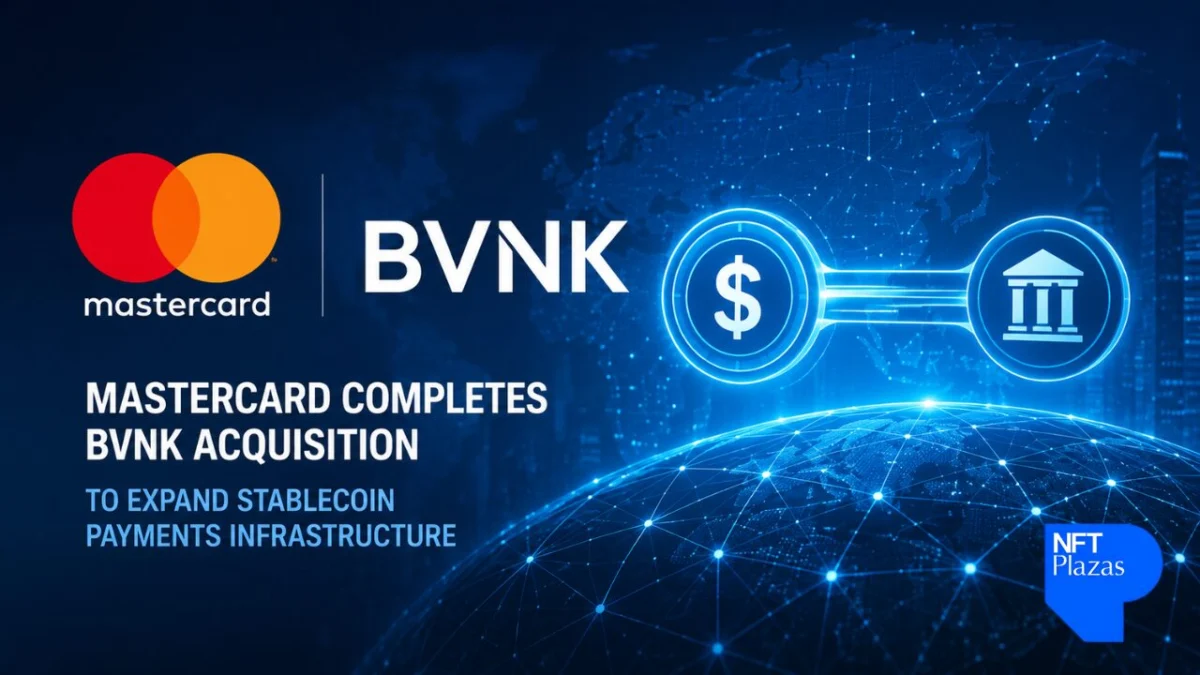
Mastercard has officially concluded its acquisition of BVNK, a London-based provider of stablecoin infrastructure, marking a pivotal moment in the payments giant’s strategic expansion into the realm of digital assets. This landmark transaction significantly enhances Mastercard’s capacity to facilitate seamless value transfers between traditional fiat currencies and stablecoins, while simultaneously fortifying its enterprise-grade infrastructure to support the next generation of global payment systems. The acquisition, initially announced earlier this year with a potential valuation of up to $1.8 billion, including a $300 million earnout, grants Mastercard direct ownership of a leading stablecoin payment platform. This move signifies a growing institutional confidence in stablecoins, transitioning them from niche cryptocurrency products to integral components of payment infrastructure.
The strategic acquisition represents Mastercard’s deepened commitment to bridging the gap between established financial systems and the burgeoning world of blockchain-based digital assets. By integrating BVNK’s technology, Mastercard aims to provide its extensive network of customers – encompassing financial institutions, fintech firms, and multinational enterprises – with unparalleled flexibility in how value moves across both traditional and blockchain-based payment networks. This initiative is geared towards fostering greater interoperability between fiat currencies, stablecoins, tokenized deposits, and other emerging forms of digital value, enabling businesses and financial institutions to transact frictionlessly across diverse payment rails.
Mastercard’s Strategic Pivot Towards Digital Asset Integration
Jorn Lambert, Mastercard’s Chief Product Officer, articulated the company’s vision, stating, "Digital currencies, particularly stablecoins, are increasingly addressing real-world needs in areas like cross-border B2B payments, remittances, payouts, settlement, and treasury flows. In a multi-money world where fiat, stablecoins, tokenized deposits, and other forms of value coexist, the next payments paradigm will be defined by how effectively each rail, network, or form of money connects and works together."
Lambert further elaborated that the synergy between Mastercard’s expansive global payment network and BVNK’s blockchain-native infrastructure is poised to deliver faster, more trusted, and efficient payment experiences for businesses worldwide. This acquisition is not merely about adding a new service but about fundamentally reshaping how value is exchanged in an increasingly digitized economy. The move signals a proactive stance by Mastercard to lead in the evolving landscape of digital finance, ensuring its continued relevance and dominance in the payments sector.
BVNK: The Engine Behind Enterprise Stablecoin Payments
Founded in 2021, BVNK rapidly emerged as one of the fastest-growing providers of enterprise-grade stablecoin infrastructure. Unlike consumer-facing cryptocurrency platforms, BVNK specializes in developing the foundational backend technology that empowers companies to manage, hold, send, receive, and convert both fiat currencies and stablecoins through a unified infrastructure layer. The company’s platform is engineered to facilitate payments across major blockchain networks while rigorously adhering to the compliance, security, and interoperability standards demanded by regulated financial institutions. Prior to its acquisition by Mastercard, BVNK operated in over 130 countries, serving a diverse clientele that included payment providers, fintech innovators, and global corporations.

The integration of BVNK’s technology into Mastercard’s ecosystem is expected to unlock a broad spectrum of stablecoin-powered use cases. These range from streamlining cross-border business-to-business payments and supplier settlements to enhancing treasury management and enabling efficient corporate payouts. This capability is particularly crucial in a globalized economy where the speed and cost-effectiveness of financial transactions can significantly impact business operations and profitability.
From Strategic Partnership to Strategic Ownership: A Timeline of Evolution
The journey from initial discussions to the finalization of this acquisition underscores a broader industry trend among global payment behemoths. For years, traditional payment networks primarily engaged with blockchain infrastructure through external providers and intricate API partnerships. However, by acquiring BVNK, Mastercard gains direct ownership of the underlying technology. This shift provides the company with enhanced control over product development, regulatory compliance, and the seamless integration of blockchain capabilities within its existing, robust payment ecosystem.
Industry observers have characterized this transaction as a definitive indicator that stablecoin infrastructure is transitioning from an experimental phase to a strategic imperative. Reports surrounding the deal indicated that BVNK had been a target of acquisition interest from several major industry players prior to Mastercard’s successful bid. This intense interest highlights the perceived value of BVNK’s proprietary technology and its established position in the market. Instead of merely enabling its customers to access stablecoins, Mastercard now possesses critical infrastructure capable of directly connecting blockchain settlement mechanisms with its vast global payment network. This strategic acquisition positions Mastercard at the forefront of integrating decentralized finance (DeFi) principles into mainstream financial operations.
The timeline leading up to this acquisition can be traced back to Mastercard’s increasing engagement with the digital asset space. While specific dates of initial discussions are proprietary, the public announcement of the acquisition earlier this year followed a period of extensive due diligence and negotiation. Mastercard’s involvement with BVNK likely began with a strategic partnership, allowing the payments giant to assess the technology and market potential firsthand. This period of collaboration would have been crucial in understanding the complexities of stablecoin infrastructure and its integration possibilities with Mastercard’s existing network. The progression to a full acquisition reflects a calculated decision to internalize this critical capability, thereby gaining greater control and accelerating its deployment.
The Ascending Trajectory of Stablecoins in Institutional Finance
The acquisition occurs at a time when stablecoins are experiencing a significant surge in adoption within mainstream financial services. Unlike more volatile cryptocurrencies such as Bitcoin, stablecoins are typically pegged to established fiat currencies, most commonly the U.S. dollar. This characteristic makes them exceptionally well-suited for commercial payments and settlements, offering a degree of price stability that is essential for business transactions.
Financial institutions are increasingly drawn to stablecoins due to the inherent advantages of blockchain networks, which can operate continuously, facilitating near-instantaneous cross-border settlements. This efficiency not only reduces transaction times but also holds the potential to significantly lower costs and improve liquidity management for businesses. Data from industry trackers like CoinMarketCap and CoinGecko consistently show the total market capitalization of stablecoins reaching hundreds of billions of U.S. dollars, with major stablecoins like Tether (USDT) and USD Coin (USDC) commanding substantial portions of this market share. This growing market value underscores the increasing trust and utility attributed to these digital assets.

Mastercard has been systematically expanding its digital asset strategy over recent years. Key initiatives include its comprehensive Crypto Partner Program, which empowers businesses to integrate cryptocurrency payment solutions, and its advancements in tokenization services. The company has also actively supported various blockchain-based payment solutions, demonstrating a consistent commitment to innovation in this space. The addition of BVNK’s native on-chain payment capabilities further amplifies these efforts, seamlessly integrating them into Mastercard’s existing global infrastructure.
This move also reflects a heightened competitive landscape among payment giants vying for leadership in blockchain-enabled finance. Rival companies like Visa have pursued similar strategies, focusing on strategic partnerships and exploring stablecoin settlement initiatives. Fintech pioneers such as Stripe have also made substantial investments in digital asset payment infrastructure, indicating a collective industry recognition of the transformative potential of this technology. The race to establish dominant positions in this evolving market is intensifying, with acquisitions like Mastercard’s BVNK deal serving as significant milestones.
Architecting a Multi-Rail Payment Future
Mastercard frames this acquisition as an integral part of its broader vision for a "multi-money" ecosystem. This envisions a future where traditional bank deposits, card payments, stablecoins, and tokenized assets coexist harmoniously rather than compete. In this paradigm, blockchain infrastructure is not intended to replace existing payment systems but rather to complement them, unlocking new possibilities for programmable and cross-border transactions.
With BVNK now fully integrated into its operations, Mastercard is confident in its ability to offer customers a unified infrastructure. This unified system will effectively connect conventional financial rails with blockchain networks, all while upholding the stringent security, compliance, and trust standards that are synonymous with global payment providers. As the enterprise adoption of digital assets continues to accelerate, this acquisition strategically positions Mastercard to play a more significant role in shaping the future of how money moves between traditional finance and decentralized networks.
The company’s strategic bet is that the future of payments will not be defined by a single dominant form of currency or network, but by the seamless interoperability of every form of value. Whether originating from a traditional bank account, a payment card, or a blockchain, the ability to move and utilize these assets interchangeably will be the hallmark of the next generation of financial services. This forward-thinking approach suggests that Mastercard is not merely adapting to the rise of digital assets but is actively engineering the infrastructure for their widespread integration and utility. The acquisition of BVNK is a testament to this ambition, solidifying Mastercard’s role as a key architect of the future of global payments.