 Lina Irawan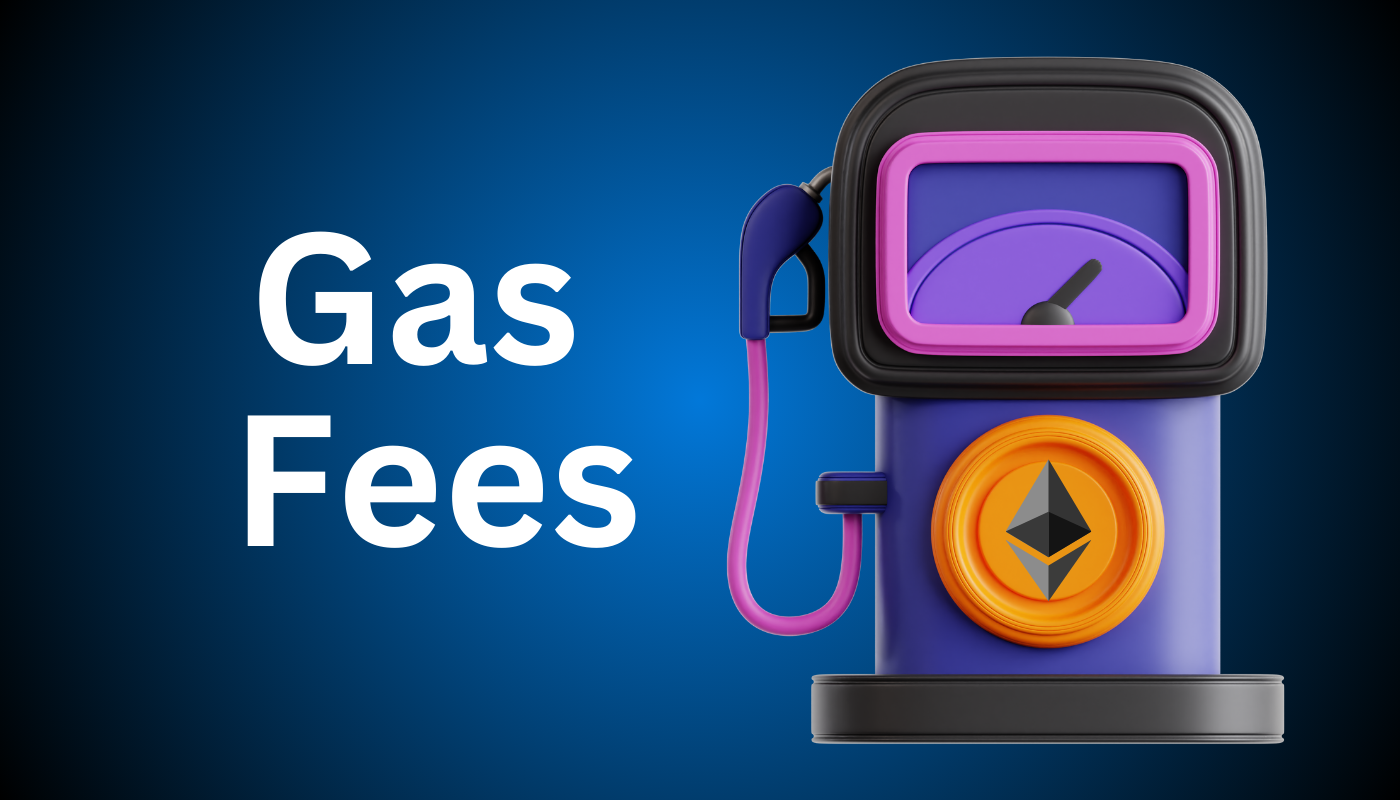
Gas fees are the often-unseen but essential tolls levied on blockchain networks, playing a critical role in the functionality and security of cryptocurrencies. For anyone who has moved tokens, swapped coins, or engaged with decentralized applications, the presence of an additional charge on their transactions is a familiar, albeit sometimes perplexing, reality. This comprehensive guide delves into the intricacies of gas fees, exploring their purpose, mechanics, influencing factors, and strategies for mitigation, offering a clearer perspective on this fundamental aspect of the crypto ecosystem.
The Essence of Gas Fees in Decentralized Networks
At its core, a gas fee is a small charge incurred each time a user interacts with a blockchain. These interactions can range from the seemingly simple act of sending cryptocurrency from a digital wallet to more complex operations like executing token swaps, acquiring Non-Fungible Tokens (NFTs), or utilizing decentralized applications (dApps) built upon the network’s infrastructure. The fundamental principle behind gas fees is rooted in the inherent limitations of blockchain network capacity. Each blockchain can only process a finite number of operations concurrently. Gas fees serve as a crucial mechanism for managing this demand, essentially assigning a priority to transactions and ensuring their smooth, timely processing. Without them, the network would be susceptible to being overwhelmed by a deluge of requests, leading to delays and inefficiencies.
The Rationale Behind Gas Fees: Incentives and Network Integrity
The existence of gas fees is multifaceted, serving dual purposes: incentivizing network participants and safeguarding network integrity. Primarily, these fees act as a reward system for the individuals and distributed systems, often referred to as validators or miners, who are responsible for verifying and recording transactions on the blockchain. This compensation is vital for maintaining the operational integrity and security of the network. Furthermore, gas fees act as a deterrent against the proliferation of trivial or malicious activity. By attaching a cost to every transaction, users are less likely to flood the network with meaningless operations. When users submit transactions, validators prioritize them based on the fee offered. Consequently, transactions with higher gas fees are typically processed more rapidly, particularly during periods of high network activity. This competitive bidding system ensures that valuable network resources are allocated efficiently.
Deconstructing the Mechanics: How Gas Fees Operate
The operational framework of gas fees can be likened to a service charge, where users attach a payment to cover the computational effort required for their transaction to be processed and recorded on the blockchain. The total cost of a transaction is a function of two primary variables: the gas limit and the gas price.
Understanding the Gas Limit: Setting Transaction Boundaries
The gas limit represents the maximum amount of "gas" (computational effort) a user is willing to expend on a particular transaction. It functions as a safeguard, preventing users from inadvertently overspending due to unforeseen complexities or network issues. Simpler operations, such as transferring a cryptocurrency, typically require a lower gas limit. In contrast, more intricate actions, like interacting with complex decentralized applications or executing smart contracts, often necessitate a higher gas limit because they involve a greater number of computational steps. Setting an appropriate gas limit is crucial; if it is set too low, the transaction may fail, but the gas used up to that point may still be consumed.
The Role of Gas Price: Bidding for Network Priority
The gas price dictates how much a user is willing to pay per unit of computational work performed on the network. During periods of high demand, users often increase their gas price to secure faster transaction confirmation. This can be conceptualized as a form of auction or bidding process. When numerous users attempt to have their transactions confirmed simultaneously, those offering a higher gas price are prioritized and moved to the front of the processing queue. The gas price is typically denominated in smaller units of the native cryptocurrency of the blockchain.
The Ethereum Ecosystem: A Case Study in Gas Fees
The Ethereum network, being the largest smart contract platform and home to a vast array of decentralized applications and digital assets, provides a prominent example of how gas fees function and influence user experience. Ethereum gas fees are the costs incurred for any operation conducted on its network. This includes sending Ether (ETH), swapping tokens on decentralized exchanges (DEXs), minting NFTs, or engaging with dApps. The dynamic nature of Ethereum’s transaction processing system directly contributes to the frequent fluctuations observed in gas fees.
The Ethereum Virtual Machine (EVM): The Engine of Transactions
The Ethereum Virtual Machine (EVM) serves as the computational engine that powers all applications on Ethereum and executes every transaction behind the scenes. When a user initiates an action, such as clicking a button to approve a transaction, the EVM meticulously processes these instructions step by step. Each step demands computational resources from the network, and each step carries a nominal cost. Consequently, straightforward actions like sending ETH, which involve fewer processing steps, incur lower gas fees. Conversely, more complex operations, such as minting an NFT, which require a greater number of computational steps, result in a higher total gas fee.
Gwei: The Unit of Measure for Ethereum Gas Fees
Ethereum gas fees are measured in a specific, small denomination of ETH known as Gwei. Gwei is a fractional unit of Ether, with one Gwei being equivalent to one-billionth of one ETH (1 Gwei = 0.000000001 ETH). The use of Gwei simplifies the representation and calculation of gas prices, avoiding the need to work with unwieldy decimal numbers. When a gas price is quoted as, for example, 30 or 50 Gwei, it signifies the amount the user is willing to pay for each unit of gas consumed by their transaction.
Calculating Gas Fees: The Arithmetic of Blockchain Transactions
The fundamental formula for calculating gas fees is straightforward: Gas Fee = Gas Units Used × Gas Price. The "Gas Units Used" represent the computational work required for a specific transaction, while the "Gas Price" is the amount paid per unit of that work. For instance, a standard ETH transfer typically requires approximately 21,000 gas units. If the prevailing gas price is 40 Gwei, the estimated total fee in Gwei would be 21,000 multiplied by 40, which equals 840,000 Gwei. This amount is then converted into ETH. It is important to note that if a transaction completes before reaching its designated gas limit, any unused gas is refunded. However, if the gas limit is set too low, the transaction may fail, and the gas consumed up to that point is still incurred.
Key Determinants of Gas Fee Fluctuations
Several critical factors contribute to the variability of gas fees users encounter:
-
Network Congestion and Peak Hours: The most significant driver of gas fee fluctuations is network congestion. When a large number of users simultaneously submit transactions, demand for limited network capacity intensifies. This competition drives up gas prices, as users bid higher to ensure their transactions are processed promptly. Peak activity often coincides with major token launches, highly anticipated NFT drops, or periods of significant market volatility, where rapid transaction execution is paramount. For example, during a popular NFT minting event, gas prices can surge dramatically within minutes as thousands of users vie for limited supply.
-
Transaction Complexity: The inherent complexity of a transaction directly correlates with the amount of computational effort, and thus gas, required. Simple transfers of cryptocurrency demand fewer processing steps and therefore incur lower fees. In contrast, interacting with sophisticated smart contracts, such as those used in decentralized finance (DeFi) protocols for lending, borrowing, or trading, involves a greater number of operations. This increased computational load translates into higher gas usage and, consequently, higher transaction costs.
-
Blockchain Architecture and Throughput: Different blockchain networks are engineered with varying design philosophies, impacting their transaction processing capabilities and associated fees. Networks designed for high throughput and low transaction costs, such as Solana or Polygon, generally exhibit significantly lower gas fees compared to more established platforms like Ethereum. Solana, for instance, can handle a substantially higher volume of transactions per second, allowing users to send transactions and interact with applications at a fraction of the cost. Ethereum, while supporting a vast and diverse ecosystem, experiences higher demand, which naturally leads to elevated gas fees. The development of Ethereum’s Layer 2 scaling solutions, such as Optimism and Arbitrum, aims to alleviate this issue by processing transactions off the main chain while inheriting its security.
-
Cryptocurrency Price and Market Conditions: Since gas fees are paid in the native cryptocurrency of the blockchain (e.g., ETH on Ethereum), the prevailing price of that cryptocurrency significantly influences the dollar-denominated cost of gas. When the price of ETH rises, the cost of gas fees, when converted to fiat currency, also increases, even if the Gwei price remains stable. Furthermore, strong market activity and increased trading volume can amplify network demand, further pushing gas prices higher.
Strategies for Mitigating High Gas Fees
While gas fees can be volatile, several practical strategies can help users minimize their transaction costs:

-
Monitor Network Activity: Utilizing real-time gas tracker tools can provide invaluable insights into current network congestion levels and projected gas prices. By observing these metrics, users can strategically choose opportune moments to execute transactions, often opting for off-peak hours when demand is lower.
-
Choose Lower-Congestion Networks: For users whose primary concern is minimizing fees, exploring alternative blockchains with lower transaction costs, such as Polygon, Solana, or BNB Chain, can be a viable solution. Many of these networks offer comparable functionality for a significantly reduced financial outlay.
-
Utilize Layer 2 Scaling Solutions: For Ethereum users, interacting with decentralized applications and conducting transactions via Layer 2 scaling solutions like Optimism, Arbitrum, or zkSync can drastically reduce gas fees. These solutions process transactions off the main Ethereum chain, bundling them and submitting them to the mainnet periodically, thereby amortizing the gas cost across many users.
-
Batch Transactions: Where possible, consolidating multiple actions into a single transaction can be more cost-effective. For instance, instead of making several individual token swaps, consider using a DEX aggregator that can execute multiple swaps in one go, potentially reducing the overall gas expenditure.
-
Adjust Gas Price Strategically: While not always feasible for time-sensitive transactions, users can experiment with slightly lower gas prices during periods of moderate congestion. This requires careful monitoring, as setting the price too low could lead to prolonged confirmation times or even transaction failure.
Essential Gas Tracker Tools
To effectively navigate the fluctuating landscape of gas fees, several reliable tools are indispensable:
-
Etherscan Gas Tracker: A widely used tool that provides real-time gas prices, average transaction fees, and historical data for the Ethereum network. It offers insights into current network congestion and recommended gas prices for different transaction speeds.
-
Polygonscan Gas Tracker: Similar to Etherscan, this tool offers real-time gas price information specifically for the Polygon network, aiding users in managing their transaction costs on this popular Layer 2 solution.
-
GasNow: A platform that aggregates gas price data from various sources, providing users with a comprehensive overview of current gas conditions across different networks.
-
Blocknative Gas Estimator: This tool provides advanced gas estimation capabilities, offering users more precise predictions of transaction costs based on current network conditions and the complexity of their intended transaction.
Conclusion: Empowering Users in the Decentralized Economy
Gas fees, while sometimes perceived as a barrier, are an integral component of the blockchain infrastructure, ensuring network security, incentivizing validators, and managing limited computational resources. The fluctuations in Ethereum gas fees, in particular, are a direct consequence of the network’s immense popularity and the dynamic interplay of demand and supply. A thorough understanding of concepts like gas limit, gas price, and the influence of network congestion is paramount for users to navigate these costs effectively. By leveraging reliable gas tracker tools and employing strategic approaches, individuals can significantly reduce their transaction expenses, enabling them to engage with the burgeoning decentralized economy with greater confidence and control. The ongoing evolution of blockchain technology, including advancements in scaling solutions, promises to further optimize these fee structures, making decentralized applications and cryptocurrencies more accessible and cost-effective for a broader audience.
Frequently Asked Questions About Gas Fees
Which blockchains have the lowest gas fees?
Blockchains such as Solana, Polygon, and BNB Chain are renowned for offering the lowest gas fees due to their architecture, which is optimized for high transaction volumes and efficient processing. Newer networks like Sui and Avalanche also prioritize keeping everyday transaction fees low. Additionally, Ethereum’s Layer 2 solutions, including Optimism and Arbitrum, significantly reduce costs by processing transactions off the main Ethereum chain while still leveraging its robust security.
Who receives gas fees?
Gas fees are directly allocated to the validators or miners who are responsible for processing and confirming transactions on the network. This reward system incentivizes them to maintain the security and operational integrity of the blockchain, rather than being paid to a central entity.
Who pays the gas fee?
The individual who initiates a transaction is responsible for paying the associated gas fee. This fee is deducted from their cryptocurrency wallet at the time the transaction is confirmed on the blockchain. Even if the transaction is intended to transfer funds to another party, the sender typically bears the cost of the gas fee.
Why is the gas fee so high?
Gas fees escalate when there is a high volume of users attempting to transact on the network simultaneously, creating intense competition for limited processing capacity. Factors such as the increasing value of the underlying cryptocurrency or the inherent complexity of the transactions being processed can also contribute to higher gas fees.
Are gas fees tax-deductible?
In many jurisdictions, gas fees may be considered tax-deductible if they are directly associated with activities such as cryptocurrency trading, investing, or operating a crypto-related business. However, tax regulations vary significantly by country and region. It is advisable to consult with a qualified tax professional to ensure accurate reporting and compliance with local tax laws.
Can I deduct Ethereum gas fees for failed transactions?
The deductibility of Ethereum gas fees for failed transactions often depends on whether these fees are linked to investment or business activities and are permissible under your local tax regulations. Given the varying tax treatments across different regions, seeking guidance from a tax advisor is recommended to ensure proper reporting of these expenses.