Nila Kartika Wati
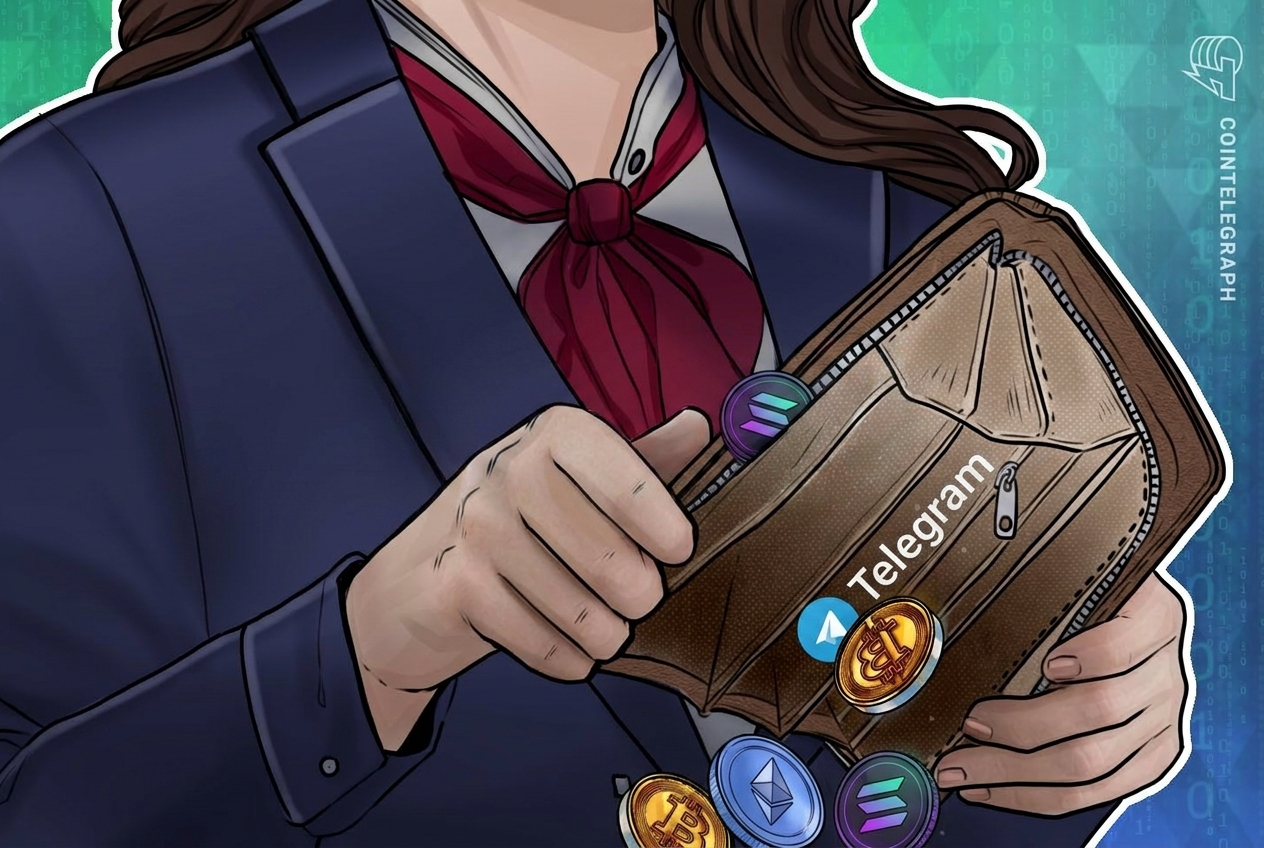
Telegram founder Pavel Durov has announced that the messaging platform will introduce a native non-custodial Gram wallet this summer, a move poised to bring self-custody cryptocurrency transactions to its burgeoning base of over one billion monthly active users. This strategic development marks a significant acceleration in Telegram’s long-standing ambition to integrate decentralized financial services directly into its communication ecosystem, potentially facilitating the largest rollout of a non-custodial crypto wallet in history.
The planned integration will allow Telegram users to send cryptocurrency instantly and without transaction fees, a feature highlighted by Durov as a cornerstone of accessibility and efficiency. While a firm launch date and specific technical details remain under wraps, the sheer scale of Telegram’s user base, which surpassed one billion monthly active users in 2025, according to company reports, suggests a transformative potential for mainstream crypto adoption. Even a fraction of this user base embracing the Gram wallet could dramatically expand the reach of self-custody and peer-to-peer crypto payments globally, challenging existing financial paradigms and solidifying Telegram’s position within the evolving Web3 landscape.
The Vision: A Seamless, Self-Custodial Experience
The core promise of the native Gram wallet lies in its non-custodial nature. This distinction is paramount in the cryptocurrency world, meaning users will retain full control over their private keys and, consequently, their digital assets. Unlike custodial solutions offered by centralized exchanges, where the platform holds the keys on behalf of the user, a non-custodial wallet empowers individuals with ultimate sovereignty over their funds. This aligns with the foundational ethos of decentralization and self-ownership that underpins the cryptocurrency movement. For Telegram’s vast user base, many of whom may be new to crypto, this introduction to self-custody could be a pivotal educational moment, shifting perceptions from cryptocurrency as an investment asset to a practical tool for everyday transactions.
Durov’s emphasis on "instant and without fees" points directly to the capabilities of The Open Network (TON) blockchain, the underlying technology powering Gram. TON is designed for high throughput and low transaction costs, making it an ideal candidate for micro-payments and frequent transfers characteristic of a widely adopted messaging app. This fee-free model could significantly lower the barrier to entry for users, especially in developing economies where traditional banking services are often costly or inaccessible. It also positions Gram as a competitive alternative to conventional payment rails, which typically levy fees for transactions, cross-border transfers, and currency conversions.
Telegram’s Ambitious Crypto Journey: A Timeline of Resilience
The announcement of the Gram wallet is not an isolated event but rather the latest chapter in Telegram’s intricate and often challenging journey into the world of cryptocurrency. This journey began with grand ambitions, faced significant regulatory hurdles, and has since seen a resurgence driven by community efforts and renewed corporate backing.
- 2018: The Birth of TON and Gram: Telegram first unveiled its ambitious vision for the Telegram Open Network (TON) and its native cryptocurrency, Gram. The project aimed to create a decentralized internet infrastructure, encompassing everything from decentralized storage and proxy services to a sophisticated payment system. Telegram conducted one of the largest Initial Coin Offerings (ICOs) in history, raising approximately $1.7 billion from private investors, underscoring the immense anticipation surrounding the project.
- October 2019: SEC Intervention: Just weeks before the scheduled launch of the TON blockchain, the U.S. Securities and Exchange Commission (SEC) filed an emergency action, alleging that Gram tokens were unregistered securities. The SEC argued that Telegram’s sale of Grams constituted an illegal offering, leading to a legal battle that would ultimately halt the project.
- May 2020: Abandonment and Settlement: After a protracted legal dispute, Telegram announced its decision to abandon the TON project and return investor funds. This came after a U.S. court ruled in favor of the SEC, granting an injunction that prevented Telegram from distributing Gram tokens. The company reached a settlement with the SEC, agreeing to pay an $18.5 million penalty. Durov expressed disappointment, citing the restrictive regulatory environment in the U.S. as a major impediment to innovation.
- 2020-Present: The Rise of The Open Network (TON Foundation): Despite Telegram’s official withdrawal, the underlying code and the vision for TON did not die. A community of open-source developers, independent of Telegram, took up the mantle, launching their version of the network under the name "The Open Network" (TON). This decentralized continuation, managed by the TON Foundation, kept the project alive, developing the blockchain and its native token, initially called Toncoin.
- Late 2021 onwards: Telegram’s Renewed Engagement: Pavel Durov and Telegram began to publicly endorse and integrate elements of the community-led TON ecosystem. Durov praised the TON Foundation’s work, acknowledging it as the "true TON." Telegram subsequently started leveraging the TON blockchain for various services, including the sale of unique usernames and virtual numbers through decentralized auctions, as well as for payments related to Telegram Premium subscriptions. Durov even stated that Telegram would become one of TON’s largest validators, signaling a significant shift from its previous hands-off approach.
- Early 2026: Toncoin Rebrands to Gram: Weeks prior to the wallet announcement, the TON Foundation unveiled plans to rename its native token from Toncoin back to Gram. This rebrand was explicitly described as a "return to the project’s roots," echoing Durov’s original vision and reinforcing the tight integration between Telegram and the TON ecosystem. The move symbolically bridges the gap between the past and present iterations of the project, aligning the community-driven network with Telegram’s renewed commitment.
- Summer 2026: Native Gram Wallet Rollout: The culmination of this journey is the imminent rollout of the native non-custodial Gram wallet, directly integrated into the Telegram messaging application.
This chronology illustrates a remarkable resilience, demonstrating how a project, once stifled by regulatory pressure, can re-emerge through community effort and ultimately gain renewed backing from its original visionary.
The TON Blockchain: Powering the Future of Payments
At the heart of the Gram wallet’s functionality lies The Open Network (TON) blockchain. Originally conceived by the Durov brothers, TON is engineered for extreme scalability and efficiency. Its multi-blockchain architecture, featuring a masterchain, workchains, and shardchains, allows it to process millions of transactions per second, a critical capability for a payment system integrated into an application with over a billion users.
The design principles of TON address common bottlenecks in older blockchain technologies, such as network congestion and high transaction fees, which have historically hindered mainstream adoption of cryptocurrencies for everyday use. By leveraging TON, the Gram wallet can deliver on the promise of instant, near-zero-fee transactions, making it practical for a wide array of uses, from sending remittances to making small purchases. This technological foundation is crucial for Telegram to effectively onboard a mass audience to decentralized finance without overwhelming the network or imposing prohibitive costs on users.
Broader Impact and Implications: A Paradigm Shift?
The introduction of a native Gram wallet within Telegram carries profound implications for the cryptocurrency landscape, digital payments, and the broader Web3 movement.
Mass Adoption of Self-Custody and Financial Inclusion
The most immediate and significant impact could be on the mass adoption of self-custody. For many, interacting with cryptocurrencies has primarily meant using centralized exchanges like Binance or Coinbase, where assets are held by a third party. Telegram’s Gram wallet offers a direct, integrated pathway to true self-custody for a massive, global audience. This could demystify the process for millions, empowering them with greater financial autonomy and reducing reliance on intermediaries.
Furthermore, Telegram’s extensive user base in emerging markets, particularly across Asia, Africa, and Latin America, positions the Gram wallet as a powerful tool for financial inclusion. In regions where traditional banking infrastructure is underdeveloped, expensive, or inaccessible, a fee-free, instant payment system integrated into a widely used messaging app could provide a lifeline. It offers a low-cost alternative for remittances, peer-to-peer transfers, and potentially even merchant payments, fostering economic participation for underserved populations.
Competitive Landscape and Web3 Integration
The entry of Telegram into the native crypto wallet space with such a massive user base will undoubtedly reshape the competitive landscape. Existing non-custodial wallets like MetaMask, Trust Wallet, and others, while popular within the crypto-native community, do not possess the immediate reach that Telegram commands. The Gram wallet could set a new standard for user experience and accessibility, pushing other wallet providers to innovate further.
More broadly, this move firmly positions Telegram as a major player in the Web3 ecosystem. By integrating a native wallet, Telegram is not just facilitating crypto payments; it’s laying the groundwork for a broader array of decentralized applications (dApps) and services to be built and accessed directly within its platform. This could include decentralized identity solutions, NFT marketplaces, gaming, and other Web3 functionalities, transforming Telegram from a mere messaging app into a comprehensive decentralized super-app.
Regulatory Scrutiny and Challenges
While the potential benefits are immense, Telegram’s past encounters with regulators suggest that the Gram wallet’s rollout will likely attract renewed scrutiny. The SEC’s previous action against Gram highlights a complex global regulatory environment for cryptocurrencies, particularly those with a broad reach. As Gram gains traction, various jurisdictions may examine its classification, money laundering risks, and consumer protection implications.
Durov’s previous criticisms of the U.S. regulatory climate indicate that Telegram might focus its efforts on regions with more favorable or clearer regulatory frameworks. However, the global nature of Telegram’s user base means that compliance across diverse legal landscapes will be an ongoing challenge. The non-custodial nature of the wallet might offer some protection against direct regulatory oversight of user funds, but the platform itself could still face pressure regarding listing, trading, and Know Your Customer (KYC)/Anti-Money Laundering (AML) policies for any integrated services.
Industry Reactions and Future Outlook
The announcement has been met with significant interest within the cryptocurrency community. Many see it as a monumental step towards mainstream adoption, praising Telegram for its commitment to self-custody and its potential to introduce billions to decentralized finance. Analysts anticipate a surge in TON blockchain activity and potentially a boost in the value and utility of the Gram token.
However, some within the decentralized community might express caution regarding the extent of Telegram’s influence over the TON ecosystem, even if the network is technically decentralized. Questions about governance, potential for censorship resistance, and the true independence of the TON Foundation from Telegram could emerge as the wallet gains traction.
Pavel Durov’s consistent vision for a more decentralized internet and financial system has been a driving force behind Telegram’s evolution. The Gram wallet represents a tangible manifestation of this vision, seeking to empower users with greater control over their digital assets and communications. As the summer rollout approaches, the world will be watching to see how this ambitious integration reshapes the digital economy and whether Telegram can navigate the complex interplay of technological innovation, user adoption, and regulatory challenges to achieve its long-held crypto aspirations. This pivotal moment underscores a broader trend: the convergence of social communication platforms with decentralized financial technologies, signaling a future where digital interactions and financial transactions become increasingly intertwined and user-controlled.