Lina Irawan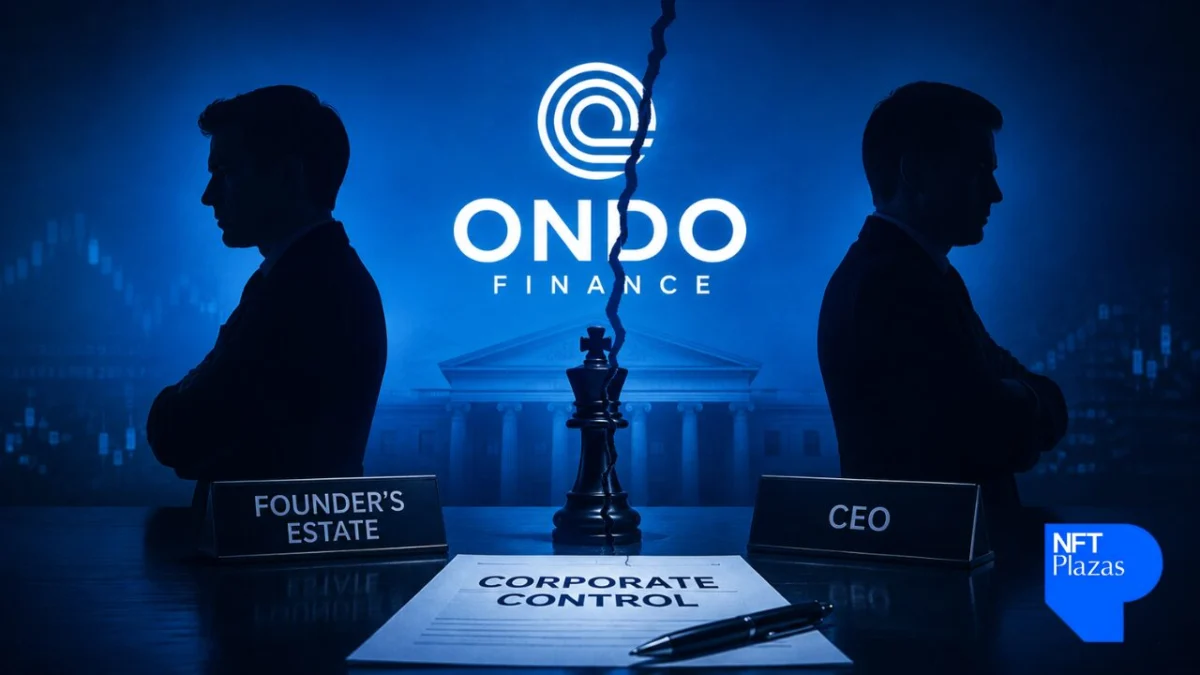
The sudden passing of Nathan Allman, the visionary founder of Ondo Finance, has plunged one of the fastest-growing companies in the tokenized real-world asset (RWA) sector into a contentious legal battle, raising significant questions about corporate governance and succession planning in the nascent digital asset industry. Court filings in Delaware reveal a bitter dispute between Allman’s estate and the company’s current CEO, Ian De Bode, over the rightful authority to control Ondo Finance following the founder’s untimely death. This internal conflict, unfolding against a backdrop of significant industry expansion, threatens to overshadow the company’s impressive trajectory and highlights the inherent governance risks faced by founder-led cryptocurrency enterprises.
The Unfolding Legal Battle Over Control
The core of the dispute, as detailed in filings submitted to the Delaware Court of Chancery, centers on the transfer of power after Nathan Allman’s death in May. At the time of his passing, Allman held a trifecta of critical roles: CEO, sole director, and the controlling shareholder of Ondo Finance. His substantial voting power, a pivotal element in corporate decision-making, became an asset of his estate. However, the exercise of these voting rights was necessarily delayed, pending the conclusion of probate proceedings in Hawaii, creating a temporary governance vacuum.
The estate, represented by Kathleen Allman, Nathan Allman’s mother, contends that this interim period was exploited by Ian De Bode. According to the lawsuit, De Bode allegedly asserted his automatic succession to the CEO position, citing the company’s bylaws. The estate further alleges that De Bode then leveraged a pre-existing voting agreement to appoint himself as Ondo Finance’s sole director. This move, the estate claims, allowed De Bode to unilaterally approve significant corporate actions, including the allocation of equity compensation, the engagement of external advisors, and attempts to expand the board of directors, all without proper board oversight. The estate argues that these actions were invalid, as the company’s bylaws stipulate that filling the CEO position requires board approval, not automatic succession.
A Timeline of Alleged Power Grabs and Estate’s Response
The legal filings paint a picture of escalating tensions and divergent interpretations of corporate procedures.
- May 2024: Nathan Allman, founder and CEO of Ondo Finance, passes away. His voting power becomes part of his estate.
- May – June 2024: A temporary governance gap emerges as probate proceedings commence.
- June 26, 2024: Kathleen Allman is formally appointed personal representative of Nathan Allman’s estate, granting her the authority to exercise the founder’s voting rights.
- Post-June 26, 2024: The estate alleges that Ian De Bode improperly claimed automatic CEO succession and used a voting agreement to appoint himself sole director.
- July 2024: Kathleen Allman reportedly attempts to engage with De Bode and the company to ensure stable operations, appointing herself to the board, reaffirming De Bode as president, and requesting corporate documents.
- July 24, 2024: Following alleged refusal of her authority, Kathleen Allman expands the board and convenes a meeting where directors vote to remove De Bode from all positions. She is appointed interim chair and interim CEO.
- Late July/Early August 2024: The estate files a lawsuit in Delaware Court of Chancery to solidify its governance control.
The estate maintains that its initial objective was not to seize permanent control but to stabilize corporate governance during the critical leadership transition. Court documents reveal that Kathleen Allman, after receiving her legal authority, sought a collaborative approach. She appointed herself to the board, implemented an interim policy to maintain ordinary business operations, reaffirmed De Bode’s role as president, and requested access to essential corporate information, including shareholder records.

However, these efforts, according to the estate’s complaint, were met with resistance. The estate claims that De Bode and the company’s external legal counsel allegedly refused to acknowledge Kathleen Allman’s authority and withheld the requested documentation. This alleged stonewalling prompted the estate to take more decisive action. On July 24, Kathleen Allman convened a board meeting after expanding the board’s composition. During this meeting, directors reportedly voted to remove Ian De Bode from all his company positions. Subsequently, Kathleen Allman was appointed interim chair and interim CEO, signaling the board’s intention to seek a permanent successor. The estate’s stated goal remains the restoration of clear governance and the seamless continuation of business operations, not long-term control.
Ondo CEO’s Rebuttal and Investor Confidence
Ian De Bode, the current CEO, has vehemently rejected the estate’s allegations, characterizing the lawsuit as detrimental to the company and the broader ecosystem it operates within. In statements provided to CoinDesk, De Bode described the legal action as "regrettable" and asserted that the claims lack merit. He emphasized that Ondo Finance continues to enjoy the unwavering support of its board, lead investors, and the Ondo Foundation. De Bode reiterated the leadership team’s commitment to realizing Nathan Allman’s long-term vision for expanding on-chain financial markets.
The Ondo Finance board has also issued a statement underscoring the company’s steadfast focus on customer service and ongoing business operations. They affirmed their commitment to the search for a permanent successor to their late founder. This dual messaging from De Bode and the board aims to reassure stakeholders that operational continuity remains paramount, despite the internal legal strife.
Implications for Corporate Governance in the Digital Asset Space
The Delaware Court of Chancery’s eventual decision in this case could set a significant precedent for corporate governance within the rapidly evolving cryptocurrency industry. The situation at Ondo Finance underscores a critical vulnerability: the potential for governance crises when founder-led companies lack robust and clearly defined succession mechanisms. In an industry characterized by innovation and often rapid growth, founders frequently hold multiple influential roles, making their departure, whether planned or unexpected, a point of significant risk.
The estate’s request for an expedited ruling highlights the urgency of the situation. Uncertainty surrounding corporate authority can have far-reaching consequences, potentially impacting crucial business decisions such as contract negotiations, spending approvals, and equity issuances. If competing leadership factions continue to assert authority, it could lead to paralysis and operational instability. The outcome of this legal battle will not only determine the future leadership of Ondo Finance but also provide valuable insight into how Delaware courts navigate succession disputes involving crypto companies where founders occupy executive, board, and controlling shareholder positions simultaneously.

A Critical Juncture for a Leading RWA Platform
This governance dispute emerges at a particularly crucial moment for Ondo Finance, a company that has rapidly ascended to prominence in the tokenized real-world asset sector. Founded in 2021, Ondo has distinguished itself as a leading issuer of tokenized financial products, including its flagship offerings, USDY (tokenized U.S. Treasury bills) and OUSG (tokenized U.S. equity ETFs). Under Nathan Allman’s leadership, Ondo Finance reportedly amassed approximately $3.5 billion in assets under management across its tokenized RWA products, a testament to its rapid growth and market traction.
More recently, Ondo has been at the forefront of initiatives to tokenize U.S. securities. This includes the development of products linked to publicly traded stocks like Micron and BlackRock’s iShares Core S&P 500 ETF, facilitated through strategic partnerships with industry players such as Broadridge and Oasis Pro. The company has also actively engaged with regulatory bodies, including the U.S. Securities and Exchange Commission (SEC), to develop compliant frameworks for tokenized securities. These efforts have solidified Ondo’s position as a critical bridge between traditional finance and the burgeoning blockchain infrastructure, making the current governance dispute particularly significant for institutional investors closely monitoring the sector’s development.
Market Watch: Governance Risks and Investor Sentiment
The internal legal wrangling at Ondo Finance has not gone unnoticed by the broader cryptocurrency market. While the company maintains that its operations are proceeding without disruption, the leadership dispute has drawn considerable attention. Some market observers have noted an increase in token transfers to exchanges and a rise in selling activity following the public disclosure of the lawsuit. This behavior suggests that investors are actively reassessing the governance risks associated with the project, alongside its long-term fundamental value.
Furthermore, reports have indicated notable price volatility for the ONDO token in the days immediately following the public revelation of the legal battle. This market reaction underscores the sensitivity of investors to governance uncertainties, particularly in a sector still maturing and seeking widespread institutional adoption. The resolution of this dispute, whether it remains a contained corporate governance matter or evolves into a prolonged legal confrontation, will be closely watched. For a company recognized as a leader in bringing traditional financial assets onto the blockchain, restoring governance clarity may prove to be as vital for its future success as its ongoing product innovation. The market’s confidence in Ondo Finance, and by extension in the broader RWA tokenization space, may hinge on the swift and transparent resolution of this challenging period.