
 Nila Kartika Wati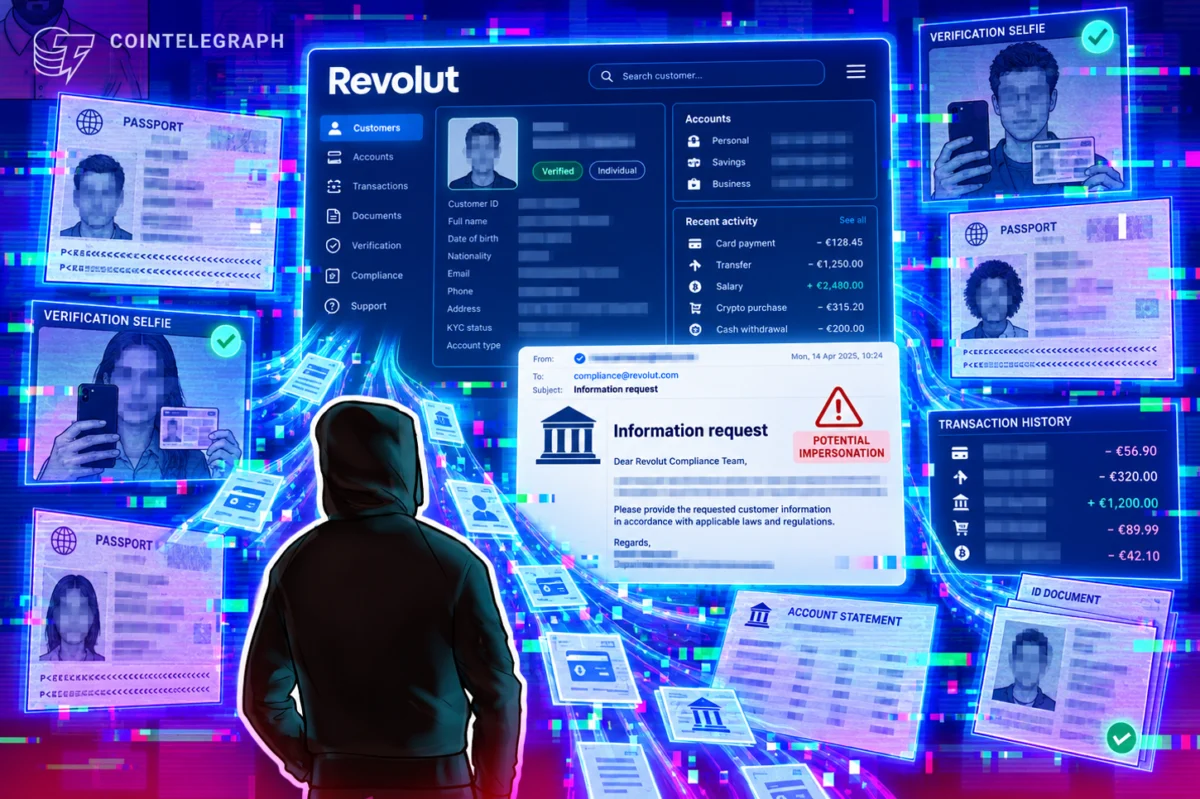
Financial technology and banking giant Revolut recently disclosed a significant data compromise, revealing that sensitive customer information, including copies of passports, verification selfies, and complete transaction histories, was released to an unauthorized third party. The breach occurred after Revolut responded to what appeared to be a legitimate request from a government agency, which was later determined to be a sophisticated fraudulent impersonation scam. This incident has ignited widespread debate about the efficacy of Know Your Customer (KYC) protocols and the inherent vulnerabilities in collecting vast amounts of personal data.
The Sophisticated Impersonation Scam Unraveled
The fraudulent request, which ultimately led to the data exposure, leveraged a legitimate government agency email domain, allowing it to bypass Revolut’s initial authentication checks. This level of sophistication highlights an escalating trend in cybercrime, where attackers meticulously craft their approaches to mimic trusted entities. According to a posting by International Cyber Digest on X, the requests for customer information were initially perceived as authentic dueating to the credible email domain. However, subsequent internal investigations by Revolut concluded that these requests were not genuine.
Upon discovering the deception, Revolut acted swiftly to contain the breach. A company spokesperson confirmed to Cointelegraph that the firm "recently identified a sophisticated external impersonation scam where an unauthorised third party utilised a legitimate government agency domain email to submit fraudulent requests for information." This statement underscores the cunning nature of the attack, which exploited a critical vulnerability in verifying official requests. Immediately after detecting the fraudulent activity, Revolut blocked the compromised email address and alerted the relevant government agency whose domain had been misused. Furthermore, the company notified pertinent law enforcement agencies and financial regulators about the incident, initiating a multi-agency response to investigate and mitigate the fallout.
Affected customers began receiving notifications on Friday, informing them that their information had been compromised. The company emphasized that "Revolut systems and customer funds are unaffected," reassuring its broader user base that the core banking infrastructure and financial assets remained secure. The spokesperson added, "We have contacted the limited number of impacted individuals directly to inform them and provide support," indicating that the breach, while serious, did not impact all of Revolut’s extensive global customer base.
A Deep Dive into the Compromised Data
The nature of the data compromised in this incident is particularly alarming. Copies of passports, verification selfies, and full transaction histories represent a trove of highly sensitive personal and financial information. Each data point carries significant risks:
- Passports: These documents contain critical identifying information, including full name, date of birth, place of birth, nationality, and a unique identification number. In the hands of malicious actors, passport data is a prime tool for identity theft, enabling fraudsters to open new accounts, apply for loans, or engage in other illicit activities under the victim’s name.
- Verification Selfies: Often used in conjunction with identity documents for "liveness" checks during digital onboarding, these selfies confirm that the person presenting the ID is indeed its legitimate owner. While seemingly innocuous, these images can be exploited for deepfake creation, enabling sophisticated impersonation in video calls or other biometric authentication systems, further complicating digital security.
- Full Transaction Histories: This data provides a comprehensive financial profile of an individual, detailing spending habits, income sources, investments, and relationships with various merchants and financial institutions. Such granular financial insight can be used for targeted phishing attacks, financial fraud, blackmail, or to identify high-net-worth individuals for further exploitation.
The combination of these data types creates an extremely potent package for identity thieves and fraudsters, significantly increasing the potential harm to affected individuals. The incident highlights the inherent risks associated with centralizing vast amounts of personally identifiable information (PII) within financial institutions, even those with robust security measures.
The Regulatory Imperative and KYC Paradox
This incident casts a spotlight on the critical role of Know Your Customer (KYC) regulations within the financial sector. KYC protocols are mandatory procedures for identifying and verifying the identity of clients. They are a cornerstone of anti-money laundering (AML) and counter-terrorism financing (CTF) efforts globally. Financial institutions, including FinTech companies like Revolut, are legally obligated to collect and store this sensitive data to prevent illicit activities.
However, the Revolut breach underscores the paradox of KYC: while intended to enhance security and prevent financial crime, the very act of collecting and centralizing such sensitive data transforms financial institutions into attractive targets for cybercriminals. The more data an organization holds, the larger the "honeypot" it becomes, increasing the potential impact of any successful breach. This incident prompts a critical re-evaluation of how KYC data is stored, protected, and accessed, particularly in an era of increasingly sophisticated cyber threats.
Globally, data protection regulations like Europe’s General Data Protection Regulation (GDPR) and California’s Consumer Privacy Act (CCPA) impose strict requirements on how personal data is collected, processed, and secured. Breaches of this nature can lead to significant financial penalties, underscoring the legal and financial liabilities companies face when such incidents occur. For instance, under GDPR, fines can reach up to 4% of a company’s annual global turnover or €20 million, whichever is higher, for serious infringements.
Revolut’s Immediate Response and Mitigation Efforts
Revolut’s response, as detailed by its spokesperson, included a series of rapid actions aimed at mitigating further damage and ensuring compliance with regulatory obligations. The immediate blocking of the fraudulent email address was a crucial step to prevent additional unauthorized data access. The notification of the legitimate government agency involved is vital to ensure that the impersonation tactic is known and that protective measures can be taken against future attempts.
The involvement of law enforcement agencies and financial regulators signifies the seriousness with which the incident is being treated. These bodies will likely conduct their own investigations into the breach, examining Revolut’s security protocols, incident response procedures, and compliance with data protection laws. Such scrutiny is standard practice and serves to hold institutions accountable while identifying systemic weaknesses that could be addressed across the industry.
Revolut’s assertion that "systems and customer funds are unaffected" is a key message aimed at preserving customer trust. It distinguishes the data compromise from a direct financial theft from customer accounts, though the potential for future financial fraud remains due to the nature of the exposed data. The direct notification of "the limited number of impacted individuals" is a standard and legally required step in data breach response, providing affected users with information and support, which may include credit monitoring or identity protection services.
Industry Reactions and the Privacy Debate
The incident quickly garnered attention within the cryptocurrency and FinTech communities, sparking significant discussion on platforms like X. Crypto sleuth ZachXBT reportedly suggested that the incident appeared limited in size and specifically targeted high-net-worth users. If accurate, this indicates a highly sophisticated and targeted attack, where criminals prioritize individuals with greater financial assets, potentially yielding larger illicit gains from identity theft or financial fraud. Targeting high-net-worth individuals often involves more bespoke social engineering tactics, making detection and prevention even more challenging.
The broader conversation on X also saw renewed criticism of mandatory information sharing and KYC requirements. Marc Zeller, a prominent voice in the crypto space, expressed his frustration, stating he "woke up to all his data being leaked by Revolut," and adding, "Sharp reminder that KYC hasn’t produced meaningful upside and has put many in harm’s way." Zeller’s sentiment reflects a growing segment of the digital finance community that questions the trade-off between privacy and regulatory compliance. Critics argue that while KYC aims to combat financial crime, it inadvertently creates centralized databases of sensitive information, making individuals more vulnerable to data breaches and identity theft. This perspective advocates for exploring alternative, more privacy-preserving methods for identity verification, such as zero-knowledge proofs or decentralized identity solutions, which could verify identity without requiring institutions to store vast amounts of personal data.
Cybersecurity experts, while not directly quoted, would likely emphasize the increasing sophistication of social engineering attacks and the critical importance of robust internal verification protocols. Even seemingly legitimate requests from official channels require multi-layered authentication and strict internal review processes to prevent impersonation. The incident serves as a stark reminder that technology alone is insufficient; human vigilance and rigorous procedural adherence are equally vital in preventing such breaches.
Broader Implications for FinTech and Data Security
The Revolut data breach carries significant implications not only for the company itself but for the entire FinTech industry and the broader landscape of data privacy and cybersecurity.
- For Revolut: Beyond potential regulatory fines, the company faces the challenge of rebuilding customer trust. Reputational damage from data breaches can be long-lasting, potentially leading to customer churn and increased scrutiny from investors and partners. The incident will undoubtedly prompt a thorough internal review of Revolut’s security architecture, employee training on social engineering awareness, and verification processes for all external requests.
- For the FinTech Industry: This serves as a cautionary tale. The rapid growth of FinTech companies has often been fueled by streamlined digital onboarding processes, which heavily rely on digital KYC. The Revolut incident highlights that while innovation is crucial, it must be balanced with unyielding security. Other FinTechs will likely review their own protocols for handling government or official requests, emphasizing multi-factor authentication for internal access to sensitive data and rigorous verification of external data requests, even those from seemingly legitimate sources. It underscores the need for continuous investment in advanced threat detection, incident response planning, and employee education.
- For Data Privacy and Cybersecurity: The breach exemplifies the evolving threat landscape where attackers are leveraging increasingly sophisticated social engineering tactics. Impersonation scams that utilize legitimate email domains are particularly insidious because they exploit trust and bypass conventional automated defenses. This incident reinforces the ongoing struggle to balance compliance requirements (like KYC) with the imperative of safeguarding user data. It may accelerate discussions around more resilient and privacy-centric identity verification technologies that could minimize the amount of sensitive data stored by financial institutions.
Navigating the Future of Digital Identity and Trust
The Revolut data compromise is more than just another data breach; it is a profound illustration of the challenges inherent in our increasingly digital financial ecosystem. As financial services become more integrated and data-driven, the tension between regulatory compliance, user convenience, and data security will only intensify. The debate sparked by Marc Zeller and others concerning the efficacy and risks of KYC protocols points towards a future where alternative identity solutions might gain traction. Technologies like decentralized identity, where individuals control their own verifiable credentials without centralizing them with a single entity, could offer a path forward to enhanced privacy and reduced risk.
Ultimately, the incident serves as a critical reminder for both companies and consumers. For companies, it necessitates a continuous, proactive approach to cybersecurity, treating data protection not just as a compliance checkbox but as a core business imperative. For consumers, it underscores the importance of vigilance, strong personal security practices, and a critical understanding of the risks associated with sharing personal information in the digital realm. The trust that underpins digital finance is fragile, and incidents like this demonstrate how quickly it can be eroded, necessitating transparent communication, robust remediation, and a commitment to continuous improvement in security posture.









