Lina Irawan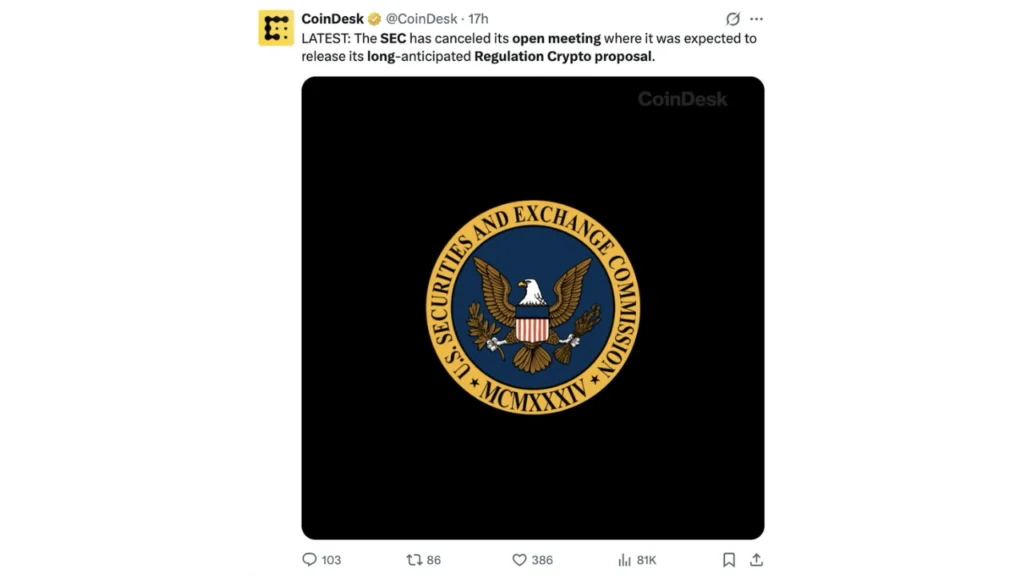
The U.S. Securities and Exchange Commission (SEC) has unexpectedly postponed a highly anticipated open meeting where commissioners were set to deliberate on a proposal that could fundamentally alter the landscape of digital asset issuance and regulation within the United States. The agency announced late Thursday that Friday’s session would be rescheduled due to "an unforeseen scheduling issue," leaving the cryptocurrency industry in a state of continued uncertainty regarding a regulatory framework that SEC Chairman Paul Atkins has previously identified as a cornerstone of his digital asset agenda. No new date has been provided for the rescheduled meeting, prolonging a period of anticipation for market participants seeking clarity on the evolving rules governing this dynamic sector.
This abrupt cancellation arrives at a particularly sensitive juncture for U.S. digital asset policy. The legislative path forward remains fraught with challenges, most notably the stalled progress of the Digital Asset Market Clarity Act in the Senate. This bill is widely viewed within the industry as a critical piece of legislation that could establish a more robust and comprehensive legal foundation for cryptocurrency markets. With Congress currently in recess and ongoing negotiations yet to yield a breakthrough, many market participants had increasingly turned their attention to the SEC, hoping the agency would independently advance regulatory initiatives to fill the void. The postponement of the SEC meeting now further defers these hopes, creating a vacuum where clarity was eagerly awaited.
The Unfolding Narrative of "Regulation Crypto"
The proposal, colloquially known as "Regulation Crypto" or "Reg Crypto," is designed to create a more tailored regulatory pathway for specific digital asset projects aiming to raise capital. Chairman Atkins has articulated this initiative as a "tailored offering regime for certain investment contracts," a concept that could potentially allow qualifying digital asset projects to secure funding without immediately being subjected to the full, often burdensome, registration requirements typically associated with traditional securities. Furthermore, the framework might offer a structured path for projects to transition away from direct SEC oversight as they mature, achieve greater decentralization, or satisfy predefined conditions.
This prospective approach represents a significant departure from the SEC’s prevailing strategy in recent years, which has largely been characterized by an enforcement-driven methodology. Instead of relying predominantly on case-by-case enforcement actions and policy pronouncements, the agency’s move towards a formal regulatory regime would involve a public notice-and-comment period, fostering greater transparency and industry input. For companies operating within the digital asset space, this distinction is paramount. A clearly defined regulatory framework would provide much-needed predictability, making it easier for them to ascertain when a token might be classified as a security, how to legally raise capital, and what ongoing obligations would apply as their networks evolve. However, the SEC’s decision to postpone the meeting means these critical questions will remain unanswered for the foreseeable future.
A Ripple Effect: Delays in Tokenization Initiatives
Beyond the core "Reg Crypto" proposal, the canceled meeting was also slated to address an update on a separate SEC initiative: an "innovation exemption" aimed at facilitating experimentation with tokenized securities. This exemption is intended to dismantle regulatory hurdles for firms looking to issue and trade securities utilizing blockchain infrastructure. However, industry sources suggest that this particular initiative has encountered significant headwinds, reportedly facing resistance from both the White House and established financial institutions. This opposition may be a contributing factor to the prolonged delays.
One of the primary concerns voiced by some stakeholders reportedly revolves around the SEC’s legal authority to grant such broad exemptions. Questions have also been raised regarding whether the agency has adequately completed the necessary economic analysis and procedural groundwork to support the implementation of such an exemption. Traditional financial institutions, represented by organizations like the Securities Industry and Financial Markets Association (SIFMA), have articulated a different set of concerns. SIFMA has questioned the intricate interplay between blockchain-based trading venues, including decentralized platforms and automated market makers, and the existing framework of equity market rules.

A critical issue at the forefront of these discussions is the principle of "best execution." Under the current U.S. market structure, Regulation NMS generally mandates that brokers seek the most favorable protected quotation when executing customer trades. Applying these requirements to the nascent and often more fluid environment of decentralized or blockchain-based markets presents considerable complexities. SIFMA has argued that any substantial modifications to market structure should be addressed through a formal, open rulemaking process, rather than through exemptions or no-action relief, which may offer less public scrutiny and debate.
The Crucial Timing of the Postponement
The timing of this postponement is particularly significant given the rapid evolution of tokenization. What began as an experiment within the cryptocurrency industry is rapidly transforming into a broader financial market trend. Major exchanges, including Nasdaq and the New York Stock Exchange, have been actively developing the infrastructure necessary to support tokenized securities. Furthermore, the Depository Trust & Clearing Corporation (DTCC) has already processed live production trades involving tokenized securities as part of a pilot program, signaling tangible progress in this area. Analysts at Citi have projected that tokenized assets could eventually represent a market valuation of $5.5 trillion by 2030, underscoring the immense potential and the urgency for regulatory clarity.
The SEC itself has increasingly signaled its recognition of blockchain technology’s potential to modernize financial markets. Under Chairman Atkins’ leadership, the agency has adopted a more accommodating stance toward digital assets, reversing several policies that were in place during the previous administration. In March, Atkins alluded to the SEC’s consideration of a safe harbor and a "fit-for-purpose startup exemption." Such measures could offer crypto entrepreneurs greater flexibility to raise capital or operate for a limited duration without immediately facing the full spectrum of securities regulations. However, the latest postponement underscores the inherent tension between the desire to move swiftly in a rapidly developing technological landscape and the imperative to establish rules that can withstand rigorous legal, political, and market scrutiny.
The Regulatory Tug-of-War: SEC vs. Congress
For the cryptocurrency industry, the immediate question transcends the specifics of the SEC’s proposed regulations. It now hinges on whether regulatory bodies or legislative lawmakers will deliver the next significant piece of regulatory clarity. The Digital Asset Market Clarity Act, despite its industry support, remains in legislative limbo in the Senate. Lawmakers departed Washington for a five-week recess without a vote on the bill. This legislation, if enacted, would establish federal rules specifically tailored for digital assets, potentially providing companies with a more definitive and stable legal foundation. However, its prospects are increasingly uncertain, as negotiations have yet to garner the necessary support to overcome the Senate’s 60-vote threshold.
This situation leaves the industry in an unusual and prolonged holding pattern. The SEC appears willing to construct a more crypto-specific regulatory framework, while simultaneously, Congress is endeavoring to delineate the statutory boundaries of the market. Both of these critical efforts remain incomplete, creating a bifurcated and unpredictable regulatory environment.
The canceled meeting does not necessarily signify an abandonment of the "Regulation Crypto" initiative by the SEC. Instead, it represents another delay in a process that could ultimately prove to be one of the agency’s most impactful policy moves concerning digital assets. Until a new meeting date is officially announced, companies involved in digital assets, investors, and traditional financial institutions will continue to navigate this period of uncertainty. The crucial question remains whether the SEC can successfully translate its evolving digital asset agenda into formal, actionable rules, or whether Congress will ultimately take the lead in defining the future of this burgeoning market. The outcome of this regulatory race will have profound implications for innovation, investment, and the broader integration of digital assets into the global financial system.