Layla Zulfa
The global digital landscape faced a significant hurdle on Thursday morning as three of the world’s leading artificial intelligence platforms—ChatGPT, Claude, and Grok—experienced near-simultaneous service disruptions. The outages, which began during peak morning work hours in North America, prevented millions of users from accessing generative AI tools, disrupting workflows across industries ranging from software development to academic research. While OpenAI, Anthropic, and xAI each acknowledged the technical difficulties and moved quickly to implement fixes, the incident has reignited a critical conversation regarding the world’s increasing reliance on a handful of centralized AI models for daily productivity.
The disruptions began as a series of cascading errors that left users unable to log in, receive responses, or access API services. Although the three companies have not confirmed a shared technical cause, the timing of the incidents led to widespread speculation among industry analysts regarding potential vulnerabilities in shared cloud infrastructure or content delivery networks. By early afternoon, services for all three providers had largely returned to normal, but the several-hour window of downtime provided a stark reminder of the "single point of failure" risks inherent in the current AI ecosystem.
A Chronology of the Disruptions
The timeline of the outages suggests a chaotic morning for Silicon Valley’s AI giants. The first major signs of trouble emerged from OpenAI, the industry leader. At approximately 7:43 a.m. PT (10:43 a.m. EST), OpenAI began investigating "elevated error rates" that rendered both ChatGPT and its coding-specific model, Codex, unavailable. According to an official statement from an OpenAI spokesperson, the issue was traced back to a "routing error" that blocked access across multiple platforms, including web interfaces and mobile applications.
OpenAI’s engineers applied a mitigation strategy by 8:17 a.m. PT, though the recovery process was gradual. Reports on the outage monitoring site Downdetector peaked at approximately 38,000 for OpenAI alone. Data indicated that the vast majority of affected users—roughly 80%—were specifically attempting to use ChatGPT, while smaller percentages reported issues with the API and the mobile app.
Simultaneously, Anthropic’s Claude was facing its own set of internal challenges. The company first flagged issues with its Claude 3.5 Sonnet model at 8:37 a.m. EST. While that initial hiccup was resolved within 20 minutes, a more severe second incident struck at 9:26 a.m. EST. This outage was more comprehensive, affecting Claude.ai, the Claude API, and newer enterprise tools like Claude Code and Claude Cowork. Anthropic eventually attributed the failure to an "infrastructure issue," though they stopped short of providing specific details. Service for Anthropic users was not fully restored until 12:16 p.m. EST.
The third pillar of the morning’s disruption involved xAI’s Grok. Elon Musk’s AI venture confirmed an outage affecting its presence on the X social media platform as well as its independent web and mobile apps. The xAI status page noted that two U.S. API regions were specifically impacted, starting around 9:30 a.m. EST. Like its competitors, xAI saw a surge in user complaints, with Downdetector reports peaking at 1,400 during the height of the blackout.
The Impact on Global Productivity and User Sentiment
The immediate reaction to the outages on social media platforms, particularly X, highlighted the extent to which generative AI has become integrated into the modern professional’s toolkit. For many, the lack of access to these "second brains" resulted in a total standstill of work. Professionals who have moved away from traditional search engines and manual drafting in favor of AI-assisted workflows found themselves unable to complete basic tasks.

"Claude, Grok, and ChatGPT. How can anyone get any work done?" wrote Simon Maechling, a chemist and science communicator, in a post that resonated with thousands of frustrated users. The sentiment was echoed by tech executives who have built their entire business models around AI integration. Dan Shipper, CEO of the AI tool developer Every, joked that without ChatGPT, he felt "immediately 50 IQ points dumber," a comment that, while humorous, underscored a genuine concern regarding the atrophy of manual cognitive tasks in the age of automation.
The disruption was particularly felt in the software engineering community. With ChatGPT’s Codex and Anthropic’s Claude Code both offline, developers reported significant delays in debugging and code generation. For companies utilizing AI APIs to power customer-facing chatbots or internal data processing, the outage represented not just a loss of personal productivity, but a potential loss of revenue and service reliability for their own clients.
Technical Analysis and Potential Common Links
While OpenAI, Anthropic, and xAI operate independently, the fact that all three experienced issues within the same four-hour window has led to intense scrutiny. In the world of high-scale cloud computing, simultaneous outages often point to an issue with a "Tier 0" provider—such as Amazon Web Services (AWS), Microsoft Azure, or Google Cloud—or a major Content Delivery Network (CDN) like Cloudflare or Fastly.
OpenAI’s mention of a "routing error" is a specific technical term usually associated with BGP (Border Gateway Protocol) updates or DNS (Domain Name System) failures. When routing tables are misconfigured, traffic intended for a specific destination is essentially sent into a "black hole," making the service appear offline even if the servers themselves are functioning perfectly. Anthropic’s mention of an "infrastructure issue" could also point to similar networking failures.
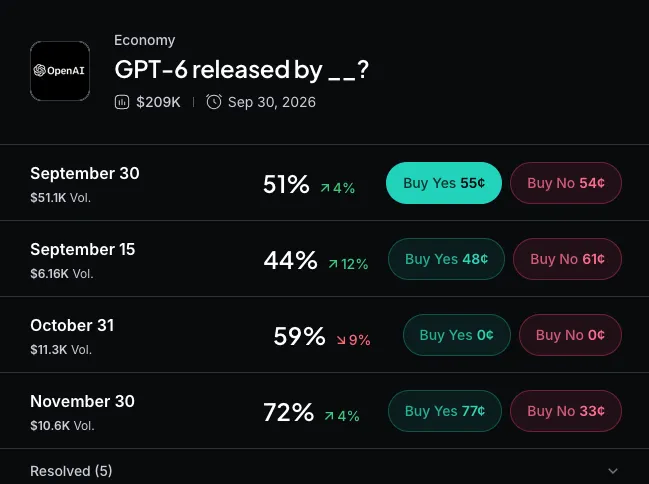
However, without an official joint statement, it remains possible that the timing was a high-profile coincidence. The load on these systems has grown exponentially over the last year, and the introduction of increasingly complex models—such as the rumored preparations for GPT-6—puts immense strain on existing server architectures. As these companies race to scale, the margin for error in infrastructure management becomes razor-thin.
Historical Context: A Pattern of Growing Pains
Thursday’s events are part of a broader trend of instability as the AI industry matures. ChatGPT, in particular, has a history of notable disruptions. In December 2024, the service suffered a major collapse shortly after the high-profile launch of its integration with Apple Intelligence. That incident was attributed to a massive surge in demand that overwhelmed OpenAI’s capacity.
More recently, in June 2025, a global outage lasted over three hours, affecting millions of users and leading to questions about OpenAI’s ability to maintain a "five-nines" (99.999%) uptime standard. For Anthropic and xAI, the stakes are equally high. As they gain market share, they become more attractive targets for DDoS (Distributed Denial of Service) attacks and face greater scrutiny regarding their service level agreements (SLAs) with enterprise partners.
Market Dynamics and the Battle for Dominance
The outages arrived at a time of shifting power dynamics in the generative AI sector. While OpenAI once held an almost total monopoly on the market, the landscape has become increasingly competitive. As of March 2026, internal and external data suggest a tightening race:
- ChatGPT: Remains the titan with over 1 billion weekly active users.
- Claude: Has solidified its position as the preferred tool for many developers and writers, with an estimated 300 million monthly active users.
- Grok: Leveraging its integration with the X platform, Grok has grown to approximately 117 million monthly active users.
Web traffic analysis from mid-2025 showed ChatGPT holding roughly 80% of the market share. However, by May 2026, that dominance had begun to erode. Competitors like Google’s Gemini and Anthropic’s Claude have capitalized on OpenAI’s occasional stability issues and perceived "model drift," drawing away users who require high-reliability environments.
For xAI, the recent growth of Grok represents a significant challenge to the established order. By offering a "rebellious" alternative with fewer guardrails and deep integration into one of the world’s largest social networks, Grok has carved out a niche that is increasingly resilient to the fluctuations of the broader market.
Broader Implications: The Need for AI Redundancy
The primary takeaway from the "Triple Outage" of Thursday is the urgent need for AI redundancy in the corporate world. Much like how businesses maintain multiple internet service providers or backup power generators, the modern enterprise may now need to maintain subscriptions to multiple AI providers to ensure continuity.
If a company’s entire customer support wing is powered by the Claude API, a three-hour outage like the one seen on Thursday is unacceptable. Moving forward, industry analysts predict a rise in "model-agnostic" architectures—systems designed to switch between GPT-4, Claude 3.5, and Gemini 1.5 Pro instantly if one service goes down.
Furthermore, the incident raises questions for regulators. As AI becomes "critical infrastructure," much like electricity or telecommunications, the government may eventually require these companies to adhere to stricter reporting and reliability standards. The "In brief" summaries of the past are no longer sufficient when the tools in question are responsible for billions of dollars in daily economic activity.
As of Thursday afternoon, OpenAI, Anthropic, and xAI have all signaled that their systems are back to full operational capacity. However, for the millions of users who found themselves "50 IQ points dumber" for a few hours, the message was clear: the AI revolution is powerful, but it is also remarkably fragile. The race to build the most intelligent model continues, but the race to build the most stable one may ultimately be more important for the global economy.