
 Nila Kartika Wati
S&P Global Ratings, a global leader in credit ratings and financial information, has launched a pioneering risk assessment framework specifically designed for digital asset lending vaults. This significant development comes as on-chain investment products rapidly gain traction within the evolving cryptocurrency landscape, attracting substantial capital and drawing increased scrutiny from market participants and regulators alike. The new framework, termed the Vault Risk Assessment (VRA), aims to provide much-needed transparency and a standardized methodology for evaluating the multifaceted risks associated with these increasingly popular decentralized finance (DeFi) instruments.
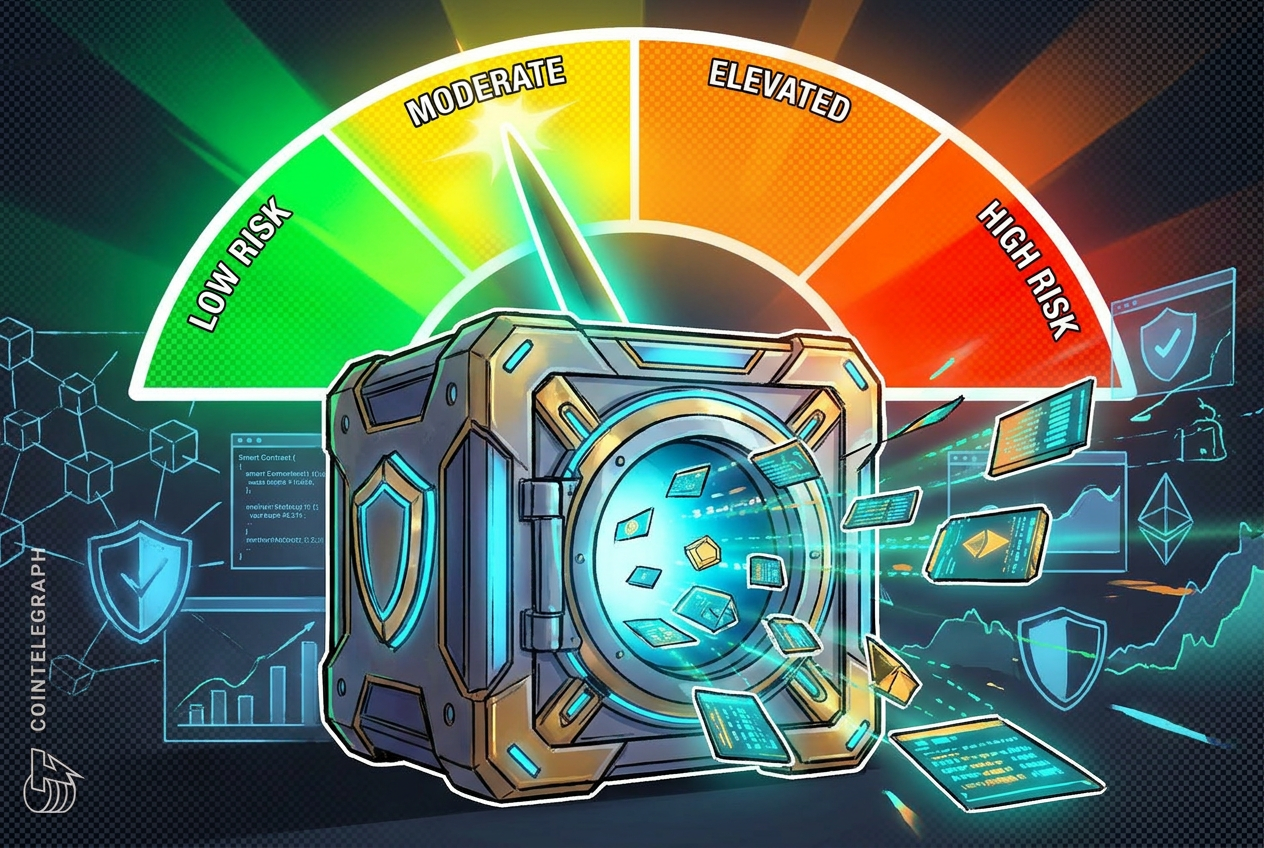
The announcement, made public on Monday, detailed a comprehensive methodology that assesses digital asset lending vaults across six critical dimensions: portfolio credit quality risk, liquidity mismatch risk, curator risk, blockchain risk, protocol risk, and vault security and governance risk. This multi-pronged approach underscores the complex nature of risk within the digital asset ecosystem, where traditional financial risks intertwine with novel technological and operational challenges. S&P emphasized that these assessments are specifically engineered to evaluate the risk of losses to investors in lending vaults, distinguishing them from traditional credit ratings which typically gauge an entity’s ability to meet financial obligations, or evaluations of investment yields.
Lisa Schroeer, an analyst at S&P Global Ratings, provided crucial insight into the framework’s philosophy, telling Cointelegraph, "A material weakness in any factor can constrain the overall VRA. A strong score in one factor does not offset a material weakness in another." This statement highlights the holistic and interdependent nature of risk in digital asset vaults, acknowledging that a single point of failure in any of the six areas could undermine the overall integrity and security of the vault. Schroeer further elaborated that this rigorous approach reflects a sector where "there are many points of risk/failure that can break," emphasizing the necessity for a thorough and uncompromising evaluation standard. S&P Global Ratings plans to publish its initial Vault Risk Assessments in future announcements, though specific vaults slated for assessment were not immediately identified.
The Genesis of a Framework: Addressing a Maturing Market
Digital asset lending vaults represent an innovative evolution in the financial services sector, leveraging blockchain technology and smart contracts to automate and decentralize lending and yield-generation strategies. These vaults typically pool investor deposits, subsequently deploying these aggregated assets through predefined strategies managed either by immutable smart contracts or human curators. In return for their deposits, participants receive tokens that represent their proportionate share of the vault’s underlying assets and any accrued returns. This model offers users a streamlined way to engage with DeFi lending, often simplifying complex strategies into accessible products.
The burgeoning growth of these vaults underscores the urgent need for a robust risk assessment framework. According to S&P, deposits in digital asset lending vaults experienced an exponential surge, climbing from approximately $1.5 billion two years prior to an impressive $10 billion by September of the current year. This more than six-fold increase in capital allocation signifies a rapid maturation of the sector and a growing appetite among investors for yield-generating opportunities in the digital asset space. However, this growth has not been without its challenges, including exposure to smart contract vulnerabilities, liquidity risks, and operational failures, which have historically plagued various segments of the crypto market. The introduction of S&P’s VRA is a direct response to this accelerated growth and the inherent complexities, aiming to instill greater confidence and provide a standardized lens through which these risks can be understood and mitigated.
S&P Global Ratings’ Methodology: A Deep Dive into the Six Pillars
The VRA framework’s six assessment areas are meticulously designed to cover the spectrum of potential risks in digital asset lending vaults. Each pillar addresses a distinct dimension, reflecting S&P’s commitment to a comprehensive and granular evaluation:
-
Portfolio Credit Quality Risk: This area scrutinizes the quality and diversification of the assets held within the vault’s lending portfolio. It considers factors such as the creditworthiness of borrowers (if applicable in a centralized lending component), the types of collateral accepted (e.g., stablecoins vs. volatile cryptocurrencies), collateralization ratios, and the overall strategy for managing potential defaults or underperformance of lent assets. For instance, a vault lending stablecoins against over-collateralized Bitcoin would present a different credit risk profile than one lending less liquid altcoins against uncollateralized or under-collateralized positions.
-
Liquidity Mismatch Risk: This assesses the potential for a vault to face challenges in meeting investor redemption requests due to a mismatch between its liquid assets and its obligations. Factors include the liquidity of the underlying assets in which the vault invests, the terms of lending agreements (e.g., fixed-term vs. open-ended), and the redemption mechanisms available to depositors. An inability to liquidate assets quickly enough to satisfy withdrawals could lead to significant investor losses or even a "bank run" scenario, a risk that has materialized in various forms across the broader crypto lending ecosystem.
-
Curator Risk: This pillar focuses on the human element involved in managing the vault’s strategies. While many vaults are driven by smart contracts, human curators often play a role in strategy selection, rebalancing, or emergency interventions. This assessment evaluates the curator’s expertise, track record, governance structure, transparency, and potential conflicts of interest. The risk of malfeasance, incompetence, or even simply poor decision-making by a human curator is a critical consideration, as such actions can directly impact investor funds.
-
Blockchain Risk: This delves into the security and stability of the underlying blockchain network on which the vault operates. It considers the resilience of the blockchain’s consensus mechanism, its decentralization, vulnerability to 51% attacks, network congestion issues, and the overall security posture of the platform. A compromise of the base layer blockchain could have cascading effects, jeopardizing all applications and assets built upon it, including lending vaults.
-
**Protocol Risk: This is perhaps one of the most unique aspects of DeFi risk. It evaluates the inherent security and design integrity of the smart contracts and protocols that govern the vault’s operations. This includes scrutinizing code audits, potential for economic exploits (e.g., flash loan attacks, oracle manipulation), reentrancy vulnerabilities, and the overall robustness of the protocol’s architecture. Flaws in smart contract code can lead to irreversible loss of funds, a frequent occurrence in the nascent DeFi space.
-
Vault Security and Governance Risk: This final pillar encompasses the operational and governance aspects specific to the vault itself. It examines access controls, multi-signature requirements for critical operations, upgrade mechanisms, emergency shutdown procedures, and the process for proposing and implementing changes to the vault’s parameters. Governance exploits, where attackers gain control over a protocol’s decision-making process to siphon funds, represent a significant threat, as evidenced by recent incidents.
Lisa Schroeer’s clarification that a weakness in any single factor can constrain the overall VRA underscores S&P’s belief that robust digital asset vault operation requires excellence across all these dimensions. This integrated view of risk management is crucial in a sector characterized by its interconnectedness and multi-layered vulnerabilities.
A Chronology of Vault Evolution and Incidents
The need for S&P’s framework is further contextualized by the recent history of crypto lending and the rapid evolution of vault products. The early crypto lending landscape was dominated by centralized entities like BlockFi, Celsius Network, and Voyager Digital. While these platforms offered attractive yields, their opaque operational models, insufficient risk management, and commingling of client funds ultimately led to spectacular collapses in 2022, resulting in billions of dollars in investor losses. These failures served as a stark lesson in the perils of centralized custodianship without adequate regulatory oversight and transparency, prompting a renewed focus on decentralized alternatives.
The emergence of DeFi sought to address these issues by replacing intermediaries with smart contracts, theoretically offering greater transparency and immutability. Digital asset lending vaults have since expanded significantly over the past year, as various exchanges, wallets, and DeFi platforms have rolled out products that package lending and other yield-generating strategies for their users.
Several key milestones highlight this rapid adoption:
- February [Year]: "Wallet in Telegram" introduced self-custodial BTC, ETH, and USDT vaults. These vaults leveraged infrastructure from prominent DeFi protocols such as Morpho, TAC, and Re7, signaling a move towards integrating DeFi functionalities directly into widely used communication platforms.
- May [Year]: Cryptocurrency exchange Kraken launched its own Bitcoin yield vault. Powered by Veda and curated by Sentora, this product quickly garnered significant interest, attracting $30 million from 4,000 wallets within its first 10 hours. This rapid uptake demonstrated a substantial market demand for accessible and seemingly secure yield-generating products.
- September [Year]: Kraken further expanded its offerings by launching yield vaults for tokenized versions of traditional financial assets, including Nvidia stock, the SPDR S&P 500 ETF, and Invesco QQQ ETFs. In this model, Sentora continued to manage strategies that lend these tokenized assets through various DeFi markets, bridging the gap between traditional securities and decentralized finance.
However, this period of accelerated growth has not been without significant peril. The inherent complexities and nascent nature of DeFi protocols mean they remain susceptible to sophisticated exploits. A notable incident occurred in August [Year] when lending protocol Term Finance suffered an estimated $8.5 million loss. The attacker exploited a vulnerability in the governance control of its Meta Vaults, demonstrating how even well-intentioned decentralized governance mechanisms can be manipulated if not meticulously secured. Such incidents underscore the critical need for comprehensive risk assessments that go beyond superficial security audits.
The Regulatory Shadow: Navigating Uncharted Waters
Amidst the rapid innovation and growing capital flow into digital asset vaults, regulatory bodies have begun to pay closer attention, often expressing concerns about investor protection and market integrity. In July [Year], SEC Commissioner Hester Peirce, known for her comparatively pro-innovation stance within the commission, issued a cautionary statement suggesting that some crypto vaults and on-chain lending products could potentially fall under federal securities laws, depending on their structure and operational characteristics.
Peirce specifically highlighted that vaults involving "discretionary decisions over asset allocation, yield strategies, lending terms or liquidation thresholds" could trigger requirements related to securities, investment companies, or investment advisers. Her comments underscore the regulatory ambiguity surrounding these products in the United States, where the "Howey test" for determining whether an asset constitutes a security is applied on a case-by-case basis. The lack of clear, prescriptive regulations creates uncertainty for both innovators and investors, making frameworks like S&P’s VRA even more pertinent. While not a regulatory body, S&P’s framework provides a structured approach to risk identification and evaluation that could, in time, contribute to a more standardized understanding of these products, potentially informing future regulatory discussions and policies. Globally, regulators are grappling with similar challenges, with jurisdictions taking varying approaches to classifying and overseeing decentralized finance.
Industry Reactions and Future Outlook
The introduction of S&P Global Ratings’ Vault Risk Assessment framework is poised to have significant implications across the digital asset ecosystem:
For Investors: The primary beneficiaries of this framework will be investors, particularly institutional ones. As Lisa Schroeer noted, "The assessment aims to provide more transparency on the risks so that any entity can make more informed decisions when deciding how to allocate capital to DeFi vaults." This enhanced transparency is crucial for de-risking investments in a sector often perceived as opaque and volatile. By offering an objective, third-party assessment of risk, the VRA can help investors differentiate between high-quality, well-managed vaults and those with significant vulnerabilities, potentially leading to more confident and substantial capital allocation. It also provides a common language for understanding risk, reducing information asymmetry.
For Vault Providers: While implementing S&P’s rigorous standards may require significant effort and investment, vault providers that achieve favorable VRA scores stand to gain a considerable competitive advantage. Such a rating would serve as a powerful signal of operational excellence and robust risk management, potentially attracting more institutional capital and sophisticated investors who demand higher standards of due diligence. The framework could also act as a benchmark for best practices, encouraging all participants to strengthen their security, governance, and operational protocols, thereby elevating the overall quality and trustworthiness of the digital asset lending vault market. It could push for greater standardization in reporting and disclosures, which is currently lacking in many parts of DeFi.
For the Broader Crypto Market: S&P Global Ratings’ foray into digital asset risk assessment is a significant step towards the institutionalization and professionalization of the cryptocurrency market. The involvement of a leading traditional finance entity like S&P lends considerable credibility to digital assets as a legitimate and investable asset class. This bridging of TradFi (traditional finance) and DeFi (decentralized finance) is critical for attracting mainstream adoption and integrating digital assets more seamlessly into the global financial system. It signals a maturation beyond the early speculative phases, indicating a move towards structured products and disciplined risk management.
Challenges and Adaptation: Despite its robust design, the VRA framework will face ongoing challenges. The digital asset space is characterized by its rapid pace of innovation, with new protocols, strategies, and attack vectors emerging constantly. S&P’s framework will need to be dynamic and adaptable, undergoing continuous review and updates to remain relevant and effective in a fast-evolving technological landscape. The ability to promptly incorporate new risks and adjust assessment methodologies will be crucial for its long-term utility. Furthermore, the framework’s success will depend on its adoption by the industry and its ability to accurately reflect the complex interplay of risks without stifling innovation.
In conclusion, S&P Global Ratings’ introduction of the Vault Risk Assessment framework represents a landmark moment for the digital asset lending market. By bringing traditional finance’s rigorous risk assessment methodologies to the innovative world of DeFi vaults, S&P is poised to foster greater transparency, enhance investor confidence, and potentially accelerate the mainstream adoption of these products. As the digital asset landscape continues to evolve and attract increasing capital, such comprehensive and independent risk evaluations will be indispensable for navigating its inherent complexities and ensuring a more secure and sustainable future for on-chain finance.









