Nila Kartika Wati
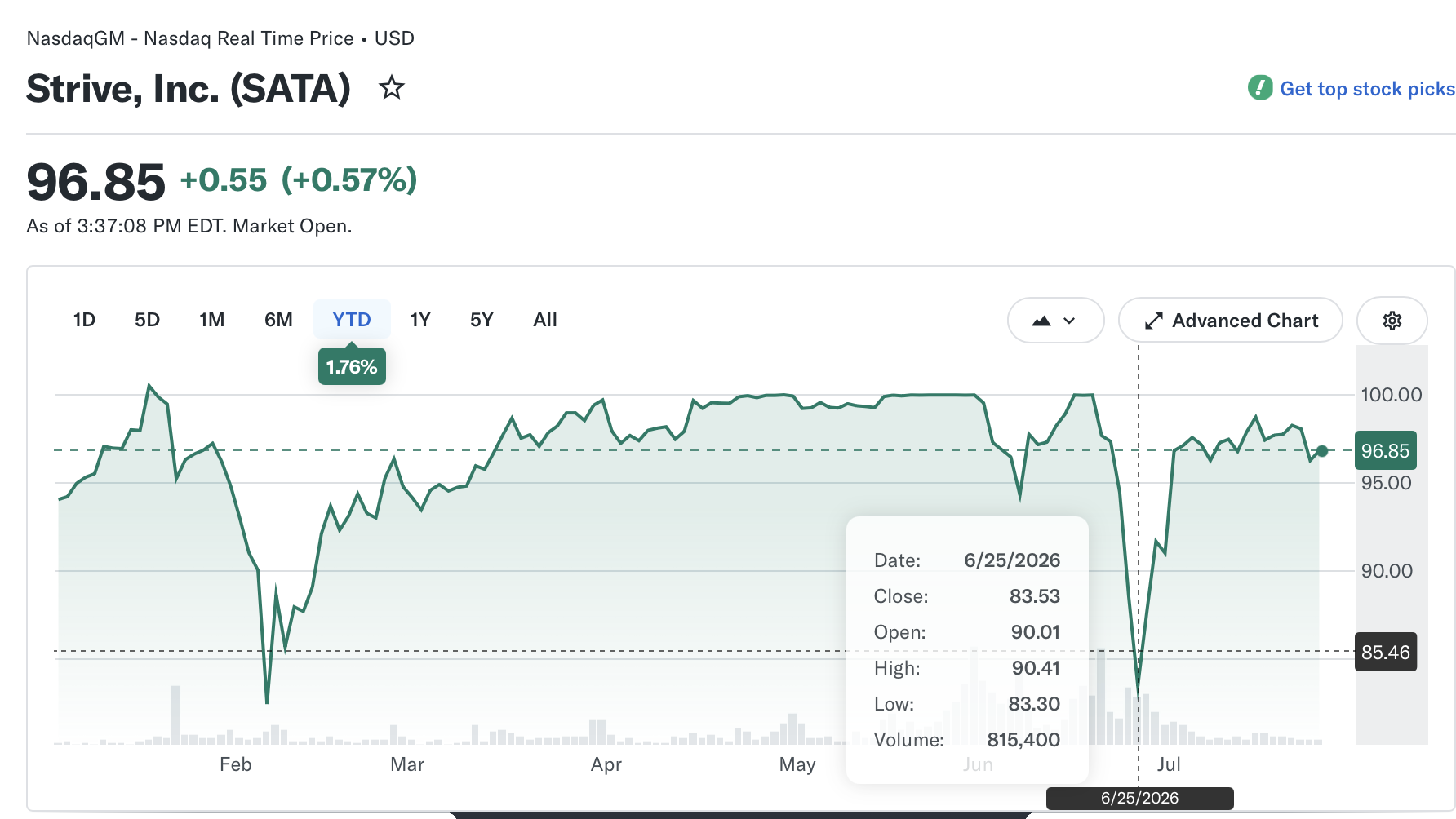
Strive’s SATA preferred shares have demonstrated a robust rebound, climbing from a June low of $83.30 to approximately $97, effectively recovering the majority of the recent market selloff and positioning them within roughly 3% of their $100 par value, according to comprehensive data compiled by Yahoo Finance. This resurgence marks a critical moment for the innovative financial instrument and the broader ecosystem of Bitcoin treasury strategies, suggesting a stabilization in investor confidence after a period of volatility. The performance of SATA is being closely watched as a bellwether for the viability and appeal of preferred equity designed to finance corporate Bitcoin holdings without diluting common shareholders.
The Genesis of Bitcoin-Backed Preferred Equity
Strive, a prominent player in the corporate Bitcoin adoption space, initially introduced SATA in November 2025. This strategic move was designed to provide a novel mechanism for financing the expansion of its Bitcoin treasury. At its core, SATA represents a variable-rate perpetual preferred stock, meticulously structured with the explicit aim of trading consistently near its $100 par value. The mechanism for achieving this stability lies in its variable dividend rate, which is designed to adjust in response to market conditions, thereby maintaining the share’s attractiveness to investors. The overarching goal for Strive was to efficiently raise capital for its Bitcoin (BTC) treasury, enabling aggressive accumulation of the digital asset, all while circumventing the need to issue additional common shares. This non-dilutive approach is a significant draw for companies seeking to bolster their Bitcoin reserves without impacting existing shareholder equity ratios.
The introduction of SATA by Strive was not an isolated event but rather a significant development within an emerging financial segment. SATA is part of a burgeoning class of preferred-share products directly linked to corporate Bitcoin treasury strategies. This segment, often described by industry pioneers such as Strategy as "digital credit," represents a novel frontier in corporate finance, blending traditional equity structures with exposure to the volatile yet high-potential world of digital assets. The concept of "digital credit" encompasses various financial instruments that allow companies to leverage their Bitcoin holdings or raise capital specifically for Bitcoin acquisition, offering investors exposure to the asset class through regulated securities.
Comparative Performance: SATA vs. STRC

The market’s reaction to these innovative instruments has provided valuable insights into investor sentiment regarding Bitcoin-backed securities. Strategy’s STRC, another preferred share product launched in 2025, shares a similar strategic objective with SATA: to maintain a $100 share price through a variable dividend mechanism. Like SATA, STRC experienced a sharp decline during the late-June market selloff, reflecting a broader downturn across both traditional and digital asset markets. However, while STRC has also seen a recovery, its trajectory has been less pronounced than SATA’s. Currently, STRC continues to trade below its par value, hovering around $87, according to Yahoo Finance data. This divergence in recovery performance between SATA and STRC could be attributed to a variety of factors, including market perception of each company’s balance sheet strength, the specific terms of their preferred shares, or broader investor confidence in their respective management strategies.
The June market downturn, which impacted both SATA and STRC, was characterized by a confluence of macroeconomic concerns and specific pressures within the cryptocurrency market. Global inflationary pressures, rising interest rates from central banks, and persistent regulatory uncertainties created a risk-off environment that disproportionately affected speculative assets like Bitcoin. Furthermore, significant liquidations and solvency issues within certain sectors of the broader crypto industry exacerbated the selloff, leading to a precipitous drop in Bitcoin’s price and a ripple effect across related financial products. For preferred shares like SATA and STRC, which derive their underlying value and dividend sustainability from Bitcoin holdings, this period presented a severe test of their structural resilience and investor faith. The subsequent recovery, albeit partial for some, signals a degree of stabilization and a re-evaluation of the long-term prospects of these digital credit instruments.
Leading the Charge: Corporate Bitcoin Treasuries
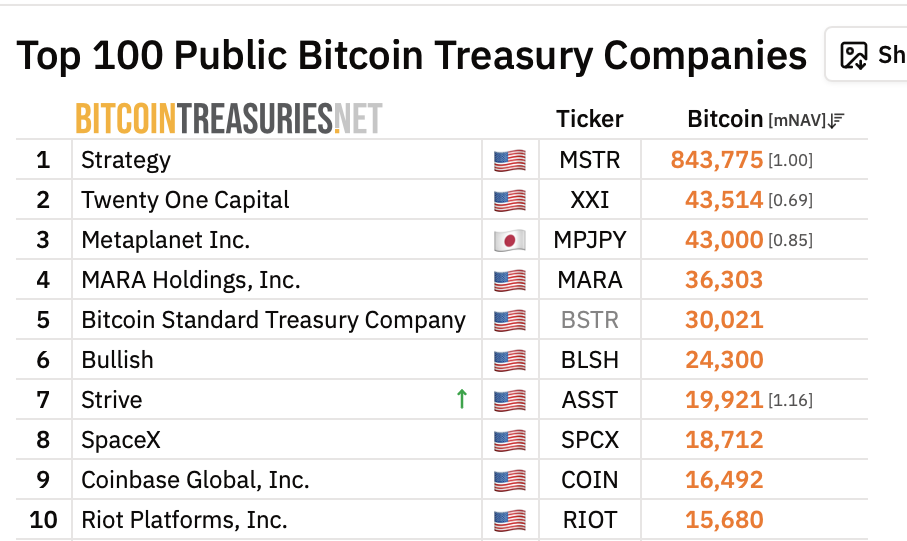
The adoption of Bitcoin as a primary treasury asset has become a defining characteristic for a growing number of forward-thinking corporations. These companies view Bitcoin as a strategic hedge against inflation, a potential store of value, and a diversification tool for their balance sheets. Strategy, an undisputed leader in this domain, maintains its position as the world’s largest public corporate Bitcoin holder, boasting an impressive treasury of 843,775 BTC. This substantial holding underscores Strategy’s conviction in Bitcoin’s long-term value proposition and its aggressive accumulation strategy.
Strive, while not matching Strategy’s colossal reserves, has rapidly ascended the ranks of corporate Bitcoin holders. With 19,921 BTC, Strive has secured the seventh position among public companies with Bitcoin treasuries, according to data from BitcoinTreasuries.NET. This rapid accumulation highlights Strive’s commitment to its Bitcoin-centric strategy and the effectiveness of its capital-raising mechanisms, including the SATA preferred shares. The continued expansion of these corporate treasuries, even amidst market volatility, indicates a strategic long-term vision that transcends short-term price fluctuations. The success of companies like Strive in utilizing innovative financing tools like preferred shares further validates the evolving landscape of corporate finance in the digital age.
Expert Insights on Market Dynamics and Confidence
The recent market movements, particularly SATA’s impressive recovery, have sparked renewed discussion among industry experts regarding the stability and future of Bitcoin-backed financial products. Samson Mow, the founder and CEO of Jan3, a leading Bitcoin technology company, offered a compelling perspective in an interview with Cointelegraph. Mow expressed his belief that the recent adjustments undertaken by Bitcoin treasury companies are beginning to restore critical confidence in preferred-share products. This, he argued, lends significant support to his long-held view that Bitcoin has already found its market bottom.
"I think every action that Strategy has undertaken to strengthen their balance sheet and encourage STRC to go back to par is also working," Mow stated, emphasizing the interconnectedness of market sentiment and corporate strategy. He further elaborated on this symbiotic relationship: "But everything sort of works in tandem. I think as SATA returns to par, you’re going to see STRC return to par too, because people say, ‘OK, this model’s not broken.’ Everyone is capitalized for three or more years of dividend payments… there was no reason to panic all along." Mow’s analysis suggests that the underlying fundamentals of these preferred share models, particularly the robust capitalization for dividend payments, were sound even during the peak of the selloff. The market’s initial panic, he implies, was an overreaction driven by fear rather than a fundamental flaw in the financing structure.
Mow’s commentary extends beyond individual company performance, touching upon a broader paradigm shift within the Bitcoin treasury sector. He noted that companies are continuously refining their capital-raising strategies, demonstrating an adaptive and innovative spirit. As an example of this evolving landscape, Mow pointed to Lyn Alden’s Orange Juice treasury company, which launched on July 15. Orange Juice’s entry into the market with plans to operate a Bitcoin treasury exemplifies the diversity of approaches and the pursuit of optimized strategies, including those aimed at achieving a lower Bitcoin cost basis. This ongoing innovation, coupled with the resilience demonstrated by instruments like SATA, reinforces the notion that the corporate Bitcoin treasury model is not only viable but also maturing.
The Evolution of Digital Credit and Future Implications
The concept of "digital credit" is rapidly gaining traction as companies seek non-dilutive ways to participate in the Bitcoin economy. These preferred shares offer a unique value proposition: they allow investors to gain exposure to Bitcoin’s potential upside through a traditional equity instrument, often with the added benefit of a variable dividend designed to provide a stable income stream. For companies, it’s a method to raise significant capital without selling off existing common equity or taking on traditional debt that might be less flexible or more costly.
The market’s initial apprehension, as evidenced by the June selloff, highlights the inherent volatility associated with any financial product tied to Bitcoin. However, SATA’s subsequent recovery suggests that investors are increasingly distinguishing between broader market noise and the fundamental strength of well-structured digital credit instruments. The ability of Strive to manage its dividend rate and maintain its preferred shares close to par provides a proof-of-concept that could encourage more companies to explore similar financing models.
Looking ahead, the success of SATA and the continued refinement of models like STRC and Orange Juice could pave the way for a more diverse range of digital credit products. This might include various types of preferred shares, convertible bonds, or even securitized products backed by Bitcoin treasuries. The implications are significant:
- Increased Corporate Bitcoin Adoption: Easier and more flexible financing options could lower the barrier for other public companies considering adding Bitcoin to their balance sheets.
- Investor Diversification: Traditional equity investors gain new avenues for exposure to Bitcoin, potentially attracting a broader pool of capital into the crypto ecosystem.
- Financial Innovation: The "digital credit" segment pushes the boundaries of traditional finance, demonstrating how digital assets can be integrated into conventional capital markets.
- Market Maturation: The resilience of these instruments during downturns, coupled with expert validation, contributes to the overall maturation and institutional acceptance of Bitcoin.
However, challenges remain. The inherent volatility of Bitcoin will always present a risk to the underlying asset base of these instruments. Regulatory frameworks around digital credit are still evolving, and changes could impact their structure and appeal. Furthermore, the ability of companies to consistently generate sufficient cash flow to cover variable dividend payments, especially in prolonged Bitcoin bear markets, will be a crucial factor in their long-term sustainability.
In conclusion, Strive’s SATA preferred shares have not merely recovered; they have offered a powerful demonstration of resilience and the potential viability of Bitcoin-backed financing models. This rebound, supported by expert commentary and a broader trend of corporate innovation, signals a critical inflection point for the "digital credit" sector. As companies continue to refine their strategies and investors gain a deeper understanding of these instruments, the landscape of corporate finance and digital asset integration is poised for further transformative growth. The lessons learned from the recent market volatility will undoubtedly shape the future development and adoption of these innovative financial tools.