Lina Irawan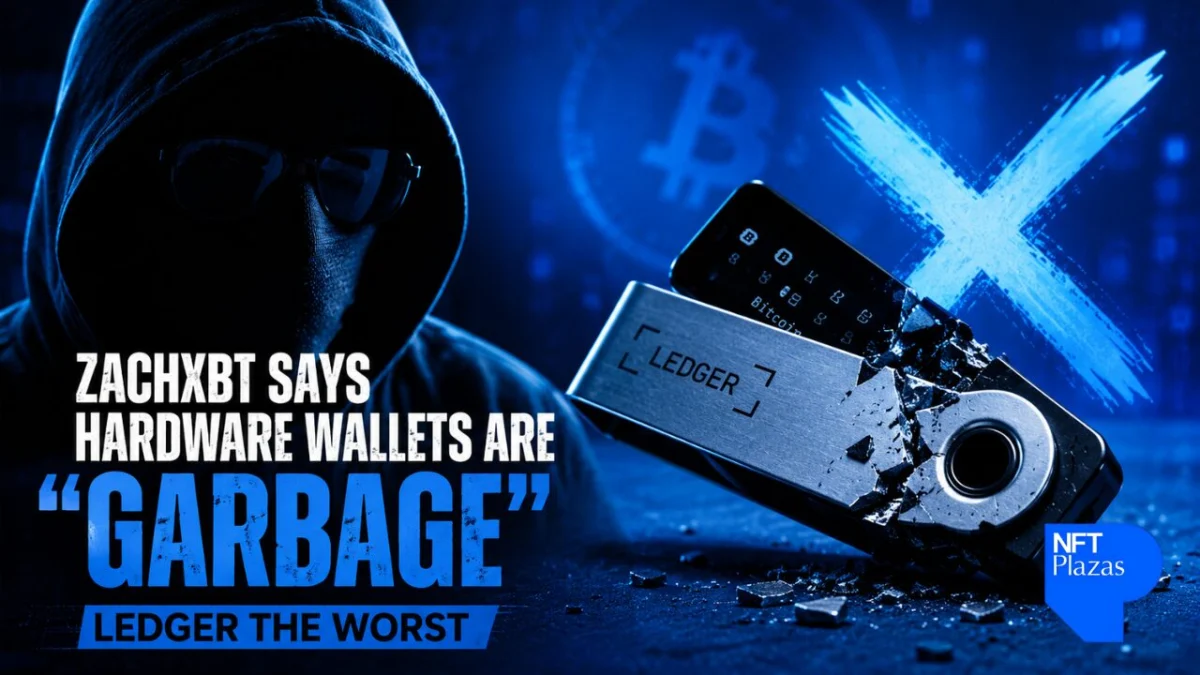
Onchain investigator ZachXBT has ignited a significant debate within the cryptocurrency community by publicly stating that contemporary hardware wallets are "complete garbage" and ill-suited for the critical tasks of signing important transactions or safeguarding substantial amounts of digital assets. This provocative assertion challenges a long-standing tenet of cryptocurrency security, suggesting that experienced users might find greater utility in a dedicated, offline smartphone, such as an iPhone, exclusively reserved for crypto-related activities. This recommendation directly confronts the industry’s established best practices for self-custody.
The comments, initially disseminated through a Telegram post, rapidly permeated the crypto sphere, eliciting a spectrum of reactions ranging from strong endorsement to sharp criticism. While ZachXBT’s pronouncements represent his personal assessment rather than evidence of a newly discovered vulnerability within hardware wallet technology, they arrive at a critical juncture. The cryptocurrency landscape is currently besieged by increasingly sophisticated phishing campaigns, deceptive wallet applications, and pervasive social engineering tactics that have collectively siphoned millions of dollars from unsuspecting holders. This environment underscores the persistent and evolving nature of threats targeting digital asset security.
ZachXBT’s Radical Reassessment of Hardware Wallet Efficacy
For years, hardware wallets have been lauded as the pinnacle of self-custody solutions, primarily due to their core design principle: isolating private keys from internet-connected devices. Prominent manufacturers like Ledger and Trezor have built their brand reputation on this foundation, emphasizing that offline key storage dramatically mitigates the risk of malware compromising users’ crypto holdings. This fundamental security architecture has been widely accepted as the gold standard for protecting digital wealth.
However, ZachXBT fundamentally disagrees with this prevailing assessment. In his widely circulated Telegram message, he explicitly advised against utilizing hardware wallets for "important tasks like signing transactions or storing funds," deeming all current offerings as inadequate. Instead, he proposed an alternative: a dedicated smartphone, such as an iPhone, meticulously configured for sole use in managing crypto wallets and executing transactions. He appended a notable caveat, humorously suggesting this approach is only suitable for those possessing a high degree of technical proficiency, implicitly acknowledging the learning curve and operational complexity involved.

ZachXBT’s critique appears to stem less from concerns about the underlying cryptographic security of hardware wallets and more from their practical usability and the increasing complexity of their surrounding ecosystems. He contends that the current hardware wallet landscape has become unduly complicated, introducing a proliferation of software updates and companion applications that can introduce friction and potential points of failure for users. This perspective shifts the focus from the device’s inherent security to the user experience and the broader software environment in which these devices operate.
Ledger Faces the Brunt of ZachXBT’s Scrutiny
Among the leading hardware wallet manufacturers, Ledger bore the brunt of ZachXBT’s most pointed criticism. He characterized Ledger devices as "the worst," citing frequent updates to its companion software, Ledger Live (recently rebranded as Ledger Wallet), as a primary concern. ZachXBT argues that these updates often alter the user interface and application functionalities in ways that can be disruptive, occasionally even impairing basic wallet operations. This criticism is directed primarily at the software experience and its impact on user interaction, rather than at the fundamental security architecture designed to protect users’ private keys.
In response to the evolving threat landscape and user feedback, Ledger has consistently maintained its stance on hardware-based signing as one of the most secure methods for safeguarding digital assets. The company’s ongoing software development efforts, including the recent interface improvements, security enhancements, and bug fixes in Ledger Live version 4.8.0, aim to bolster user confidence and operational reliability. Ledger’s core security proposition remains that private keys are designed to never leave the user’s device during normal, authorized operations.
It is crucial to note that ZachXBT did not allege any new security breaches or suggest that Ledger’s Secure Element technology, a specialized chip designed for secure storage of sensitive data, had been compromised. His argument is centered on the usability challenges, software complexity, and the broader operational ecosystem surrounding hardware wallets, rather than a direct attack on their cryptographic integrity.
The Enduring Vulnerability of Human Error
This spirited debate underscores a critical and increasingly recognized distinction in the realm of cryptocurrency security. While modern hardware wallets excel at protecting private keys from malware residing on connected computers, they are inherently powerless against actions taken by the user. They cannot prevent individuals from inadvertently revealing their recovery phrases, approving malicious transactions, or downloading counterfeit software disguised as legitimate applications.

This reality has been starkly illuminated throughout the current year. Earlier in 2026, ZachXBT himself reported on a colossal cryptocurrency theft, involving over $282 million worth of Bitcoin and Litecoin, one of the largest single-asset thefts on record. His meticulous investigation concluded that this immense loss was the result of a sophisticated social engineering scam targeting a hardware wallet user, rather than a technical exploit of the device itself. The perpetrator subsequently employed a complex laundering strategy, utilizing multiple instant exchanges, converting substantial portions of the stolen funds into Monero, and bridging Bitcoin across various blockchain networks via the Thorchain protocol.
This incident served to reinforce a growing consensus among security researchers and industry professionals: attackers are increasingly shifting their focus from exploiting cryptographic vulnerabilities to targeting the human element. This paradigm shift implies that even the most robust technical security measures can be rendered ineffective by compromised user judgment or deception.
The Persistent Threat of Deceptive Applications
Owners of hardware wallets have also become prime targets for malicious actors deploying counterfeit software designed to impersonate legitimate wallet applications. In April of this year, a fraudulent Ledger Live application briefly surfaced on Apple’s App Store, successfully deceiving users into inputting their recovery phrases. This elaborate scam ultimately resulted in the theft of at least $9.5 million in cryptocurrency from over 50 victims before Apple intervened and removed the malicious application.
The stolen assets encompassed a diverse range of cryptocurrencies, including Bitcoin, Ethereum, Solana, Tron, and XRP. This broad spectrum of stolen assets highlights how social engineering tactics can prove effective even when users possess ostensibly secure hardware wallets. The attack did not exploit any inherent weaknesses in Ledger’s hardware; instead, victims were tricked into voluntarily surrendering their recovery phrases to software they believed was authentic, thereby granting attackers complete control over their digital assets.
Incidents like these provide a compelling rationale for ZachXBT’s assertion that device isolation alone is insufficient when the surrounding software ecosystem remains susceptible to impersonation and phishing attacks. The ease with which a fake application could infiltrate a major app store and defraud users underscores the systemic vulnerabilities that extend beyond the hardware itself.

Exploring Alternative Paradigms for Self-Custody
ZachXBT’s proposal of utilizing a dedicated iPhone represents a philosophical divergence rather than a universally endorsed best practice. The concept involves employing a smartphone exclusively for cryptocurrency-related activities, devoid of social media, messaging applications, general web browsing, or any other non-essential software. Such a setup could significantly reduce exposure to a multitude of attack vectors commonly associated with everyday device usage. Furthermore, modern iPhones incorporate Apple’s Secure Enclave, a dedicated hardware component designed to provide robust, hardware-backed protection for sensitive cryptographic operations, offering a layer of security akin to the principles behind hardware wallets.
However, seasoned security professionals caution that smartphones, by their very nature, remain internet-connected devices. Consequently, their security is intrinsically dependent on the integrity of their operating systems, the security of installed applications, robust backup practices, and, crucially, the vigilant behavior of the user. These devices are not a direct substitute for the "cold storage" capabilities offered by traditional hardware wallets, which are designed for prolonged periods of complete offline isolation.
For the vast majority of cryptocurrency investors, hardware wallets purchased directly from reputable manufacturers and employed correctly continue to offer a substantial and meaningful layer of protection, far exceeding the risks associated with leaving assets on centralized exchanges or utilizing standard software wallets that are perpetually connected to the internet.
Ultimately, ZachXBT’s pointed remarks reflect a growing frustration with the prevalent marketing of hardware wallets as all-encompassing security panaceas. The reality is that the most significant threats to cryptocurrency holdings increasingly originate from sources external to the devices themselves. Regardless of whether users opt for dedicated hardware wallets or explore alternative self-custody methodologies, security experts consistently reiterate the foundational principles of robust digital asset protection: never divulge recovery phrases, rigorously verify software authenticity, procure devices exclusively through official channels, and maintain unwavering vigilance against phishing and social engineering schemes. The ongoing debate serves as a crucial reminder that comprehensive security in the digital asset space is a multi-faceted endeavor, requiring both technological safeguards and informed, cautious user behavior.