Lina Irawan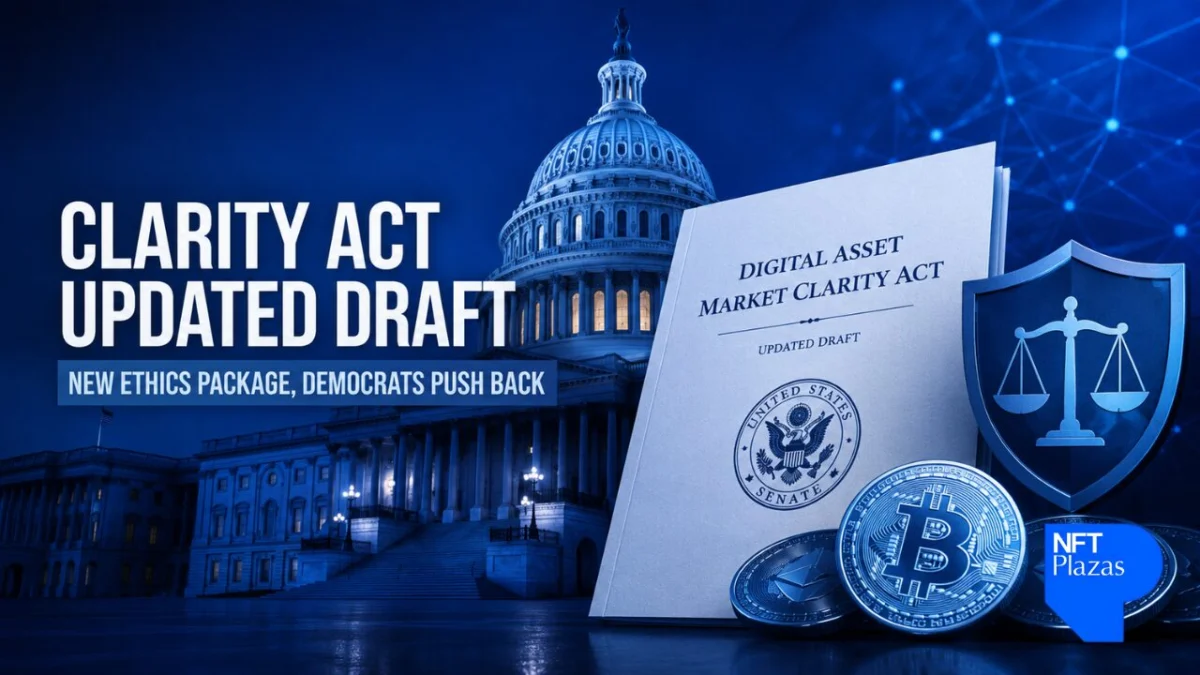
Senate Republicans have unveiled a significantly revised draft of the Digital Asset Market Clarity Act, a pivotal piece of legislation aimed at establishing a comprehensive regulatory framework for the cryptocurrency market. This updated text, released on Wednesday, incorporates a long-anticipated ethics package negotiated with the White House. The move comes as lawmakers are in a race against time to bring the bill to a floor vote before the impending August recess. The new draft represents a critical fusion of language previously advanced by the Senate Banking and Agriculture Committees. For the first time, it introduces stringent conflict-of-interest rules that extend to the President and other senior government officials, a provision that has been a persistent demand from Democrats for over a year.
The introduction of this ethics component marks a significant development in the protracted legislative efforts to bring clarity to the burgeoning digital asset sector. The original impetus for such legislation stemmed from a growing recognition within Congress that the rapid evolution of blockchain technology and digital assets necessitated a clear set of rules to foster innovation while mitigating risks. Early drafts focused on defining regulatory responsibilities between agencies like the Securities and Exchange Commission (SEC) and the Commodity Futures Trading Commission (CFTC), but the inclusion of robust ethics provisions reflects a broader concern about potential undue influence and conflicts of interest at the highest levels of government.
The Ethics Package: Safeguarding Public Trust in the Digital Age
At the core of the revised bill lies an ethics package designed to prevent officials from leveraging their positions for personal financial gain within the digital asset space. The new text explicitly prohibits the President, Vice President, members of Congress, federal judges, and other designated senior officials, along with their spouses, from issuing or sponsoring any digital asset for compensation while in office. This prohibition is a direct response to concerns that individuals in positions of power could potentially influence the market or benefit from their involvement in nascent digital asset projects.
To comply with these new regulations, covered officials would be compelled to divest themselves of their cryptocurrency holdings and any equity stakes in companies operating within the digital asset ecosystem. Alternatively, they would have the option to place these assets into a blind trust, a financial arrangement where the beneficiary has no knowledge of or control over the specific investments. This measure is modeled on existing federal ethics-agreement rules, aiming to create a transparent and impartial environment. The restrictions are set to expire at noon on January 20, 2029, meaning that any conduct occurring after this date would not be subject to these specific penalties. This sunset clause acknowledges the evolving nature of the digital asset landscape and provides a defined period for the regulations to be tested.
Enforcement of these ethics provisions would be vested in the Department of Justice (DOJ). The department would be granted new civil authority to initiate lawsuits against officials who knowingly violate these rules. Furthermore, the DOJ would also have the power to pursue exchanges that knowingly list tokens issued in contravention of these stipulations. Individuals found to be in violation could be compelled to surrender any profits derived from their illicit activities and face substantial civil penalties. For officials, a new disclosure requirement mandates that any cryptocurrency sales exceeding $1,000 must be publicly reported. To further bolster the integrity of the system, the Government Accountability Office (GAO) is tasked with conducting a comprehensive study to determine whether additional ethics safeguards are warranted in the future.

Crucially, the revised draft explicitly excludes state attorneys general from initiating enforcement actions related to this ethics section, reserving this authority solely for the U.S. Attorney General. This centralization of enforcement aims to ensure a consistent and uniform application of the rules across the federal government. The bill also preserves a specific carve-out that allows for the continued commercial use of an official’s name, image, or likeness, provided that such usage was already established by an issuer prior to that individual assuming a covered official status. This provision acknowledges existing commercial relationships and seeks to avoid unduly disrupting legitimate business operations.
Beyond Ethics: A Broader Regulatory Scope
The inclusion of the ethics package does not overshadow the bill’s fundamental objectives regarding the broader digital asset market. The draft retains the provisions of the Blockchain Regulatory Certainty Act, which is designed to exempt non-custodial software developers from being classified as money transmitters. This is a significant point for the decentralized technology community, as it aims to prevent overly broad regulation that could stifle innovation in decentralized finance (DeFi) and Web3 development.
Additionally, the new text introduces a dedicated section aimed at enhancing the capabilities of law enforcement agencies in prosecuting cryptocurrency-related crimes. This includes provisions for expanded funding to support blockchain investigations, specialized training for law enforcement personnel, and the establishment of a new cyber center specifically focused on addressing threats emanating from adversarial nations such as North Korea and Iran. The increasing sophistication of cybercriminals and state-sponsored actors in exploiting digital assets has underscored the need for enhanced government capacity in this area.
In a move that addresses concerns surrounding stablecoins, the bill mandates that stablecoin issuers must comply with lawful orders to freeze, seize, burn, and reissue tokens. This provision is intended to provide regulators and law enforcement with essential tools to combat illicit finance and maintain financial stability. The bill also outlines a framework for how customer assets would be treated separately from a company’s estate in the event of a bankruptcy involving an exchange or custodian, a critical measure to protect consumers in an industry prone to significant financial risks.
Political Reactions: A Deepening Divide
The release of the revised draft has predictably elicited a spectrum of reactions, largely falling along established political lines. The White House officially signaled its approval of the ethics language on July 21, following intensive negotiations between Republican senators, including Senator Cynthia Lummis of Wyoming and Senator Bernie Moreno of Ohio, and administration officials. Senator Lummis lauded the ethics provisions as "one of the most comprehensive ethics provisions ever attached to legislation" and urged swift passage by the Senate. Cody Carbone, CEO of the Digital Chamber, characterized the draft as a "meaningful step toward a floor vote," indicating a positive reception from industry advocacy groups that have been pushing for regulatory clarity.
However, Democratic senators have expressed significant reservations, arguing that the proposed legislation falls short of their expectations on multiple fronts. A joint statement released by seven Democratic senators—Catherine Cortez Masto, Angela Alsobrooks, Cory Booker, Ruben Gallego, John Hickenlooper, Mark Warner, and Raphael Warnock—asserted that the text "falls short on ethics, consumer protection, illicit finance, and conflicts of interest." Senator Alsobrooks, one of only two Democrats who had previously supported the bill in committee, sharply criticized the DOJ-only enforcement structure as "an unserious offer," stating her unwillingness to support the bill with the current language. Despite these criticisms, Democrats have indicated a continued willingness to engage in negotiations to address their concerns. Senator Gallego echoed similar sentiments, arguing that the current text still leaves potential loopholes that could be exploited for officials’ cryptocurrency dealings.

The dispute over enforcement mechanisms carries particular weight given the known cryptocurrency holdings of former President Donald Trump. Financial disclosure reports have previously indicated that Trump earned substantial sums from crypto ventures, with a significant portion linked to World Liberty Financial, a company co-founded by Trump family members that issues the WLFI token and the USD1 stablecoin. This background amplifies the importance of robust ethics and conflict-of-interest rules for senior officials. Beyond political circles, banking trade groups have also raised concerns, specifically targeting the draft’s stablecoin-yield provisions, suggesting that the language could still pose risks to local lending activities.
The Core of the Clarity Act: Defining Regulatory Boundaries
Notwithstanding the contentious ethics debate, the underlying framework of the Clarity Act remains an ambitious attempt to provide the digital asset industry with a much-needed regulatory rulebook. The legislation seeks to delineate clear responsibilities between the SEC and the CFTC, thereby reducing regulatory ambiguity. It aims to classify different types of digital assets, establish standardized registration and disclosure requirements for exchanges, and direct regulators to develop a clear pathway for the trading of tokenized securities and futures on public blockchains.
Miller Whitehouse-Levine, CEO of the Solana Policy Institute, has noted that the bill, in its broader intent, would offer "clearer treatment for token fundraising and stronger consumer protections." However, industry stakeholders, particularly banking trade groups, continue to voice opposition to specific aspects of the draft, notably the language concerning stablecoin yields, indicating that the path to consensus remains challenging.
A Narrowing Legislative Window
The path to enacting the Digital Asset Market Clarity Act has been marked by incremental progress, with key milestones already achieved. The House of Representatives passed its own version of the bill, H.R. 3633, in July 2025 with a significant bipartisan vote of 294-134. Subsequently, the Senate Banking Committee advanced its version by a vote of 15-9 in May, with two Democrats joining the Republican majority. The Senate Agriculture Committee had earlier in the year passed its companion measure, which falls under the CFTC’s jurisdiction.
Senate Majority Leader John Thune has indicated his intention to bring the merged bill to the Senate floor for a vote as early as the following week, irrespective of Democratic support. However, the requirement for 60 votes for passage in the Senate presents a formidable hurdle. The Senate is currently operating with a limited number of working days remaining before the August recess, a period widely regarded as the last realistic opportunity to pass the bill in 2026. The looming midterm elections are expected to significantly shift legislative priorities, making passage in the current year increasingly difficult.
The uncertainty surrounding the bill’s fate is reflected in market sentiment. Prediction markets that track the likelihood of the bill becoming law this year have seen a decline in its odds, dropping into the low-to-mid 30 percent range since the release of the latest draft. This sentiment suggests a prevailing doubt about the ability of lawmakers to bridge the remaining divides and secure the necessary votes within the constrained legislative timeline. The coming weeks will be critical in determining whether the Digital Asset Market Clarity Act can overcome its political and procedural obstacles to become a landmark piece of legislation for the digital economy.