James Watt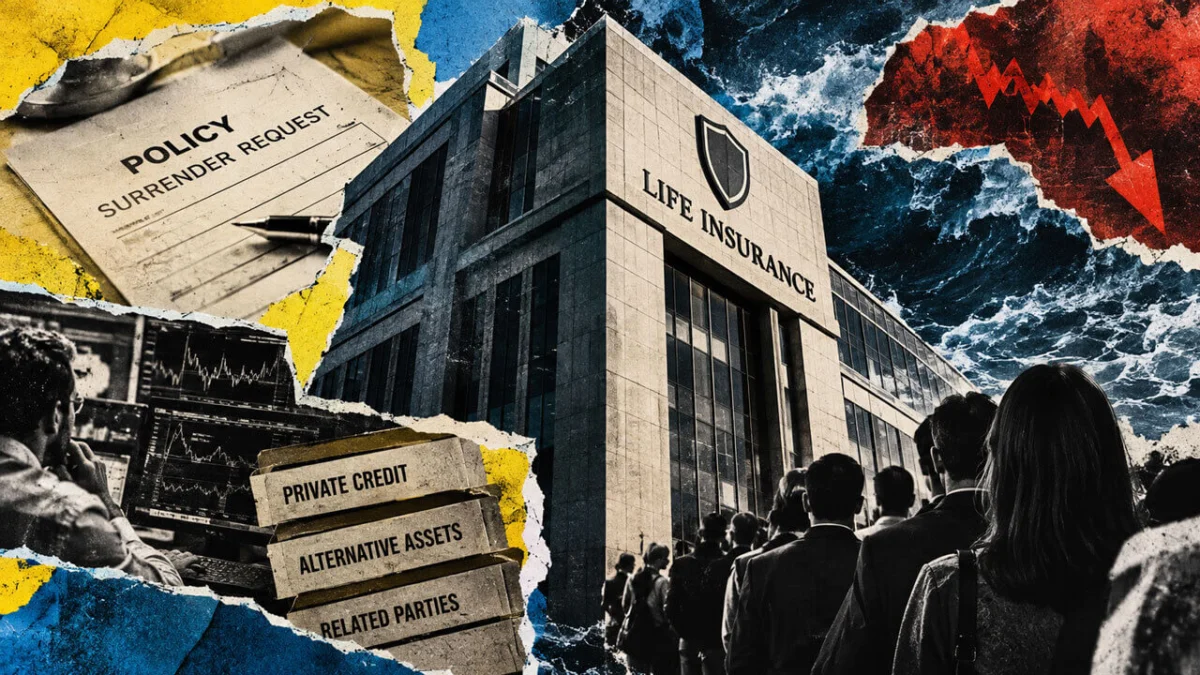
The landscape of the American life insurance industry is facing a period of intense regulatory and federal scrutiny following a series of massive financial restatements by major insurers tied to billionaire financier Mark Walter. Delaware Life Insurance Company and Clear Spring Life and Annuity Company recently filed corrected annual statements that radically altered the transparency of their balance sheets, revealing that billions of dollars in assets previously categorized as independent were, in fact, related-party holdings. This revelation has triggered grand jury subpoenas from the U.S. Attorney’s Office for the Southern District of New York and a parallel inquiry by the Securities and Exchange Commission (SEC), raising broader questions about the "private equity model" of insurance management that has come to dominate the sector over the last decade.
The scale of the revisions is unprecedented in the modern statutory accounting era. Delaware Life Insurance Company’s 2025 balance sheet underwent a startling transformation when the insurer corrected its annual filing to show that approximately $17 billion of its investments were classified as related-party holdings. This figure represents roughly 39% of the company’s total invested assets, a staggering increase from the $1.4 billion, or 3%, reported in the earlier version of the filing. Simultaneously, Clear Spring Life and Annuity Company issued a separate correction of approximately $4.6 billion. Together, these revisions exceed $20 billion across entities connected to Mark Walter, exposing a complex web of internal financing that had previously been obscured from public and regulatory view.
The Intersection of Federal Investigations and Internal Reviews
The financial corrections have moved beyond the realm of technical accounting errors and into the sights of federal law enforcement. According to Delaware Life’s second-quarter filing for 2026, the company and Clear Spring received grand jury subpoenas from the U.S. Attorney’s Office for the Southern District of New York in February. While federal authorities have not charged Walter or either insurance company with a crime, the involvement of a grand jury indicates a high-level investigation into the nature of these disclosures and the underlying transactions.
Parallel to the Department of Justice’s interest, the SEC has opened an inquiry focused on whether certain private-credit investments introduced by an affiliate should have carried related-party labels from the outset. In its filing, Delaware Life stated it is cooperating fully with these inquiries. The company also admitted that an internal review had uncovered disclosure errors, leading to the massive restatements. The central concern for regulators is whether the misclassification of these assets allowed the insurers to bypass certain concentration limits or capital requirements that typically apply to affiliated transactions.
While transactions with related entities are entirely legal under state insurance oversight frameworks, they require rigorous disclosure to ensure that regulators can assess potential conflicts of interest, fee structures, and the true quality of the underlying loans. The corrected labels do not inherently mean the investments are of poor quality, but they do highlight how a model built around private assets, affiliated managers, and patient insurance money can become difficult to interpret, even for sophisticated analysts and statutory auditors.
A Chronology of the Private Credit Evolution in Insurance
The current situation is the culmination of a decade-long shift in how life insurance companies manage their "general accounts"—the pools of capital used to pay out future claims and annuity benefits. Following the 2008 financial crisis, low interest rates forced insurers to look beyond traditional government and corporate bonds for yield. This led to a symbiotic relationship with private equity firms and private credit managers.
In 2018, the National Association of Insurance Commissioners (NAIC) counted 90 U.S. insurers owned by private-equity firms. By the end of 2024, that number had surged to 137, and by June 2025, it reached 139. These firms collectively held $704.3 billion in cash and invested assets at the end of 2024, representing approximately 7.8% of the $9 trillion held by the entire U.S. insurance industry. Crucially, life insurance companies account for 96% of this private-equity-owned group.
The timeline of Delaware Life’s specific troubles began to accelerate in early 2024 with the receipt of the first subpoenas. By mid-2025, the internal reviews concluded, resulting in the massive restatements. On August 17, Delaware Life disclosed a significant remediation effort: an agreement for TWG Global to exchange up to $6.5 billion of investments whose repayment depends on affiliates for an equivalent amount of non-affiliated assets. This swap, subject to regulatory approval, is seen as an attempt to de-risk the balance sheet and reduce the concentration of related-party exposure that triggered the federal inquiries.
Data Analysis: The Concentration of Risk and Ratings
The move toward private credit has fundamentally changed the composition of insurance company portfolios. Structured and asset-backed securities (ABS) now represent 31% of bonds held by private-equity-owned insurers, compared to just 13% for the rest of the industry. This total exposure is estimated at nearly $133 billion. Federal Reserve research further highlights this dominance, noting that life-insurer-affiliated managers now oversee 72% of the industry’s general-account assets and hold roughly 35% of all broadly syndicated loans.
A major point of contention for regulators is the reliance on "bespoke" ratings for these private assets. Unlike public bonds that trade daily and are rated by major agencies like S&P or Moody’s, many private credit loans are rated by smaller firms. Bloomberg reported that Egan-Jones Ratings Company served as the sole rating provider for approximately 16% of Delaware Life’s $32 billion bond portfolio and at least 50% of Clear Spring’s $6.3 billion book. Since 2024, related companies have reportedly paid Egan-Jones approximately $8 million for these services.
This creates a "circularity" risk: an affiliate of the insurer originates a loan, an affiliated manager oversees it, and a third-party rater—paid by the entity—provides the grade that determines how much capital the insurer must hold against that loan. The NAIC found that 96% of bonds held by PE-owned insurers carry "NAIC 1" or "NAIC 2" designations (the highest categories), which explains why these firms appear to have sturdy solvency ratios on paper. However, the illiquidity of these assets means that "investment grade" does not necessarily equate to "readily available cash."
The Threat of the Modern Insurance Run
The core danger of the private credit model is a mismatch between the liquidity of assets and the potential volatility of liabilities. Historically, insurance liabilities move slowly; policyholders hold their contracts for decades. However, the rise of "nontraditional liabilities" has introduced new risks. The Federal Reserve’s May 2026 financial stability report estimated these liabilities at $531 billion.
A "run" on an insurance company does not look like a traditional bank run; instead, it is conducted through surrender forms and collateral notices. Many annuity products allow holders to surrender their policies for cash, albeit with a penalty. Research from the Bank for International Settlements (BIS) indicates that global surrender values can equal 30% of life-sector assets, with about half of that amount redeemable within a single week.
In a rising interest rate environment, policyholders may choose to pay the surrender penalty to move their money into higher-yielding products elsewhere. This forces the insurer to sell assets. If those assets are illiquid private loans or "Schedule BA" assets (which are affiliated at a 67% rate for PE-owned insurers), the company may be forced to sell at a steep discount, eroding its capital surplus. Furthermore, insurers using interest-rate swaps to hedge their portfolios may face immediate collateral demands during market volatility, requiring instant cash that illiquid private credit cannot provide.
Lessons from the Eurovita Collapse
The risks inherent in this model are not merely theoretical. The 2023 collapse of the Italian insurer Eurovita serves as a stark warning. Eurovita, owned by a private equity firm, saw its solvency ratio plummet from 230% to 130% as bond losses and policy surrenders collided. The situation became so dire that Italian regulators had to implement a temporary redemption freeze and place the company under special administration before five other insurers eventually took over the policies.
The Eurovita episode demonstrated that even a company that appears solvent on a "hold-to-maturity" basis can face a liquidity crisis if customers see better rates elsewhere and demand their cash. This "double whammy" of falling asset values and rising surrender requests is the primary concern for U.S. regulators as they look at the $20 billion in reclassified assets at Delaware Life and Clear Spring.
Regulatory Response and Future Implications
In response to these evolving risks, the NAIC has moved to tighten oversight. As of July 24, the organization has updated its private-credit work page to include new filing requirements and capital tools. One of the most significant changes is the requirement for "Private Rating Letter Rationale Reports," which force insurers to provide the underlying logic and data behind the ratings assigned to their private investments. This is intended to prevent the "ratings shopping" that can occur when insurers rely on a single, niche rating agency.
For Delaware Life and Clear Spring, the path forward involves navigating the federal inquiries while maintaining policyholder confidence. Delaware Life’s financial page currently lists $70.5 billion in admitted assets and $4 billion in capital and surplus as of June 30, 2026. While its major financial-strength ratings remain at A-minus, they are currently under "negative outlook" or "watch" status due to the ongoing investigations and the uncertainty surrounding the reclassified assets.
The broader implication for the financial system is significant. As private credit continues to permeate the life insurance sector, the line between insurance and shadow banking continues to blur. The appeal of the model is economically coherent—matching long-term liabilities with long-term, higher-yielding private loans. However, the Delaware Life correction proves that transparency remains a critical vulnerability. When related-party ties obscure who is setting the price and who is assessing the risk, the stability of the entire "permanent capital" model is called into question.
The outcome of the SDNY grand jury investigation and the SEC inquiry will likely set a precedent for how the dozens of other private-equity-owned insurers must disclose their affiliated holdings. For now, the industry is on notice: the era of "patient money" in private credit is being met with a new era of aggressive regulatory transparency, where the difference between a $1 billion and a $17 billion disclosure can mean the difference between business as usual and a federal subpoena.