Lina Irawan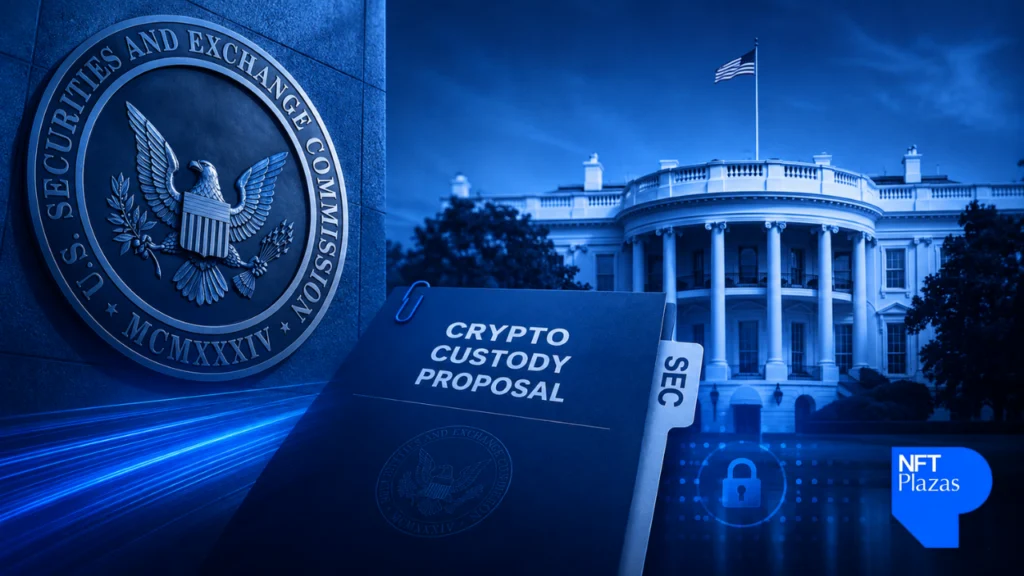
The U.S. Securities and Exchange Commission (SEC) has initiated a significant regulatory undertaking, submitting a new proposal concerning how investment advisers and funds can hold client-owned crypto assets to the White House for review. This move signals a potential recalibration of existing custody rules, aiming to modernize requirements for digital assets within the framework of established securities laws. The proposal, officially titled "Amendments to the Custody Rules," was lodged with the Office of Information and Regulatory Affairs (OIRA), a division of the Office of Management and Budget (OMB), on August 25th. While the specifics of the filing remain confidential, its classification as "Deregulatory" under Executive Order 14192 strongly suggests a focus on reducing existing regulatory burdens rather than introducing new restrictions. This suggests the SEC is exploring avenues to streamline compliance for institutions engaging with the rapidly evolving digital asset landscape.
A Shift in Approach: Moving Beyond Past Challenges
This latest initiative represents a notable departure from the SEC’s previous attempts to grapple with crypto custody under the leadership of former Chairman Gary Gensler. In 2023, the agency put forth a controversial proposal, often referred to as the Safeguarding Rule, which sought to expand custody requirements to encompass crypto assets. Under this proposed rule, investment advisers would have been mandated to hold client assets, including digital currencies, with entities meeting stringent regulatory standards designated as "qualified custodians."
For traditional securities, the concept of qualified custodians was relatively well-defined, typically including entities such as banks, trust companies, registered broker-dealers, and certain futures commission merchants. However, applying this framework to the nascent cryptocurrency market proved considerably more complex. Many digital asset platforms and exchanges did not fit neatly into the established definitions of qualified custodians, leaving investment advisers in a quandary regarding how to offer exposure to crypto assets while ensuring full regulatory compliance. Chairman Gensler at the time articulated that advisers could not unilaterally presume the qualification of crypto platforms due to the unique operational models prevalent in the industry.
The 2023 Safeguarding Rule proposal faced widespread criticism from both the traditional financial sector and the cryptocurrency industry. Opponents argued that the proposed requirements could render crypto custody prohibitively expensive or practically unfeasible, particularly for smaller investment advisory firms. The Small Business Administration also voiced concerns about the potential adverse impact on small businesses, highlighting the disproportionate burden such stringent rules might impose. Ultimately, the SEC withdrew the Safeguarding Rule in June 2025, a decision attributed to the lack of final approval during Gensler’s chairmanship. This withdrawal underscored the challenges inherent in adapting existing regulatory structures to the novel characteristics of digital assets.
Evolving Landscape: Growth in Crypto Custody Infrastructure
The intervening period since the withdrawal of the Safeguarding Rule has witnessed significant developments within the crypto custody sector, creating a more conducive environment for regulatory evolution. A key factor has been the increasing number of traditional financial institutions actively seeking regulatory approval to offer digital asset custody services. Both established financial firms and cryptocurrency companies have pursued bank and trust charters, thereby expanding the pool of entities capable of securely handling digital assets within the U.S. financial system. This growth in regulated custodianship provides the SEC with greater flexibility and a more robust infrastructure to consider when formulating custody rules for crypto.
The SEC itself has taken incremental steps to address the complexities of crypto custody. In September 2025, the agency issued a no-action letter that provided conditional relief for certain state-chartered trust companies to act as qualified custodians for digital assets. The conditions attached to this relief emphasized crucial elements such as thorough due diligence, independent audits, robust internal controls, strict asset segregation, and limitations on rehypothecation. More recently, the SEC employed a similar no-action approach to accommodate the custody arrangements for Franklin Templeton’s OnChain Fund. These instances demonstrate a regulatory willingness to experiment with and adapt existing frameworks to accommodate digital assets, moving beyond a purely prescriptive approach.

The current proposal, therefore, has the potential to codify and expand upon these ad hoc accommodations, establishing broader, more consistent rules rather than relying on a case-by-case regulatory relief process. This move is anticipated to provide greater clarity and certainty for market participants.
A Broader Regulatory Agenda: The Atkins Initiative
This crypto custody initiative is an integral part of a more comprehensive regulatory strategy under SEC Chairman Paul Atkins, who has prioritized the development of clearer and more accommodating regulations for the digital asset space. Under Chairman Atkins, the SEC has been actively engaged in developing rules pertaining to token offerings, the structure of crypto markets, broker-dealer activities, and the regulation of tokenized securities. In March of this year, the SEC issued an interpretative guidance clarifying the application of federal securities laws to certain crypto assets and transactions, a move presented as a step towards enhancing regulatory certainty for the industry.
The importance of the custody proposal cannot be overstated, as custody forms a fundamental pillar of institutional adoption of cryptocurrencies. Asset managers, while potentially willing to offer digital asset products, require compliant and secure mechanisms for safeguarding these assets, managing private keys, and demonstrating effective control to both regulators and their clients. Without clear and practical custody solutions, institutional engagement with the crypto market remains significantly constrained.
The SEC’s current timetable indicates a target of October 2026 for the publication of the proposed rule. This would initiate a public comment period, allowing stakeholders to provide feedback before the agency considers finalizing the regulations. However, this timeline is subject to change, as the proposal is currently under OMB review, and the SEC has historically encountered delays in meeting its regulatory deadlines. The process is likely to be closely scrutinized by industry participants and investors alike.
Implications and Forward Outlook
The confidentiality surrounding the SEC’s specific proposals means that the market must await further details. However, the classification as "Deregulatory" and the explicit aim to modernize existing rules under the Investment Advisers Act of 1940 and the Investment Company Act of 1940 offer a glimpse into the potential direction. The agency’s regulatory agenda indicates a focus on removing outdated provisions that are no longer necessary for investor protection, especially in light of evolving market practices and asset-holding methodologies.
The implications of this proposed rule change are far-reaching. If the SEC successfully navigates the OIRA review and publishes a proposal that strikes a balance between robust investor protection and the practical realities of institutional crypto custody, it could significantly accelerate institutional adoption of digital assets. This could lead to a surge in new investment products, increased capital flowing into the crypto ecosystem, and a more integrated role for digital assets within traditional finance. Conversely, if the proposed rules prove to be overly burdensome or fail to adequately address the unique technical and operational challenges of digital asset custody, it could stifle innovation and maintain the status quo of limited institutional participation.
The market will be keenly watching the SEC’s next steps. The experience of the failed Safeguarding Rule proposal in 2023 serves as a critical lesson. The success of this new initiative will hinge on the SEC’s ability to craft a regulatory framework that is both effective in safeguarding investors and practical for the evolving landscape of digital asset management. The eventual publication of the proposed rule in October, or at a later date, will provide the first definitive insight into whether the SEC has found a workable middle ground, potentially paving the way for a more mature and integrated digital asset market within the broader financial system. The ongoing review at OIRA represents a crucial juncture in this process, where the details of this potentially transformative regulatory shift will be shaped.