admin
admin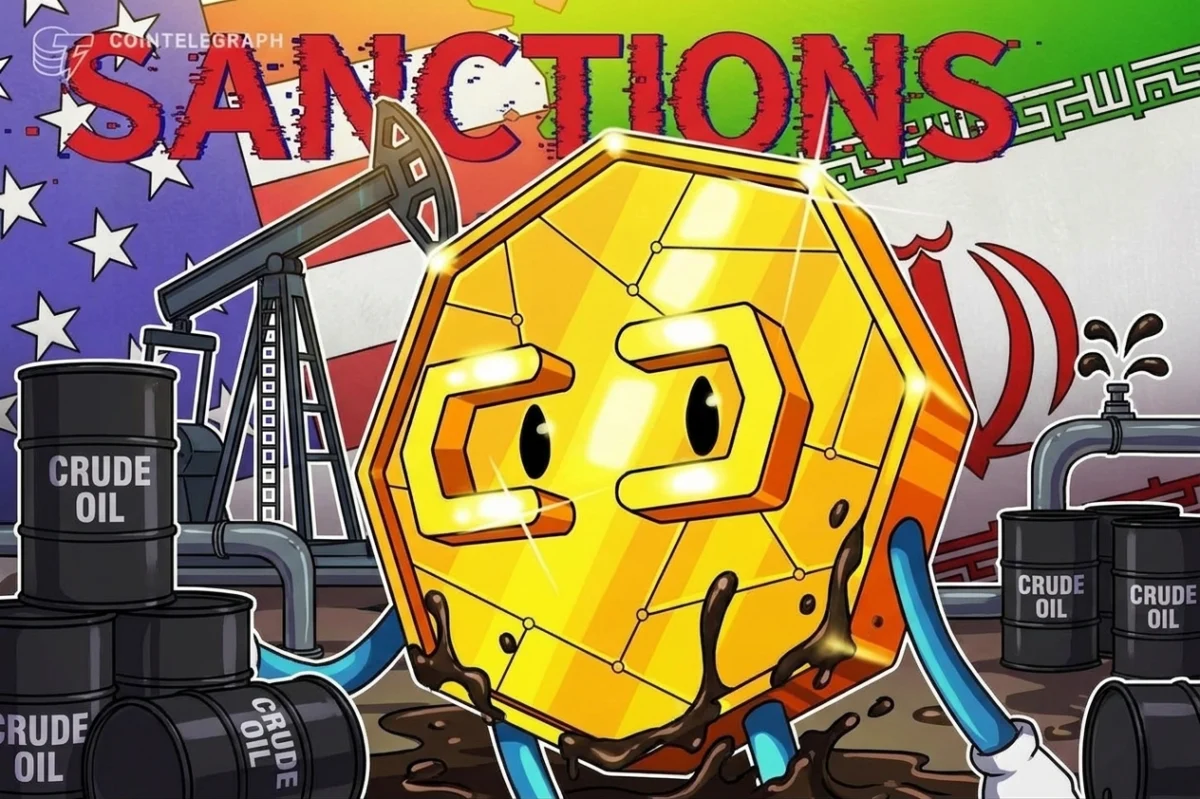
The United States Department of the Treasury has significantly escalated its economic pressure campaign against the Islamic Republic of Iran by expanding its sanctions framework to encompass the nation’s entire digital asset sector. This strategic move, announced by the Office of Foreign Assets Control (OFAC) on Monday, marks a pivotal shift from targeting specific individuals and exchanges to a broader sectoral determination. The Treasury’s decision is rooted in allegations that Iran has increasingly turned to cryptocurrency as a primary mechanism for bypassing international trade restrictions, specifically citing more than $100 million in digital asset payments used to facilitate the illicit sale of Iranian petroleum.
Under the new determination, the U.S. government now possesses the legal authority to sanction any foreign individual or entity found to be operating within or providing material support to Iran’s digital asset industry. This measure was part of a wider enforcement action that issued sectoral sanctions determinations covering not only digital assets but also technology, gold, aviation, and shipping. In a comprehensive sweep, the agency designated nearly 60 entities, individuals, and maritime vessels across various networks, including those involved in nuclear development, missile procurement, cyber warfare, and the oil trade.
The Strategic Pivot to Sectoral Sanctions
For years, the U.S. Treasury has utilized a "whack-a-mole" strategy, identifying and blacklisting specific crypto wallets and small-scale exchanges as they appeared on the radar of federal investigators. However, the latest action signals a move toward a more systemic approach. By designating the "digital asset sector" of the Iranian economy as a targetable category under Executive Order 13902, the Treasury has lowered the threshold for future enforcement actions.
Executive Order 13902, originally signed in 2020, allows the Secretary of the Treasury, in consultation with the Secretary of State, to identify sectors of the Iranian economy that provide the government with a source of revenue used to fund its nuclear program, missile development, and regional proxy groups. Previously, this order was applied to the construction, mining, manufacturing, and textile sectors. The inclusion of digital assets reflects the Treasury’s assessment that cryptocurrency has evolved from a niche tool into a pillar of Iran’s financial architecture.
The Treasury Department stated that Iran increasingly views crypto as a “tool of choice for sanctions evasion.” This is particularly true for transactions linked to the Islamic Revolutionary Guard Corps (IRGC) and high-level government insiders. The transparency of the blockchain, while often cited as a deterrent for criminals, has seemingly been utilized by Iranian state actors through sophisticated obfuscation techniques, including the use of third-party brokers and nested exchanges.
The Case of Ivan Obukhov and Foscom FZE
A central figure in the Treasury’s latest announcement is Ivan Obukhov, a UAE-based Ukrainian broker. According to OFAC, Obukhov played a critical role in the IRGC-Quds Force’s efforts to liquidate oil and bypass the traditional banking system. Since 2023, Obukhov is alleged to have processed over $100 million in cryptocurrency payments to facilitate oil sales on behalf of the IRGC.
The investigation revealed that Obukhov utilized his UAE-based company, Foscom FZE, to manage these transactions. By operating out of the United Arab Emirates—a major global financial hub—Obukhov was able to bridge the gap between Iranian state-controlled oil entities and international buyers who were seeking to avoid direct exposure to sanctioned Iranian banks. The Treasury has sanctioned both Obukhov and Foscom FZE, freezing any assets they hold within U.S. jurisdictions and prohibiting U.S. persons from engaging in business with them.
This specific case highlights the Treasury’s focus on the "middlemen" of the crypto world. It serves as a warning to independent brokers and over-the-counter (OTC) desks worldwide that facilitating transactions for Iranian interests, even if conducted entirely in digital assets, carries the risk of total exclusion from the U.S. financial system.
A Chronology of Escalation: The 2024 Enforcement Wave
The decision to target the entire digital asset sector is the culmination of a year-long surge in enforcement actions directed at Iran’s crypto infrastructure. The timeline of these events suggests an intensifying focus by U.S. intelligence on the flow of digital wealth in and out of Tehran.
In January 2024, OFAC took its first major step by sanctioning UK-registered digital asset exchanges Zedcex and Zedxion. These were the first-ever Iran-related designations specifically targeting crypto exchanges. At the time, the Treasury alleged these platforms were being used to move funds for the IRGC and other sanctioned entities under the guise of legitimate commercial activity.
By June 3, 2024, the scope widened significantly. The Treasury sanctioned four major Iranian crypto exchanges, most notably Nobitex, which is recognized as the largest digital asset platform in the country. This action followed a revealing statement from Treasury Secretary Scott Bessent, who disclosed that the U.S. had successfully seized nearly $1 billion in cryptocurrency from various Iranian-linked exchanges and wallets over a relatively short period.
The pressure continued into late summer. On August 7, 2024, OFAC sanctioned two additional exchanges, Shelbit and Aban Tether. The agency alleged these platforms facilitated approximately $5 million in digital asset movements connected to the Iranian government. While the dollar amount in the August action was smaller than previous seizures, it demonstrated the Treasury’s commitment to dismantling even the smaller nodes of the Iranian crypto network.
Quantifying the Financial Impact and Evasion Tactics
The scale of Iranian crypto activity is staggering. Beyond the $1 billion seized by the U.S. government, third-party blockchain analytics firms have provided deeper insights into the volume of funds moving through these channels. A report by TRM Labs recently indicated that Iran-linked entities moved an estimated $3.8 billion through the exchange CoinEx.
These funds are rarely moved in a single, direct transaction. Instead, Iranian actors often employ a variety of tactics to hide their tracks, including:
- Chain-Hopping: Converting funds between different cryptocurrencies (e.g., from Bitcoin to Monero or Tether) to break the audit trail.
- Mixing Services: Using protocols that blend illicit funds with legitimate ones to obscure the origin of the assets.
- Nested Exchanges: Operating small, unregulated exchanges that use the liquidity of larger, global platforms to process trades without fulfilling standard Know Your Customer (KYC) requirements.
- Shell Companies: Utilizing entities like Foscom FZE to act as the legal face of a transaction, while the underlying value is transferred via blockchain.
The Treasury’s determination addresses these tactics by making it clear that any service provider—whether a developer, a liquidity provider, or a custodial service—could be held liable if they are found to be supporting the Iranian digital asset sector.
Broader Implications for Global Finance and Crypto Compliance
The implications of this sectoral determination extend far beyond the borders of Iran. The U.S. Treasury has made it clear that designated parties’ US-linked property must be blocked. Furthermore, and perhaps more importantly, foreign financial institutions that facilitate "significant transactions" for these designated parties could face secondary sanctions. This includes being restricted from maintaining correspondent accounts or payable-through accounts in the United States.
For the global cryptocurrency industry, this represents a significant increase in compliance risk. Exchanges operating in jurisdictions with traditionally lax regulations must now implement more rigorous screening processes to ensure they are not inadvertently facilitating trades for individuals or entities connected to the Iranian digital asset sector. The "sectoral" nature of these sanctions means that an entity does not necessarily need to be on the Specially Designated Nationals (SDN) list to be a risk; if they are determined to be "operating in" the Iranian digital asset sector, they are effectively radioactive to any firm that values its access to the U.S. dollar.
Industry experts suggest that this move will likely lead to a further "balkanization" of the crypto market. Regulated exchanges in the U.S., Europe, and parts of Asia will likely tighten their geofencing and KYC protocols, while Iranian users may be pushed toward even more obscure, decentralized, or peer-to-peer (P2P) platforms that are harder for regulators to monitor.
Analysis: The Future of the Financial Cat-and-Mouse Game
The expansion of sanctions to the digital asset sector is a testament to the success of previous sanctions on traditional Iranian banking. As the U.S. successfully cut off Iran from the SWIFT international payment system, the Iranian government was forced to innovate. Cryptocurrency provided a decentralized alternative that was initially beyond the reach of Western regulators.
However, the Treasury’s latest move suggests that the "regulatory gap" is closing. By treating the digital asset sector with the same gravity as the oil or shipping sectors, the U.S. is signaling that the era of crypto-anonymity for state actors is coming to an end.
The inclusion of "Technology" and "Gold" in the same sectoral determination is also telling. It suggests that the Treasury views these three sectors—tech, gold, and crypto—as an interconnected "evasion triad." Gold has long been a staple for Iranian sanctions evasion (the "gas-for-gold" schemes of the past), and technology provides the infrastructure necessary to run the servers and software required for modern digital finance.
As the U.S. continues to refine its tools for blockchain surveillance and international cooperation, the cost of doing business for the Iranian government will likely continue to rise. However, the decentralized and borderless nature of cryptocurrency ensures that this will remain a dynamic and evolving conflict. The Treasury’s latest determination is a powerful new weapon in its arsenal, but the long-term effectiveness will depend on the ability of the U.S. to gain cooperation from other financial hubs, particularly in the Middle East and Southeast Asia, where much of this activity is currently concentrated.
In the immediate term, the international community can expect a heightened level of scrutiny on any crypto-related business with ties to the Middle East. For Ivan Obukhov and the entities named in Monday’s release, the message is clear: the digital frontier is no longer a safe haven from the reach of the U.S. Treasury.