James Watt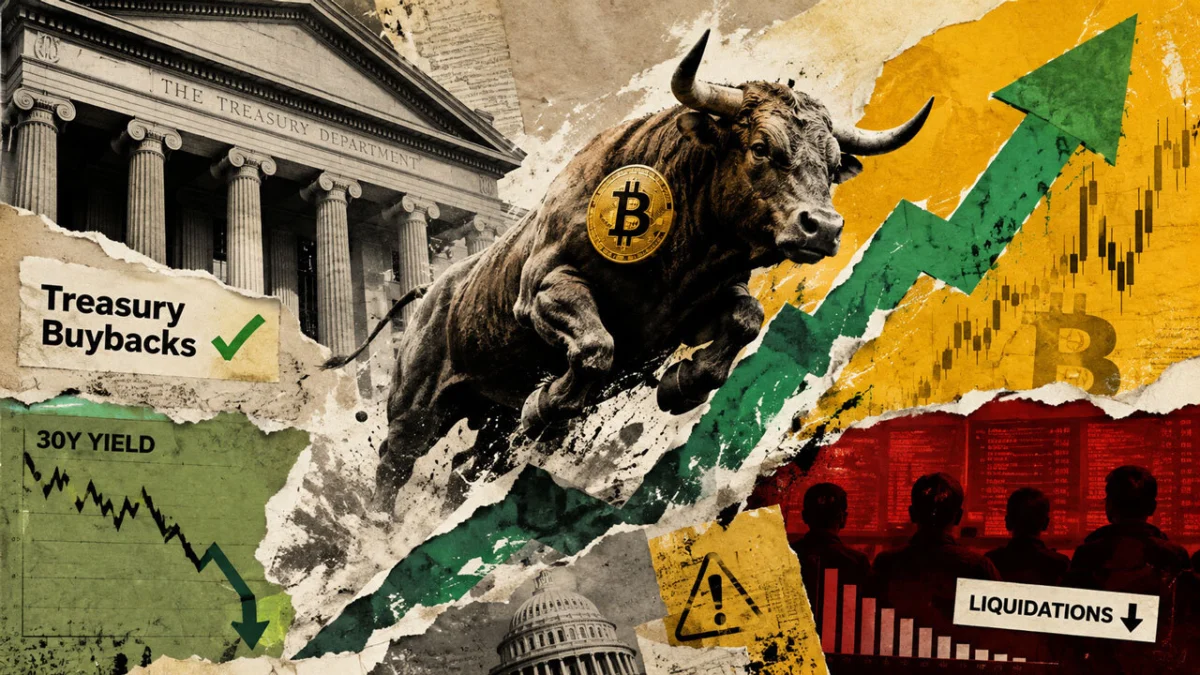
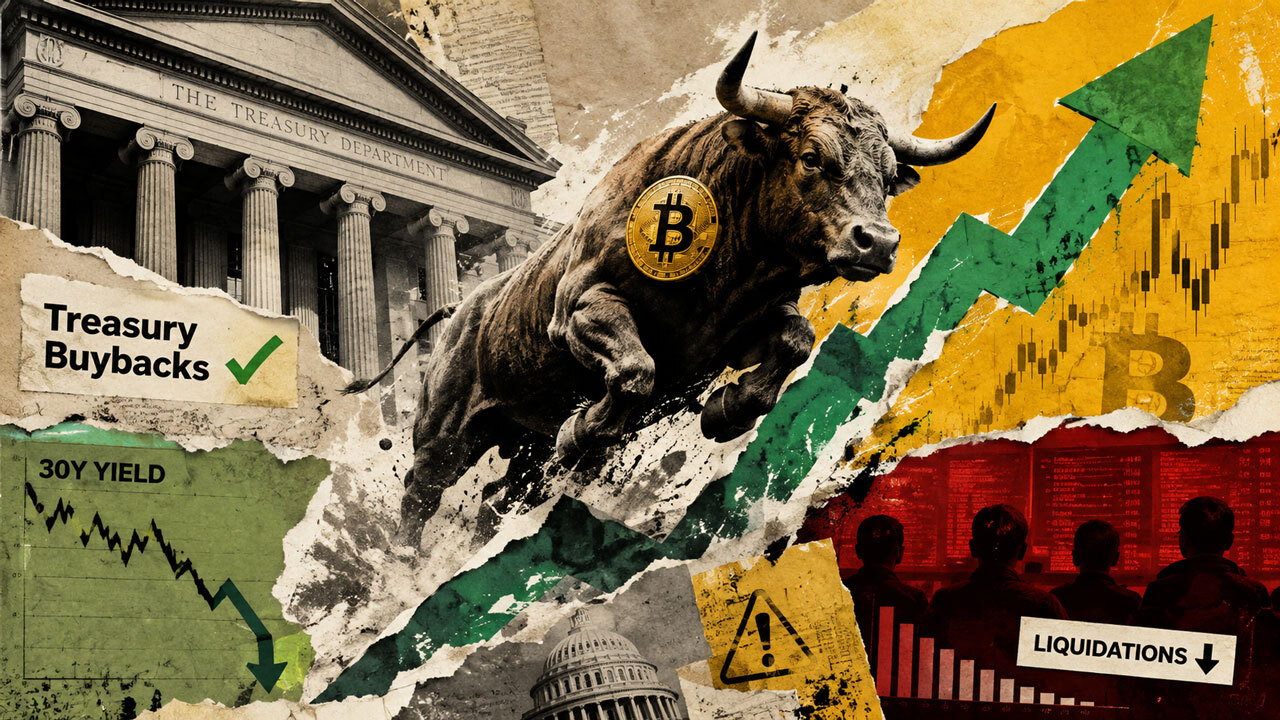
The global financial landscape experienced a significant shift on Wednesday as the United States Department of the Treasury announced a major strategic adjustment to its debt management operations, sparking a vigorous rally across the cryptocurrency sector. Bitcoin (BTC) and Ethereum (ETH) saw aggressive price appreciation, reclaiming the $69,500 and $2,000 levels respectively, in a move that analysts attribute to a sudden injection of liquidity and a corresponding retreat in government bond yields. The catalyst for this market-wide surge was the Treasury’s decision to double its planned buybacks of long-dated government debt, a maneuver designed to stabilize a bond market that has been under intense pressure from rising borrowing costs and historical volatility.
The Treasury’s Strategic Intervention: Doubling Down on Liquidity
On August 19, the Treasury Department issued a formal press release detailing an expansion of its liquidity-support operations. According to the announcement, the department will increase the maximum size of its buyback operations for securities with maturities ranging from 10 to 20 years and 20 to 30 years. Previously capped at $2 billion, the limit for these operations will be raised to at least $4 billion per session. This enhanced buyback program is scheduled to commence on September 9 and will remain in effect through November 4.
The primary objective of this policy shift is to provide "greater liquidity support" to the longer-dated nominal sectors of the Treasury market. For several months, market participants have consistently offered more debt for sale than the Treasury had been willing to repurchase, leading to a supply-demand imbalance that exacerbated price volatility and pushed yields higher. By increasing the buyback capacity, the Treasury aims to act as a "buyer of last resort" for these specific tranches of government debt, ensuring that the market remains functional and that transaction costs do not spiral out of control.
Immediate Relief in the Bond Market
The announcement provided instantaneous relief to a bond market that had been reeling from multi-year highs in interest rates. Prior to the announcement on Tuesday, the 30-year Treasury yield—a critical benchmark for long-term mortgage and corporate borrowing—had peaked at 5.34%, its highest level since 2007. Following the Treasury’s news, the 30-year yield plummeted to approximately 5.19%. Similarly, the 10-year Treasury yield, which serves as a proxy for investor sentiment regarding economic growth and inflation, dropped to 4.647%.
Perhaps most significantly, the gap between the 2-year and 30-year yields narrowed sharply. This flattening of the yield curve suggests that while short-term inflation remains a concern, the Treasury’s intervention has successfully lowered the "term premium"—the extra compensation investors demand for the risk of holding long-term debt. For risk assets like Bitcoin, which are highly sensitive to the "risk-free rate" of return offered by Treasuries, this decline in yields represents a direct reduction in the opportunity cost of holding non-yielding assets.
Bitcoin and Ethereum Reclaim Key Psychological Levels
As bond yields retreated, capital flowed rapidly back into the cryptocurrency market. Data provided by CryptoSlate indicates that Bitcoin underwent a dramatic intraday recovery. After dipping toward a low of $64,100 earlier in the week, the premier digital asset surged above $69,000 before stabilizing near the $68,000 mark. This recovery was mirrored by Ethereum, the world’s second-largest cryptocurrency by market capitalization, which rose as high as $2,100. This move marked the first time Ethereum has traded above the $2,000 threshold since June, signaling a potential shift in the medium-term trend for decentralized finance (DeFi) ecosystems.
The suddenness of the rally caught many market participants off guard, particularly those who had positioned themselves for a continued downturn. The resulting "short squeeze"—where traders betting on falling prices are forced to buy back assets to cover their losses—accelerated the upward momentum.
A $1.45 Billion Liquidation Event
The volatility surrounding the Treasury’s announcement proved catastrophic for leveraged traders. According to data from CoinGlass, more than $1.2 billion in crypto positions were liquidated within a single hour of the price surge. Short traders, who had bet against the rally, accounted for the vast majority of these losses, totaling approximately $1.29 billion.
Over the full 24-hour window, the carnage was even more pronounced. More than 110,000 individual traders saw their accounts liquidated for a combined total of $1.45 billion. The largest single liquidation event occurred on the Bitget exchange, where a $32 million ETH-USD position was forcibly closed. This scale of liquidation highlights the extreme leverage currently present in the crypto markets and the sensitivity of these assets to macroeconomic policy shifts originating from Washington D.C.
Macroeconomic Context: Why Yields Matter for Crypto
To understand why a technical change in Treasury buybacks can trigger a billion-dollar rally in Bitcoin, it is necessary to examine the relationship between real yields and risk assets. When long-term Treasury yields rise, they increase the cost of capital across the entire economy. This makes it more expensive for companies to borrow, reduces the present value of future cash flows for technology stocks, and makes "risk-free" government debt more attractive compared to volatile assets like Bitcoin.
In recent months, the "long end" of the Treasury curve has faced immense pressure due to three primary factors:
- Persistent Inflation: Investors demanding higher yields to protect against the eroding purchasing power of the dollar.
- Heavy Government Borrowing: The US fiscal deficit requires constant issuance of new debt, which competes for a finite pool of investor capital.
- Corporate Competition: A surge in corporate bond issuance, particularly from firms seeking to fund artificial intelligence (AI) infrastructure, has added to the supply of high-yield debt options for investors.
When the Treasury intervenes to buy back its own debt, it effectively acts as a counter-pressure to these forces. By removing supply from the market, it pushes bond prices up and yields down, creating a "breathing room" for Bitcoin and other high-duration assets.
Expert Analysis: Bitcoin as the "Canary in the Coal Mine"
Market analysts have been quick to weigh in on the implications of the Treasury’s move. Andre Dragosch, Head of Research at Bitwise Europe, characterized the intervention as a sign that the global financial system is beginning to show "signs of cracking." According to Dragosch, the Treasury was essentially forced to act because the private market could no longer absorb the volume of long-dated debt without causing yields to spike to levels that would threaten economic stability.
"Bitcoin is the canary in the macro coal mine," Dragosch stated. "It anticipates changes in financial conditions both to the downside and the upside. Rising yields were already forcing the hand of the Treasury to intervene, and Bitcoin is sniffing it out."
Dragosch’s analysis suggests that Bitcoin acts as a high-sensitivity barometer for global liquidity. When the Treasury or the Federal Reserve takes steps to ease financial conditions—even if those steps are framed as "technical liquidity support" rather than "Quantitative Easing" (QE)—Bitcoin tends to be the first asset to react.
Liquidity Support vs. Quantitative Easing
It is a crucial distinction that the Treasury’s buyback program is not technically the same as the Federal Reserve’s Quantitative Easing. QE involves the central bank creating new reserves to expand its balance sheet and buy assets, thereby increasing the total money supply. In contrast, Treasury buybacks are funded by the Treasury’s existing cash account (the Treasury General Account) or through the issuance of shorter-term debt (like T-bills) to buy back longer-term debt.
The goal of a buyback is to improve the "plumbing" of the bond market—making it easier for traders to buy and sell securities—rather than to lower the overall debt burden of the government. However, for investors, the net effect is often perceived as "dovish." By stabilizing the long end of the yield curve, the Treasury is effectively preventing a tightening of financial conditions, which the market interprets as a signal to return to risk-taking.
The Long-Term Thesis: Structural Dollar Decline
While the immediate market reaction was focused on the technicalities of bond yields, some observers see a much larger narrative unfolding. Matt Cole, Chairman of Strive—a company known for its Bitcoin treasury advocacy—argues that these interventions reinforce the view that the US dollar is in a state of structural decline.
Cole suggests that the federal government is trapped between two difficult choices: they must either tolerate high real interest rates, which could lead to a severe recession and a debt crisis, or they must manage the strain through policies that support liquidity and nominal growth at the expense of the currency’s value.
"There is no painless path," Cole remarked. "The question is simply where the adjustment gets absorbed." He noted that Bitcoin’s most significant historical rallies have coincided with periods of dollar weakness. However, he pointed out that Bitcoin has never existed through a prolonged, multi-year decline of the dollar’s global dominance. If the Treasury’s recent actions are a precursor to a long-term policy of currency depreciation to manage debt, Cole believes the next five to seven years could provide Bitcoin with a "macro tailwind" stronger than any previous cycle in its history.
Conclusion and Outlook
The Treasury’s decision to double its buyback operations has served as a powerful reminder of how interconnected the traditional financial system and the digital asset market have become. While Bitcoin was once viewed as an isolated experiment, it now functions as a primary liquidity proxy for global investors.
As the program begins in earnest on September 9, market participants will be watching closely to see if the Treasury can maintain this delicate balance. If yields remain suppressed, the path toward new all-time highs for Bitcoin and Ethereum may be cleared. However, the underlying issues—persistent deficits and the need for constant liquidity injections—suggest that the volatility seen this Wednesday may only be the beginning of a more complex macroeconomic era for digital assets.