
 Nila Kartika Wati
Asset manager VanEck has issued a pointed critique of Metaplanet’s executive compensation framework, asserting that despite recent adjustments made by the Japanese Bitcoin treasury company to mitigate shareholder dilution, the current structure still falls significantly short of effectively aligning management’s incentives with those of its investors. The firm’s assessment places Metaplanet in a unique and unfavorable position among its peers in the rapidly evolving digital asset sector, highlighting a governance challenge that could impact investor confidence and long-term value creation.
In a comprehensive report released on Friday, VanEck meticulously examined the executive compensation practices across the ten largest digital asset treasury companies globally. The analysis, part of their "Chaincheck" series, categorized Metaplanet’s compensation structure as "Bad," making it the solitary entity to receive this lowest possible rating. This stark designation underscores VanEck’s severe reservations regarding the company’s approach to executive incentives. The report specifically cited an equity plan equivalent to a substantial 14.7% of fully diluted shares and an officer exposure of 8.2%. These figures, according to VanEck, represent a significant deviation from industry norms and best practices, raising red flags about potential value erosion for existing shareholders.
To contextualize Metaplanet’s position, VanEck’s research revealed that the company’s officer exposure is approximately ten times the average of 0.8% observed among the other nine companies scrutinized in the study. Similarly, its overall equity plan is nearly four times the peer average, indicating an unusually generous and potentially dilutive compensation scheme for its leadership. The asset manager’s findings suggest a fundamental disconnect between the incentives offered to executives and the broader interests of the company’s investor base, particularly concerning the long-term value of the underlying Bitcoin holdings.
Industry Benchmarks and Stark Contrasts
For comparison, MicroStrategy, the undisputed leader and largest corporate Bitcoin (BTC) holder, serves as a significant benchmark in VanEck’s analysis. MicroStrategy’s compensation structure, with an equity plan equal to a mere 2% of fully diluted shares and officer exposure of 0.5%, received a "Good" rating from VanEck. The report lauded MicroStrategy for its prudent approach, noting that its equity reserve is fixed, and any proposed increases to the plan require an explicit shareholder vote. This model exemplifies the kind of transparent and shareholder-centric governance that VanEck advocates for, ensuring that executive rewards are tightly linked to sustained shareholder value without undue dilution. The contrast between MicroStrategy’s "Good" rating and Metaplanet’s "Bad" rating highlights the spectrum of corporate governance practices within the burgeoning Bitcoin treasury space and underscores the specific areas where VanEck believes Metaplanet falls short.
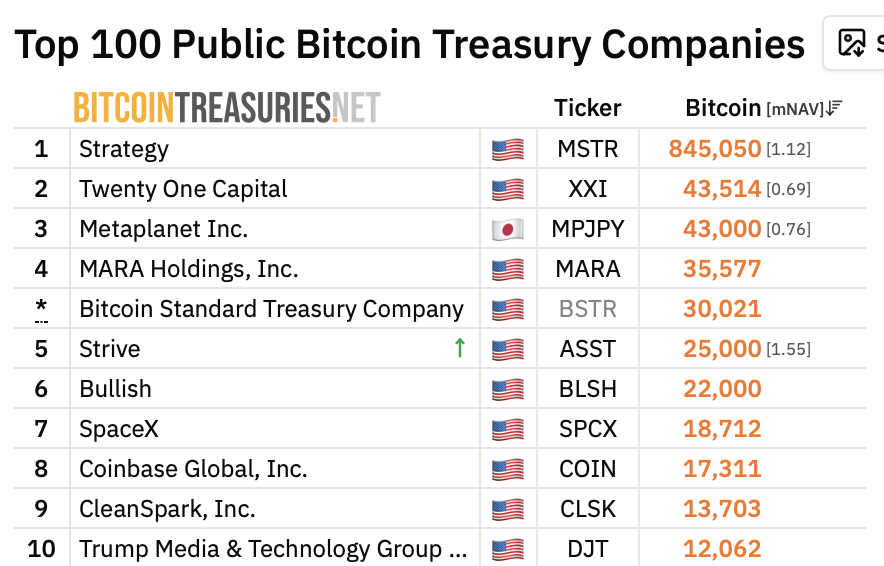
Metaplanet, a Japanese company, has rapidly ascended to become a prominent player in the Bitcoin treasury landscape. It currently ranks as the third-largest publicly traded corporate Bitcoin holder, boasting an impressive stash of 43,000 BTC, according to data from BitcoinTreasuries.net. Its strategic pivot to Bitcoin as a primary treasury asset has garnered significant attention, positioning it as a key institutional adopter of the digital currency in Asia. However, this strategic shift has seemingly coincided with, and in part exacerbated, the governance issues now being highlighted by VanEck. The company’s ambitious Bitcoin acquisition strategy, while potentially beneficial for long-term asset appreciation, appears to have inadvertently created mechanisms that could disproportionately reward executives at the expense of shareholder equity.
The Genesis of the Dilution Issue: Automatic Option Pool Expansion
VanEck’s report traces the disparity in Metaplanet’s executive compensation structure partly to a historical mechanism embedded within its former compensation framework. This problematic structure allowed the company’s executive option pool to expand automatically whenever Metaplanet issued new shares to fund its aggressive Bitcoin purchases. In essence, as the company raised capital to acquire more BTC – a move ostensibly aimed at increasing shareholder value through exposure to the digital asset – it simultaneously and automatically inflated the potential pool of shares available for executive compensation.

This automatic adjustment mechanism led to a dramatic and concerning expansion of the executive option pool. The pool surged from an initial 46 million shares to an staggering 319.5 million shares, effectively adding approximately 273 million potential shares that could eventually dilute existing shareholders. The rationale behind such a mechanism, while perhaps intended to align executive incentives with growth, demonstrably lacked the checks and balances typically found in robust corporate governance frameworks. It created an environment where executive compensation could grow significantly without direct, explicit shareholder approval for each increment, leading to a substantial build-up of potential dilution.
Shareholder Outcry and Metaplanet’s Subsequent Adjustments
The implications of this expanding option pool did not go unnoticed by Metaplanet’s investor base. At the time, the rapid expansion of the executive stock pool drew considerable criticism from some Metaplanet shareholders. These concerned investors vocally called upon the company to annul the additional potential shares that had been created by this controversial adjustment mechanism. The backlash underscored a growing awareness among shareholders regarding the importance of sound corporate governance, especially in companies undergoing significant strategic transformations, such as the pivot to Bitcoin treasury. The criticism highlighted the tension between a company’s growth ambitions and the need to protect shareholder interests from excessive dilution.
Responding to the mounting shareholder pressure and public scrutiny, Metaplanet took steps to address the issue. In August, the company announced the termination of the automatic adjustment mechanism, signaling an acknowledgment of the problems it created. This was followed by a more substantial action in September, when Metaplanet further reduced the overall executive option pool by a significant 41%. The pool was cut from its peak of 319.5 million shares down to 188.2 million shares. These actions, while representing a move in the right direction, were presented by Metaplanet as a commitment to improving corporate governance and shareholder alignment.
However, VanEck’s recent analysis suggests that these changes, while positive, remain insufficient to truly resolve the underlying issues. The asset manager stated unequivocally that the implemented adjustments "fall well short of the mark." This assessment implies that even with the reductions, the remaining potential for dilution and the overall structure of executive compensation at Metaplanet still present a significant concern for investors seeking strong alignment and protection of their equity. The core problem, according to VanEck, lies not just in the size of the pool but in the principles governing its allocation and the potential for past grants to continue to impact future shareholder value.
VanEck’s Prescriptive Recommendations for Improved Governance
VanEck’s report goes beyond mere criticism, offering specific, actionable recommendations for Metaplanet to rectify its compensation issues and achieve better alignment with shareholder interests. The asset manager called for a fundamental reversal of the roughly 273 million-share expansion that was generated by the now-defunct automatic adjustment clause. This recommendation implies a retrospective correction, seeking to unwind the dilutive effects of the past mechanism. Furthermore, VanEck urged Metaplanet to replace any remaining rights associated with the problematic structure with a new compensation plan that is explicitly approved by shareholders. This move would foster greater transparency and ensure that future executive incentives are subject to democratic oversight by the company’s owners.
A critical nuance in VanEck’s assessment is the acknowledgment that "unless past grants are clawed back, much of the dilution has already occurred." This highlights a significant challenge: simply reducing the potential future pool might not fully address the impact of options or shares that have already been granted under the old, dilutive mechanism. Clawback provisions, which allow companies to reclaim executive compensation under certain circumstances (e.g., poor performance, misconduct, or, in this case, potentially excessive dilution from past structures), would be essential for a comprehensive resolution. Without such measures, the benefits of future adjustments might be limited to prospective dilution, leaving existing dilution largely unaddressed.
Beyond structural changes, VanEck also provided strategic guidance on how Metaplanet could design a more effective executive compensation strategy going forward. The firm recommended tying executive compensation to a specific, relevant metric such as "Bitcoin per fully diluted share." This metric would directly link executive performance to the efficiency with which the company’s Bitcoin holdings translate into value for each outstanding share, including those from potential dilution. For a company whose primary value proposition is its Bitcoin treasury, such a metric would ensure that management is incentivized not just to acquire Bitcoin, but to do so in a manner that maximizes value for all shareholders on a per-share basis. This contrasts with metrics that might simply reward overall Bitcoin accumulation without considering the dilutive cost of that accumulation.
Additionally, VanEck advised Metaplanet to adopt a written grant-timing policy. Such a policy is crucial for preventing opportunistic option grants, where executives might receive options just before positive news or a price surge, thereby maximizing their personal gains irrespective of long-term value creation. A transparent and consistent grant-timing policy would enhance fairness, reduce the perception of self-dealing, and further align executive incentives with predictable, long-term shareholder value. These recommendations collectively form a blueprint for Metaplanet to not only address its immediate compensation concerns but also to establish a robust, sustainable corporate governance framework.
Broader Implications for the Digital Asset Treasury Sector
VanEck’s detailed scrutiny of Metaplanet’s compensation structure serves as a critical reminder of the growing importance of strong corporate governance within the nascent digital asset treasury sector. As more public companies, both established and emerging, begin to allocate significant portions of their balance sheets to Bitcoin and other cryptocurrencies, the mechanisms governing their operations and executive incentives will increasingly come under the microscope. Investors are not merely seeking exposure to Bitcoin; they are investing in companies that they expect to manage these assets prudently and in a manner that prioritizes shareholder returns.
The case of Metaplanet illustrates the potential pitfalls when a company undergoes a rapid strategic transformation without adequately updating its governance structures. While the pivot to Bitcoin can be a bold and potentially rewarding move, it must be accompanied by governance practices that ensure transparency, accountability, and genuine alignment between management and shareholders. Companies like MicroStrategy, by establishing clear and shareholder-friendly compensation policies, are setting a high bar for corporate governance in this new asset class. Their model demonstrates that aggressive Bitcoin accumulation can coexist with sound governance, thereby fostering greater investor confidence.
The potential for significant shareholder dilution, as highlighted in Metaplanet’s situation, can erode investor trust and depress stock valuations, regardless of the underlying asset’s performance. In a market segment characterized by volatility and evolving regulatory landscapes, robust governance acts as a crucial safeguard, signaling to investors that their capital is being managed responsibly. Failure to address these concerns fully could lead to continued investor skepticism, potential activist shareholder campaigns, and difficulty in attracting new capital.
Moving Forward: The Path to Rebuilding Trust
Metaplanet now faces the significant challenge of demonstrating a deeper commitment to shareholder alignment. While their recent efforts to reduce the option pool are a step in the right direction, VanEck’s report makes it clear that more fundamental changes are required. The company will likely need to engage in more transparent dialogue with its investors, outlining a comprehensive plan to address the lingering dilution concerns and implement the kind of governance best practices that VanEck and other institutional investors are advocating for.
The ultimate goal is to create a compensation structure where executives are rewarded for driving long-term value creation that directly benefits all shareholders, without resorting to mechanisms that could lead to disproportionate personal gains or excessive dilution. For a company like Metaplanet, whose fortunes are increasingly tied to the performance of its Bitcoin treasury, ensuring that executive incentives are perfectly calibrated to maximize "Bitcoin per fully diluted share" will be paramount. The resolution of this issue will not only be crucial for Metaplanet’s own trajectory but will also offer valuable lessons for other companies navigating the complexities of integrating digital assets into their corporate strategies while upholding the highest standards of corporate governance.









