Lina Irawan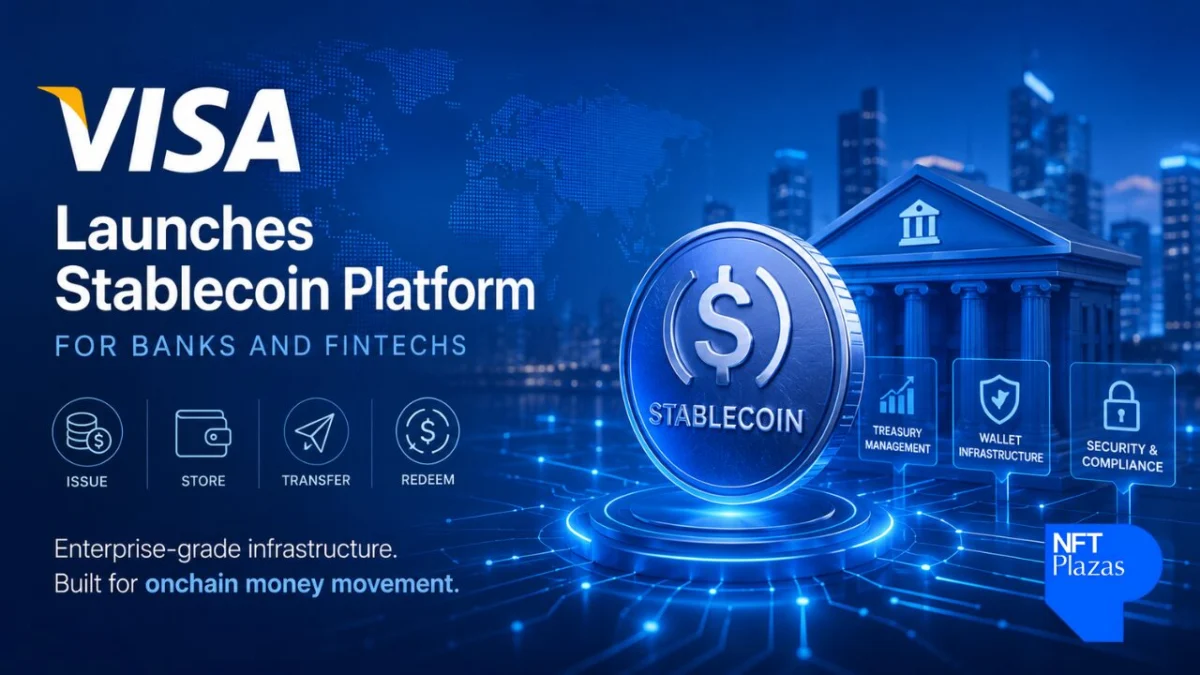
Visa has unveiled a new platform designed to help banks, fintech companies, and payment providers issue, store, transfer, and redeem stablecoins through its vast payments network, significantly expanding the card giant’s strategic push into blockchain-based finance. This launch marks a substantial advancement beyond simple stablecoin settlement, offering institutions a complete operational layer for on-chain money movement without the prohibitive cost and complexity of building their own blockchain infrastructure from the ground up.
Visa Stablecoin Platform: A Unified Solution for On-Chain Finance
The newly introduced product, officially named the Visa Stablecoin Platform (VSP), consolidates critical functionalities such as minting, redemption, wallet infrastructure, and treasury management into a single, Visa-managed enterprise system. This integrated approach aims to streamline the deployment of stablecoin operations within existing payment and settlement workflows. By providing a comprehensive solution, Visa seeks to alleviate the burden on financial institutions that would otherwise need to piece together disparate vendor solutions and complex technical integrations.
The Rise of Stablecoins: Bridging Traditional and Digital Finance
Stablecoins are a specialized class of cryptocurrencies engineered to maintain a stable value, most commonly pegged to a fiat currency like the U.S. dollar. Their rapid ascent within the digital asset market is attributed to their ability to combine the speed and efficiency of blockchain-based transactions with the predictable value crucial for financial operations. This characteristic makes them particularly attractive for businesses and institutions seeking to leverage blockchain technology without exposing themselves to the inherent volatility of assets such as Bitcoin and Ether. As of early 2024, the total market capitalization of stablecoins has surpassed $150 billion, underscoring their growing importance in the global financial landscape.
Addressing Operational Realities: Visa’s Strategic Insight
Jack Forestell, Visa’s Chief Product and Strategy Officer, articulated the platform’s core value proposition, stating, "Stablecoins are opening up a new layer of programmable money, but for most institutions the hard part isn’t the concept, it’s the operational reality. With the Visa Stablecoin Platform, we’re giving our clients a single place to mint, move, and manage stablecoin operations with the controls, security, and network reach they already expect from Visa." This statement highlights Visa’s recognition of the practical challenges faced by financial entities in adopting new digital asset technologies. The VSP is designed to bridge this gap by offering familiar controls and robust infrastructure.

Initial Stablecoin Support and Future Scalability
At its launch, the Visa Stablecoin Platform initially supports Open USD (OUSD), a novel stablecoin introduced by the Open Standard consortium. This strategic partnership signifies Visa’s commitment to integrating innovative stablecoin solutions into its ecosystem. Furthermore, Visa has indicated that the platform is architected for interoperability, designed to work seamlessly alongside its existing support for established stablecoins like Circle’s USDC and Paxos’ USDG. This inclusive approach broadens the spectrum of stablecoin options available to institutional clients, catering to diverse operational needs and preferences. The platform is currently in a beta phase, available to select users, with broader access anticipated as the system matures.
Enhanced Infrastructure: Wallet-as-a-Service and Security Protocols
A key component of the VSP is its Wallet-as-a-Service infrastructure. This offering, coupled with robust blockchain connectivity and sophisticated security controls, provides institutions with the tools necessary to manage digital assets with confidence. Security features such as dual-approval workflows, comprehensive audit logs, and transfer allow lists are critical for financial institutions. These functionalities bring stablecoin operations into closer alignment with the established control frameworks prevalent in traditional finance, including approval gates, compliance checks, and meticulous recordkeeping, thereby mitigating operational and regulatory risks.
The platform grants institutions flexibility in managing their digital asset infrastructure. Clients can opt to utilize a Visa-managed wallet stack, simplifying deployment and ongoing management. Alternatively, they can integrate their own preferred wallet providers directly with the VSP. Regardless of the chosen approach, clients gain access to a comprehensive suite of tools for minting, burning, holding, and transferring stablecoins, enabling seamless integration into their existing treasury, liquidity management, and settlement operations.
Strategic Context: Visa’s Evolving Blockchain Strategy
Visa’s strategic move into stablecoin infrastructure development is not an isolated event but rather a culmination of years of focused investment and product development in the blockchain space. The company has consistently explored and integrated digital asset solutions, including early adoption of stablecoin settlement programs, the rollout of crypto-linked card programs, and the development of blockchain-based money movement services. These initiatives underscore Visa’s long-term vision of positioning itself at the forefront of the evolving financial landscape, where digital assets are expected to play an increasingly significant role.
The adoption of stablecoins by financial institutions is driven by several compelling factors, including the promise of faster settlement times, reduced friction in cross-border payments, and the availability of programmable financial infrastructure. As global payment volumes continue to grow, and the demand for more efficient and transparent transaction mechanisms intensifies, stablecoins offer a viable solution that can be integrated into existing financial systems.

Competition and Innovation in Stablecoin Issuance
The launch of the VSP also highlights the burgeoning competition in the stablecoin issuance and distribution arena. Open Standard’s OUSD has garnered particular attention due to its distinct economic model, which reportedly allows partners to share in reserve income, a departure from the traditional model where revenue is concentrated with a single issuer. This revenue-sharing structure could prove highly appealing to banks and payment firms seeking to align their infrastructure investments with economic incentives, fostering a more collaborative ecosystem.
Visa’s endorsement of Open USD lends significant institutional credibility to a project still in its nascent stages. Open Standard boasts a diverse coalition of backers from the payments, banking, technology, and cryptocurrency sectors, and its innovative economic model has already generated considerable market discussion regarding the long-term viability and competitive landscape for incumbent stablecoin issuers.
Market Reactions and Implications for Established Issuers
The competitive pressure exerted by new models like Open Standard’s has reportedly impacted established players. Reports emerged on the day of Visa’s announcement indicating a decline in Circle’s share value. This market reaction suggests investor concern that a partner-owned stablecoin model could pose a significant challenge to the established business models of major stablecoin issuers, potentially reshaping market dynamics and revenue streams. Circle, the issuer of the widely adopted USDC stablecoin, has been a key partner in the stablecoin ecosystem, and such shifts in market perception and competitive positioning warrant close observation.
Visa’s growing presence in the stablecoin market is demonstrably robust. In April of the preceding year, the company announced an expansion of its stablecoin settlement program to encompass a broader array of blockchain networks. At that time, annualized stablecoin settlement volume had already reached an impressive $7 billion, with support for stablecoin-linked card programs extending to over 130 across more than 50 countries. These figures illustrate Visa’s consistent and accelerating commitment to integrating digital assets into its core payment infrastructure.
From Experimentation to Infrastructure: Visa’s Strategic Evolution
The introduction of the Visa Stablecoin Platform represents a pivotal moment in Visa’s engagement with digital assets, signaling a transition from experimental adoption to the establishment of foundational infrastructure. By positioning stablecoins not merely as a niche cryptocurrency feature but as an integral component of modern payment rails, treasury tools, and settlement systems, Visa is paving the way for broader institutional adoption. This strategic evolution is poised to benefit banks, fintech innovators, and crypto-native businesses alike, enabling them to leverage the advantages of stablecoins within a secure, scalable, and familiar operational framework. The platform’s comprehensive features and strategic partnerships suggest that Visa is actively shaping the future of institutional digital asset finance, aiming to democratize access to blockchain-based financial services while maintaining its position as a central player in global payments.