admin
admin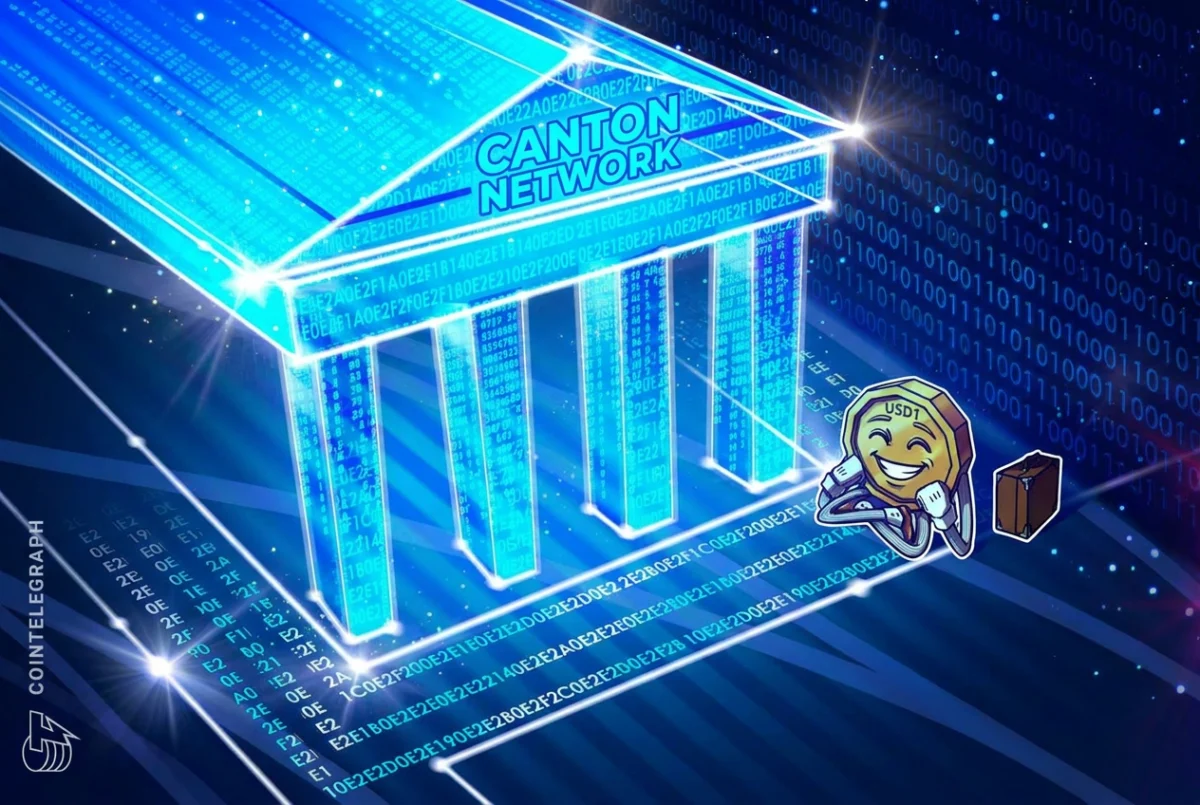
The strategic integration of the USD1 stablecoin into the Canton Network marks a significant milestone in the convergence of decentralized finance and institutional banking, providing a native cash-settlement layer for a network that already facilitates trillions of dollars in monthly transaction volume. World Liberty Financial, the crypto initiative backed by the Trump family, announced on Tuesday that its flagship stablecoin, USD1, is now live on the Canton Network, a move designed to allow institutional participants to settle transactions involving tokenized real-world assets (RWAs) with greater efficiency and privacy. This native issuance enables USD1 to function as the "cash leg" for a variety of complex financial operations, including the management of derivatives collateral, institutional lending, and the primary issuance and redemption of tokenized securities.
By deploying natively on Canton, USD1 circumvents the need for traditional bridging mechanisms, which have historically been a point of vulnerability and friction in cross-chain transactions. Instead, the stablecoin can now settle alongside tokenized assets within the same transaction block, utilizing the Canton Network’s specialized privacy and permissioning controls. This development is particularly relevant for the institutional sector, where the ability to maintain transaction confidentiality while ensuring regulatory compliance is a prerequisite for the adoption of blockchain technology.
The Rise of USD1 and World Liberty Financial
World Liberty Financial entered the digital asset space in late 2024 amidst significant media attention due to its ties to the Trump family. While the project initially faced scrutiny regarding its decentralized governance model and technical roadmap, it solidified its market presence with the launch of USD1 in March 2025. In the seventeen months since its debut, USD1 has experienced rapid growth, ascending to the position of the sixth-largest stablecoin by market capitalization. According to data from DeFiLlama, USD1 currently boasts a market cap of approximately $4.05 billion, placing it behind industry giants such as Tether (USDT) and USD Coin (USDC), but ahead of many long-standing algorithmic and decentralized stablecoin competitors.
The stability and credibility of USD1 are anchored by its reserve management strategy. The stablecoin is issued by BitGo Bank & Trust, a regulated entity that oversees the minting and redemption processes. World Liberty Financial has maintained a transparent reserve policy, stating that USD1 is fully backed by a portfolio of high-quality liquid assets. These reserves include short-term U.S. Treasury bills, government money market funds, and traditional U.S. dollar deposits. This conservative backing is intended to appeal to institutional investors who require a high degree of capital preservation and liquidity from their digital cash equivalents.
Canton Network: An Institutional Powerhouse
The Canton Network has emerged as a preferred infrastructure for global financial institutions seeking the benefits of blockchain without the transparency risks associated with public, permissionless chains like Ethereum or Solana. Designed by Digital Asset, Canton is a "network of networks" that allows disparate financial systems to interoperate while maintaining strict data silos. This architecture ensures that sensitive trade data is only visible to the parties involved in a transaction and their authorized regulators.
The scale of activity on the Canton Network is substantial. Industry data suggests the network processes and issues more than $9 trillion in tokenized assets each month. Furthermore, the movement of on-chain U.S. Treasurys across the network averages more than $350 billion daily. The addition of a native, highly liquid stablecoin like USD1 provides these institutional users with a standardized medium of exchange that can be integrated into automated smart contracts for instant delivery-versus-payment (DvP) settlements.
Chronology of Expansion and Strategic Milestones
The integration of USD1 on Canton is the latest in a series of calculated expansions for both World Liberty Financial and the Canton ecosystem. To understand the significance of this move, it is necessary to look at the timeline of events leading up to this announcement:
- September 2024: World Liberty Financial is officially unveiled as a Trump-backed crypto venture, promising to "make finance great again" by leveraging decentralized protocols.
- March 2025: The USD1 stablecoin is launched, focusing on regulatory compliance and high-quality reserve backing to differentiate itself from more speculative assets.
- Late 2025: USD1 achieves a $1 billion market capitalization, driven by integration into several major DeFi lending pools and its adoption as a collateral asset.
- May 2026: Canton Network announces a surge in institutional participation, with several Tier-1 banks utilizing the network for repo markets and collateral management.
- August 18, 2026: Digital Asset and former U.S. House Speaker Paul Ryan’s American Idea Foundation announce a pilot program on Canton. The project aims to distribute state-administered benefits across three U.S. states starting in 2027, demonstrating the network’s utility for public sector applications.
- August 25, 2026: World Liberty Financial announces the native issuance of USD1 on Canton, completing the link between the Trump-backed stablecoin and the institutional-grade network.
Technical Advantages of Native Issuance
The decision to issue USD1 natively on Canton rather than relying on wrapped versions of the token offers several technical and operational advantages. In the context of institutional finance, "native" means the asset is created and resides directly on the ledger where the transactions occur.
- Atomic Settlement: Native issuance allows for "atomic" transactions, where the transfer of an asset (such as a tokenized bond) and the payment (USD1) happen simultaneously. If one side of the transaction fails, the entire trade is voided, eliminating settlement risk.
- Enhanced Privacy: Canton’s unique privacy layer ensures that while USD1 is a common currency across the network, the details of individual balances and transaction histories are not broadcast to the entire network, mimicking the privacy of the traditional banking system.
- Regulatory Compliance: Because BitGo Bank & Trust manages the minting and redemption, they can enforce Know Your Customer (KYC) and Anti-Money Laundering (AML) protocols at the protocol level. Native issuance on a permissioned network like Canton makes it easier to restrict the movement of the stablecoin to verified institutional wallets.
Market Reactions and Industry Implications
While official statements from major banking partners are often withheld until specific pilots are completed, analysts suggest that the move is a clear signal of the growing legitimacy of stablecoins in the eyes of traditional finance. The integration of a Trump-linked financial product into a network used by global banks also highlights the increasingly bipartisan or at least multi-polar political landscape of the digital asset industry.
The broader implications for the stablecoin market are profound. For years, the market was dominated by retail-focused tokens used primarily for trading volatility on centralized exchanges. The emergence of USD1 on Canton represents a shift toward "utility-grade" stablecoins that serve as the plumbing for the global financial system.
Industry experts believe that as more real-world assets—ranging from real estate to corporate debt—are tokenized, the demand for a stable, regulated, and natively issued cash leg will grow exponentially. With $9 trillion in monthly volume already moving through Canton, even a small percentage of those transactions shifting to USD1 settlement could see the stablecoin’s market cap double or triple in the coming years.
Future Outlook: Toward a Tokenized Economy
The partnership between World Liberty Financial and the Canton Network is a precursor to a more integrated financial future. As the pilot program with the American Idea Foundation suggests, the infrastructure being built today is intended to handle everything from private institutional trades to the distribution of public social benefits.
For World Liberty Financial, the native launch on Canton provides a level of institutional "stickiness" that retail-oriented stablecoins lack. Once a bank integrates USD1 into its automated settlement workflows for derivatives or lending, the cost of switching to a different asset becomes significant. This creates a defensive moat for USD1 in the competitive stablecoin landscape.
As the industry moves toward 2027, the focus will likely shift to how these private networks interact with public blockchains. While Canton provides the privacy institutions crave, the ability to eventually move value between the permissioned world of Canton and the liquidity-rich world of public DeFi remains a long-term goal for the sector. For now, the focus remains on building the robust, compliant, and efficient rails necessary to support the next generation of global finance.
The successful deployment of USD1 on Canton serves as a case study in how political influence, institutional-grade technology, and traditional financial backing can coalesce to create a powerful new financial instrument. As the digital asset market matures, the distinction between "crypto" and "finance" continues to blur, with USD1 and the Canton Network sitting at the very center of that evolution.